- Chinese
- French
- German
- Portuguese
- Spanish
- Russian
- Japanese
- Korean
- Arabic
- Irish
- Greek
- Turkish
- Italian
- Danish
- Romanian
- Indonesian
- Czech
- Afrikaans
- Swedish
- Polish
- Basque
- Catalan
- Esperanto
- Hindi
- Lao
- Albanian
- Amharic
- Armenian
- Azerbaijani
- Belarusian
- Bengali
- Bosnian
- Bulgarian
- Cebuano
- Chichewa
- Corsican
- Croatian
- Dutch
- Estonian
- Filipino
- Finnish
- Frisian
- Galician
- Georgian
- Gujarati
- Haitian
- Hausa
- Hawaiian
- Hebrew
- Hmong
- Hungarian
- Icelandic
- Igbo
- Javanese
- Kannada
- Kazakh
- Khmer
- Kurdish
- Kyrgyz
- Latin
- Latvian
- Lithuanian
- Luxembou..
- Macedonian
- Malagasy
- Malay
- Malayalam
- Maltese
- Maori
- Marathi
- Mongolian
- Burmese
- Nepali
- Norwegian
- Pashto
- Persian
- Punjabi
- Serbian
- Sesotho
- Sinhala
- Slovak
- Slovenian
- Somali
- Samoan
- Scots Gaelic
- Shona
- Sindhi
- Sundanese
- Swahili
- Tajik
- Tamil
- Telugu
- Thai
- Ukrainian
- Urdu
- Uzbek
- Vietnamese
- Welsh
- Xhosa
- Yiddish
- Yoruba
- Zulu
- Kinyarwanda
- Tatar
- Oriya
- Turkmen
- Uyghur

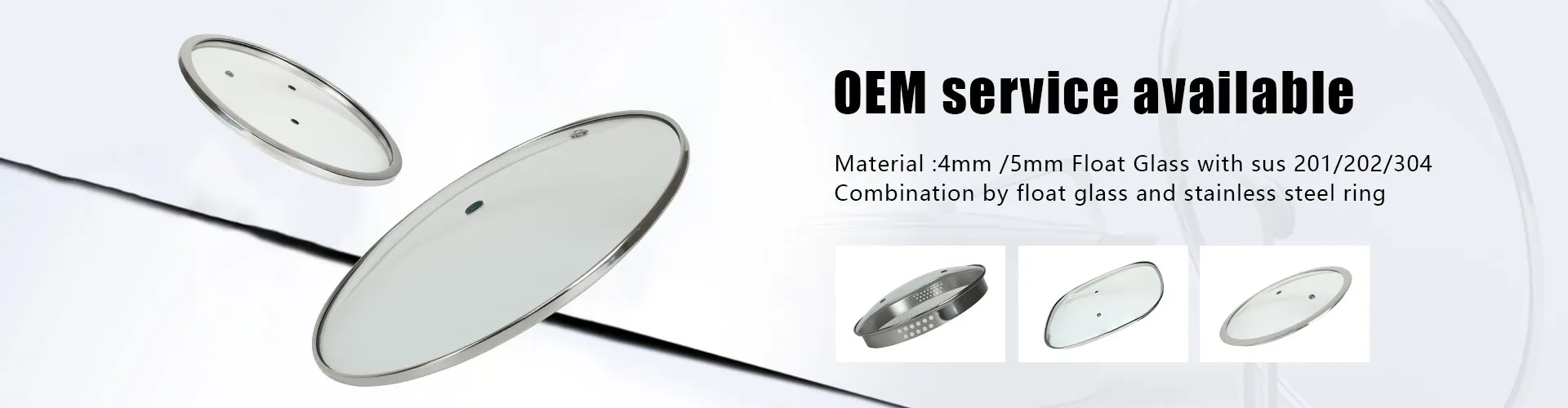
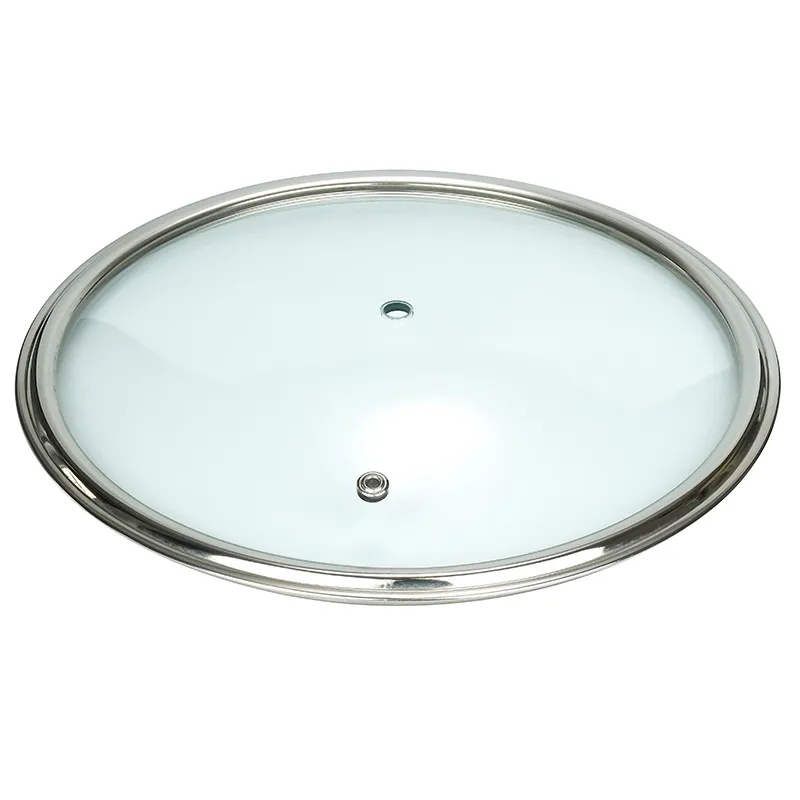
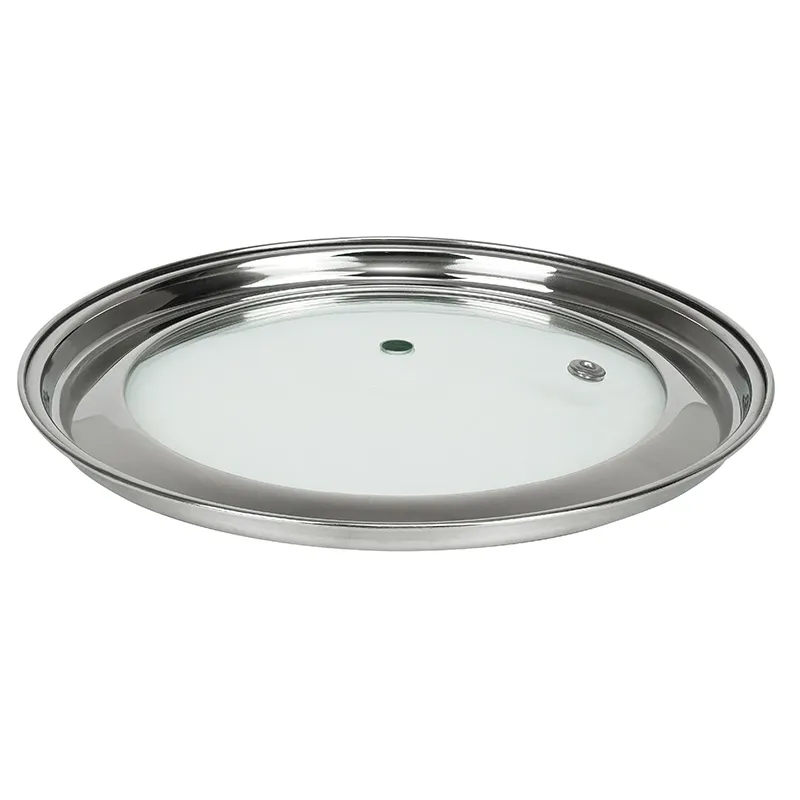
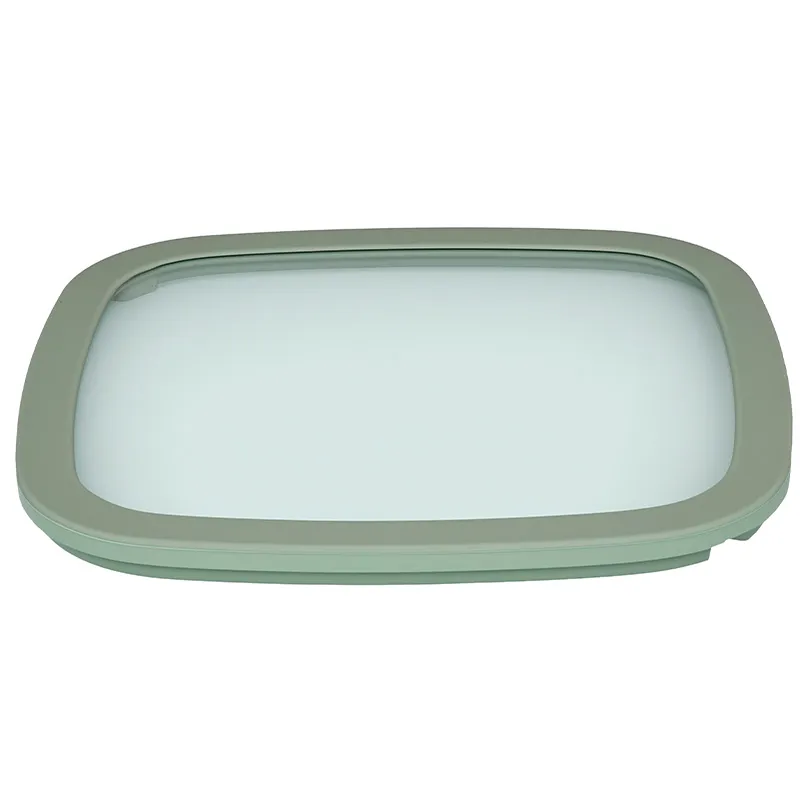
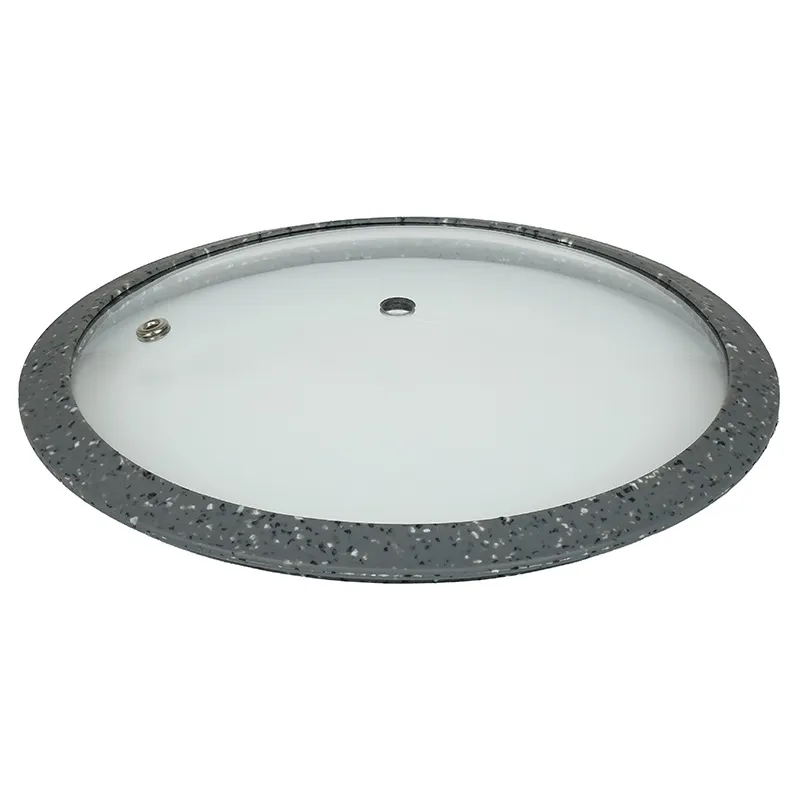
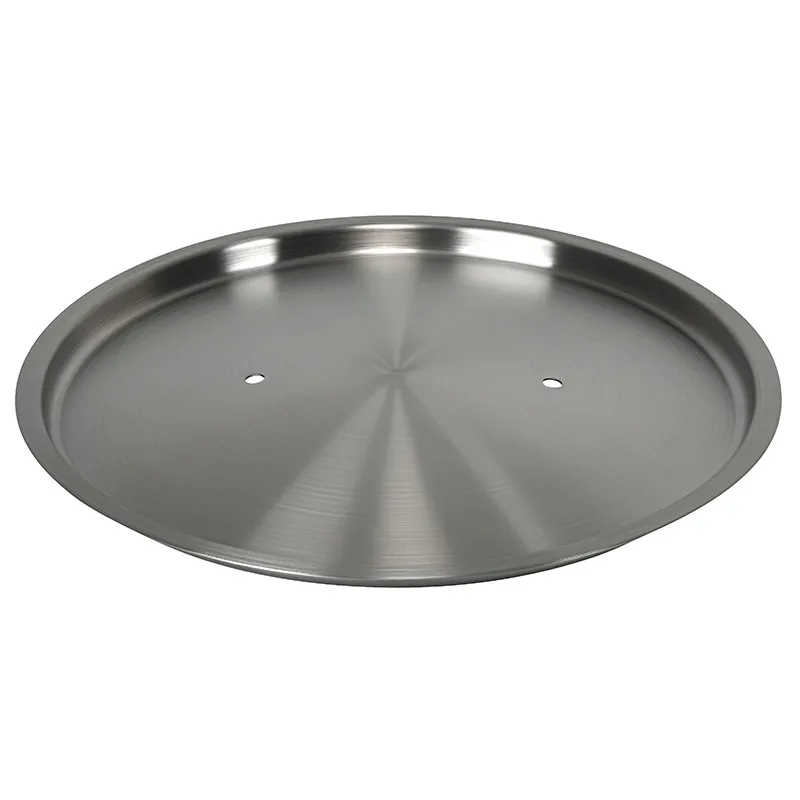
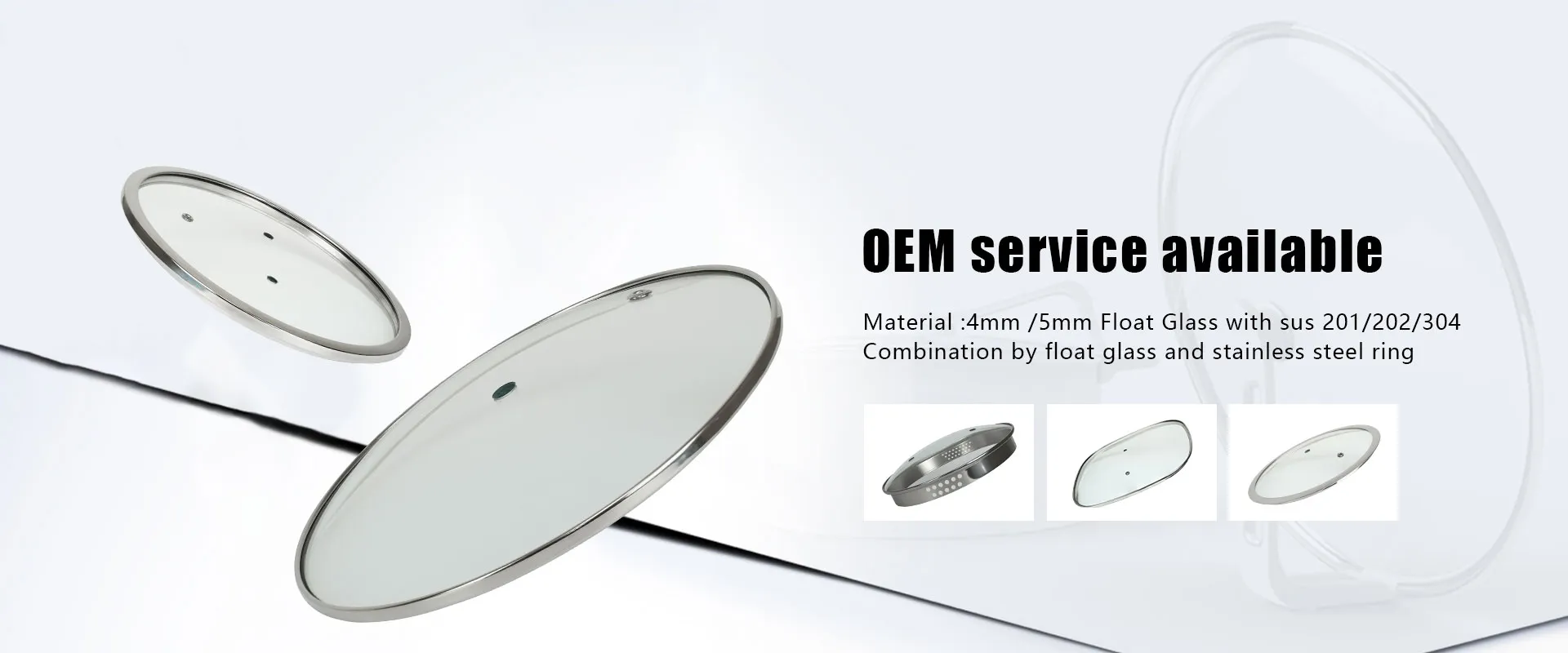
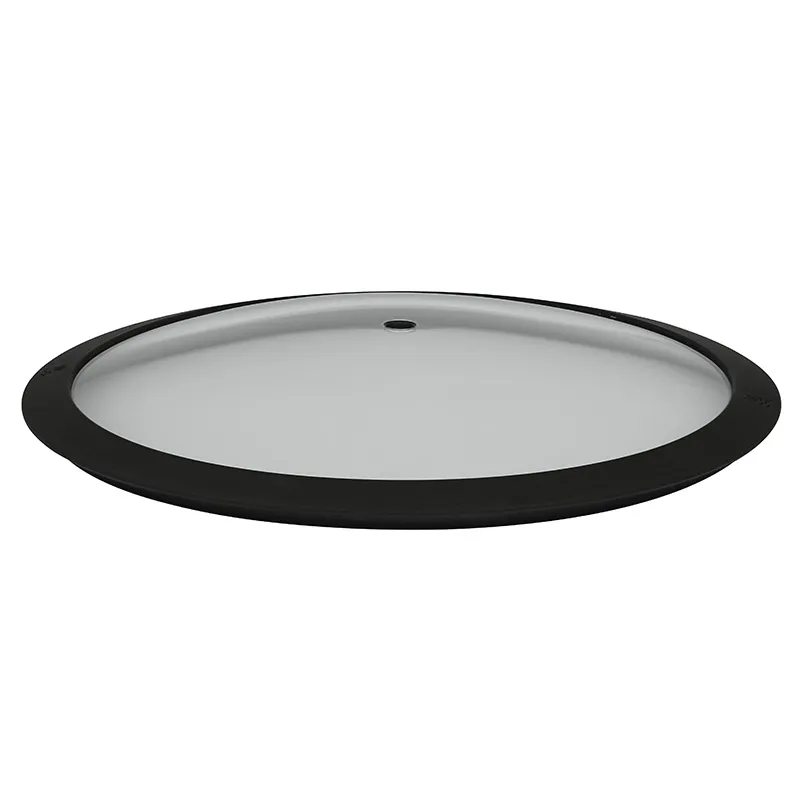
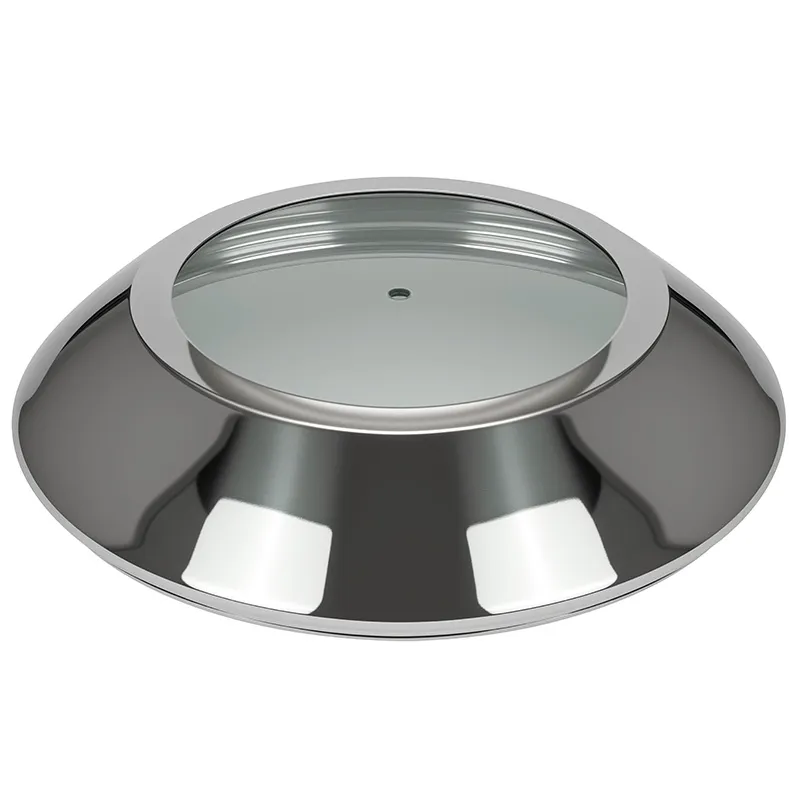
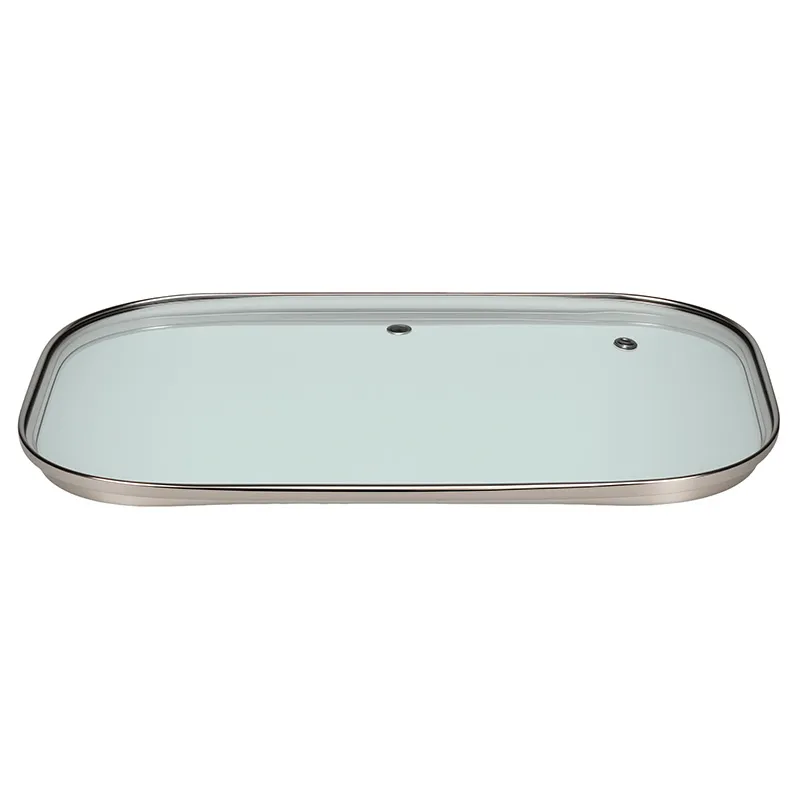
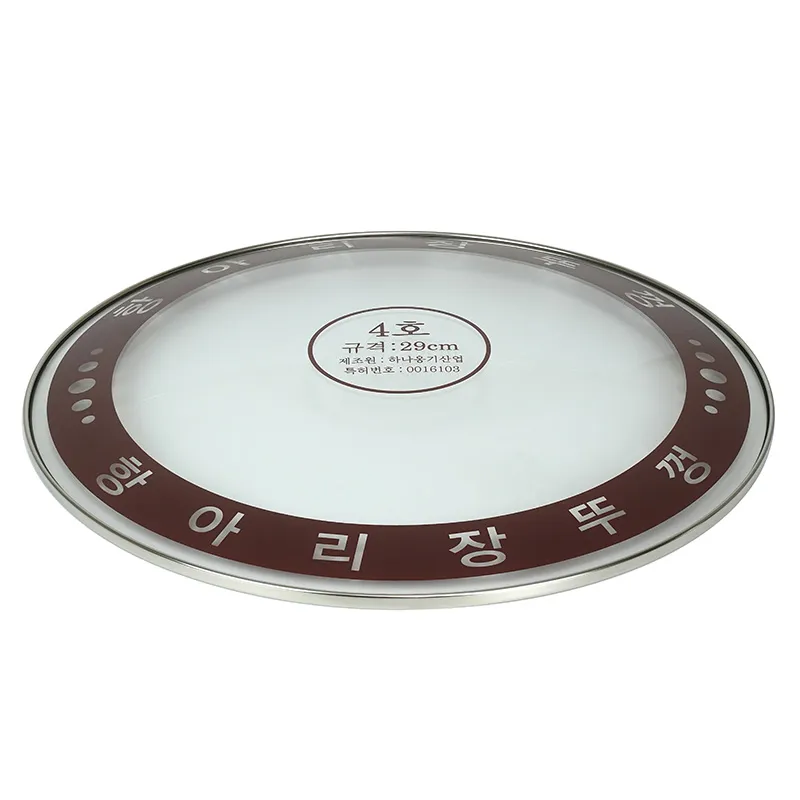
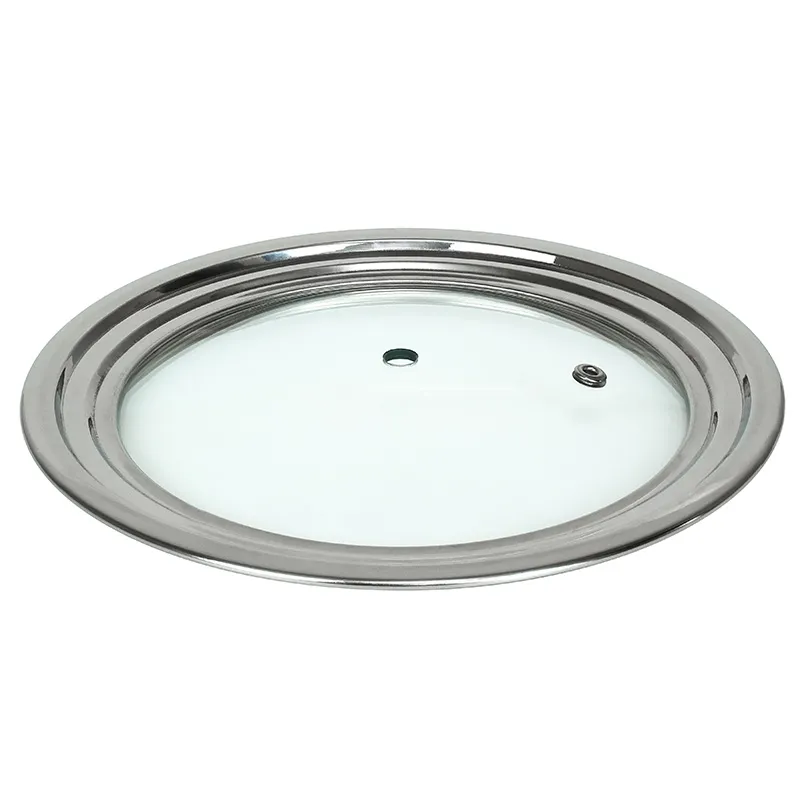
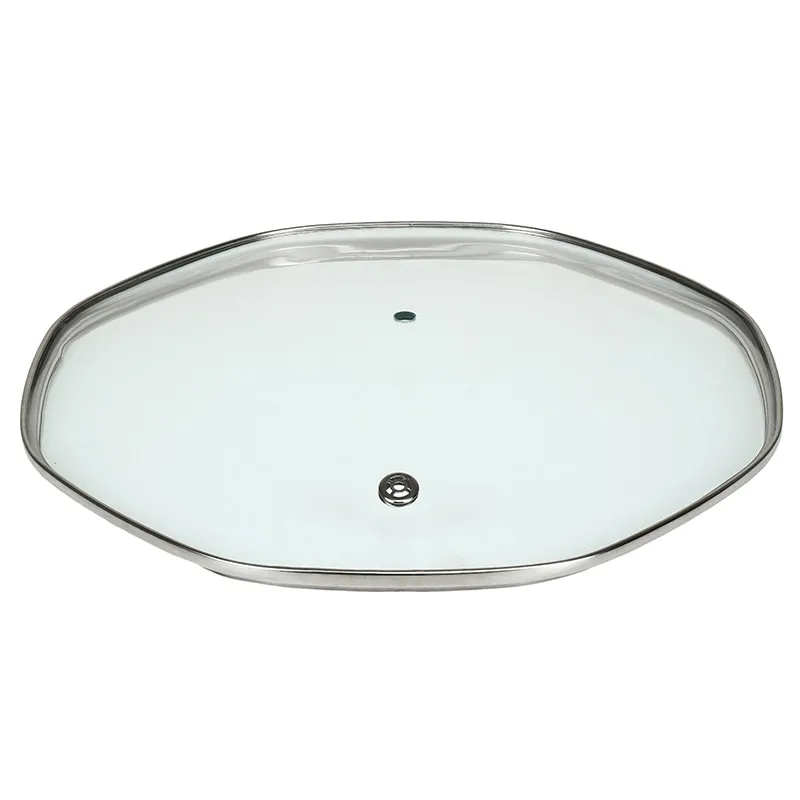
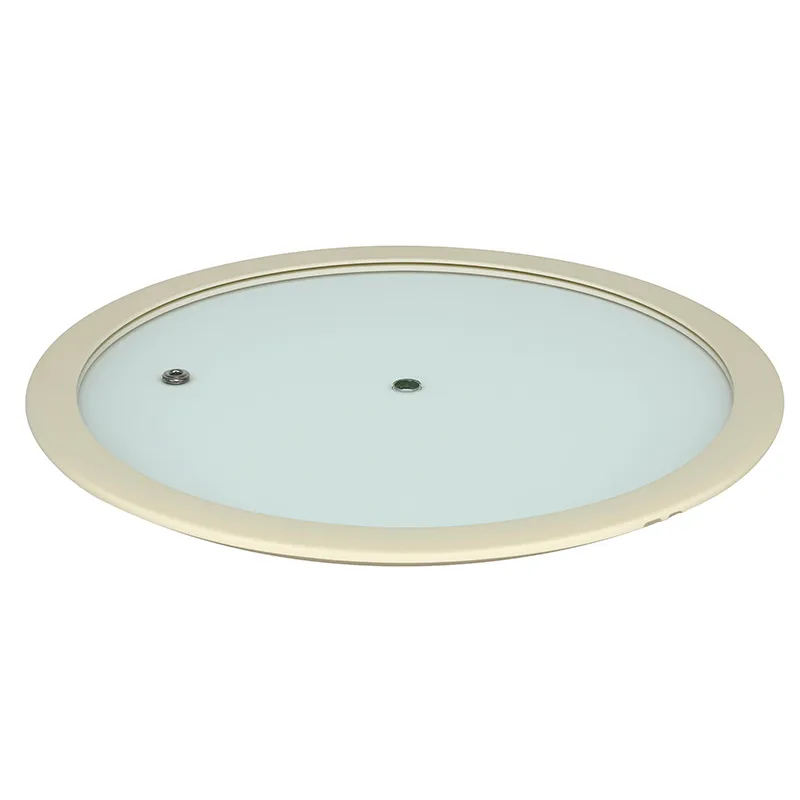
cookware tempered glass lid
When you hear 'cookware tempered glass lid,' most people just think 'see-through cover.' That's the surface-level take. The reality is more nuanced, and frankly, where a lot of brands and even some manufacturers get tripped up. It's not just about transparency; it's about managing heat, steam, and pressure in a way that doesn't compromise safety or function. I've seen too many lids that look the part but fail under real kitchen stress—warping on a high simmer, developing micro-fissures from thermal shock, or having handles that get uncomfortably hot. The assumption that any tempered glass will do is the first, and biggest, mistake.
The Core Misconception: Tempering Isn't a Magic Bullet
Tempering, the heat-treatment process, gives the glass its strength and safety characteristic—it shatters into small, granular pieces instead of sharp shards. That's non-negotiable. But the grade and composition of the glass before tempering matter immensely. We're not talking about window glass here. For a lid, you need a borosilicate or high-quality soda-lime base that can handle rapid temperature changes. I recall a batch from years ago where the supplier cut corners on the raw material. The lids passed the basic impact test, but failed miserably in a simple 'cold lid on hot pot' scenario. A chorus of pings and cracks. That was a costly lesson in supply chain vetting.
Then there's the fit. A tempered glass lid must sit flush, but not airtight (unless designed for pressure cooking). The curvature is critical. It's a common pain point: a lid that rocks on the pot rim. It seems minor, but it affects steam venting and heat distribution. I've measured rim gaps on 'premium' sets that were inconsistent by over two millimeters. That doesn't happen by accident; it's a molding or pressing tolerance issue in the glass production phase.
This is where companies with a dedicated focus stand out. Take EUR-ASIA COOKWARE CO.,LTD. Their operation, detailed on their site at glass-lid.com, is a case study in specialization. They don't make pots; they make lids—specifically, tempered glass lid products. An annual output of over 15 million pieces isn't just a volume stat; it suggests a production line fine-tuned for this single component. Their export footprint across Europe and Asia also hints at adherence to diverse regional safety standards, which is a whole other layer of complexity.
The Devil in the Details: Handles, Rims, and Steam Vents
Let's get into the parts everyone touches but few design correctly: the handle and the rim. The handle, often plastic or phenolic, must be riveted or bonded to withstand oven temperatures (if applicable) and repeated dishwasher cycles. I've seen adhesive failures where the handle just spins after a few months. A proper mechanical fix is better. The rim usually has a stainless steel or silicone band. Silicone seals better for braising, but it degrades faster under high heat. Steel is durable but can chip the glass edge if the fit is too tight. It's a trade-off.
The steam vent hole is another tiny feature with huge implications. Its placement and size control boil-over. Too small, and pressure builds, causing the lid to rattle and liquid to seep out. Too large, and you lose too much moisture. The best lids I've used have a subtly raised vent or an off-center placement that creates a more controlled condensation drip-back. It's a small design insight that comes from watching food cook, not just running lab tests.
And about cleaning. The smoked or tinted glass some brands use for a 'premium look' is a nightmare. It hides stains initially, but over time, oil films and mineral deposits become very visible, and the tint makes it hard to see if it's truly clean. Clear, high-clarity tempered glass is more honest and user-friendly in the long run.
Real-World Stress Points and Failure Modes
Lab tests are one thing; a home cook's kitchen is another. One consistent failure point is direct flame contact. On a gas stove, if the flame licks up the side of the pot and touches the glass lid's edge, the localized superheating can cause a thermal break. No amount of tempering can fully compensate for that abuse, but a thicker glass edge and a well-designed overhanging rim can mitigate it. I've advised brands to include clearer warnings about this in their manuals.
Another is impact from utensils. Dropping a metal spoon on the lid from a foot up? Usually fine. A corner-on strike from a heavy cast iron utensil? That's the test. The toughness is impressive when it holds, but the granular shatter pattern, while safe, means the lid is instantly a total loss. It's a definitive, non-repairable failure. This is why some commercial kitchens still prefer stainless steel lids—they dent, but they don't catastrophically fail.
I remember evaluating a sample from a new vendor that had a beautiful, low-profile handle. It looked sleek. But in a wet hand, it was slippery. After a steam burn incident during testing (thankfully minor), we mandated a deeper grip contour or a textured surface on all future designs. Ergonomics can't be an afterthought.
The Manufacturing Lens and Material Sourcing
Visiting a factory like EUR-ASIA's theoretical production base—which their site notes is in a high-tech development zone in Shandong—drives home the scale. Covering 20,000㎡ and turning out millions of tempered glass lid units yearly isn't a side business. It requires automated cutting, precision tempering ovens, and rigorous quality control stages. The fact that over 90% of their output is exported speaks volumes. The German market, for instance, has brutal safety and material purity standards. Meeting those is a benchmark of quality.
Sourcing the raw glass is its own challenge. Consistency is key. A variance in the silica sand or boron content can alter the thermal expansion coefficient. For a company like EUR-ASIA COOKWARE CO.,LTD., which specializes in household glass products, establishing long-term, certified raw material supply chains is likely a core part of their operational stability. It's not glamorous, but it's what prevents the failure batch I mentioned earlier.
The final finishing—grinding edges, applying bands, attaching handles—is often where cost gets cut. Automated grinding ensures smooth, uniform edges. Hand-applied rims can introduce inconsistencies. High volume production, when done right, actually enforces consistency because the machinery is calibrated for a single, repeated task.
Concluding Unscientific Postscript
So, what makes a good cookware tempered glass lid? It's the sum of unsexy details. The right base glass, tempered correctly. A precise fit for its intended pot line. A handle that stays cool and secure. A vent that manages steam intelligently. And a design that prioritizes function over fleeting aesthetics.
When you look at a product from a specialist manufacturer, you're not just buying a piece of glass. You're buying the accumulated trial and error, the solved problems of thermal shock and fit, and the infrastructure to produce it reliably at scale. It's the difference between a component and an engineered part.
Next time you pick one up, look at the rim. Feel the handle. Check the clarity. Those details tell the real story, far more than the marketing copy on the box. The goal is for the lid to disappear in use—to be a reliable, silent partner in cooking. And that's surprisingly hard to achieve.
Related Products
Related Products