- Chinese
- French
- German
- Portuguese
- Spanish
- Russian
- Japanese
- Korean
- Arabic
- Irish
- Greek
- Turkish
- Italian
- Danish
- Romanian
- Indonesian
- Czech
- Afrikaans
- Swedish
- Polish
- Basque
- Catalan
- Esperanto
- Hindi
- Lao
- Albanian
- Amharic
- Armenian
- Azerbaijani
- Belarusian
- Bengali
- Bosnian
- Bulgarian
- Cebuano
- Chichewa
- Corsican
- Croatian
- Dutch
- Estonian
- Filipino
- Finnish
- Frisian
- Galician
- Georgian
- Gujarati
- Haitian
- Hausa
- Hawaiian
- Hebrew
- Hmong
- Hungarian
- Icelandic
- Igbo
- Javanese
- Kannada
- Kazakh
- Khmer
- Kurdish
- Kyrgyz
- Latin
- Latvian
- Lithuanian
- Luxembou..
- Macedonian
- Malagasy
- Malay
- Malayalam
- Maltese
- Maori
- Marathi
- Mongolian
- Burmese
- Nepali
- Norwegian
- Pashto
- Persian
- Punjabi
- Serbian
- Sesotho
- Sinhala
- Slovak
- Slovenian
- Somali
- Samoan
- Scots Gaelic
- Shona
- Sindhi
- Sundanese
- Swahili
- Tajik
- Tamil
- Telugu
- Thai
- Ukrainian
- Urdu
- Uzbek
- Vietnamese
- Welsh
- Xhosa
- Yiddish
- Yoruba
- Zulu
- Kinyarwanda
- Tatar
- Oriya
- Turkmen
- Uyghur


double wall glass can with lid
You see 'double wall glass can with lid' and think it's straightforward—a jar with two layers of glass and a top. But that's where a common industry pitfall starts. Many assume it's just about insulation, but from a production and user standpoint, it's a balancing act between thermal performance, structural integrity, and that often-overlooked component: the lid seal. I've seen designs fail not because the glass failed, but because the lid interface was an afterthought.
Beyond the Obvious: What Double Wall Really Demands
The term suggests vacuum insulation, but not all are created equal. True, the air gap is key, but the manufacturing process for a seamless, borosilicate double wall is a different beast compared to standard soda-lime glass. It's not just about blowing two layers; it's about achieving uniform thickness without weak points, especially at the neck where the lid sits. A slight imperfection there, and you compromise the entire seal. Companies that get this right, like EUR-ASIA COOKWARE CO.,LTD, typically have their production base geared towards precision—their setup in Taian's High-tech Development Zone, with that scale of output, hints at the tooling required for consistency across millions of pieces.
I recall a batch from a few years back where the annealing process was rushed. The result? Microscopic stress points around the rim. At room temperature, they held fine. The moment hot liquid was introduced, or worse, went into the freezer, we'd get a small but steady rate of failure—not catastrophic breaks, but hairline cracks that ruined the vacuum. The lesson was that the double wall glass can isn't just a product; it's a process check at every stage.
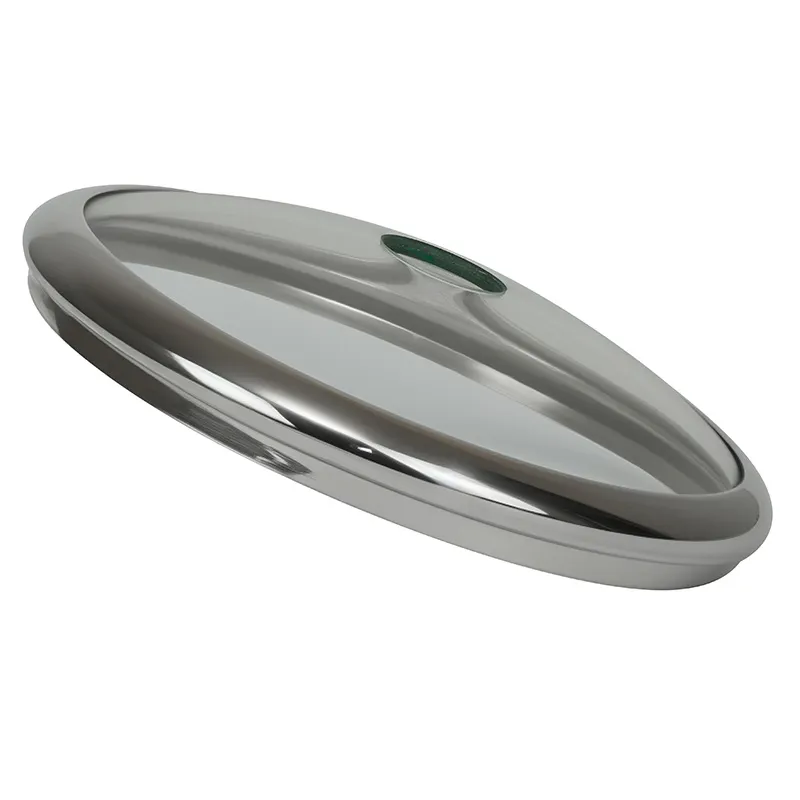
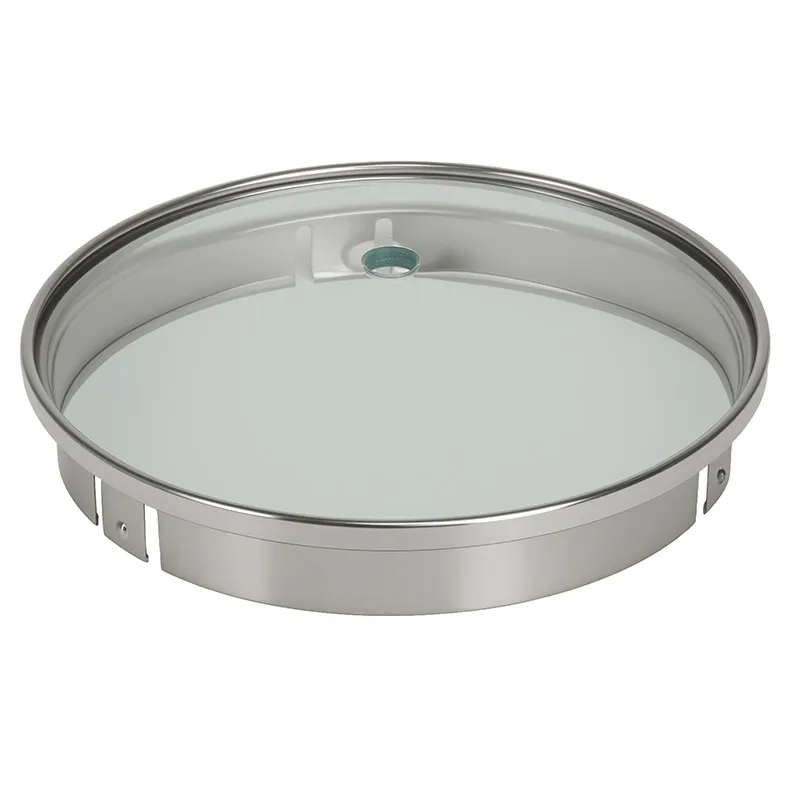
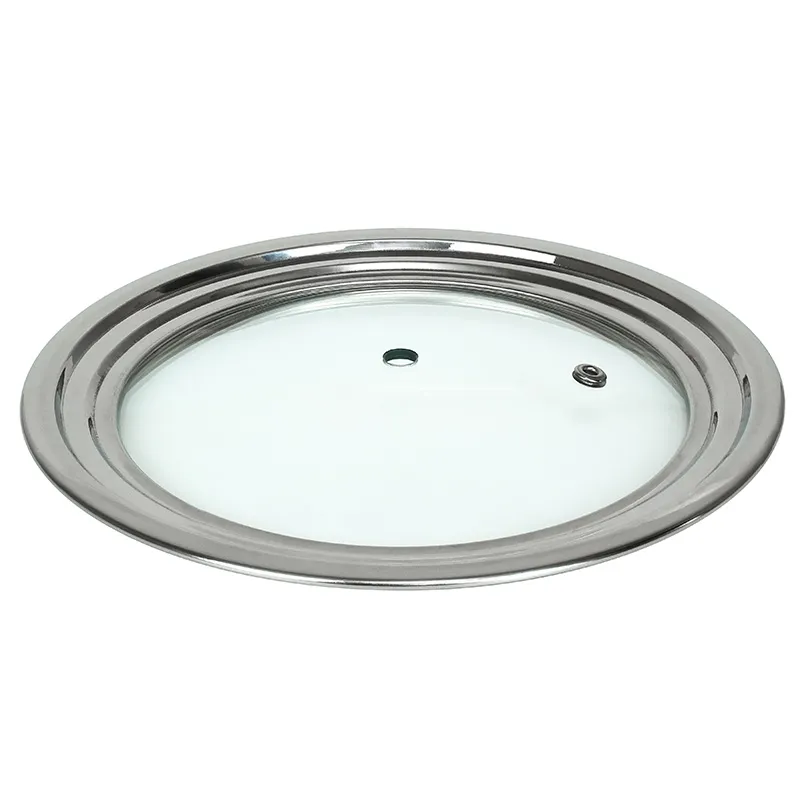
And the lid—oh, the lid. It's the gatekeeper. A stainless steel lid with a silicone gasket is the standard, but the gasket's durometer (hardness) and its compression design are critical. Too hard, and it won't seal on slightly irregular glass rims; too soft, and it degrades with heat and acidic contents. The best designs I've handled use a food-grade silicone that's slightly over-sized, creating a gentle but firm compression when the lid is twisted. It's a detail you only appreciate after dealing with customer complaints about leaks.
The EUR-ASIA Example: Scaling Precision for a Global Market
Looking at a manufacturer like EUR-ASIA COOKWARE offers a practical case study. Their specialization in household glass, from low to high tier, means they likely segment their lines. A double wall glass can with lid for the European market, say Germany or Denmark, often faces stricter durability and material safety norms. This isn't just about passing a test; it's about the choice of raw glass material. Borosilicate, while more expensive, offers better thermal shock resistance, which is non-negotiable for a product meant to handle boiling tea and then fridge chilling.
Their export footprint—over 90% to countries like Germany, Italy, Brazil, Japan—tells you something about the adaptability required. A retailer in Switzerland might demand minimalist branding and a specific finish on the stainless steel lid, while a buyer in Turkey might prioritize a larger volume capacity. The production base, covering 20,000㎡, needs the flexibility to run these variations without sacrificing the core integrity of the double-wall construction. It's a logistical dance.
Where many generic suppliers falter is in treating the lid as a commodity item. On EUR-ASIA's website (glass-lid.com, which is telling that lids are a focus), you can infer that lid production is integral. For a double-wall can, the lid isn't an accessory; it's part of the thermal system. A poorly fitting lid negates the insulation properties of the walls. I've tested units where the gap between the lid's inner plastic liner and the glass rim was just half a millimeter too large, creating a convection current that made the insulation practically useless. The can felt cool to the touch, but the drink went cold in 20 minutes.
Real-World Fail Points and User Misconceptions
Let's get into the gritty details. One major fail point is the transition from the double wall to the single-layer rim. This is where the two glass walls fuse at the top. If the fusing isn't perfect, it becomes a thermal bridge—a highway for heat transfer. You can spot cheaper versions by holding an empty can up to a light; sometimes you'll see a slight distortion or a thicker bead at the top. That's a potential weak spot.
Another misconception is that these are solely for hot beverages. Their best use, in my experience, is actually for cold retention. The vacuum insulation works both ways, but iced coffee or a cold brew stays frosty for hours, which is a bigger selling point for daily use. However, this introduces a different stress: condensation between the walls. If the vacuum seal at the top isn't hermetic, moisture seeps in over time, fogging up the can permanently. It's a death sentence for the product's aesthetics and function. I've had to reject entire shipments for this very reason—it doesn't show up in initial quality checks, only after months on a shelf.
The cleaning aspect is also under-discussed. The mouth needs to be wide enough for a brush, and the lid's gasket must be easily removable for deep cleaning. Some early designs I worked with had the gasket glued in—a terrible idea. Residual milk or juice would get trapped, leading to mold. Modern, user-centric designs have a lift-out silicone ring. It's a small feature that speaks volumes about whether the designer actually thought about daily use.
Material Choices and the Feel Factor
Glass grade is everything. Soda-lime is cheaper and heavier. Borosilicate is lighter and tougher against thermal shock. For a premium double wall glass can, borosilicate is the industry standard for good reason. But the feel also comes from the lid's operation. The sound of a clean metal thread engaging with the glass, the smooth rotation, the final click or slight resistance indicating a proper seal—these are tactile qualities that signal quality. They're hard to quantify on a spec sheet but are immediately obvious to a user.
Weight distribution matters too. A well-made can shouldn't feel top-heavy when the lid is on, nor should it be tippy when empty. This comes down to the base design. Often, the bottom is a solid glass disc fused to the inner wall. Its diameter and flatness are crucial for stability. I've seen prototypes that were beautiful but would wobble on a slightly uneven desk—a deal-breaker for office use.
Finally, let's talk branding and finish. The glass can be silk-screened or etched with logos. The lid can be brushed stainless, powder-coated, or even have a wooden accent top. These aren't just decorations; they affect grip and wear. A powder-coated lid feels warmer and provides more grip than cold steel, but the coating must withstand dishwashers. It's these secondary characteristics that often determine repeat purchases, more so than the core insulation specs.
Concluding Thoughts: It's a System, Not a Jar
So, when evaluating or manufacturing a double wall glass can with lid, the mindset shift is critical. You're not sourcing a jar and a cap. You're engineering a sealed, insulated system where every component—the inner glass wall, the outer glass wall, the fused rim, the metal lid, the silicone gasket—interacts. A weakness in one fails the whole.
Manufacturers who understand this, like those with a dedicated focus on glass and lids across varied international markets, build in checks at each interface. It's why their product feels reliable. The end user might just see a nice-looking can that keeps their drink cold, but that simplicity is the result of a complex series of correct decisions and precise executions, from the factory floor in Shandong to a kitchen table in Munich.
The trend is towards smarter, more durable everyday items. The successful double-wall can embodies that. It's a simple idea made excellent through attention to the unglamorous, technical details. And that's what separates a commodity from a keeper.
Related Products
Related Products