- Chinese
- French
- German
- Portuguese
- Spanish
- Russian
- Japanese
- Korean
- Arabic
- Irish
- Greek
- Turkish
- Italian
- Danish
- Romanian
- Indonesian
- Czech
- Afrikaans
- Swedish
- Polish
- Basque
- Catalan
- Esperanto
- Hindi
- Lao
- Albanian
- Amharic
- Armenian
- Azerbaijani
- Belarusian
- Bengali
- Bosnian
- Bulgarian
- Cebuano
- Chichewa
- Corsican
- Croatian
- Dutch
- Estonian
- Filipino
- Finnish
- Frisian
- Galician
- Georgian
- Gujarati
- Haitian
- Hausa
- Hawaiian
- Hebrew
- Hmong
- Hungarian
- Icelandic
- Igbo
- Javanese
- Kannada
- Kazakh
- Khmer
- Kurdish
- Kyrgyz
- Latin
- Latvian
- Lithuanian
- Luxembou..
- Macedonian
- Malagasy
- Malay
- Malayalam
- Maltese
- Maori
- Marathi
- Mongolian
- Burmese
- Nepali
- Norwegian
- Pashto
- Persian
- Punjabi
- Serbian
- Sesotho
- Sinhala
- Slovak
- Slovenian
- Somali
- Samoan
- Scots Gaelic
- Shona
- Sindhi
- Sundanese
- Swahili
- Tajik
- Tamil
- Telugu
- Thai
- Ukrainian
- Urdu
- Uzbek
- Vietnamese
- Welsh
- Xhosa
- Yiddish
- Yoruba
- Zulu
- Kinyarwanda
- Tatar
- Oriya
- Turkmen
- Uyghur


drinking glass with lid
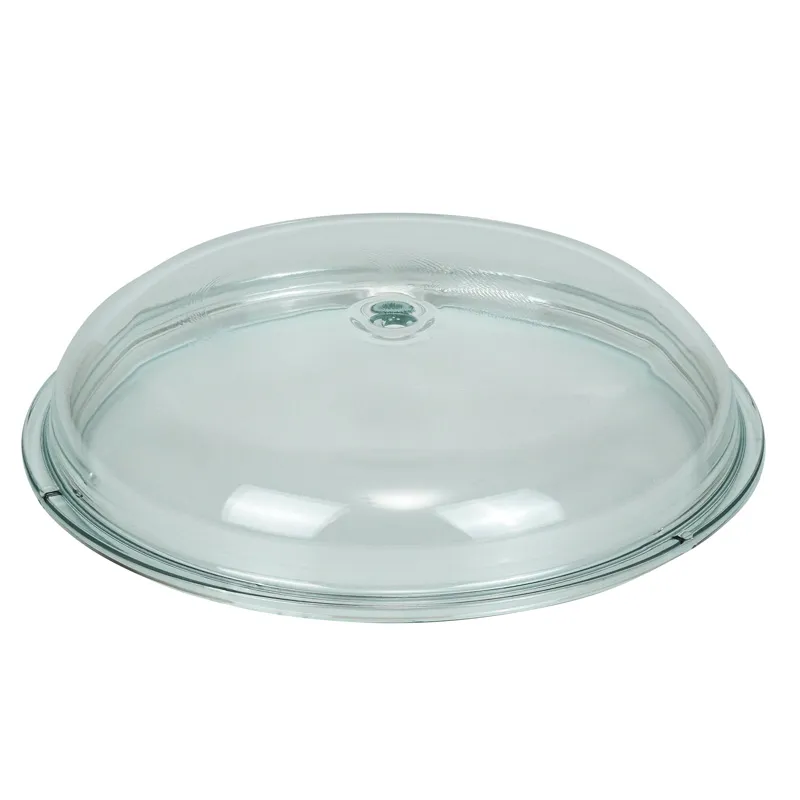
Most people think a drinking glass with a lid is a simple product. You get a glass, you get a lid, done. But that's where the industry's first big misconception lies. The real challenge isn't in making either piece; it's in engineering the precise, reliable, and silent marriage between them. A gap of even half a millimeter can mean leaks, a warped seal, or a lid that pops off with the slightest pressure change. I've seen countless prototypes fail on this exact point, where the focus was on the aesthetic of the glass and the lid was treated as an afterthought. It's a systems problem, not a components problem.
Material Mismatch and Thermal Dynamics
Let's talk materials. Borosilicate glass is the gold standard for heat resistance, but pairing it with a generic plastic or silicone lid is a recipe for failure in real-world use. The coefficients of thermal expansion are wildly different. You pour hot tea into the glass, the glass expands minimally. The lid, if it's a cheap polymer, expands more. Suddenly, what was a snug fit at room temperature is either jammed shut or dangerously loose. I recall a batch from a supplier years ago where the lids would literally deform after a few dishwasher cycles, creating a permanent gap. The failure wasn't in the glass, which was fine, but in specifying a lid material that couldn't handle the thermal and chemical stress of repeated washing and heating.
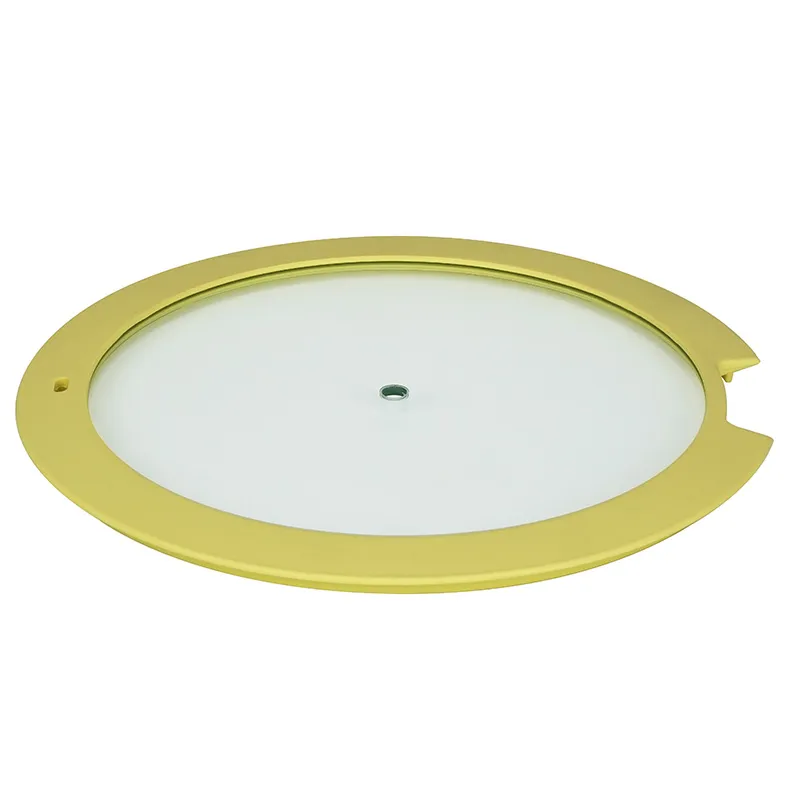
This is where companies with integrated production shine. They control both variables. Take EUR-ASIA COOKWARE CO.,LTD., for instance. Their specialization in tempered glass for lids means they're likely tempering the glass body and the lid (if it has a glass component) with the same thermal processes. This isn't just about strength; it's about creating predictable material behavior. When both elements are tempered, their expansion under heat is more synchronized. It’s a subtle point, but it’s the kind of detail that separates a product that lasts a season from one that lasts years. You can see their approach on their site at glass-lid.com – the focus is on the lid as a critical, engineered component, not a trinket.
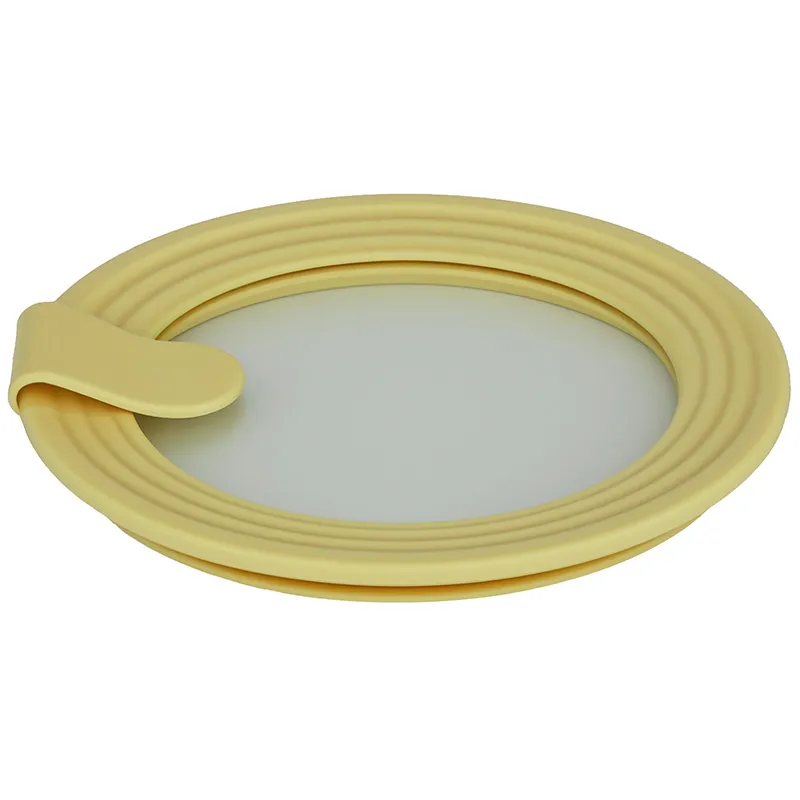
The seal itself is another world. Is it a direct glass-to-plastic contact? Or is there a silicone gasket? If it's the latter, the durometer (hardness) of that silicone is critical. Too soft, and it feels mushy, doesn't seal reliably, and can retain odors. Too hard, and it requires excessive force to close, risking chipping the glass rim. Getting this right involves trial and error with real users—feeling the click, testing the leak resistance with the glass on its side overnight. It's a tactile, iterative process no simulation can fully replicate.
The Drinkability Factor Often Overlooked
Here's a practical headache: the drinking aperture. A lid with a tiny sip hole might prevent spills, but it's terrible for actual drinking—you get a thin stream of liquid, or worse, it creates a vacuum lock. A wide opening defeats the spill-proof purpose. The solution isn't a single hole, but often a designed spout or a flip-top mechanism that opens wide. But every moving part is a new failure point. Hinges collect grime, snap mechanisms wear out. I've advised against overly complex flip-tops for children's drinking glasses with lids simply because the hinge will inevitably break after being chewed on and dropped.
Then there's cleaning. A beautifully sculpted lid with deep undercuts and narrow channels is a nightmare. Milk or smoothie residue gets trapped, and no brush can reach it. A good design prioritizes cleanability. This means smooth, sweeping internal curves, minimal seams, and if there's a silicone seal, it should be easily removable by the user. I remember evaluating a sample where the seal was permanently bonded. After a week of coffee use, a stale smell developed that was impossible to eradicate. That's a product destined for the landfill, not repeat purchases.
Weight and balance matter too. A heavy, ornate stainless steel lid on a lightweight glass makes the whole thing top-heavy and prone to tipping. The center of gravity should be low. Often, the best-performing lids for daily use are simple, lightweight polypropylene or Tritan with a minimal silicone gasket. They don't look as premium in a marketing photo, but they function flawlessly. This is a classic case of marketing desires clashing with engineering reality.
Export Realities and Market-Specific Demands
Working with a manufacturer like EUR-ASIA, which exports over 90% of its output to markets like Germany, Japan, and Brazil, you learn that a drinking glass with lid is not a universal product. European buyers, especially in Germany, have incredibly high standards for material safety and chemical migration. They'll demand full test reports for plastics in contact with food, often beyond FDA standards. A lid that passes in one market might be rejected outright in another.
The company's footprint, with its 15,000㎡ facility and annual output of 15 million pieces, indicates scale. But scale here is useful for one thing: enabling customization. From their base in Shandong's High-tech Development Zone, they can run smaller batches for specific clients—different colors for a Scandinavian brand, a specific lid diameter for a Japanese retailer's existing glass line, or a logo molded into the silicone seal. This flexibility is key. The low- medium- high level range mentioned in their intro isn't just about price; it's about having the production capability to serve a boutique homeware brand and a large supermarket chain with different product tiers from the same technical knowledge base.
Logistics play a part, too. A lid that fits perfectly on the production line can warp during a long sea freight journey in a hot container. I've had to specify different packaging—using internal supports or climate-controlled containers—for shipments to the Middle East versus Northern Europe, all to ensure the lid still fits when it arrives. It's these unglamorous, behind-the-scenes details that determine if a product succeeds at the point of use.
Case in Point: The Failed Universal Lid
Early in my work, there was a push to create a universal silicone lid that could stretch to fit any standard glass rim diameter from 80mm to 100mm. The concept was brilliant for inventory reduction. In practice, it was a disaster. On an 80mm rim, the silicone was over-stretched, creating excessive tension that made it difficult to remove and deformed the seal over time. On a 100mm rim, it was too loose, sagging and leaking. We learned the hard way that a one-size-fits-all approach compromises performance on every size. Precision matters. A lid must be engineered for a specific glass, with a tolerance of maybe +/- 0.3mm on the rim diameter. This failed experiment cemented my view: the glass and its lid should be designed and tested as a single unit.
This is why vertical integration in a factory matters. When the same team is tempering the glass, molding the plastic or silicone components, and performing the final assembly and leak testing, they control the entire tolerance stack-up. A company focused on glass lid production, as EUR-ASIA's name and domain suggest, is building its processes around this core competency. It's not just another item in a catalog; it's the focus.
The lesson? Avoid universal solutions for critical interfaces. The market might think it wants flexibility, but what it really needs is reliability. A perfect seal on one specific glass is infinitely more valuable than a mediocre seal on ten different ones.
Where the Real Innovation Lies
So, where's the interesting work now? It's not in making a lid that simply closes. It's in the secondary functions. Can the lid have an integrated strainer for loose-leaf tea? Can it include a secure compartment for vitamins or supplements that can be released into the drink with a twist? These are the value-adds that move a product from a commodity to a specialized tool. But each addition must be judged against the core mandate: does it compromise the primary seal or cleanability?
Another frontier is sustainability. Can the lid be made from a single, easily recyclable polymer, or better yet, a biodegradable material? This is a huge ask, as any material must still meet food-contact, thermal, and durability standards. It's a tough puzzle, but the manufacturers who are starting to crack it, often in response to European market pressure, are the ones leading the next wave.
In the end, a drinking glass with a lid is a deceptively complex object. Its success hinges on a deep understanding of materials science, ergonomics, manufacturing tolerances, and real-world user behavior. It’s a humble product, but getting it right is a quiet testament to proper industrial design and production discipline. The next time you use one that doesn't leak, closes with a satisfying snap, and is easy to clean, know that a lot of considered, practical thought—and probably a few failed prototypes—went into making it seem that simple.
Related Products
Related Products