- English
- Chinese
- French
- German
- Portuguese
- Spanish
- Russian
- Japanese
- Korean
- Arabic
- Irish
- Greek
- Turkish
- Italian
- Danish
- Romanian
- Indonesian
- Czech
- Afrikaans
- Swedish
- Polish
- Catalan
- Esperanto
- Hindi
- Lao
- Albanian
- Amharic
- Armenian
- Azerbaijani
- Belarusian
- Bengali
- Bosnian
- Bulgarian
- Cebuano
- Chichewa
- Corsican
- Croatian
- Dutch
- Estonian
- Filipino
- Finnish
- Frisian
- Galician
- Georgian
- Gujarati
- Haitian
- Hausa
- Hawaiian
- Hebrew
- Hmong
- Hungarian
- Icelandic
- Igbo
- Javanese
- Kannada
- Kazakh
- Khmer
- Kurdish
- Kyrgyz
- Latin
- Latvian
- Lithuanian
- Luxembou..
- Macedonian
- Malagasy
- Malay
- Malayalam
- Maltese
- Maori
- Marathi
- Mongolian
- Burmese
- Nepali
- Norwegian
- Pashto
- Persian
- Punjabi
- Serbian
- Sesotho
- Sinhala
- Slovak
- Slovenian
- Somali
- Samoan
- Scots Gaelic
- Shona
- Sindhi
- Sundanese
- Swahili
- Tajik
- Tamil
- Telugu
- Thai
- Ukrainian
- Urdu
- Uzbek
- Vietnamese
- Welsh
- Xhosa
- Yiddish
- Yoruba
- Zulu
- Kinyarwanda
- Tatar
- Oriya
- Turkmen
- Uyghur

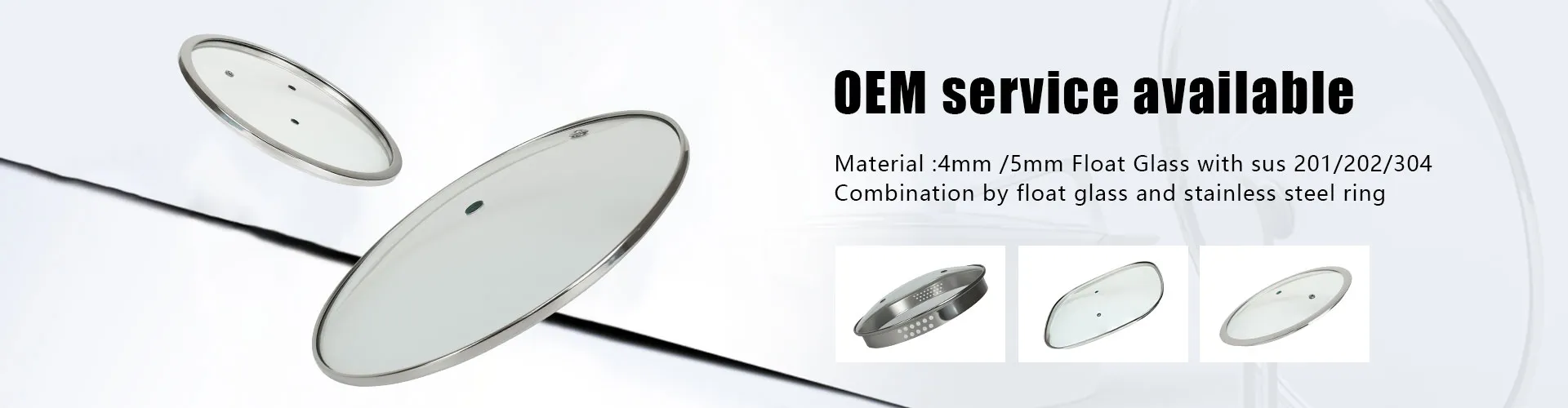
Glass Lid Handle Options for Cookware: What OEM Buyers Should Specify
2026-10-29
If you are sourcing a tempered glass lid with handle for your cookware OEM project, vague specifications will lead to loose fittings, cracked glass, hot-to-touch hardware, and costly rework after sampling. Unlike a glass lid with knob, long pull handles carry more weight and rely on double-hole mounting, which creates unique structural and engineering requirements. This guide walks OEM buyers, product engineers, and import purchasers through every specification you need to lock in before sending RFQs and approving samples.
1. Why Lid Handle Specifications Matter for OEM Cookware Projects
Lid pull handles are not just cosmetic add-ons. They bear the full weight of large tempered glass lid for cookware while resisting repeated heat cycles and dishwasher cleaning. Poorly defined pull handle specs create recurring product failures: stress cracks around mounting holes, loosened screws after thermal expansion, and scalding hot metal grips during cooking.
It is critical to draw a clear boundary between pull handles and knobs to avoid confusion with other product specifications:
- Long pull handles: Two mounting points, designed for heavy, large-diameter lids on stockpots, woks, and Dutch ovens. This article focuses exclusively on these double-hole pull handles.
- Knobs (single-point knobs): One central screw, suitable only for small, lightweight lids. We will not cover knob geometry, hole sizing or mounting hardware here.
Without a written pull handle specification sheet, factories will default to standard off-the-shelf hardware that may not match your lid’s glass thickness, hole layout, or market requirements.
2. Handle Design & Material Selection (Core Specs for OEM)
2.1 Handle Shape, Grip Space & Ergonomic Design
The first step is to lock down pull handle geometry to match your product’s use case. The most common OEM pull handle styles include C-shaped, U-shaped, T-shaped, and foldable pull handles. Each style serves a different storage and gripping purpose:
- U-shaped and C-shaped pull handles deliver a wide grip space for gloved or towel-wrapped hands on large stockpot lids.
- Foldable pull handles reduce vertical height, making the full cookware set stackable inside cabinets.
- T-shaped pull handles offer a balanced grip for medium-sized lids.
Two non-negotiable ergonomic requirements apply to all pull handle styles:
- Sufficient finger clearance between the handle bar and the lid surface to prevent pinching.
- Consistent height so the pull handle does not collide with adjacent pots during stacked storage.
For visual consistency, the surface finish (brushed, polished, matte) of the pull handle must align with the stainless steel rim of the tempered glass lid.
2.2 Handle Material Options & Their Trade-offs
Glass lid with stainless steel remains the most popular choice for export OEM orders, but you must define material grade and thermal structure to control cost and performance. Below are the key material options:
- Stainless steel (201 vs 304 grade)
- 201 stainless steel: Low-cost option for mid-range domestic lines; higher risk of surface tarnishing after repeated dishwasher cycles.
- 304 stainless steel: Preferred for EU, US and other export markets; better corrosion resistance against salt and acidic food residues.
- Hollow tube construction reduces heat transfer and keeps the grip cooler than solid bar stainless steel.
- Bakelite / silicone-covered metal pull handles
- Heat-resistant polymer outer layers stay cool during high-heat cooking.
- Silicone sleeves offer a softer grip but require tighter mold tolerances to avoid slipping off the metal core.
One critical design rule: Match the pull handle metal grade to the lid rim metal grade to prevent galvanic corrosion between dissimilar metals after prolonged steam exposure.
3. Mounting Structure & Glass Hole Technical Requirements
3.1 Two Main Installation Structures for Glass Lid Pull Handles
Double-hole pull handles use two primary mounting methods, each with distinct pros for mass production:
- Bolt-through assembly (screws + washers + silicone gaskets)This is the most widely used structure for OEM cookware lids. Screws pass fully through the glass from bottom to top, with layered washers and silicone gaskets placed between the metal base and the glass surface. The rubber gasket prevents rigid metal contact with tempered glass, which is the leading cause of cracking during tightening or thermal expansion.
- Riveted fixed assemblyRivets create a flush inner surface with no protruding screw shanks. This eliminates food-trapping gaps and simplifies deep cleaning. Riveted pull handles are permanent and cannot be easily replaced if damaged.
Key rule for both structures: Never mount metal hardware directly against bare glass without a flexible silicone or rubber buffer.
3.2 Glass Lid Drilling Specs for Double-Hole Pull Handles
Double-hole pull handle installation imposes strict drilling rules for tempered glass lids. Improper hole placement creates stress concentrations that crack the glass after tempering. Your engineering drawing must include these key hole parameters:
- Exact center-to-center distance between the two mounting holes (hole pitch).
- Hole diameter, with smooth chamfered edges to avoid micro-cracks at the hole rim.
- Minimum safe distance from each hole edge to the outer edge of the glass lid.
- No drilling on the curved peak of the domed glass lid, where glass tension is highest.
Single-hole knob drilling follows entirely different rules and will not be discussed here.
4. Size Matching: Pull Handle, Glass Lid & Cookware Compatibility
Even a perfectly engineered pull handle will fail if its dimensions do not align with the lid and the matching pot body. You need to specify three key dimensional match requirements:
- Pull handle hole pitch must correspond strictly to lid diameter: Larger lids require wider spacing between mounting holes to distribute weight evenly across the glass surface.
- Vertical pull handle height must fit stacked storage: The total height of the pull handle cannot exceed the stacked clearance of your cookware set, otherwise the pots will not nest properly.
- Symmetrical mounting for balanced weight: Dual pull handles (on large wok lids) must be installed at equal angles to prevent the lid from tilting and sliding off the pot rim.
Every pull handle dimension must be cross-referenced against the outer diameter, glass thickness and dome height of your tempered glass lid for cookware.
5. Cleanability & Long-Term Maintenance Requirements
OEM buyers must design pull handle assemblies to stand up to repeated handwashing and commercial dishwasher cycles. The core design principles are:
- Minimize narrow gaps and crevices where grease, food residue and mold can build up. One-piece hollow stainless steel pull handles are easier to sanitize than multi-piece welded constructions.
- All metal fasteners must resist rusting under prolonged exposure to hot water and detergent.
- Anti-scald structure must maintain shape after hundreds of heat cycles without warping or loosening.
Avoid complex split joints that trap food particles; simple continuous tube designs offer better long-term hygiene.
6. OEM Sample Approval & Drawing Specification Confirmation
Before approving pre-production samples, you must submit a fully dimensioned engineering drawing with all pull handle parameters clearly marked. Incomplete drawings lead to factory interpretation errors and inconsistent samples.
Your technical drawing must include these details:
- Overall pull handle length, width, grip height and hole center distance.
- Material grade (201 / 304 stainless steel or bakelite) and surface finish.
- Full hardware list: screw length, washer size, silicone gasket thickness.
- Glass hole dimensions, chamfer requirements and minimum edge clearance.
The sample inspection checklist for pull handles includes:
- No wobble or play when the pull handle is pulled firmly.
- No chipping or micro-cracking around the two glass mounting holes.
- All gaskets are fully installed and not omitted during assembly.
- The pull handle remains firmly secured after repeated hot-and-cold temperature cycling.
7. Mass Production Inspection & Consistency Control
Consistency control during mass production prevents uneven assembly and high defect rates. Build these three inspection steps into your QC protocol:
- Incoming hardware inspection: Check pull handle dimensions, material quality and surface blemishes before assembly. Reject out-of-tolerance hole pitch on raw pull handles.
- Assembly process control: Define the screw tightening torque to avoid two common defects: over-tightening which compresses and cracks the glass, and under-tightening which leads to loose pull handles after thermal expansion.
- Finished lid random sampling: Verify pull handle symmetry, zero wobble, and 100% gasket inclusion on every production batch.
The most frequent mass production defect is skipped silicone gaskets, which directly leads to glass breakage after heat exposure.
8. Information You Need to Prepare Before Sending RFQ & Sampling Request
Many OEM projects suffer from back-and-forth revisions because buyers submit incomplete RFQ information. Compile this full set of requirements before contacting manufacturers to cut down sampling lead times:
- Basic lid parameters: Glass lid diameter, glass thickness, domed height.
- Pull handle specifications: Style (C / U / T / foldable), material grade, surface finish, hole pitch.
- Mounting requirements: Bolt-through or riveted assembly, full hardware and gasket specifications.
- End-use conditions: Household or commercial use, dishwasher compatibility, target export market.
- Tolerance limits, first sample quantity and production assembly standards.
A complete RFQ package eliminates guesswork and helps the factory produce a compliant first sample on the first try.Contact our team to share your specification sheet for sampling.
9. Frequently Asked Questions for Glass Lid Pull Handle OEM Projects
Q1: Can I re-drill new holes on finished tempered glass to fit an existing pull handle?
A: No. Tempered glass cannot be re-drilled without shattering. All hole positions must be defined before the glass undergoes tempering treatment. You must match the pull handle hole pitch to the pre-drilled glass layout.
Q2: What is the main failure point for foldable lid pull handles in long-term use?
A: The hinge joint will develop play after repeated opening and closing. You should specify reinforced hinge pins and document acceptable hinge performance in your technical specification sheet.
Q3: How do I stop pull handles from loosening after repeated heating and cooling?
A: Use silicone spring washers under the metal nuts to absorb thermal expansion and keep consistent tension on the screw joint. Avoid rigid metal-on-metal fastening without flexible buffer parts.
Conclusion: Final Checklist for Glass Lid Pull Handle OEM Specifications
Before locking in your OEM order for a tempered glass lid with handle, run through this condensed checklist to eliminate most engineering and quality issues:
- Confirm pull handle shape, grip clearance and material grade (including stainless steel grade).
- Finalize double-hole mounting structure, hardware and silicone gasket configuration.
- Lock glass hole pitch, hole size and safe edge distance to prevent glass cracking.
- Match pull handle dimensions to lid diameter and stacked storage height.
- Optimize pull handle structure for easy cleaning and dishwasher durability.
- Submit fully dimensioned technical drawings and pass strict first-article sample inspection.
- Enforce mass-production QC rules for screw torque verification and gasket checks.
- Package a complete RFQ document with all dimensional and material requirements.
With these specifications documented clearly, you will avoid sample rework, reduce field warranty claims, and keep your cookware lid production running smoothly.