- English
- Chinese
- French
- German
- Portuguese
- Spanish
- Russian
- Japanese
- Korean
- Arabic
- Irish
- Greek
- Turkish
- Italian
- Danish
- Romanian
- Indonesian
- Czech
- Afrikaans
- Swedish
- Polish
- Catalan
- Esperanto
- Hindi
- Lao
- Albanian
- Amharic
- Armenian
- Azerbaijani
- Belarusian
- Bengali
- Bosnian
- Bulgarian
- Cebuano
- Chichewa
- Corsican
- Croatian
- Dutch
- Estonian
- Filipino
- Finnish
- Frisian
- Galician
- Georgian
- Gujarati
- Haitian
- Hausa
- Hawaiian
- Hebrew
- Hmong
- Hungarian
- Icelandic
- Igbo
- Javanese
- Kannada
- Kazakh
- Khmer
- Kurdish
- Kyrgyz
- Latin
- Latvian
- Lithuanian
- Luxembou..
- Macedonian
- Malagasy
- Malay
- Malayalam
- Maltese
- Maori
- Marathi
- Mongolian
- Burmese
- Nepali
- Norwegian
- Pashto
- Persian
- Punjabi
- Serbian
- Sesotho
- Sinhala
- Slovak
- Slovenian
- Somali
- Samoan
- Scots Gaelic
- Shona
- Sindhi
- Sundanese
- Swahili
- Tajik
- Tamil
- Telugu
- Thai
- Ukrainian
- Urdu
- Uzbek
- Vietnamese
- Welsh
- Xhosa
- Yiddish
- Yoruba
- Zulu
- Kinyarwanda
- Tatar
- Oriya
- Turkmen
- Uyghur

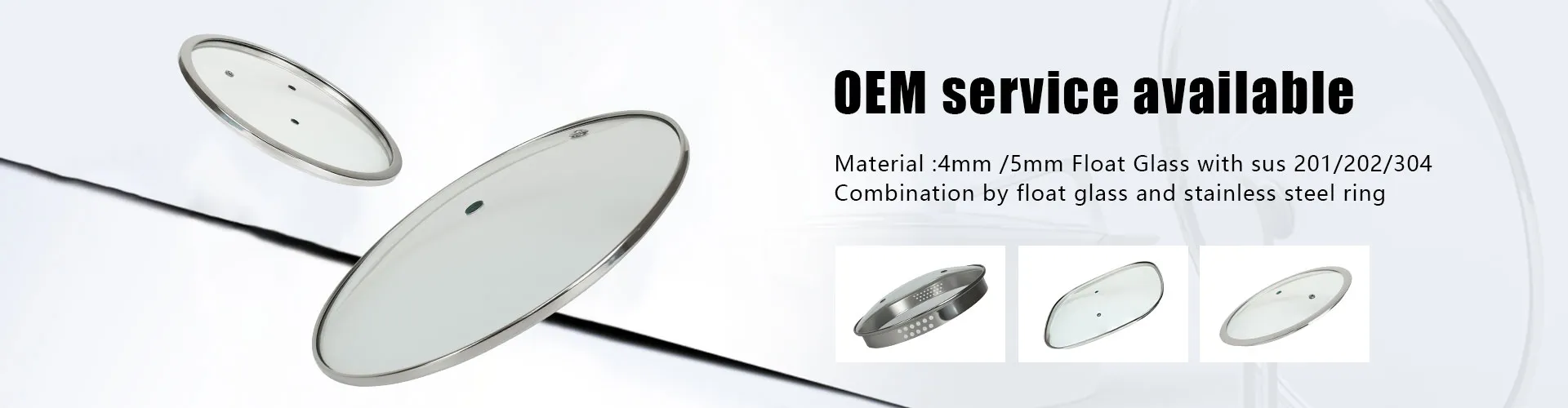
Glass Lid Maker in China for OEM Custom Cookware Lids
2026-11-09
If you run a startup cookware brand or source small-batch kitchen accessories, finding a reliable glass lid maker in China that supports flexible OEM and low-volume orders can be tricky. Many overseas buyers face recurring headaches: rigid high MOQs, slow sampling cycles, unclear custom options, inconsistent finishing, and confusing certification requirements. This buying guide covers custom specifications, sample workflows, MOQ expectations, quality controls and the full OEM ordering process. It helps you source tempered glass lids for your cookware line with fewer surprises.
Why Source Custom Cookware Glass Lids From a Glass Lid Maker in China
Chinese manufacturers of tempered cookware glass lids benefit from well-established local kitchenware supply chains. Most factories can produce glass lids while sourcing matching knobs, handles and silicone sealing rings locally. This ecosystem keeps sampling costs manageable and supports flexible OEM adjustments for emerging small brands.
That said, supplier quality varies greatly. Not every glass lid maker accepts small batches. Some only serve large, established cookware brands with high-volume contracts. Always validate samples, certificates and QC protocols before locking in mass production.
Available Custom Options When Working With a Chinese Glass Lid OEM
A core benefit of OEM cooperation is the ability to tailor glass lids to fit your pots, pans or baking dishes. Below are the most common custom parameters you can discuss with your supplier for standard ordinary glass lid projects.
Glass Size & Shape Customization
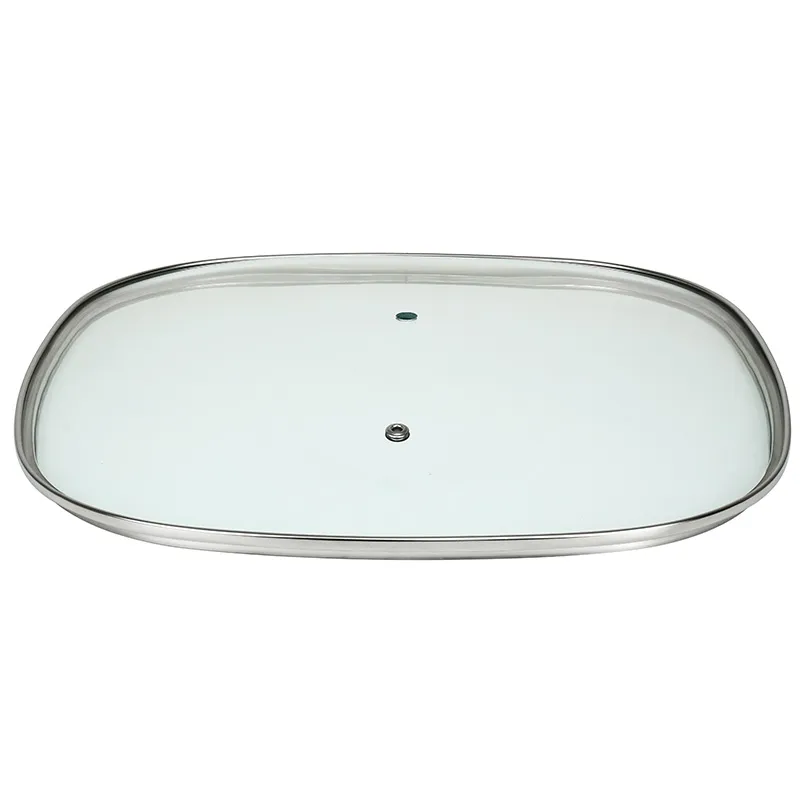
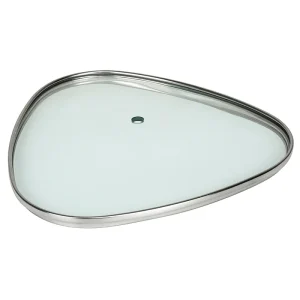
Tempered glass lids are most commonly produced in standard round formats. Square and special contoured shapes are available for custom cookware projects. You will need to share outer diameter or edge dimensions, glass thickness, and hole layout for knobs or steam vents.
Popular circular sizes such as 16 cm, 20 cm, 24 cm, and 28 cm are widely stocked and usually carry shorter lead times. Non-standard or fully irregular shapes often require custom tooling and come with higher MOQ requirements. All glass components follow standard industrial dimensional tolerances for kitchenware glass.
Handle, Knob & Accessories Customization
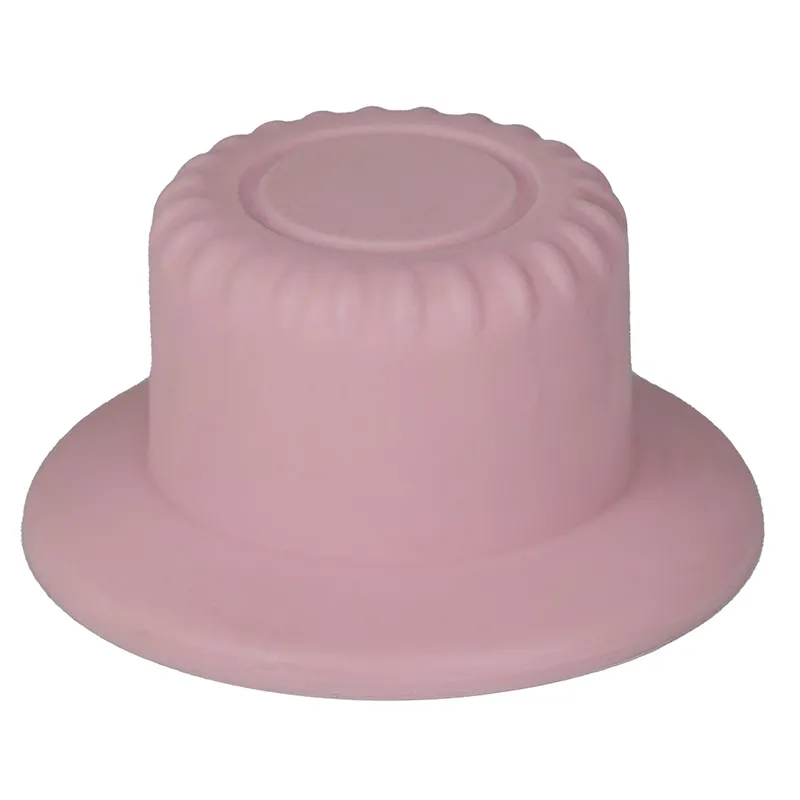
You may select knob and handle styles to match your brand identity. Typical options include solid stainless steel knobs, heat-resistant silicone handles and wooden grip pieces. Silicone gaskets can also be matched by color and heat resistance grade, explore our silicone glass lid series for reference.
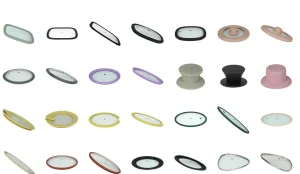
Many suppliers support brand marking directly on knobs or handles. Confirm heat exposure limits and food-contact safety for every accessory you select, not only the glass panel itself.
Surface Treatment & Logo Printing
Two mainstream marking methods for glass lids are silk screen printing and laser engraving. Silk screen printed logos deliver bold color and rely on food-safe high-temperature ink. Laser engraving creates permanent, scratch-resistant branding without extra ink layers.
Logo placement is usually limited to corner zones or central knob bases, so it will not block visibility during cooking. Dark or full-coverage prints need careful review, as heavy printing can affect tempering stability and long-term durability.
Color & Tint Options for Tempered Glass Lids
Clear tempered glass remains the default for most cookware lids because it lets users monitor cooking progress. Tinted variants such as light smoke or amber glass are available from selected factories, though color choices are far more limited than clear glass.
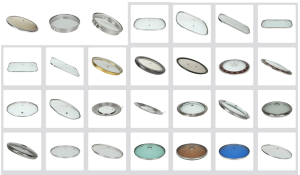
Coated or heavily dyed glass is uncommon for food-contact lids. Some tint options may add extra cost and extend lead times, so confirm availability early in your project. View our colored lid options.
Sample Process & Lead Time for Custom Glass Lids
Samples are the best way to verify fit, finish and quality before approving mass production. The standard sample workflow follows these steps:
- Share reference photos, sketches, or CAD/PDF drawings with the glass lid maker
- The factory reviews design feasibility and provides a sample quotation
- You confirm sample payment; the factory prepares simple cutting fixtures or tooling
- The factory produces, inspects and packages the prototype
- The finished sample is arranged for shipping and your evaluation
There is a clear distinction between ready stock standard samples and newly developed custom samples. Stock samples have faster turnaround, while designs requiring new fixtures or exclusive printing take longer. Many suppliers refund sample charges once your bulk order hits an agreed volume. Sample shipping fees are typically covered by the buyer.
MOQ for OEM Glass Lids: What Small-Batch Buyers Need to Know
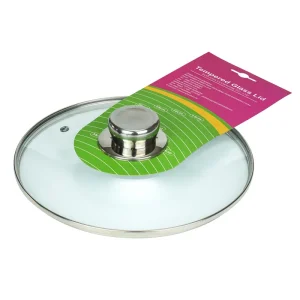
Small MOQ glass lid service is the top priority for startup cookware brands, and minimum quantities differ widely by product type.
Off-the-shelf standard round lids generally have the lowest MOQ. Brand-new custom shapes, dedicated tooling or exclusive printed designs usually require higher minimums due to fixture setup and production changeover work. If your order sits between sampling scale and large mass production, ask your supplier about shared tooling, combined batches or split delivery schedules to reduce pressure on your first order.
Do not rely only on verbal MOQ commitments. Confirm minimum quantities, unit price tiers, and whether MOQ applies per size or per total order in your formal quotation.
Quality Control & Certifications for Food-Grade Tempered Glass Lids
Cookware glass lids are exposed to high heat and steam during use. Food-contact compliance and tempered glass safety are non-negotiable.
Mandatory Food Contact Certifications
For exported cookware glass lids, buyers commonly request food contact certificates such as FDA and LFGB. Always ask for valid, item-matching documentation from your selected manufacturer. Avoid generic or reused certificates that do not cover your exact glass lid product. Certification rules vary by target market, so align documents with your sales region.
In-House QC Steps for Tempered Glass Lids
Reliable glass lid makers follow a structured inspection sequence:
- Raw glass sheet incoming inspection
- Cutting and edge grinding check to eliminate sharp burrs
- Tempering and stress testing to lower spontaneous breakage risk
- Dimensional verification to guarantee proper lid-to-pot fit
- Accessory assembly inspection
- Final visual check and random packaging sampling
Even properly tempered glass carries a small inherent risk of spontaneous breakage. Responsible factories reduce this risk through controlled tempering processes and careful edge treatment.
Step-by-Step OEM Order Workflow With a China Glass Lid Manufacturer
Once samples are approved, your bulk OEM order follows this standard workflow:
- Compile all specifications: dimensions, shape, logo files, accessories, packaging and target quantity
- Receive formal quotation and technical confirmation from the glass lid maker
- Approve and lock the pre-production sample
- Sign the proforma invoice and arrange deposit payment
- The factory prepares tooling and schedules production
- Complete pre-shipment inspection or bulk sample audit before shipment
- Settle the balance, confirm packaging and arrange cargo dispatch
Keep one sealed approved sample on file for comparison when bulk goods arrive. This gives you a clear benchmark if finished lids deviate from agreed specifications.
Common Pitfalls When Buying Custom Glass Lids From China & How to Avoid Them
Small-batch OEM buyers often encounter these issues. Forward planning helps you reduce risk:
- Promised low MOQs that increase once production starts: lock MOQ and pricing in written documents
- Visible inconsistency between approved samples and mass goods: require sealed pre-production samples
- Silicone rings with poor heat resistance or fast aging: define temperature requirements and check accessory certificates
- Poorly tempered glass with elevated breakage rates: review the factory’s tempering QC process
- Expired or non-transferable certification files: verify certificates match the glass lid SKU
- Delivery delays caused by artwork or design changes: freeze all artwork after sample sign-off
FAQ for Small-Batch OEM Glass Lid Buyers
Can I order glass lids without handles or knobs?
Yes. Many manufacturers supply bare tempered glass lids only, if you source knobs and handles separately.
Can I change the design after sample approval?
Minor tweaks may be possible, but major changes to shape, hole layout or printing usually require new samples, extra fees and reset lead times. Finalize your design before sample confirmation.
What is the shelf life of silicone seals?
There is no universal fixed shelf life. Service life depends on silicone material grade, frequency of high-heat exposure and cleaning methods. Food-grade silicone seals degrade gradually with repeated use.
What shipping options are available for small orders?
Small sample shipments typically use express couriers. Larger bulk orders can use sea freight or air freight based on your budget and delivery timeline.
Can the factory help with neutral packing or custom packaging?
Most OEM glass lid suppliers support neutral brown box packing. Custom printed packaging is available at extra cost and subject to packaging MOQs.
Wrap-Up
Working with a glass lid maker in China for OEM custom cookware lids suits small brands well when you organize sourcing around clear specifications, verified samples, fixed MOQ terms and valid food-safety certificates. Prepare your size, shape, accessory and logo requirements before sending inquiries, and confirm QC rules and certification requirements at the early stage.
Share your project specifications, request samples or get a formal quotation if you are ready to move forward, contact us to start your OEM project.