- English
- Chinese
- French
- German
- Portuguese
- Spanish
- Russian
- Japanese
- Korean
- Arabic
- Irish
- Greek
- Turkish
- Italian
- Danish
- Romanian
- Indonesian
- Czech
- Afrikaans
- Swedish
- Polish
- Catalan
- Esperanto
- Hindi
- Lao
- Albanian
- Amharic
- Armenian
- Azerbaijani
- Belarusian
- Bengali
- Bosnian
- Bulgarian
- Cebuano
- Chichewa
- Corsican
- Croatian
- Dutch
- Estonian
- Filipino
- Finnish
- Frisian
- Galician
- Georgian
- Gujarati
- Haitian
- Hausa
- Hawaiian
- Hebrew
- Hmong
- Hungarian
- Icelandic
- Igbo
- Javanese
- Kannada
- Kazakh
- Khmer
- Kurdish
- Kyrgyz
- Latin
- Latvian
- Lithuanian
- Luxembou..
- Macedonian
- Malagasy
- Malay
- Malayalam
- Maltese
- Maori
- Marathi
- Mongolian
- Burmese
- Nepali
- Norwegian
- Pashto
- Persian
- Punjabi
- Serbian
- Sesotho
- Sinhala
- Slovak
- Slovenian
- Somali
- Samoan
- Scots Gaelic
- Shona
- Sindhi
- Sundanese
- Swahili
- Tajik
- Tamil
- Telugu
- Thai
- Ukrainian
- Urdu
- Uzbek
- Vietnamese
- Welsh
- Xhosa
- Yiddish
- Yoruba
- Zulu
- Kinyarwanda
- Tatar
- Oriya
- Turkmen
- Uyghur


Tempered Glass Lid with Silicone Rim: A Complete Buyer’s Guide
2026-11-09
For procurement specialists, product developers and quality control engineers sourcing cookware accessories, the tempered glass lid with silicone rim is one of the most widely adopted options for stock pots, saucepans, slow cookers and multi-cookers. Even experienced sourcing teams often face recurring pain points: strange silicone odour, loose rims after limited use, glass cracking from thermal shock, non-compliant food-contact materials and vague incoming inspection standards.
This buyer’s guide covers the structure, core functions, compliance rules, temperature limits, assembly styles, common failure modes and QC checkpoints for tempered glass lid with silicone rim. It also contrasts silicone-rimmed lids against stainless steel rim alternatives to support your sample evaluation and batch validation decisions.
What Is a Tempered Glass Lid with Silicone Rim?
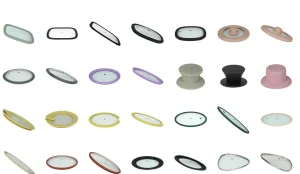
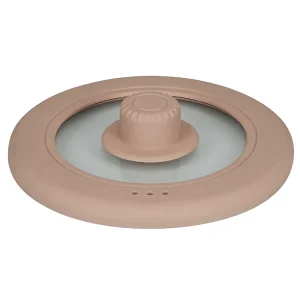
A tempered glass lid with silicone rim is a cookware cover made of toughened tempered glass fitted with a flexible silicone edge around its perimeter. Unlike ordinary cut glass, the tempered substrate goes through thermal treatment to boost mechanical strength and improve basic resistance to sudden temperature changes.
The silicone rim is not merely decorative trim. It creates a soft contact boundary between rigid glass and the metal pot opening. Three mainstream structural designs are common in global cookware supply chains:
- Groove-inserted silicone rim: the silicone strip is pressed into a continuous slot machined or moulded along the glass edge
- Snap-fit silicone rim: the shaped silicone profile clips onto the glass edge without adhesive
- Overmoulded integrated silicone rim: silicone is moulded directly onto the glass edge during manufacturing
Core Functions of the Silicone Rim on Glass Lids
Many buyers assume the silicone rim only serves sealing purposes. In practice, it fulfils several critical roles for both commercial and consumer cookware.
- Steam & spill control: reduces liquid boil-over and retains steady internal steam during simmering and low-temperature cooking
- Impact buffering: absorbs light knocks between lid and pot rim to lower chipping and cracking risk
- Noise reduction: eliminates the sharp metallic clink when the glass lid is set down
- Tolerance compensation: accommodates minor dimensional irregularities on rolled pot mouths for a tighter fit
- Surface protection: stops hard glass edges from scratching polished stainless steel or aluminium pot rims
- Mild thermal barrier: slows heat transfer at the contact zone for safer handling
Food-Grade Compliance Standards for Silicone Rim & Tempered Glass
Food-contact compliance is the top priority for cross-border cookware shipments. Glass and silicone are evaluated separately because different standards set distinct rules for substance migration, extractables and sensory limits.
For North American markets, suppliers need to demonstrate compliance with FDA food-contact requirements for soda-lime tempered glass and food-grade silicone. For European markets, LFGB testing is frequently requested by private-label brands and retail buyers.
Key test records you should collect from suppliers include:
- Overall and specific substance migration under standard food simulants
- Sensory checks for unwanted odour or flavour transfer
- Colour stability and resistance to fatty food media
- Heavy metal leaching limits for glass edges and any surface coatings
Compliance certificates alone cannot guarantee consistent mass production quality. Your QC process should link material batch numbers directly to matching test reports.
Temperature Resistance & Safe Operating Limits
Tempered glass and silicone have separate thermal thresholds. In most cases, the silicone rim is the limiting component under high-heat conditions.
Tempered cookware glass can withstand moderate thermal cycling, yet it remains vulnerable to extreme rapid temperature swings. Splashing cold water onto a hot lid or moving it directly from high heat to a cold countertop may cause spontaneous breakage.
Food-grade cookware silicone keeps stable performance within its rated working range. Extended exposure above its continuous operating temperature accelerates polymer degradation, which may lead to oiling out, discolouration and odour release.
Share these usage boundaries with your factory and end customers:
✅ Suitable for: stovetop simmering, oven use within stated ratings, approved air fryer applications
❌ Not recommended for: direct open-flame exposure, broiler zones, rapid quenching with cold liquid
Note: Exact continuous and peak temperature ratings, plus formal thermal shock test criteria, must be verified against supplier test reports.
Installation & Assembly Methods of Silicone Rim
The assembly method heavily influences production yield, service life and repairability. Each design carries clear trade-offs for mass sourcing.
- Groove insertion: silicone strip pressed into a pre-cut glass channel. Positioning is stable, though glass grooving raises processing cost. Rims can usually be replaced after damage.
- Snap-fit: silicone profile mechanically grips the glass edge without glue. Assembly is fast, but loose dimensional tolerances may cause the rim to pop off after repeated heating and cooling cycles.
- Adhesive bonding: silicone fixed with food-safe approved adhesive. It delivers a clean visual finish, yet adhesive degradation under prolonged heat and steam is a known failure mode.
- Overmoulded integrated rim: silicone moulded onto glass in one production step. Delamination risk is low when properly executed, but rim replacement is not possible.
Cleaning, Maintenance & Storage Guidelines
Correct care slows silicone ageing and preserves glass clarity. These points can be added to user inserts or shared with your manufacturer for documentation.
- Confirm dishwasher suitability with your supplier before marking the lid as dishwasher-safe
- Avoid abrasive pads, steel wool and strong alkaline or chlorine cleaners; they degrade silicone surfaces and glass finishes
- Clear trapped grease and food debris from the rim gap regularly. Burnt organic residue speeds yellowing and odour development
- Dry fully before stacking or long-term storage. Trapped moisture can foster mould between silicone and glass
- Do not use sharp tools to pry the silicone rim away from the glass
Note: Long-term ageing performance across repeated dishwasher cycles needs validation from supplier reliability data.
Common Failure Risks & Root Cause Analysis
Defects found in incoming lots or after customer use fall into two groups: manufacturing non-conformity and end-user misuse.
- Silicone yellowing: usually caused by accumulated grease, repeated high-heat exposure or low-quality filler materials in silicone
- Oiling out or blooming: low-molecular-weight compounds migrating to the silicone surface; this often signals formulation issues
- Persistent chemical odour: incomplete silicone curing or non-food-grade raw material
- Rim detachment: triggered by weak snap geometry, adhesive breakdown or insufficient groove depth
- Silicone cracking: fatigue after repeated thermal cycles, over-stretching or contact with incompatible cleaning agents
- Glass chipping or spontaneous breakage: edge damage during processing, severe thermal shock or inadequate tempering control
A practical rule for your QC team: defects visible on brand-new unused lids typically point to production issues. Defects appearing after dozens of use cycles usually stem from material formulation, assembly design or user operation.
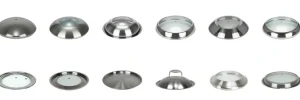
Tempered Glass Lid with Silicone Rim vs Stainless Steel Rim Glass Lid
Many product teams compare silicone-rimmed glass lids against traditional stainless steel rim versions during development. The table below summarises core trade-offs for B2B sourcing decisions.
| Evaluation Item | Tempered Glass Lid with Silicone Rim | Tempered Glass Lid with Stainless Steel Rim |
|---|---|---|
| Sealing & cushioning | Excellent; flexible contact absorbs vibration | Fair; rigid metal contact provides no shock buffer |
| Noise on placement | Quiet fit | Loud metallic clink |
| Cleaning difficulty | Gap between silicone and glass can trap grime | Steel rim seams may hold water and food residue |
| Corrosion risk | Zero rust risk | Risk of rust or tea staining if moisture remains trapped |
| Replacement feasibility | Groove and snap-fit designs support rim swap | Rim is normally crimped permanently to glass |
| High-heat ageing | Silicone degrades gradually under extreme sustained heat | Metal rim stays dimensionally stable |
| Visual style | Soft, modern appearance | Robust, classic industrial look |
| Typical cost position | Mid-range | Lower to mid-range |
Stainless steel rim lids remain suitable for heavy commercial cookware lines where long-term thermal stability is prioritised. Silicone rim variants are preferred for consumer-focused lines requiring quieter operation and gentler pot protection.
Inspection & QC Checklist for Incoming Shipment
This checklist works for AQL-based incoming quality control at your warehouse or third-party inspection sites.
- Visual inspection
- Check glass for scratches, bubbles, inclusions and edge chips; reject units with sharp edge damage
- Examine silicone rim for tears, cuts, excess flash, uneven colour and surface blooming
- Verify consistent seating; the rim must not twist, bulge or show continuous gaps around the perimeter
- Dimensional and fit test
- Confirm outer diameter, rim width and handle mounting dimensions match the approved sample
- Test fit on the matching pot body to confirm stable, level seating
- Assembly strength check
- Apply steady, moderate pulling force to the silicone rim to check for separation
- Sensory screening
- Run ambient odour check; strong chemical odour is a direct rejection criterion
- Documentation cross-check
- Match batch codes to valid food-contact test reports and material certificates
- Marking verification
- Confirm permanent markings for material type, heat limits and safety warnings align with your specification
Frequently Asked Questions
Can I replace only the silicone rim if it fails?
It depends on the assembly style. Groove-inserted and snap-fit rims are generally replaceable. Adhesive-bonded and overmoulded rims are not designed for simple rim replacement.
Does yellow silicone mean the material is unsafe?
Yellowing alone is not an automatic safety failure when the material has passed required food-contact testing. It often comes from grease staining rather than harmful substance migration. That said, yellowing combined with strong odour, sticky oiling out or cracking requires material re-testing.
Is a tempered glass lid with silicone rim safe under direct flame?
Most standard models are not rated for direct open-flame exposure. Confirm the supplier’s published heat limits before approving it for high-heat applications.
Is spontaneous glass breakage always a factory defect?
No. While poor tempering or hidden edge damage causes spontaneous breakage, thermal shock from rapid cooling is the most common root cause behind consumer complaints.
Conclusion
A tempered glass lid with silicone rim balances reliable sealing, impact protection and improved user experience. Sourcing it consistently well depends on layered validation: confirm food-contact compliance first, then review temperature ratings, assembly design and foreseeable failure risks. Stainless steel rim alternatives remain viable for certain heavy-use cookware segments, though they lack the cushioning and quiet benefits offered by silicone.
To stabilise quality across shipments, integrate the above inspection checklist into your QC workflow and always link material batches to valid test documentation. When selecting suppliers, prioritise partners that can supply clear thermal performance data and traceable food-grade silicone formulations.Please contact our team if you have any requirements.