- English
- Chinese
- French
- German
- Portuguese
- Spanish
- Russian
- Japanese
- Korean
- Arabic
- Irish
- Greek
- Turkish
- Italian
- Danish
- Romanian
- Indonesian
- Czech
- Afrikaans
- Swedish
- Polish
- Catalan
- Esperanto
- Hindi
- Lao
- Albanian
- Amharic
- Armenian
- Azerbaijani
- Belarusian
- Bengali
- Bosnian
- Bulgarian
- Cebuano
- Chichewa
- Corsican
- Croatian
- Dutch
- Estonian
- Filipino
- Finnish
- Frisian
- Galician
- Georgian
- Gujarati
- Haitian
- Hausa
- Hawaiian
- Hebrew
- Hmong
- Hungarian
- Icelandic
- Igbo
- Javanese
- Kannada
- Kazakh
- Khmer
- Kurdish
- Kyrgyz
- Latin
- Latvian
- Lithuanian
- Luxembou..
- Macedonian
- Malagasy
- Malay
- Malayalam
- Maltese
- Maori
- Marathi
- Mongolian
- Burmese
- Nepali
- Norwegian
- Pashto
- Persian
- Punjabi
- Serbian
- Sesotho
- Sinhala
- Slovak
- Slovenian
- Somali
- Samoan
- Scots Gaelic
- Shona
- Sindhi
- Sundanese
- Swahili
- Tajik
- Tamil
- Telugu
- Thai
- Ukrainian
- Urdu
- Uzbek
- Vietnamese
- Welsh
- Xhosa
- Yiddish
- Yoruba
- Zulu
- Kinyarwanda
- Tatar
- Oriya
- Turkmen
- Uyghur


Tempered Glass Lids for Frying Pans: Matching Lids to Pan Ranges
2026-11-05
If you source or develop cookware lines, you have likely run into a common headache: ordering a tempered glass lid for fry pan only to find it does not align with the rest of your frying pan collection. Many brands and OEM buyers select lids one size at a time, which creates inconsistent aesthetics, poor rim fit, complicated inventory management, and frustrating after-sales support. Instead of treating each lid as an isolated accessory, leading cookware developers design and validate tempered glass lid options across an entire pan diameter series. This guide walks you through systematic lid-to-pan matching, flat versus domed lid tradeoffs, non-stick compatibility rules, and the standard OEM lid-pan pairing workflow for your frying pan ranges.
Why Frying Pan Ranges Require Systematically Matched Tempered Glass Lids
A frying pan line built around unified design rules delivers far better commercial and functional outcomes than a patchwork of separate glass lid for pan selections. When you standardize lid construction, handle style, edge treatment, and tolerance rules across a diameter series, you lock in visual consistency for retail packaging, product imagery, and shelf presentation.
Systematic matching also simplifies your supply chain. Shared mould families reduce tooling overhead, lower sample validation work, and cut the number of unique SKUs you need to track. Consumer-facing benefits follow: replacement glass lids are easier to reference and restock, and customer service teams face fewer complaints about ill-fitting lids.
On the production side, aligned rim geometry means assembly, sealing performance, and safety testing can be validated once for the whole series rather than repeatedly for every single pan size. This consistency matters most for lines marketed as frying pan with glass lid sets, where buyers expect a cohesive product family rather than random accessory combinations.
Matching Tempered Glass Lids to Pan Diameter Series
The foundation of reliable pairing is grouping your frying pans into logical pan diameter series before finalizing lid specifications. The stated pan diameter is only the starting point; the critical variable is how the lid edge interfaces with the pan rim.
The table below provides a decision framework for pairing, without focusing exclusively on one individual size (to avoid overlap with dedicated single-specification articles).
| Pan Series Group | Suggested Lid Type | Rim Fit Style | Application & Restriction |
|---|---|---|---|
| Small lightweight frying pan series | Flat tempered glass lid | Overlap / rolled rim fit | Low stack height, ideal for compact pan sets |
| Mid-size general frying pan series | Flat or domed tempered glass lid | Overlap fit | Most flexible group; choice depends on intended cooking use |
| Large deep frying / sauté pan series | Domed tempered glass lid | Overlap or recessed fit | Extra internal space for rising foods and steam circulation |
Key Rim Fit Variables Between Glass Lid and Frying Pan
Rim fit separates well-matched assemblies from leaky, wobbly combinations. Three common rim designs create different pairing constraints: rolled rims, flat cut rims, and pouring-spout rims.
Rolled rims tend to be the most forgiving for standard glass lid for pan designs. The curved upper edge creates a stable landing surface and helps center the lid naturally. Flat cut rims demand tighter diameter tolerances, as there is no curved guide to self-align the glass. Pouring-spout rims add a special consideration: the lid edge must be shaped or relieved so it does not catch on the spout and create a gap that spills steam or liquids.
Even within one diameter series, mixing rim profiles across pans breaks standardization. If your line includes multiple rim styles, you may need separate lid mould groups rather than assuming one lid family will serve the full range.
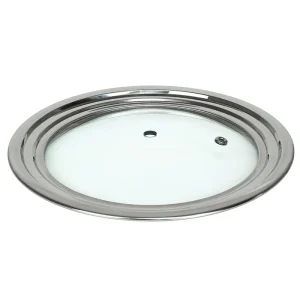
Flat vs Domed Tempered Glass Lids for Frying Pans: When to Choose Which
Flat and domed tempered glass lids each serve distinct frying pan use cases, and the best option depends on your product positioning and cooking function.
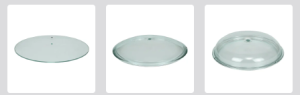
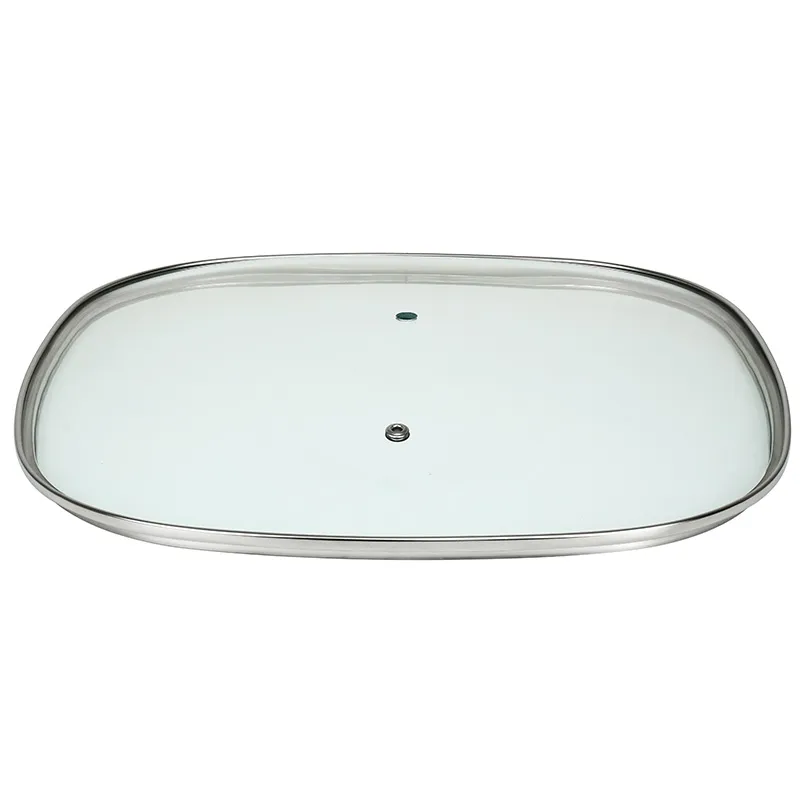
Flat lids sit low on the pan. Their biggest advantage is stackability. Sets that ship nested inside one another, or retail lines optimized for tight cabinet storage, often rely on flat lids. They work well for shallow frying tasks where you mostly want to contain oil splatter and hold gentle heat. The tradeoff is limited headroom: foods that puff, bubble up, or expand during cooking will press against the glass.
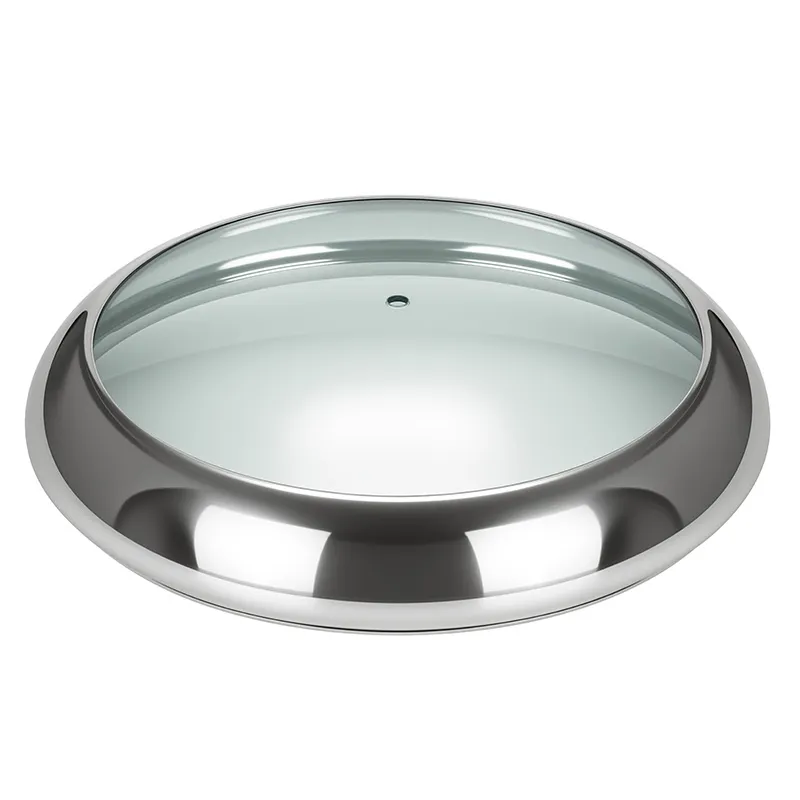
Domed lids curve upward to create extra internal volume. This space suits covered frying, braising, steaming, and recipes where ingredients rise. For OEM lines positioned as multi-use sauté and fry sets, a domed tempered glass lid for fry pan is frequently the preferred selection. The downside is larger packaging dimensions and reduced nesting capability.
Many buyers ask whether they can mix flat and domed lids inside one frying pan range. This is technically possible, but it changes the visual identity of the collection and complicates packaging layouts. Most premium cookware brands select one lid profile per series to preserve a unified look.
Critical Considerations When Pairing Glass Lids with Non-Stick Frying Pans
A glass lid for non stick pan carries extra design rules that do not apply to bare metal frying pans. The core risk is physical damage to the non-stick coating from the lid’s bottom edge during placement, sliding, or repeated customer use.
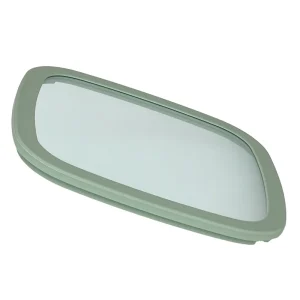
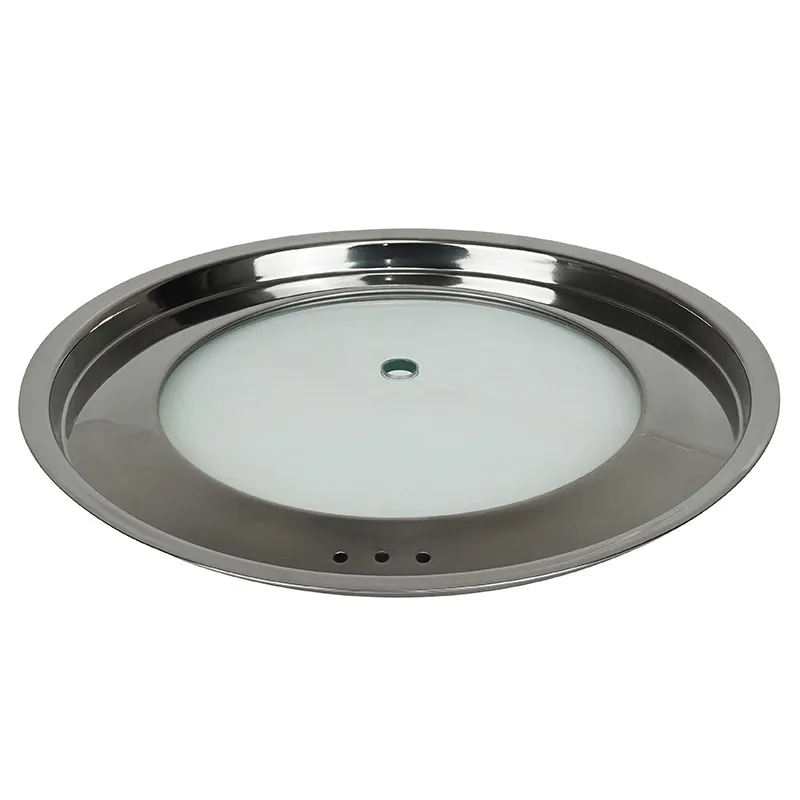
First, the lower edge of the tempered glass must be smooth, chamfered, and free of sharp chips or raw cut glass. Many suppliers add a protective silicone or metal rim buffer for non-stick compatible lids. Rough, unprotected glass edges can scratch coating over time, even if the initial fit looks acceptable.
Second, thermal behaviour requires review. Condensation that drips back onto the non-stick surface will not usually damage coating by itself, but uneven dripping can create hot spots or alter cooking results. If your non-stick line targets high-heat frying applications, confirm the lid vent design and glass tempering rating match the pan’s maximum recommended operating temperature.
Third, quality control should include repeated open-close and sliding tests as part of sample approval. Do not rely only on static fit checks. A lid that sits perfectly at rest may abrade the coating when consumers slide it sideways on the pan rim.
OEM Lid-Pan Pairing Workflow for Frying Pan Lines
Structured OEM lid-pan pairing reduces expensive rework and wasted tooling. Follow this sequence when you develop a new frying pan with glass lid program:
- Submit your full pan range brief: planned diameter series, rim drawings, target pan depth, non-stick or bare metal specification, and desired lid style (flat or domed).
- Complete DFM (design for manufacture) review: the supplier checks whether your existing pan rim geometry works with standard tempered glass lid tooling, or if custom edge relief is required.
- Produce pre-production samples for fit, stacking, heat, and abrasion validation. This stage is where rim gap, spout clearance, and non-stick scratch risk are caught.
- Lock approved samples for sign-off. The signed sample becomes the benchmark for mass production.
- Run a small pilot production batch to confirm consistency across all sizes in the series. Tolerance drift across the diameter range is a common hidden issue.
- Release full production with agreed inspection checkpoints for lid edge finish, glass temper quality, handle attachment, and rim fit.
The most costly mistake in OEM projects is cutting this workflow short and opening glass lid moulds before the pan rim design is finalized. Small rim adjustments can make an entire lid mould family unusable.
FAQ About Tempered Glass Lids for Frying Pan Series Matching
Can one glass lid fit multiple pan diameters in the same series?
It depends on the rim design and tolerance window. Some overlapping ranges support one lid for two adjacent pan sizes, but this creates compromises in seal quality and centering. This approach is mostly seen on budget cookware sets; premium lines usually assign one lid size per pan diameter.
Does a domed lid affect stacking packaging for frying pan sets?
Yes. Domed lids increase the overall height of each pan unit and usually prevent tight nesting. If compact retail packaging is a core selling point, flat lids are generally more suitable.
Are tempered glass lids for non stick pans subject to extra safety tests?
They often require additional abrasion and contact-surface checks beyond standard tempered glass impact and thermal shock tests, focused on protecting the non-stick coating. Required testing varies by target market standards.
Can we switch between flat and domed lids within one frying pan range?
There is no hard technical ban, but mixing lid styles breaks visual consistency and complicates packaging and product photography. Most brand teams avoid this unless they create clearly separated sub-lines.
What is the typical lead time for custom-matched tempered glass lids for fry pan lines?
Lead time depends on whether existing moulds can be adapted or new tooling is required. Pre-production sampling and validation usually add several weeks before mass production can start.
Get Support for Your Frying Pan Glass Lid OEM Matching Project
Matching a tempered glass lid for fry pan across a full product series is less about picking a pretty glass top and more about aligning rim geometry, tolerance rules, lid profile, coating protection, and supply chain planning.
If you are developing or refreshing a frying pan range and need structured lid-pan pairing support, share your pan drawings, diameter series plan, and product requirements via our contact page.We can review fit feasibility, recommend flat or domed configurations, and walk through sample validation for your frying pan with glass lid collection.