- Chinese
- French
- German
- Portuguese
- Spanish
- Russian
- Japanese
- Korean
- Arabic
- Irish
- Greek
- Turkish
- Italian
- Danish
- Romanian
- Indonesian
- Czech
- Afrikaans
- Swedish
- Polish
- Basque
- Catalan
- Esperanto
- Hindi
- Lao
- Albanian
- Amharic
- Armenian
- Azerbaijani
- Belarusian
- Bengali
- Bosnian
- Bulgarian
- Cebuano
- Chichewa
- Corsican
- Croatian
- Dutch
- Estonian
- Filipino
- Finnish
- Frisian
- Galician
- Georgian
- Gujarati
- Haitian
- Hausa
- Hawaiian
- Hebrew
- Hmong
- Hungarian
- Icelandic
- Igbo
- Javanese
- Kannada
- Kazakh
- Khmer
- Kurdish
- Kyrgyz
- Latin
- Latvian
- Lithuanian
- Luxembou..
- Macedonian
- Malagasy
- Malay
- Malayalam
- Maltese
- Maori
- Marathi
- Mongolian
- Burmese
- Nepali
- Norwegian
- Pashto
- Persian
- Punjabi
- Serbian
- Sesotho
- Sinhala
- Slovak
- Slovenian
- Somali
- Samoan
- Scots Gaelic
- Shona
- Sindhi
- Sundanese
- Swahili
- Tajik
- Tamil
- Telugu
- Thai
- Ukrainian
- Urdu
- Uzbek
- Vietnamese
- Welsh
- Xhosa
- Yiddish
- Yoruba
- Zulu
- Kinyarwanda
- Tatar
- Oriya
- Turkmen
- Uyghur


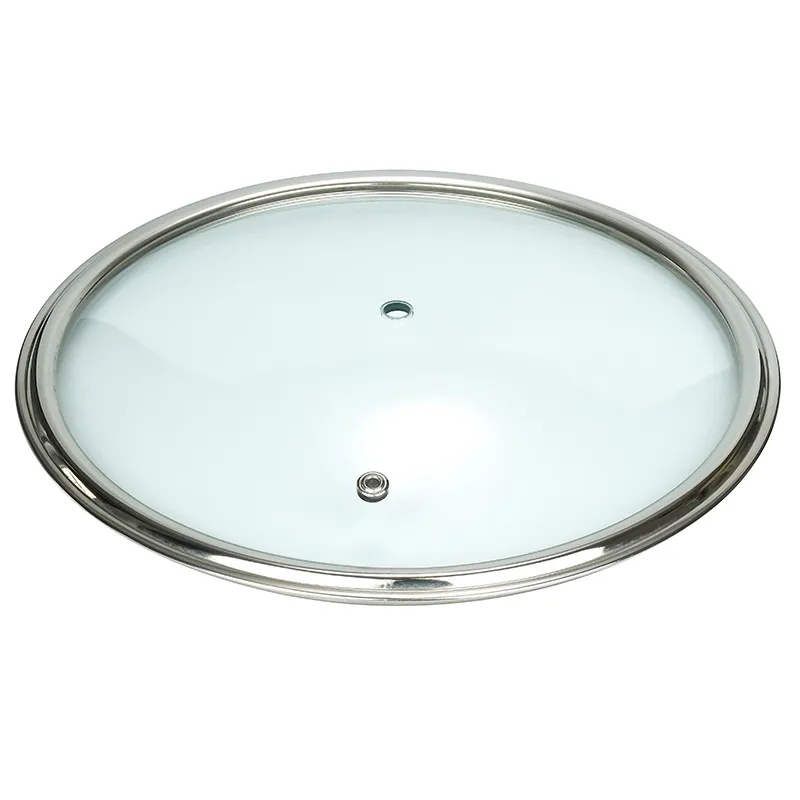
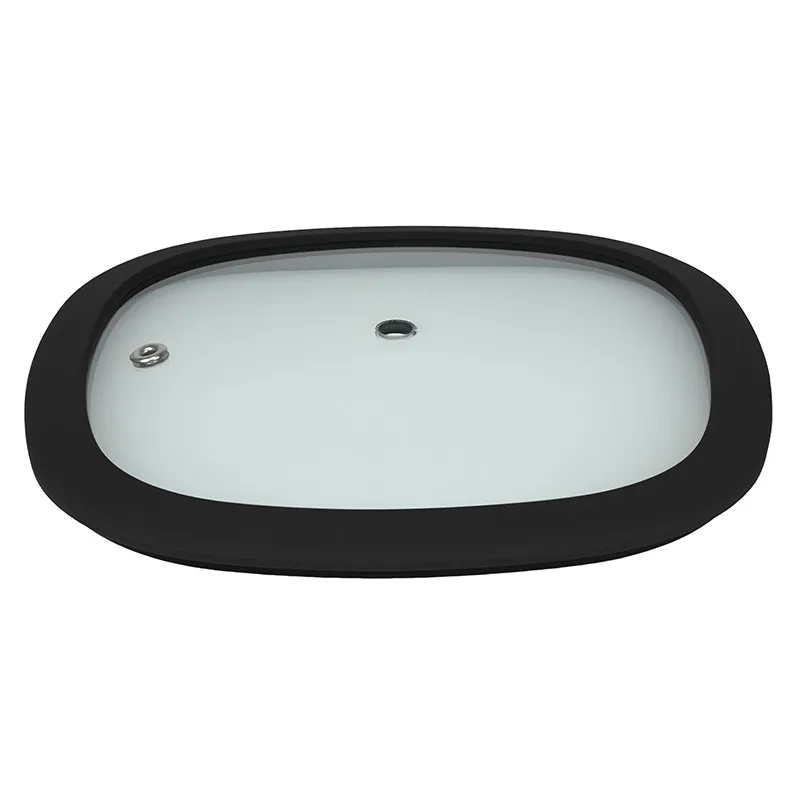
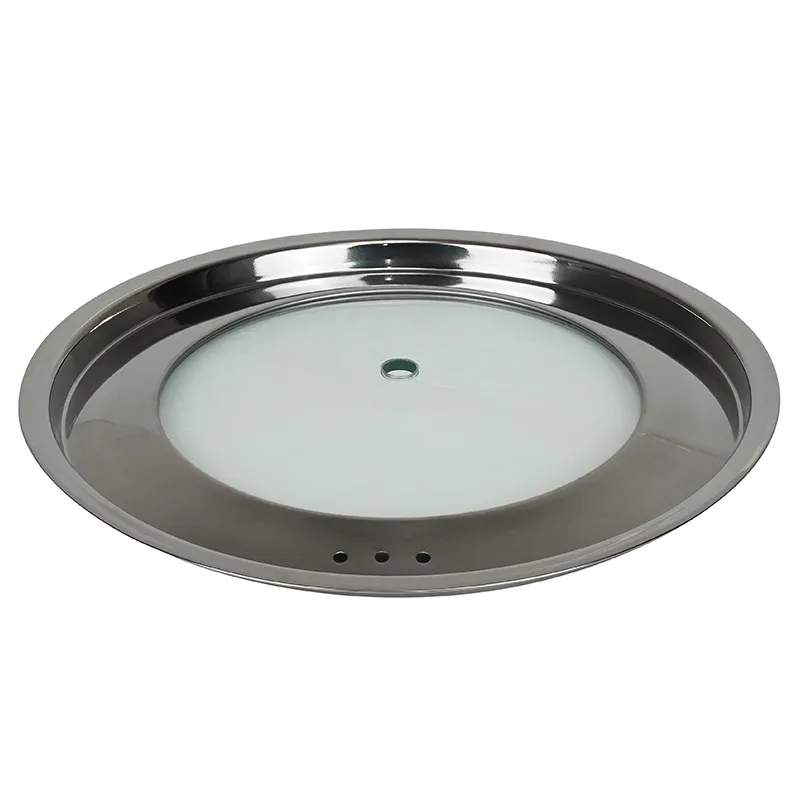
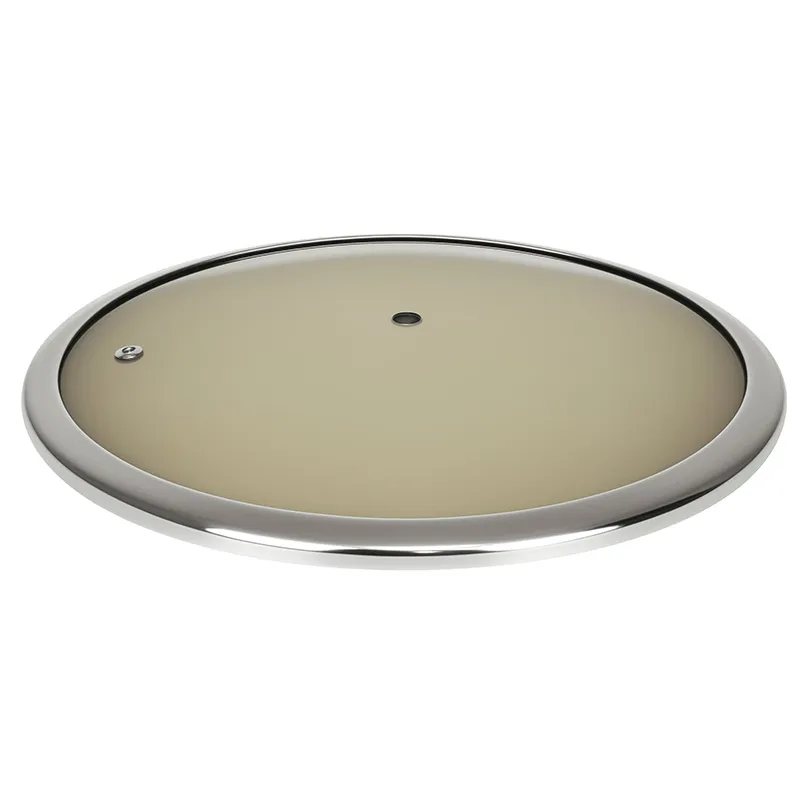
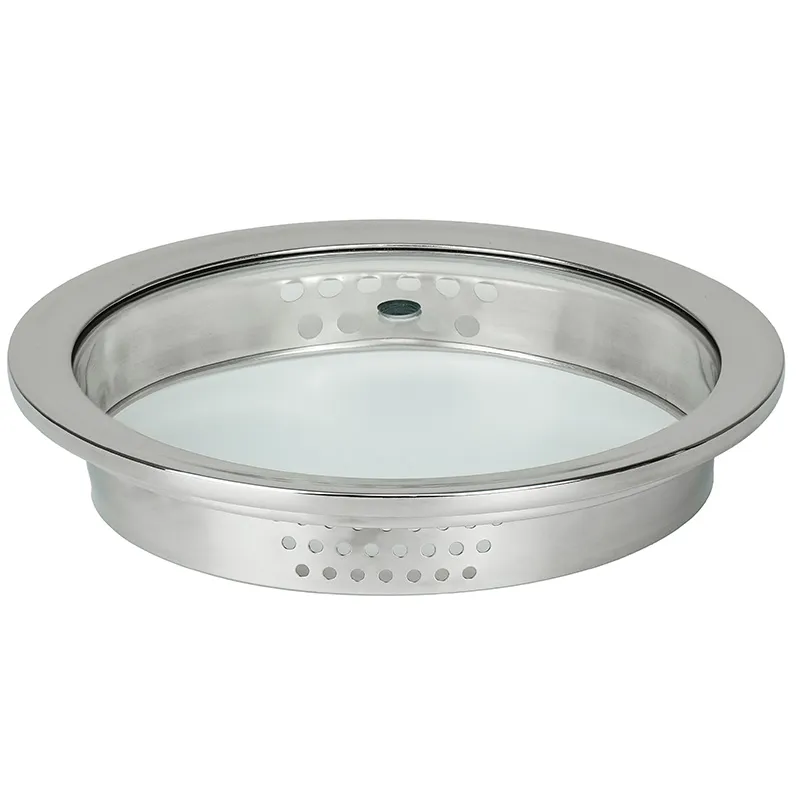
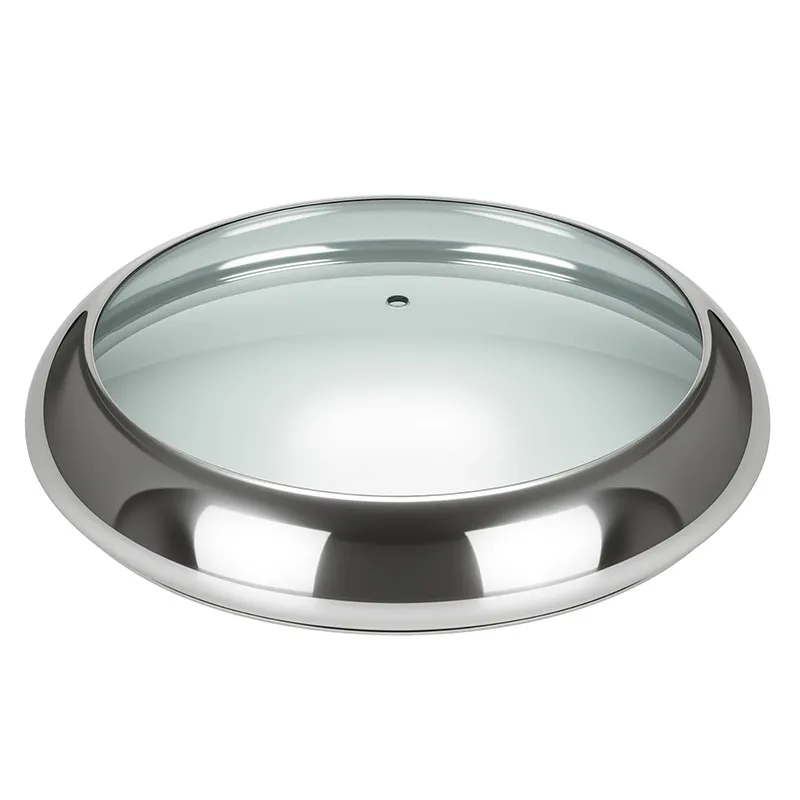
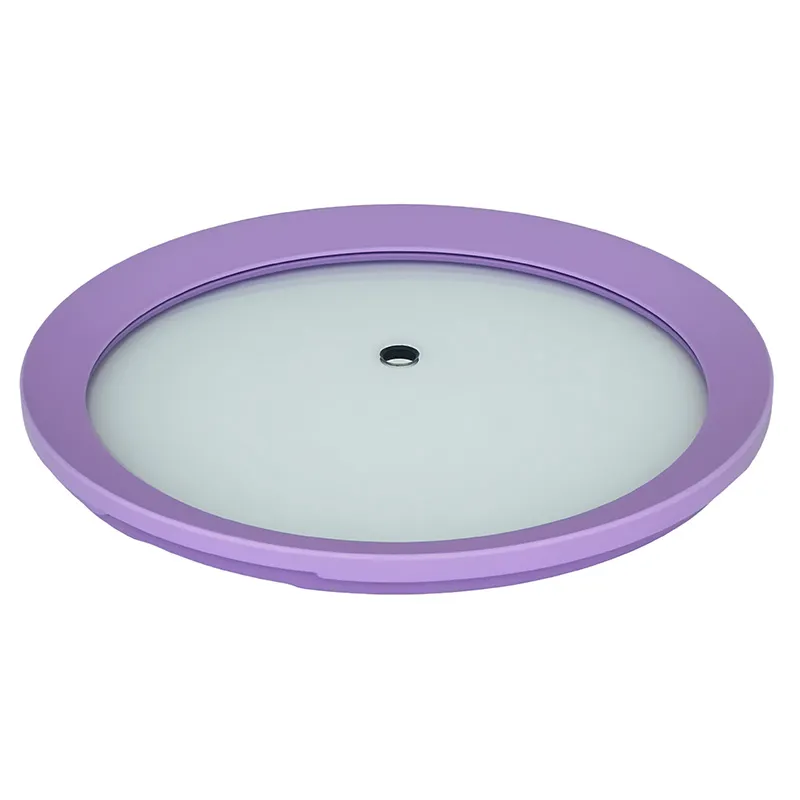
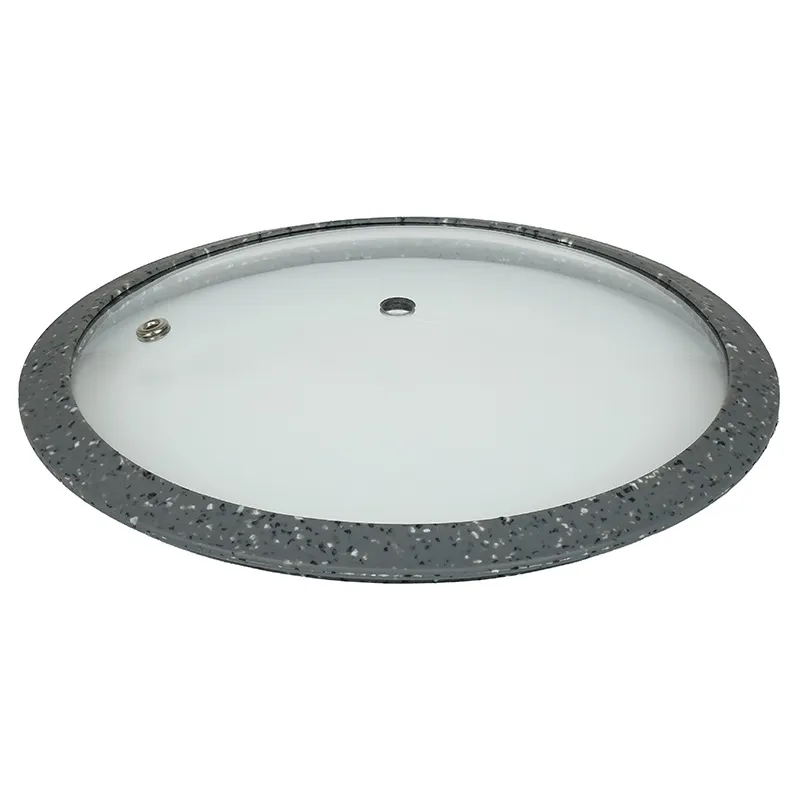
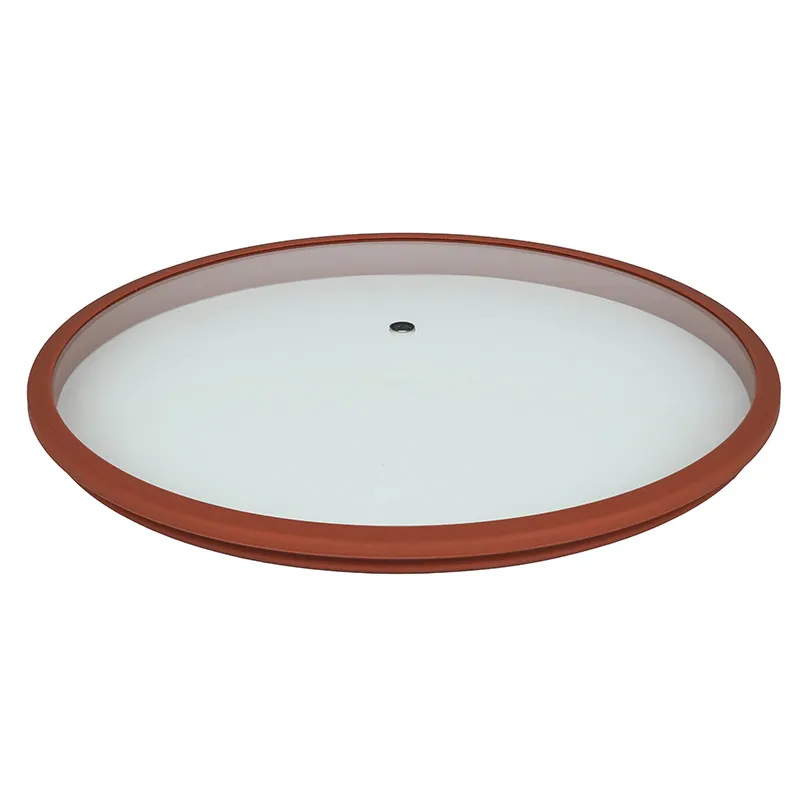
frosted glass with bamboo lid
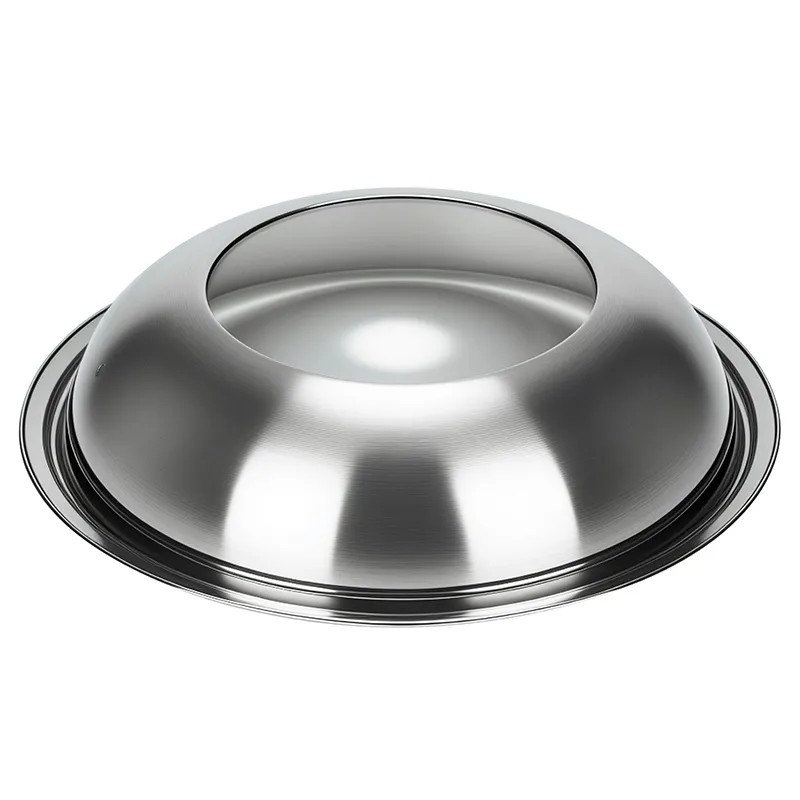
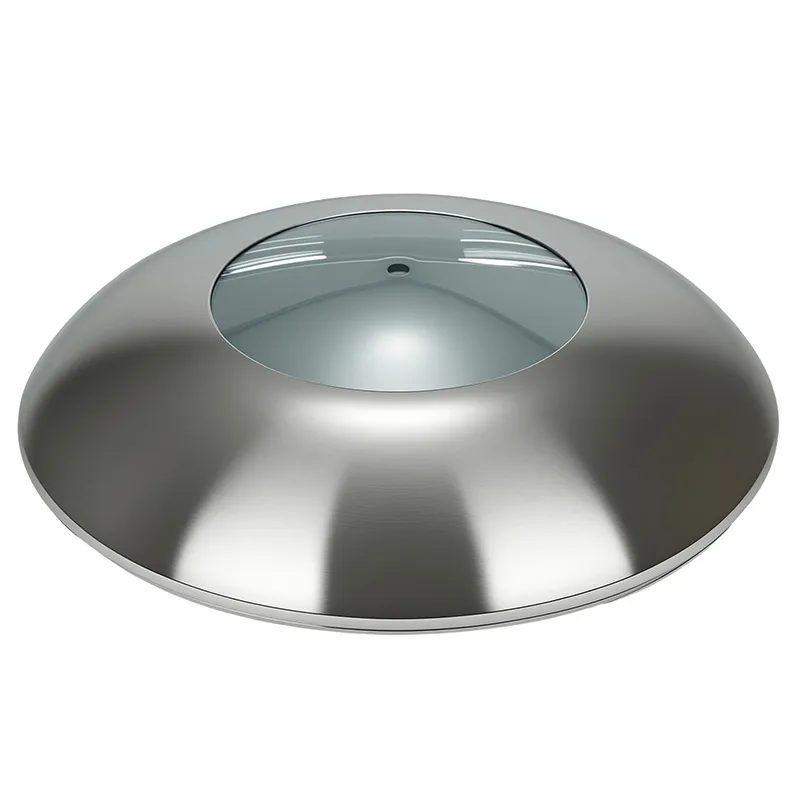
When you hear 'frosted glass with bamboo lid', the immediate image is often one of clean, minimalist design—a piece that looks good on a shelf. But in the cookware and housewares trade, that's just the starting point, and frankly, where a lot of the misconceptions begin. People, even some buyers, get hung up on the visual appeal, the 'Instagrammability', without digging into what makes a product like this actually function in a real kitchen, day in and day out. The frosted finish isn't just for a matte look; it's a functional choice that masks water spots and minor scratches better than clear, high-gloss glass. And the bamboo lid? That's where the real conversation about material interaction begins.
The Material Dialogue: Glass Meets Bamboo
Pairing frosted glass with a bamboo lid isn't as straightforward as slapping two trendy materials together. The core challenge is managing the different rates of thermal expansion and their response to moisture. Glass, especially tempered soda-lime glass used for lids, expands uniformly with heat. Bamboo, a natural fiber composite, expands and contracts differently, and more critically, it absorbs ambient moisture. If the connection system—usually a stainless steel knob riveted through the bamboo into a glass-fitted bracket—isn't engineered with precise tolerances, you get problems. The lid can warp slightly over a steaming pot, or worse, the bamboo around the rivet can crack after repeated dishwasher cycles. I've seen batches where the failure rate on the lid warpage was close to 15% because the bamboo wasn't kiln-dried to a consistent, low moisture content before fabrication.
This is where the manufacturing pedigree of a supplier becomes critical. A company like EUR-ASIA COOKWARE CO.,LTD, with a dedicated production base and a focus on volume export, typically has the jigs and quality control stages in place to catch these inconsistencies. Their specialization in tempered glass lids means they've likely iterated through dozens of bamboo supplier samples to find one that balances cost, sustainability appeal, and most importantly, dimensional stability. It’s not just about sourcing a lid; it’s about sourcing a component that won’t fail in the hands of a consumer in Munich or Seoul.
One practical detail often overlooked is the finish on the bamboo's underside, the part that faces the steam. A high-quality, food-safe lacquer or wax seal is non-negotiable. Without it, the bamboo becomes a sponge, swelling and potentially developing mold in humid climates. I recall a shipment to Brazil where this exact issue caused a minor recall. The lesson was that specs for a bamboo lid destined for Europe might need adjustment for tropical markets—a thicker seal, perhaps, or a different treatment protocol entirely.
Frosting: Function Over Form
The frosted finish on the glass is another point of technical nuance. It's usually achieved through acid etching or sandblasting. Acid etching gives a more uniform, satin feel but requires stringent environmental controls in the factory. Sandblasting can be more variable but offers depth. The key is consistency across a production run of, say, several hundred thousand units. A frosted surface does more than look nice; it provides a slight texture that makes the lid easier to grip, especially with wet hands, compared to slippery clear glass. It also significantly reduces the visibility of fingerprints and clouding from mineral deposits in hard water areas—a major plus for consumer satisfaction.
However, frosting can sometimes hide inclusions or seeds (tiny bubbles) in the glass itself. In clear glass, a major inclusion is a reject. In frosted, it might pass a less rigorous QC check. A professional buyer needs to specify the glass quality grade (e.g., float glass with a certain clarity level) before frosting, not after. I've made that mistake early on, assuming the frosting process would mask lower-grade glass, only to have lids eventually show stress points around those hidden flaws after thermal shock testing.
From a manufacturing perspective, the scale of operation at a facility like the one described for EUR-ASIA COOKWARE matters. An annual output of over 15 million pieces of tempered glass lids suggests a high degree of automation in the tempering and frosting lines. This generally leads to better consistency in the frosting depth and the resulting tensile strength of the tempered frosted glass. A small artisan shop might produce a more 'handcrafted' look, but for meeting the safety standards and volume demands of European retailers, that industrial consistency is paramount.
The Export Reality: From Taian to Global Kitchens
The company profile mentions over 90% export to a list of countries including Germany, France, Japan, and Brazil. This isn't just a sales statistic; it's a testament to the product's need to pass diverse, and often rigorous, international standards. A frosted glass with bamboo lid sold in Germany must comply with stringent EU food contact material regulations (EU 10/2011 for the glass, specific directives for the bamboo finish and any adhesives). The lid knob must pass pull tests. The glass must survive specific thermal shock and mechanical impact tests to be considered 'tempered safety glass'.
This global footprint forces a manufacturer to be incredibly adaptable. Packaging for sea freight to Brazil (high humidity) will differ from that for trucking within the EU. The product listings on their portal, https://www.glass-lid.com, likely serve as a core catalog, but the real business happens in customized OEM orders where specs are tightened for particular buyers. For instance, a Danish client might require a specific type of sustainable bamboo certification, while a Korean buyer might want a slightly smaller diameter lid to fit locally popular pot sizes. The ability to tweak these details on a production line running millions of units is what separates a commodity supplier from a strategic partner.
Having a concentrated production base, as EUR-ASIA does in Taian's high-tech zone, allows for this control. It consolidates the supply chain for raw glass, bamboo, and metal fittings, making quality oversight more manageable. When you're producing at that scale, even a 1% reduction in breakage during transit or a 0.5% decrease in customer returns due to warped lids translates into massive savings and solidified reputation.
Case in Point: The Steam Vent Dilemma
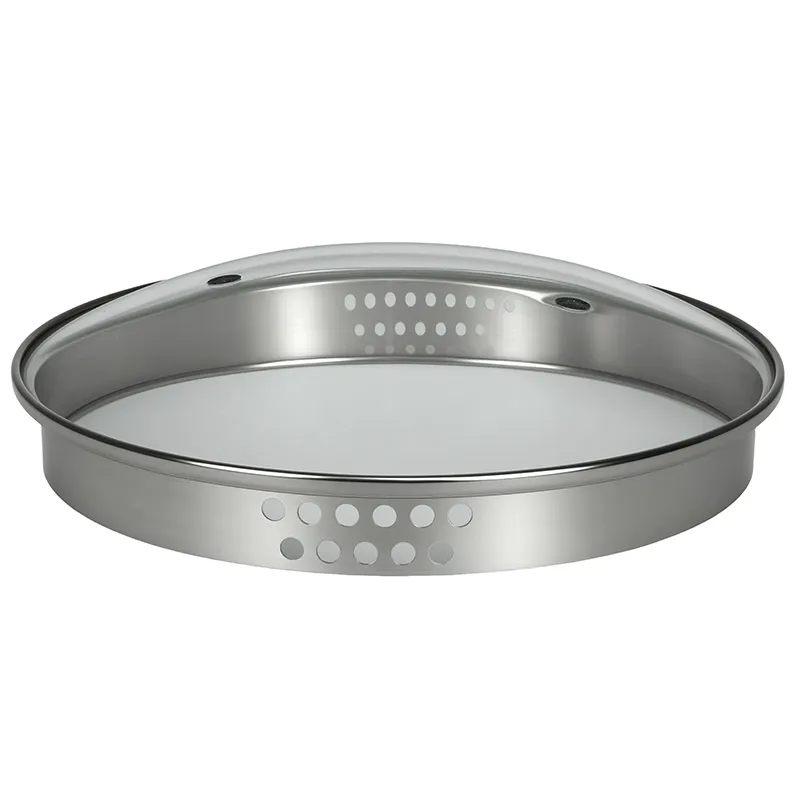
Here's a concrete example of where theory meets practice. Many frosted glass lids with bamboo tops include a steam vent—a small hole in the glass, often with a bamboo or stainless-steel slider. The engineering challenge is multifaceted. The hole is a stress concentrator, so it must be drilled and polished before the glass is tempered. Any micro-crack at the edge will cause the entire lid to shatter during the tempering quench. Post-tempering, you cannot alter the glass.
Then, the bamboo slider component must fit snugly but move smoothly. If the bamboo absorbs moisture and expands, the slider seizes. If the fit is too loose, it rattles and loses its function. We once worked on a project where the slider design was beautiful but utterly impractical. The bamboo 'nub' was too small for greasy fingers to grip easily. It was a classic case of design overruling ergonomics. The solution wasn't high-tech; it was simply making the slider tab larger and adding subtle finger grooves. This kind of iterative fix is born from live feedback, not a CAD model.
This is the unglamorous side of product development. It's not about the mood board; it's about the failure mode and effects analysis (FMEA) for a component that costs less than a dollar to produce but can determine the success of a whole SKU in a competitive retail landscape.
Beyond the Lid: The System It Serves
Finally, it's crucial to remember that a lid doesn't exist in isolation. A frosted glass lid with a bamboo top is designed for a specific pot or bowl, usually made of ceramic, stoneware, or enameled cast iron. The fit is everything. The glass must have the correct 'drop' or vertical curvature to sit flush on the pot's rim. The bamboo handle's height must provide enough clearance for a user's knuckles when gripping it over a hot pot. If the overall system—pot and lid—isn't considered, you end up with a beautiful lid that doesn't seal properly, leading to energy waste and poor cooking results.
Manufacturers who understand this, like those specializing in complete cookware sets, often design the lid and pot as a unit. For a component specialist like EUR-ASIA COOKWARE, their success hinges on providing precise dimensional tolerances and offering a wide range of standard sizes (e.g., 16cm to 28cm diameters in 2cm increments) that align with global cookware norms. Their product line of 'various types of tempered glass lid' suggests this adaptability.
So, when you evaluate a frosted glass with bamboo lid, you're not just judging an object. You're assessing the culmination of material science, manufacturing discipline, ergonomic consideration, and global compliance logistics. The best ones disappear into the user's experience—they feel solid, fit perfectly, clean easily, and look quietly appropriate on the stove. That invisibility is the hallmark of good design and execution, far removed from the mere aesthetic appeal that first catches the eye. It's what turns a simple kitchen accessory into a reliable, daily-used tool.
Related Products
Related Products