- Chinese
- French
- German
- Portuguese
- Spanish
- Russian
- Japanese
- Korean
- Arabic
- Irish
- Greek
- Turkish
- Italian
- Danish
- Romanian
- Indonesian
- Czech
- Afrikaans
- Swedish
- Polish
- Basque
- Catalan
- Esperanto
- Hindi
- Lao
- Albanian
- Amharic
- Armenian
- Azerbaijani
- Belarusian
- Bengali
- Bosnian
- Bulgarian
- Cebuano
- Chichewa
- Corsican
- Croatian
- Dutch
- Estonian
- Filipino
- Finnish
- Frisian
- Galician
- Georgian
- Gujarati
- Haitian
- Hausa
- Hawaiian
- Hebrew
- Hmong
- Hungarian
- Icelandic
- Igbo
- Javanese
- Kannada
- Kazakh
- Khmer
- Kurdish
- Kyrgyz
- Latin
- Latvian
- Lithuanian
- Luxembou..
- Macedonian
- Malagasy
- Malay
- Malayalam
- Maltese
- Maori
- Marathi
- Mongolian
- Burmese
- Nepali
- Norwegian
- Pashto
- Persian
- Punjabi
- Serbian
- Sesotho
- Sinhala
- Slovak
- Slovenian
- Somali
- Samoan
- Scots Gaelic
- Shona
- Sindhi
- Sundanese
- Swahili
- Tajik
- Tamil
- Telugu
- Thai
- Ukrainian
- Urdu
- Uzbek
- Vietnamese
- Welsh
- Xhosa
- Yiddish
- Yoruba
- Zulu
- Kinyarwanda
- Tatar
- Oriya
- Turkmen
- Uyghur

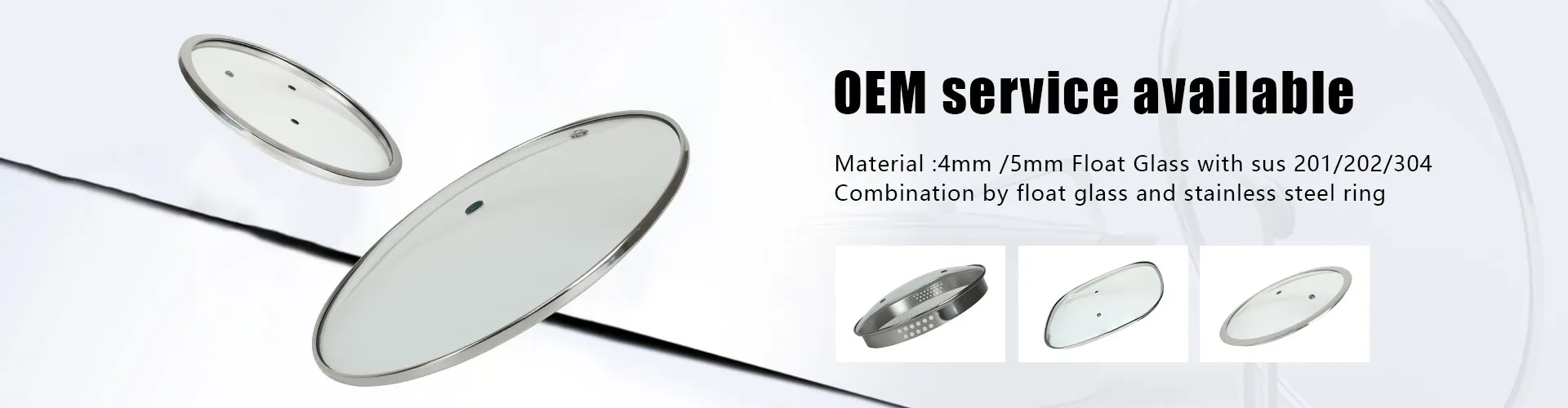
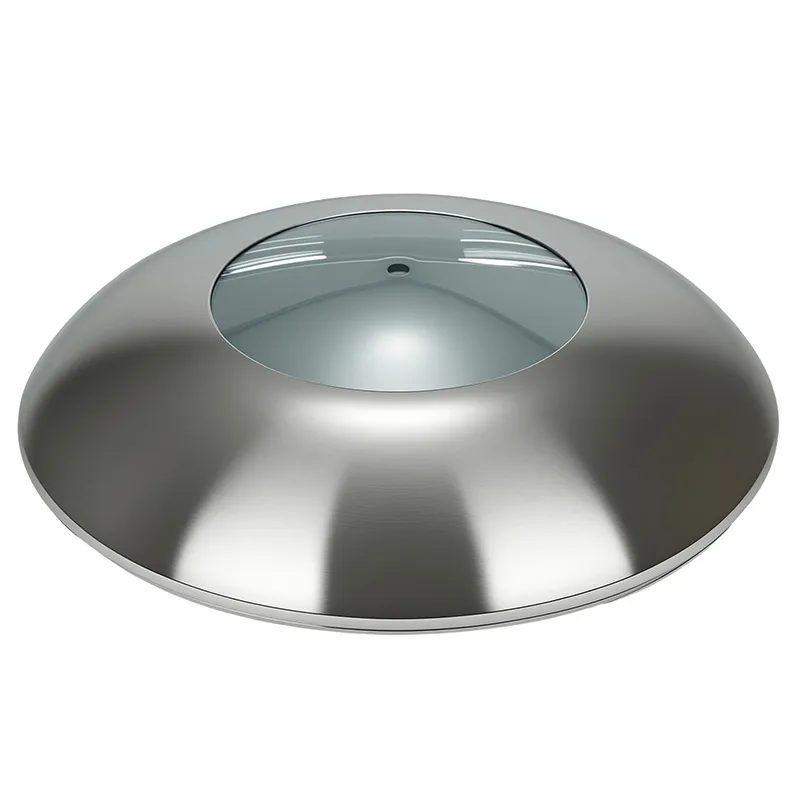
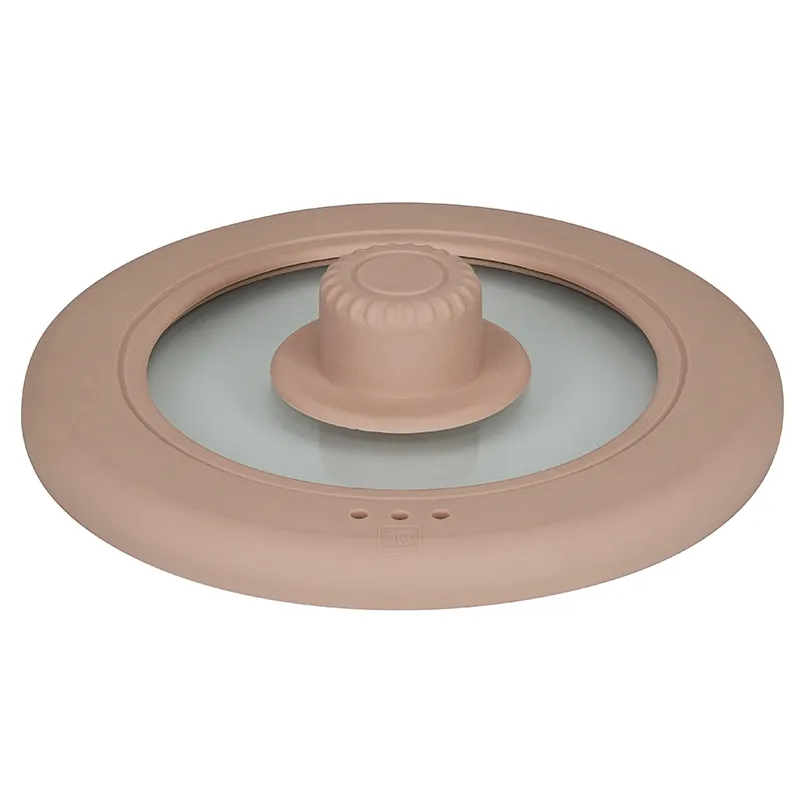
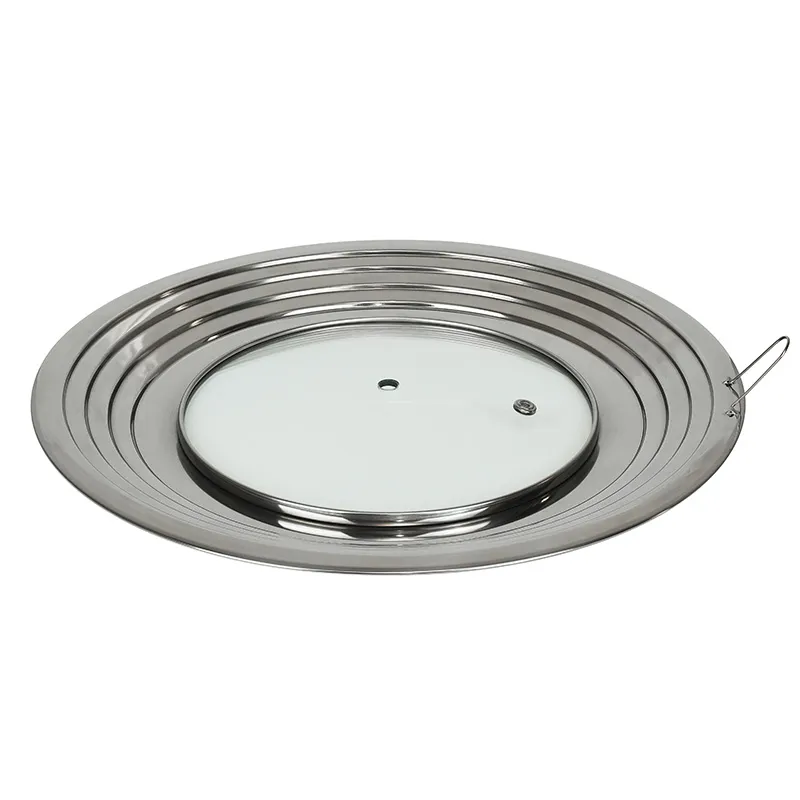
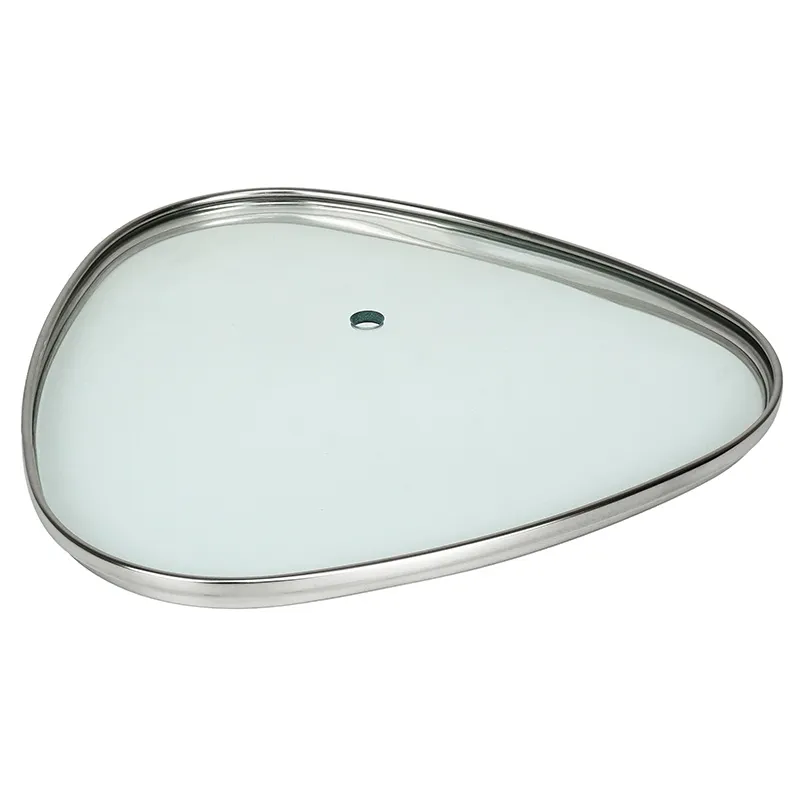
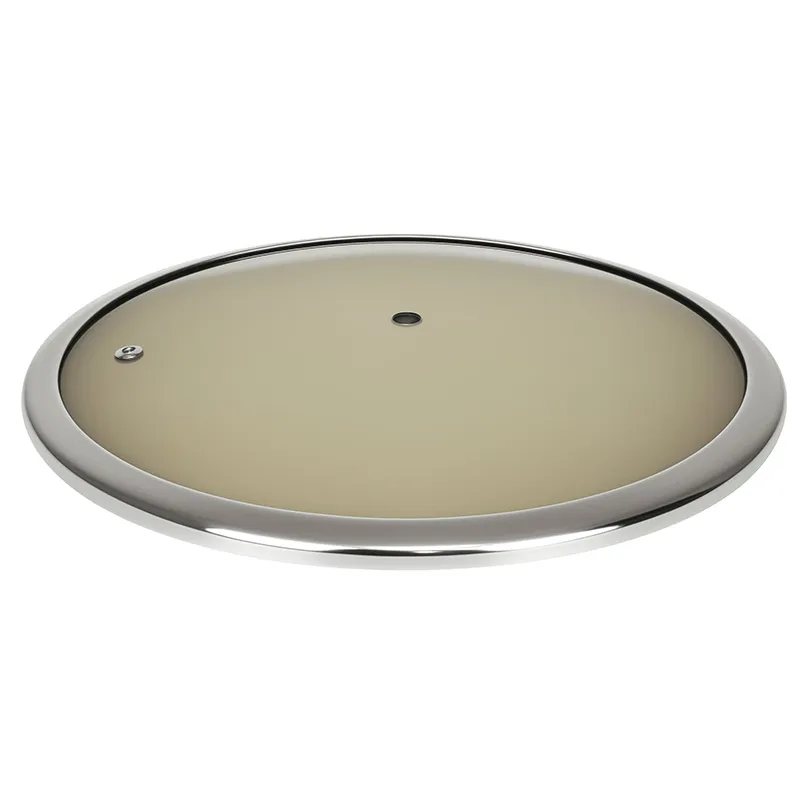
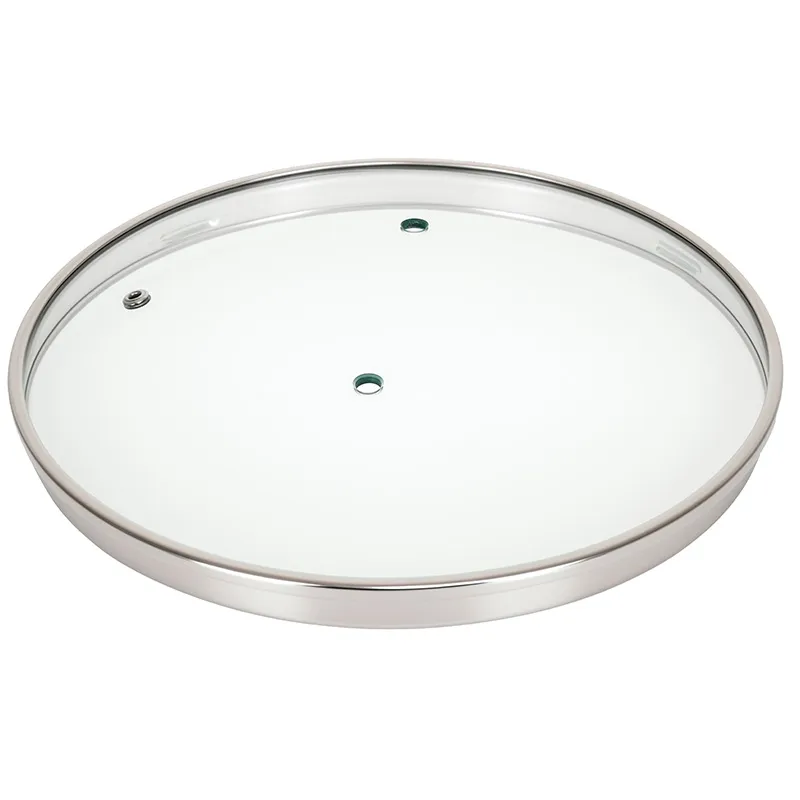
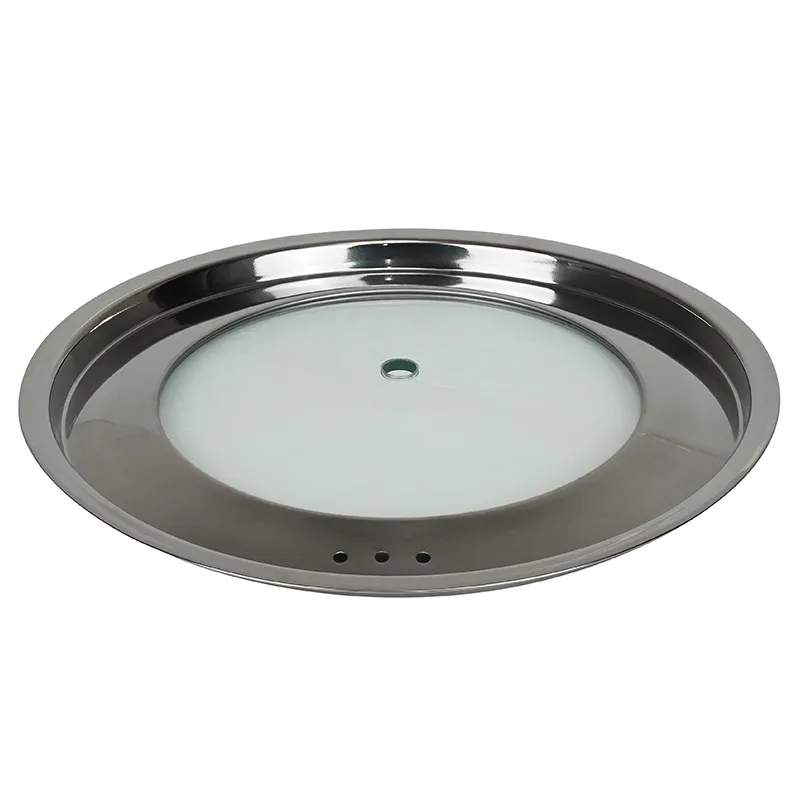
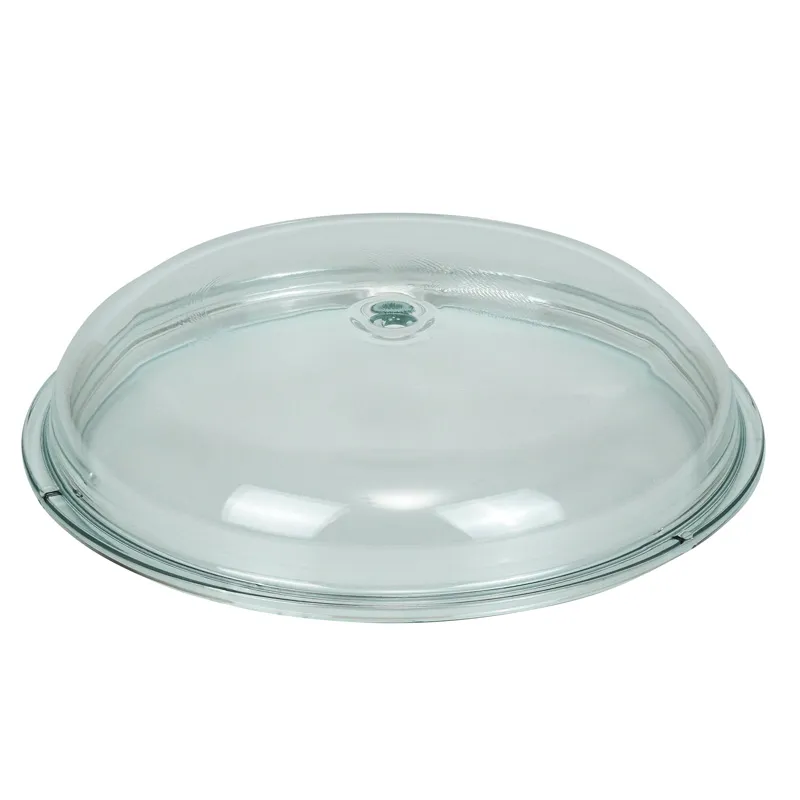
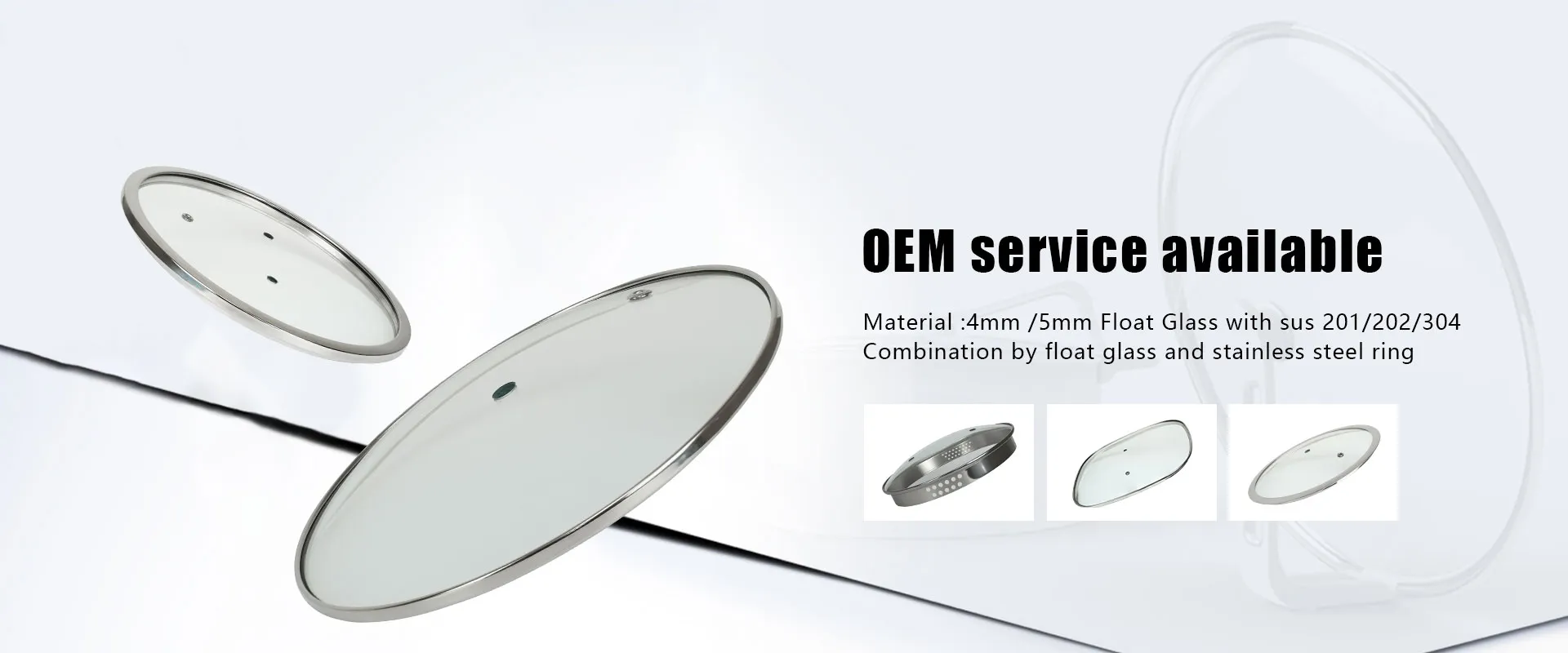
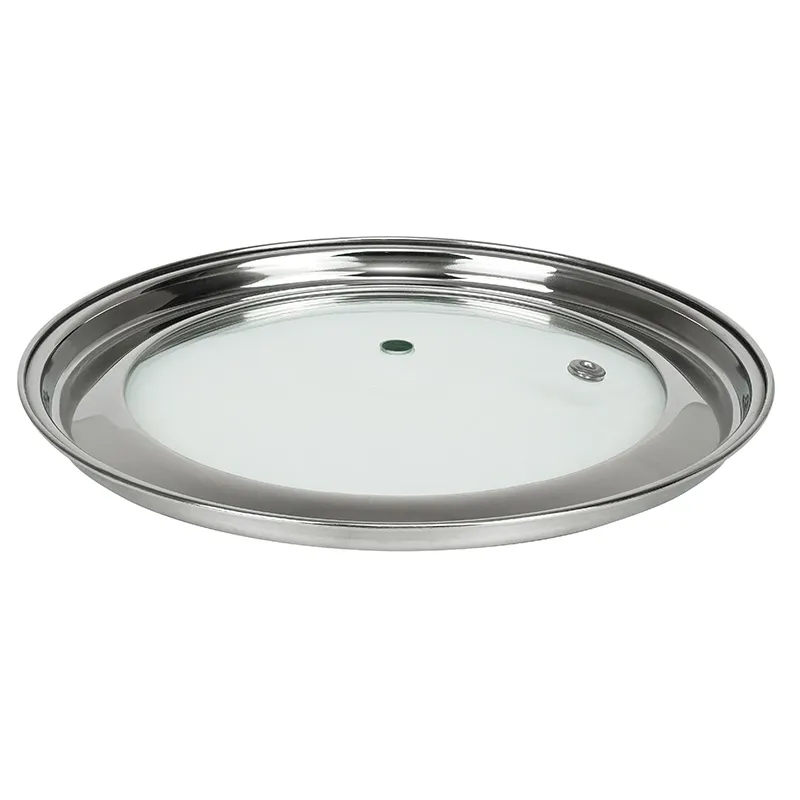
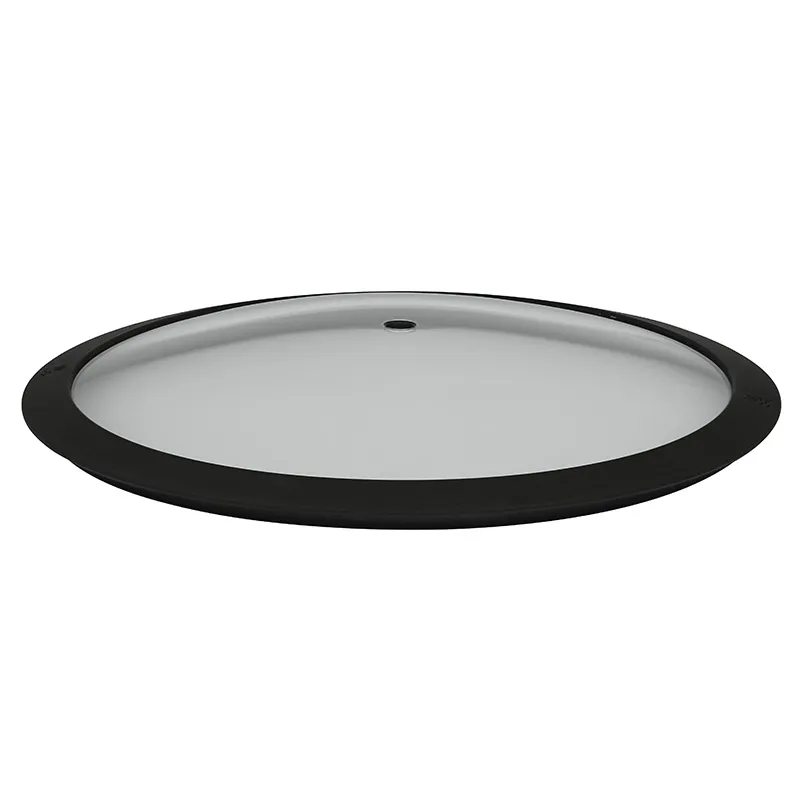
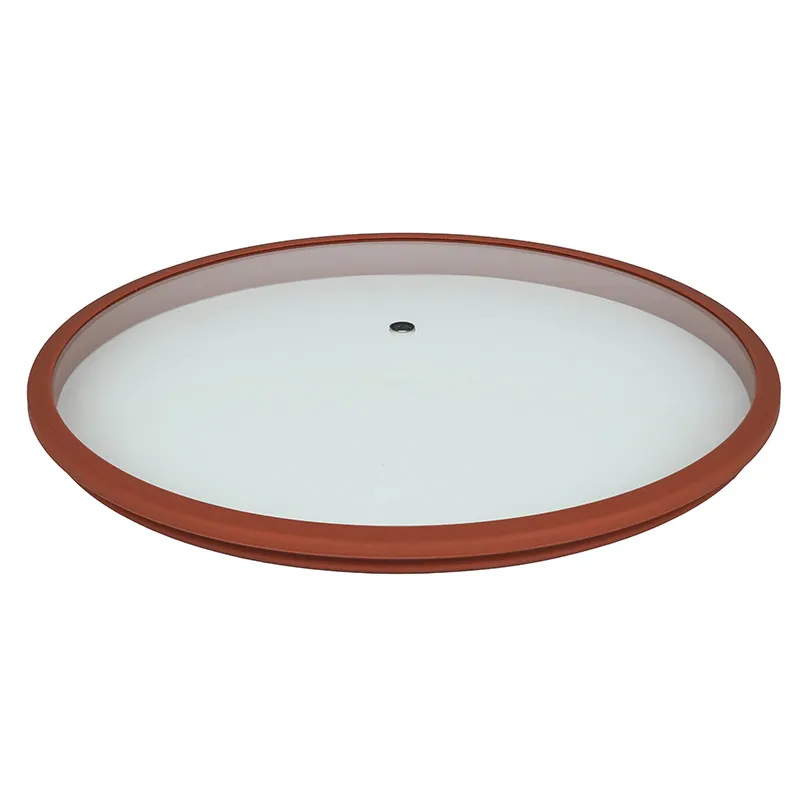
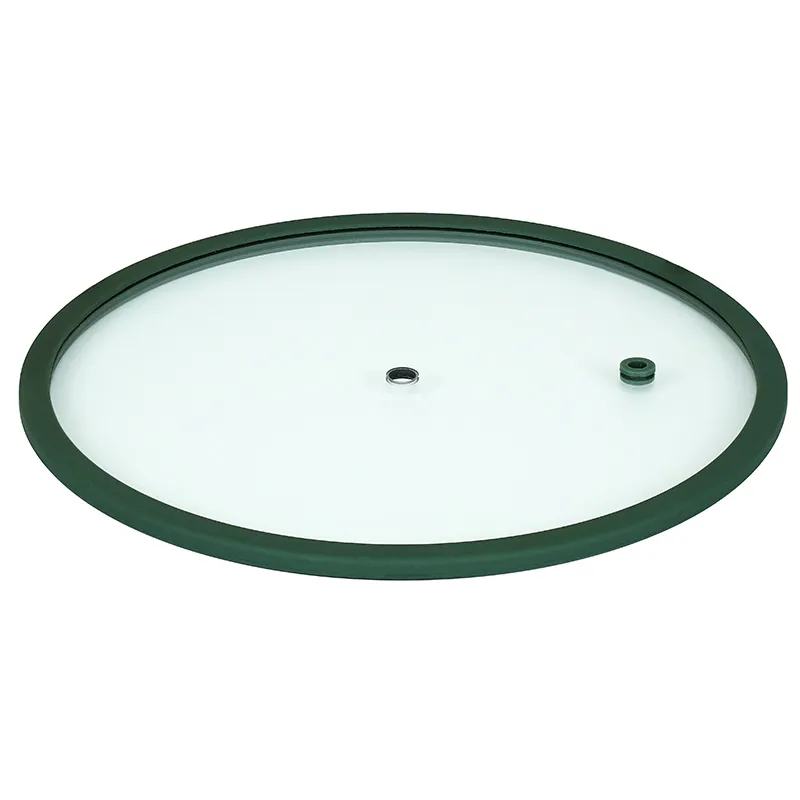
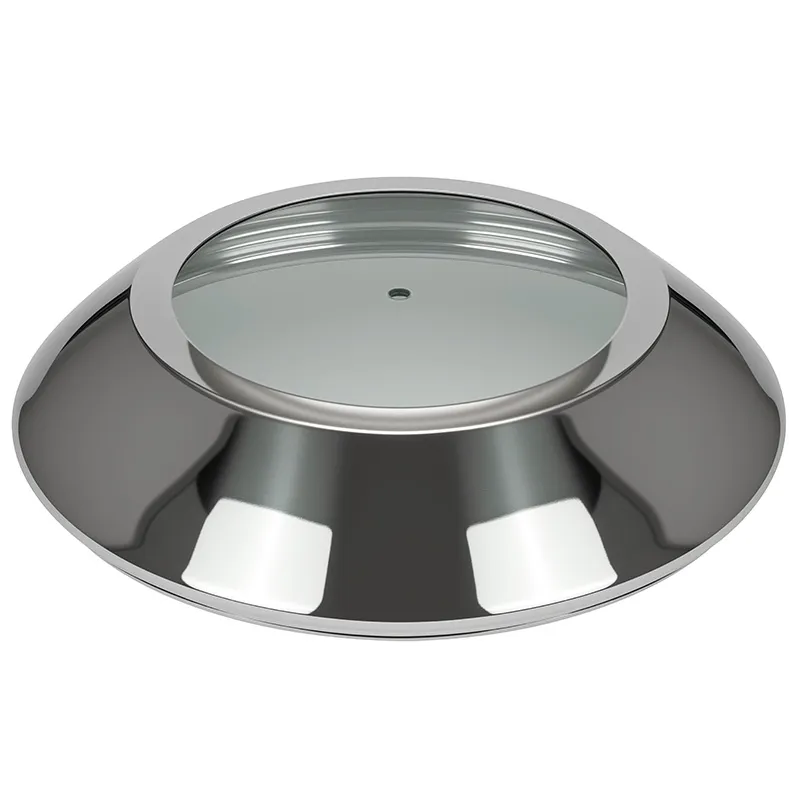
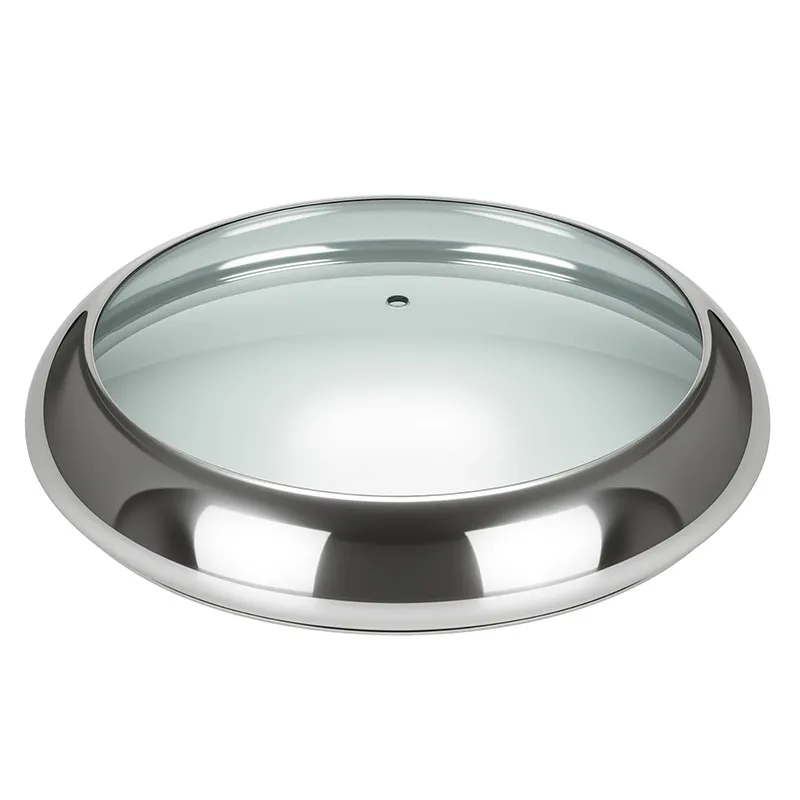
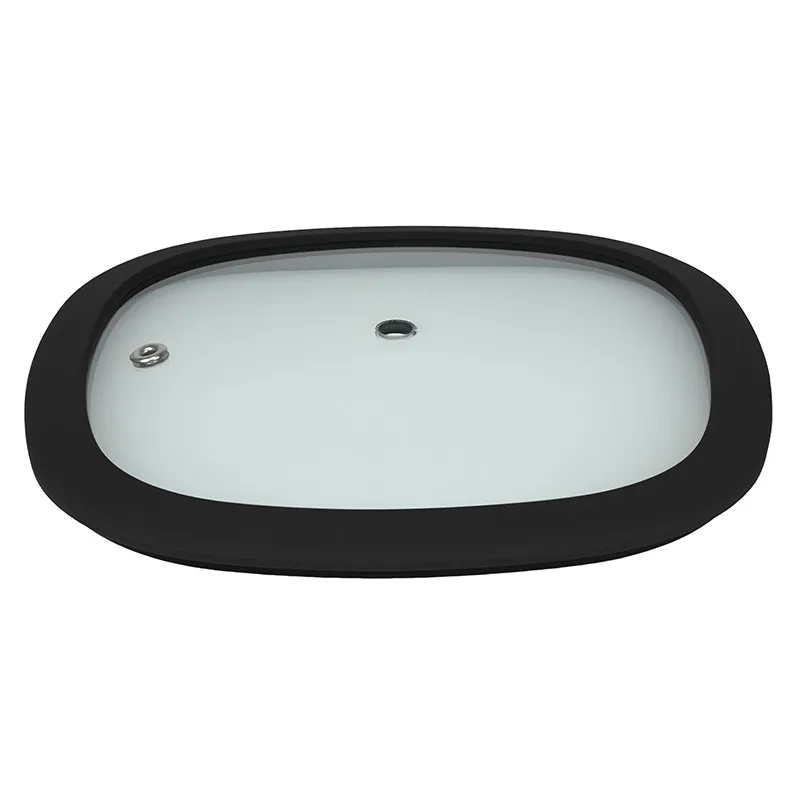
frying pan with glass lid
You see a lot of chatter about the frying pan with glass lid online, often framed as a simple upgrade for the home cook wanting to see their food. That's part of it, sure, but that perspective misses the nuanced trade-offs and the real engineering that separates a good one from a liability. The common mistake is treating the lid as an afterthought—just a piece of glass slapped on top. In reality, the interaction between the pan's material, the seal (or lack thereof), and the thermal properties of the glass defines the entire cooking experience. I've seen plenty of pans where the lid feels like an awkward, ill-fitting cap, doing little more than trapping some steam inefficiently.
Beyond Transparency: The Core Function of a Glass Lid
The primary function isn't just visibility. It's moisture management. A steel or cast iron lid completely seals the environment, which is great for braising but can lead to soggy results when you're trying to sauté and then gently steam vegetables, for instance. A well-designed glass lid with a properly placed steam vent allows for a controlled release. You can visually monitor the condensation level—seeing when the droplets form and roll down—and adjust the heat accordingly without constantly lifting the lid and losing temperature. It's a subtle form of control that becomes second nature.
This is where the quality of the glass and its tempering process is non-negotiable. I recall a batch from a supplier years ago where the thermal shock resistance was just below spec. We didn't catch it in initial tests with gradual heating, but during a rapid cool-down test—simulating someone taking a hot lid off and placing it on a cold, wet counter—we had a failure rate of about 3%. That's catastrophically high. It's not just about strength; it's about consistent, even tempering that can handle the localized stress of a cold drip hitting the hot surface.
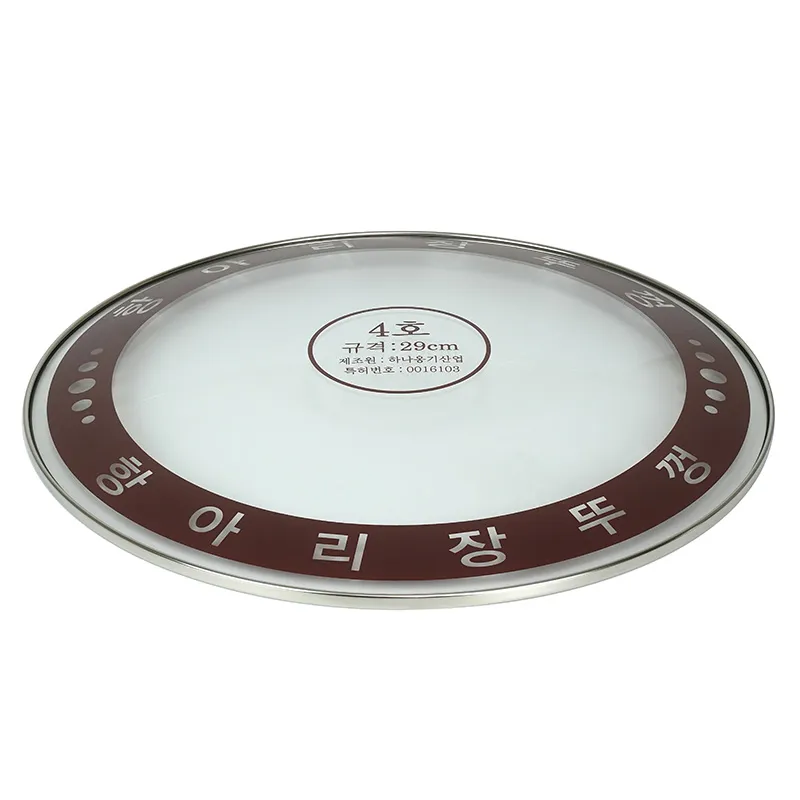
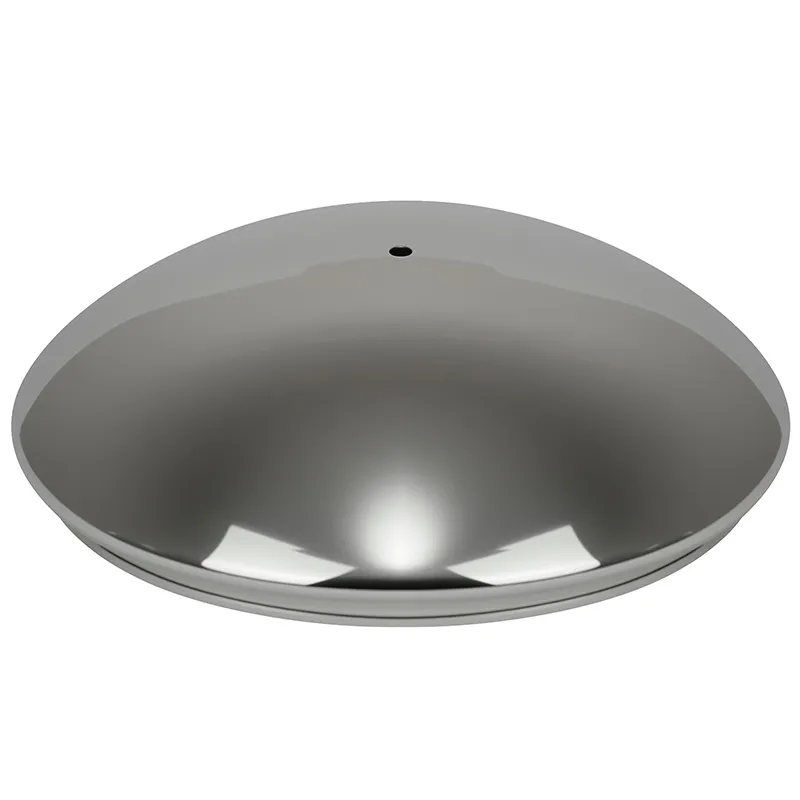
Companies that specialize in this component, like EUR-ASIA COOKWARE CO.,LTD (you can find their specific focus at glass-lid.com), understand this deeply. Their entire operation is built around producing these lids at scale for international markets, which means adhering to a myriad of safety standards from Germany to Japan. Their product line details suggest a focus on the lid as a critical standalone component, not just an accessory. That specialization often translates to better consistency in the radius of the tempered glass edge and the precision of the steam vent hole, which directly affects fit and function.
The Fit and the Seal: Where Most Problems Hide
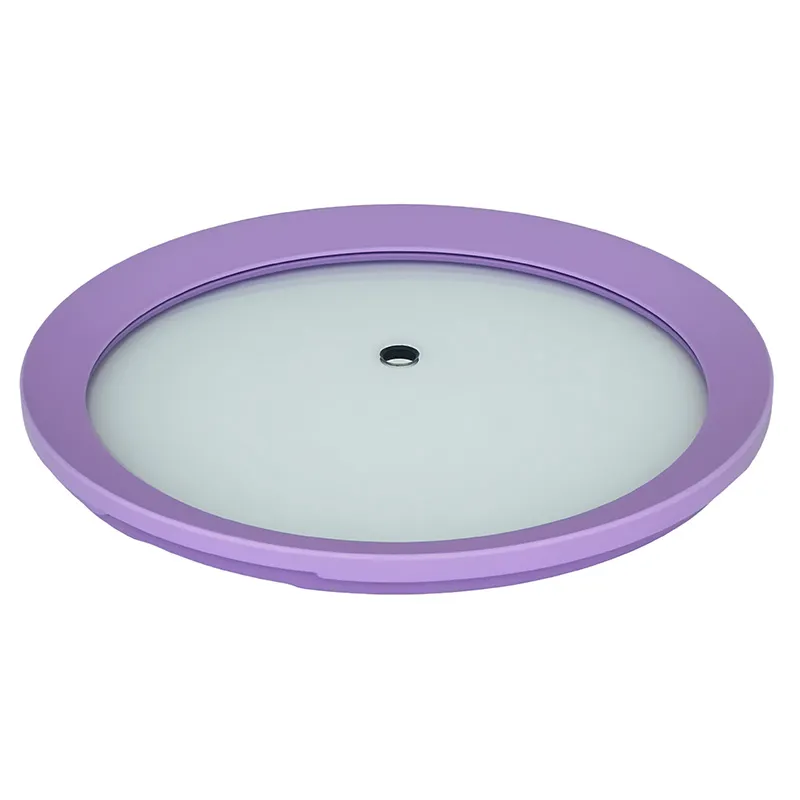
Here's the practical bit most reviews gloss over: the rim. The interface between the glass and the pan's rim is everything. A loose fit lets all your steam and heat escape from the sides, making the lid pointless. An overly tight, gasket-less metal-on-glass seal can chip the glass edge over time, especially with daily use and cleaning. The ideal is a lid that sits snugly with a slight, deliberate gap or incorporates a silicone bead—not for a full seal, but to prevent rattling and micro-chipping.
I've tested pans where the lid was a perfect circle, but the pan's rim had a slight oval deformation from the manufacturing stamping process. The result was two points of contact and a major steam leak. You only find this by physically testing dozens of units, not just reviewing a sample. This is why high-volume manufacturers with rigorous QC, like those supplying the European market, invest in automated optical scanning for lid and rim dimensions. It's the only way to ensure consistency when you're talking about annual outputs in the millions of pieces.
Weight is another subtle factor. A very heavy glass lid can be cumbersome to handle with one hand, especially when it's hot. But a lid that's too light might not sit properly on a bubbling, steam-heavy pan, causing it to chatter. There's a balance. The lids from specialists often get this right by adjusting glass thickness—not just for strength, but for ergonomics and stability during simmering.
Material Pairings and Thermal Reality
Pairing a glass lid with different pan bodies changes its behavior. On an aluminum or stainless steel pan, which heats and cools relatively quickly, the glass lid acts as a heat sink, slightly moderating temperature swings inside. On cast iron, which holds heat aggressively, the glass lid helps contain that radiant heat more effectively than a thinner metal lid might. However, the glass itself should never be the primary heat conductor. I've seen cheap pans with ultra-thin glass that heats up almost as much as the pan itself—a safety hazard and a sure way to warp or crack the lid.
The handle on the lid is critical. Plastic or phenolic knobs are standard, but their attachment point is a failure hotspot. The best designs use a wide, mechanically bonded metal stem that spreads the stress. I prefer a knob that stays relatively cool but also gives enough leverage to lift the lid safely when it's suctioned down by condensation. There's a brand that used a small, all-stainless knob; it looked sleek but became too hot to touch within minutes on a medium-high heat, a clear design oversight for actual use.
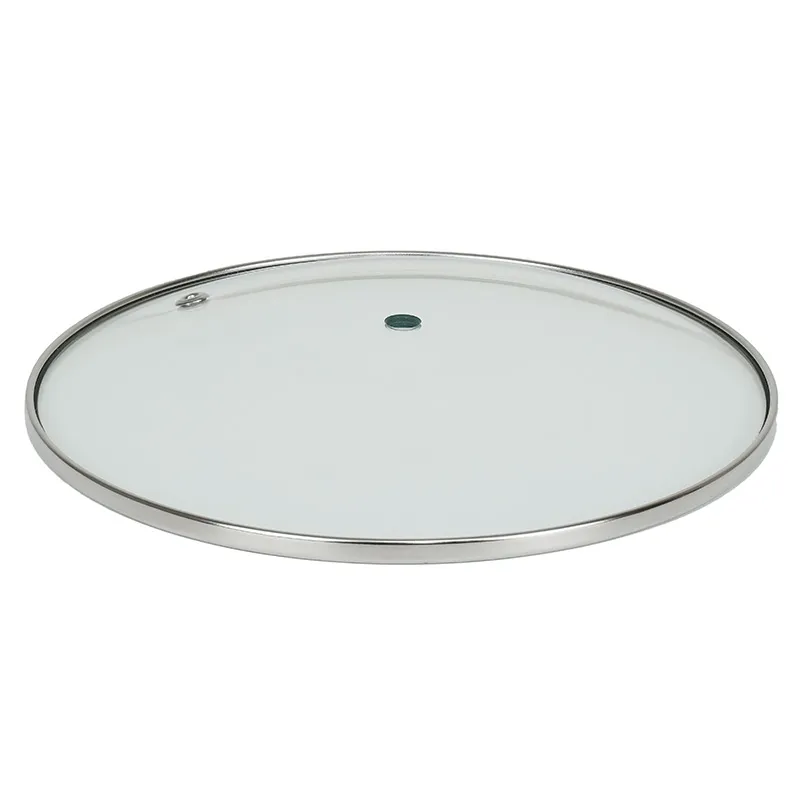
Cleaning is where the practicality is truly tested. A lid with a glued-on gasket around the rim will eventually degrade with dishwasher use. A fully tempered glass lid with a stainless steel rim band, however, is virtually indestructible in home dishwashers. This durability is a key selling point for OEM suppliers catering to Western markets where dishwasher safety is a mandatory certification. The product focus of a company like EUR-ASIA COOKWARE, with its significant export volume to Europe, inherently demands this level of durability testing.
The Export Market as a Quality Benchmark
The fact that a manufacturer exports over 90% of its output, particularly to markets with stringent consumer goods standards like Germany, Switzerland, and Japan, is a tangible indicator. It's not just about price competitiveness. It means their frying pan with glass lid components must routinely pass tests for thermal shock (like going from a 250°C oven to a 20°C water bath), mechanical impact, and food-safety of any accompanying materials. These aren't casual benchmarks.
This global demand also shapes design. A lid for the South Korean market might have different preferred handle shapes or glass tint levels than one destined for Italy. A specialized producer has to manage these variations without compromising the core safety specs. It's a complex logistics and engineering challenge that a generic factory wouldn't bother with. When you see a lid from a company with this export profile on a mid-to-high-end pan, it's often a sign that the brand has invested in a competent component supplier.
Their stated production scale—15 million pieces annually from a dedicated facility—also implies a degree of automation and process control that minimizes the human error factor in glass cutting and tempering. For a safety-critical component, that consistency is as important as the design itself.
In Practice: A Tool, Not a Gimmick
So, is a glass lid essential? No. For high-heat searing, you often want no lid at all. For a long braise, a heavy, tight-sealing Dutch oven lid is superior. But for the vast middle ground of everyday cooking—pan-frying chicken and then letting it rest in covered warmth, steaming green beans to crisp-tender, monitoring a simmering sauce without splatter—a well-executed glass lid is incredibly useful. Its value isn't in being a universal solution, but in being a precise tool for visual feedback and gentle moisture control.
The failure is in expecting it to perform like a different tool. It won't pressure-cook your food, and it shouldn't create a perfect seal. Its job is to offer a window and moderate the environment. When you lift it, the condensation should bead and roll cleanly, not smear—a sign of good glass surface tension and cleanliness.
Ultimately, the best frying pan with glass lid combinations treat the lid as an integrated part of the system. It's not about finding the most beautiful lid, but the most functionally appropriate one for the pan it's paired with. The specialization of component makers has pushed this niche forward, moving it from a basic see-through cover to a considered piece of kitchen equipment that, when done right, you stop noticing—because it just works without fuss. And that's the real mark of a good tool.
Related Products
Related Products