- Chinese
- French
- German
- Portuguese
- Spanish
- Russian
- Japanese
- Korean
- Arabic
- Irish
- Greek
- Turkish
- Italian
- Danish
- Romanian
- Indonesian
- Czech
- Afrikaans
- Swedish
- Polish
- Basque
- Catalan
- Esperanto
- Hindi
- Lao
- Albanian
- Amharic
- Armenian
- Azerbaijani
- Belarusian
- Bengali
- Bosnian
- Bulgarian
- Cebuano
- Chichewa
- Corsican
- Croatian
- Dutch
- Estonian
- Filipino
- Finnish
- Frisian
- Galician
- Georgian
- Gujarati
- Haitian
- Hausa
- Hawaiian
- Hebrew
- Hmong
- Hungarian
- Icelandic
- Igbo
- Javanese
- Kannada
- Kazakh
- Khmer
- Kurdish
- Kyrgyz
- Latin
- Latvian
- Lithuanian
- Luxembou..
- Macedonian
- Malagasy
- Malay
- Malayalam
- Maltese
- Maori
- Marathi
- Mongolian
- Burmese
- Nepali
- Norwegian
- Pashto
- Persian
- Punjabi
- Serbian
- Sesotho
- Sinhala
- Slovak
- Slovenian
- Somali
- Samoan
- Scots Gaelic
- Shona
- Sindhi
- Sundanese
- Swahili
- Tajik
- Tamil
- Telugu
- Thai
- Ukrainian
- Urdu
- Uzbek
- Vietnamese
- Welsh
- Xhosa
- Yiddish
- Yoruba
- Zulu
- Kinyarwanda
- Tatar
- Oriya
- Turkmen
- Uyghur


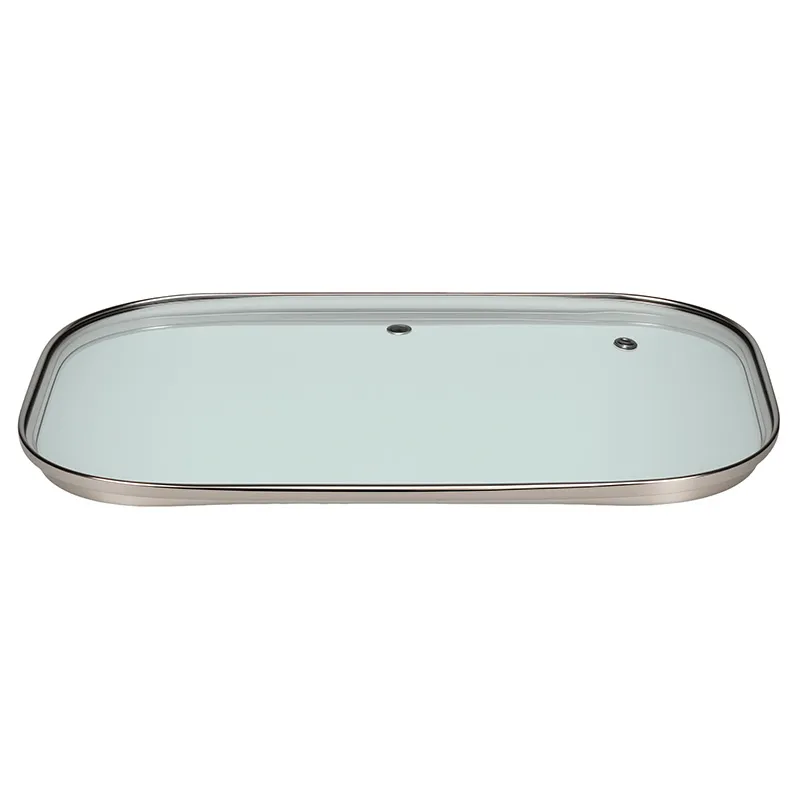
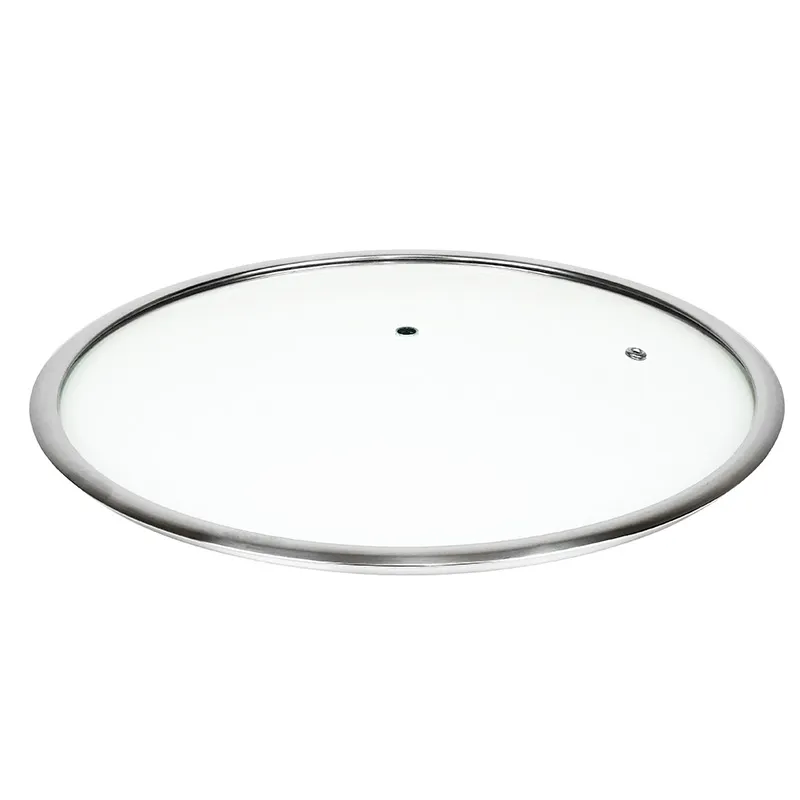
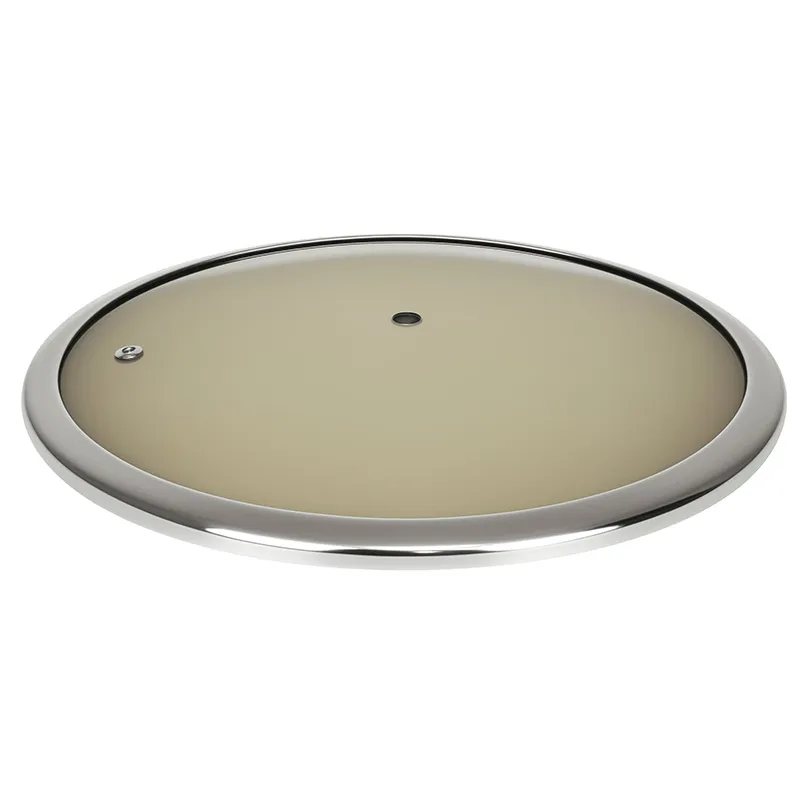
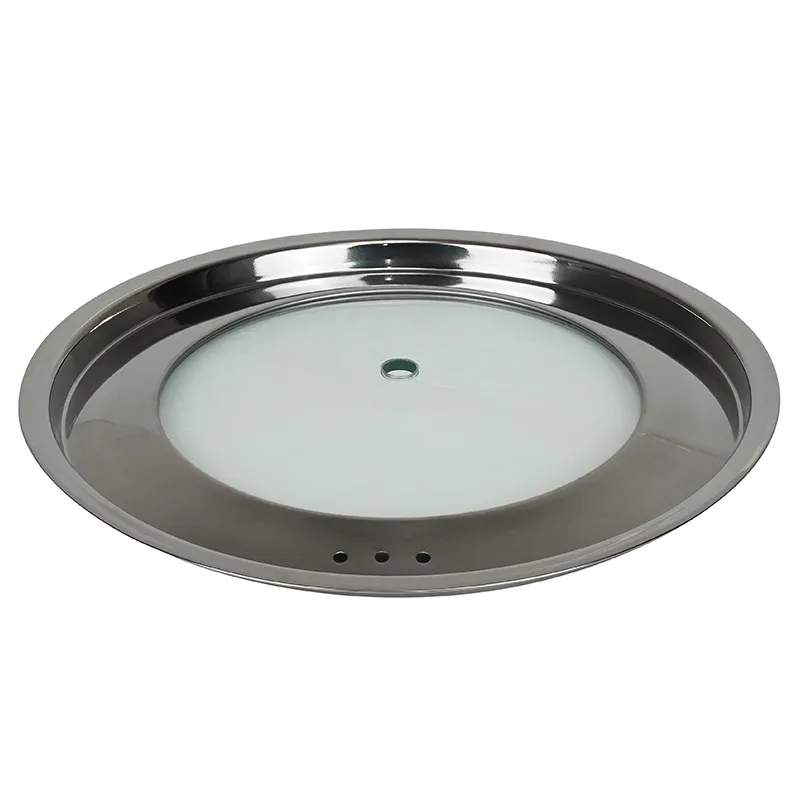
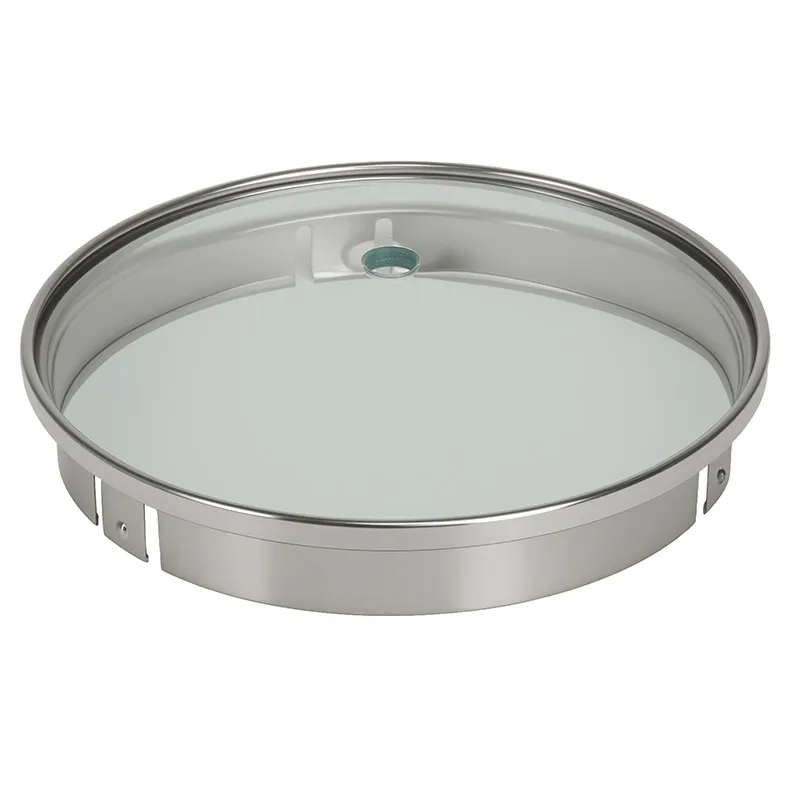
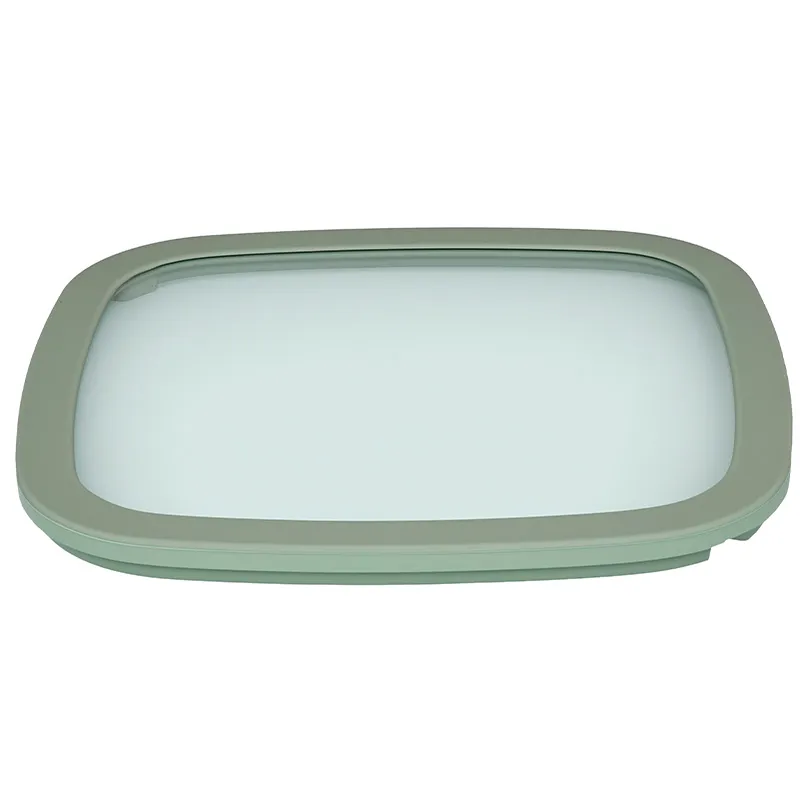
G type,T type ,C type , Rectangle,Square glass lid
If you've ever sourced or specified glass lids, you've seen the alphabet soup: G type, T type, C type. On paper, they're just profiles. In practice, they're a minefield of assumptions. A common mistake is thinking a Rectangle lid is just a stretched Square glass lid. The stress distribution changes entirely, and if your handle or knob placement doesn't account for that, you'll get more callbacks than you'd like. I learned that the hard way, early on.
Decoding the Profile Alphabet
The G-type, often called the full wrap, is the workhorse. It has a deep, continuous channel that grips the pot rim. Good sealing, feels substantial. But on larger Rectangle formats, that deep channel can be a pain in molding—if the glass isn't heated evenly during tempering, you get stress points that might not show up until a customer drops it in a sink. I've seen batches where the long sides of a rectangular G-type lid had a slightly higher rate of spontaneous fracture. Not many, maybe 0.5%, but enough to make you question the mold design and the cooling jets.
The T-type is sleeker, a shallower lip. Popular for modern lines. It sits on the rim, not around it. The catch? On square lids, it's fine. On a long rectangular lid, especially a thin one, it can rock if the pot rim isn't perfectly flat. You need a much tighter tolerance on both the lid and the cookware. We had a project with a European client who insisted on a large, thin T-type rectangle for a gourmet line. The first samples failed the rock test on 30% of their matching pots. The fix wasn't the lid, but a conversation about their pot rim spec.
Then there's the C-type. Simple folded edge. Cost-effective, less material. It's the go-to for many basic lines. But here's the nuance: for a Square glass lid, it's often perfectly stable. The symmetry helps. For rectangles, the weakness is at the corners. A C-profile corner is a sharper bend. In transit, if packs aren't stacked right, that's where you'll find micro-chips. I remember inspecting a shipment at EUR-ASIA COOKWARE CO.,LTD's facility in Taian. They showed me how they pad the corners individually for their long C-type rectangular lids bound for Germany. It added cost, but cut damage claims by half. That's practical experience you don't get from a spec sheet.
The Geometry of Heat and Stress
A square lid is predictable. Heat expands evenly from the center. Tempering is straightforward. The moment you go rectangular, you introduce a dominant axis. During the quenching process, the long sides cool and contract at a different rate than the short sides. If the air jets aren't calibrated for the aspect ratio, you get uneven tension. This isn't theoretical. I've seen lids that passed a basic impact test but failed under repeated thermal shock—small hairline cracks appearing parallel to the long edge after a dozen cycles from freezer to stove.
This is where a producer's experience shows. A company like EUR-ASIA, with an annual output of 15 million pieces, has seen every failure mode. Their production base in Shandong's High-tech Zone has the scale to run dedicated lines. They might temper Square glass lid batches with one jet configuration, and switch it for a long Rectangle batch. A smaller shop might use a one-size-fits-all setting, and that's where risk creeps in. The fact that over 90% of their output goes to markets like Germany and Japan, known for brutal quality checks, tells you they've had to solve these physics problems.
Handle placement is another geometry game. On a square, you center it. On a rectangle, instinct says center it on the long axis. But if the lid is heavy glass, and the handle is a low-profile metal knob, a user will grab it along the centerline of the shorter side for balance. If you put the knob dead center of the whole lid, their hand is off-balance. It feels awkward. We prototyped a lid once where we offset the knob slightly towards one of the shorter edges. User feedback was surprisingly positive for better balance, even though the weight distribution hadn't changed. Perception is part of the spec.
Material Thickness: The Silent Spec
Specs often just say tempered glass lid. The thickness is a footnote. But for rectangles, thickness is structural. A 3mm thick square lid feels rigid. A 3mm thick rectangle with a 30cm span can have a slight flex in the middle. That flex isn't a breakage risk per se, but it feels cheap to the user. It also changes how the G type or C type channel seats. We moved to 4mm as standard for any rectangle over 28cm in length. The cost went up, but the premium feel and the reduction in flex complaints were worth it.
However, thicker glass demands more from the profile. A thick glass edge bent into a tight C-type profile has higher internal stress at the bend. It requires more precise control during the softening phase before tempering. I recall a visit where EUR-ASIA's engineers explained they run a slower heating cycle for their thicker C-type lids to ensure even core temperature before forming. It reduces hourly output, but it's necessary. That's the kind of trade-off a real factory floor discusses, not a catalog.
Then there's the edge finish. A ground and polished edge on a thick rectangle feels luxurious. But it adds steps. A fire-polished edge is faster. The choice often comes down to the price point of the final cookware set. For their high-level lines, you'll see that polished edge, even on the long sides where polishing evenly is trickier.
Logistics and the Fragile Rectangle
This is the part nobody thinks about until the warehouse calls. Square glass lid packs neatly. You can stack them in a grid. Rectangles, especially long ones, create void spaces in a carton. They're more prone to shifting. If they shift, the edges—particularly the vulnerable corners of a T-type or C-type—knock against each other. Even with edge protectors, the constant tapping during ocean freight can cause chipping.
The solution is custom die-cut inserts. It sounds simple, but it adds packaging cost. Many buyers try to cut that corner. I've advised against it every time. One client didn't listen, used a generic corrugated divider for a shipment of long rectangular lids to Brazil. The damage rate was 8%. The savings on packaging were wiped out ten times over. Now, when I see EUR-ASIA's website (glass-lid.com) highlighting their export volume to dozens of countries, I know they've mastered this logistical dance. Getting millions of fragile items to Turkey, Brazil, and Poland in sellable condition is a testament to their packing protocols.
Stacking in the warehouse is another issue. You can't stack pallets of rectangular lids as high as square ones. The longer span makes the bottom boxes in the stack susceptible to compression damage if the stack is too tall. It's a space efficiency trade-off. Their 15,000 ㎡ building area needs to account for this lower stacking height for certain product lines.
The Evolution of a Product Line
Looking at a broad-range producer's catalog tells a story. Early on, you might see mostly squares and standard rounds. The Rectangle and oval lids come later, as they respond to market trends for rectangular braisers and oval Dutch ovens. The profiles evolve too. You might start with just G-type for everything. Then, as design trends shift, you introduce the T-type for a euro-look line. The C-type might be developed specifically for a cost-sensitive market segment.
EUR-ASIA COOKWARE CO.,LTD's range, covering low to high level, reflects this. They have to offer all profiles across all shapes. That means maintaining molds for a G-type square, a G-type rectangle, a T-type square, a T-type rectangle... it multiplies quickly. The management of this mold library is a huge operational task. It also means their R&D isn't just about creating new things, but about refining the manufacturing of existing ones—like how to shorten the cycle time for a particular rectangle mold without compromising strength.
Finally, it all loops back to the user. All these technicalities—profile type, geometry, thickness—mean nothing if the lid doesn't feel right when a home cook picks it up. The click of a T type seating on a pot, the heft of a thick Rectangle lid, the clear view through a pristine Square glass lid. That's the end goal. The years of solving breakage, logistics, and thermal stress are all in service of that simple, reliable moment in a kitchen, whether it's in Switzerland or South Korea. The real expertise is making the complex utterly invisible.
Related Products
Related Products