- Chinese
- French
- German
- Portuguese
- Spanish
- Russian
- Japanese
- Korean
- Arabic
- Irish
- Greek
- Turkish
- Italian
- Danish
- Romanian
- Indonesian
- Czech
- Afrikaans
- Swedish
- Polish
- Basque
- Catalan
- Esperanto
- Hindi
- Lao
- Albanian
- Amharic
- Armenian
- Azerbaijani
- Belarusian
- Bengali
- Bosnian
- Bulgarian
- Cebuano
- Chichewa
- Corsican
- Croatian
- Dutch
- Estonian
- Filipino
- Finnish
- Frisian
- Galician
- Georgian
- Gujarati
- Haitian
- Hausa
- Hawaiian
- Hebrew
- Hmong
- Hungarian
- Icelandic
- Igbo
- Javanese
- Kannada
- Kazakh
- Khmer
- Kurdish
- Kyrgyz
- Latin
- Latvian
- Lithuanian
- Luxembou..
- Macedonian
- Malagasy
- Malay
- Malayalam
- Maltese
- Maori
- Marathi
- Mongolian
- Burmese
- Nepali
- Norwegian
- Pashto
- Persian
- Punjabi
- Serbian
- Sesotho
- Sinhala
- Slovak
- Slovenian
- Somali
- Samoan
- Scots Gaelic
- Shona
- Sindhi
- Sundanese
- Swahili
- Tajik
- Tamil
- Telugu
- Thai
- Ukrainian
- Urdu
- Uzbek
- Vietnamese
- Welsh
- Xhosa
- Yiddish
- Yoruba
- Zulu
- Kinyarwanda
- Tatar
- Oriya
- Turkmen
- Uyghur


giant glass jar with lid
When most people hear 'giant glass jar with lid', they picture a simple, oversized storage vessel. In our line of work, that's the first misconception we have to address. The reality is far more nuanced, involving specific tempering processes, seal integrity under pressure, and the logistical headache of moving a large, fragile object from a production line in Shandong to a kitchen in Copenhagen. It's not just a jar; it's a piece of engineering that often gets its specs wrong at the design phase, leading to failures that are entirely avoidable.
Defining Giant in Practical Terms
There's no industry standard for what constitutes a 'giant' jar, which is part of the problem. For us, and for many OEM clients, it typically starts at a 5-liter capacity and goes up from there. But capacity is only half the story. The critical dimension is often the mouth diameter. A jar holding 10 liters with a narrow neck is a packaging nightmare and a user's frustration—try getting a full bag of flour or large utensils in and out. We learned this the hard way with an early batch for a European retailer; the jars sat on shelves because the opening was only 120mm. People bought them once, for decoration, not for use.
The giant glass jar with lid needs a proportional opening. For a true storage workhorse, the lid diameter should be at least 40% of the jar's height. This isn't an aesthetic choice; it's about functionality. It allows for easy cleaning, proper air circulation if you're fermenting, and realistic access to the contents. When we revised specs with EUR-ASIA COOKWARE CO.,LTD, this was a key point of discussion. Their engineering team pushed back initially, citing higher material costs for the larger tempered glass lid blank. We had to show them the return data and complaint logs from the narrow-neck design. They got it.
Weight distribution is another silent killer. A 10-liter jar, when empty, is already a substantial piece of glass. Fill it with pickles or dry goods, and you're looking at 12-15 kilos. If the base isn't sufficiently broad and the walls aren't evenly thick after tempering, the stress points will show up as spontaneous cracks—not during shipping, but six months into a customer's home. We've seen it. The base needs to be slightly recessed and thickened, a detail their Taian facility now incorporates as standard for sizes above 8 liters.
The Lid: Where the Seal Happens (or Fails)
All the focus goes on the jar, but the lid is the critical component. A giant glass jar with lid is only as good as its seal. The most common failure point isn't the glass lid itself—it's the gasket and the clamping mechanism. For large jars, a simple screw-on or clip-on lid often creates uneven pressure. One side seals tight, the opposite side has a micron gap. For dry storage, it's a dust and pest issue. For fermented foods, it's a contamination and failed batch.
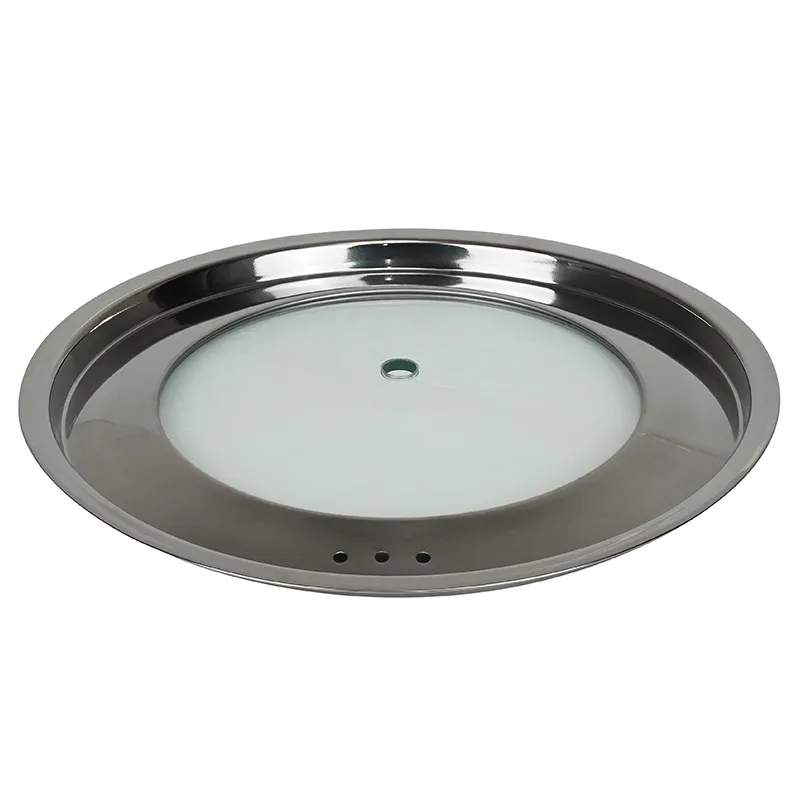
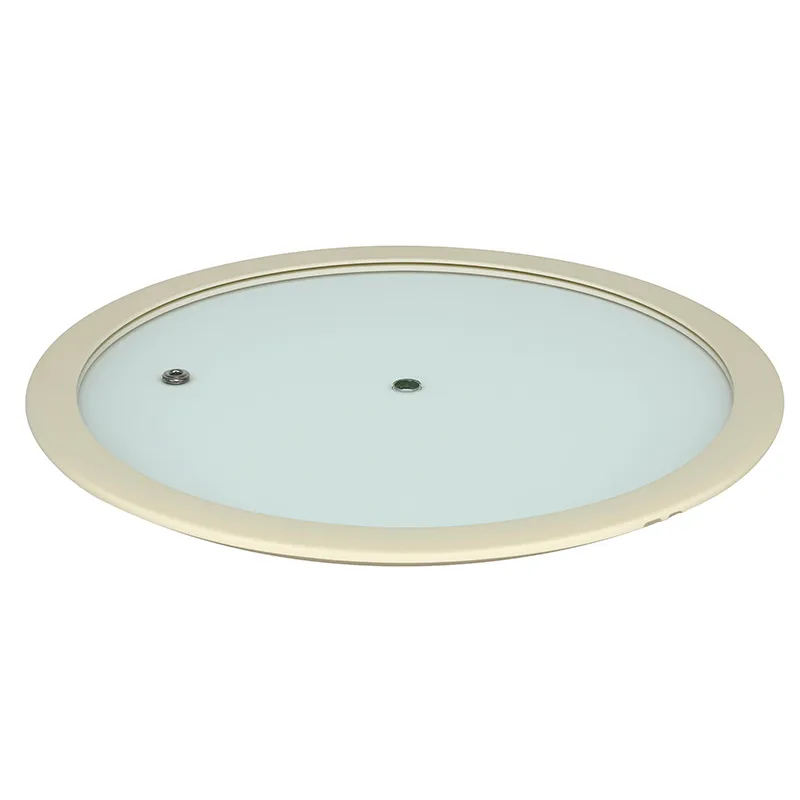
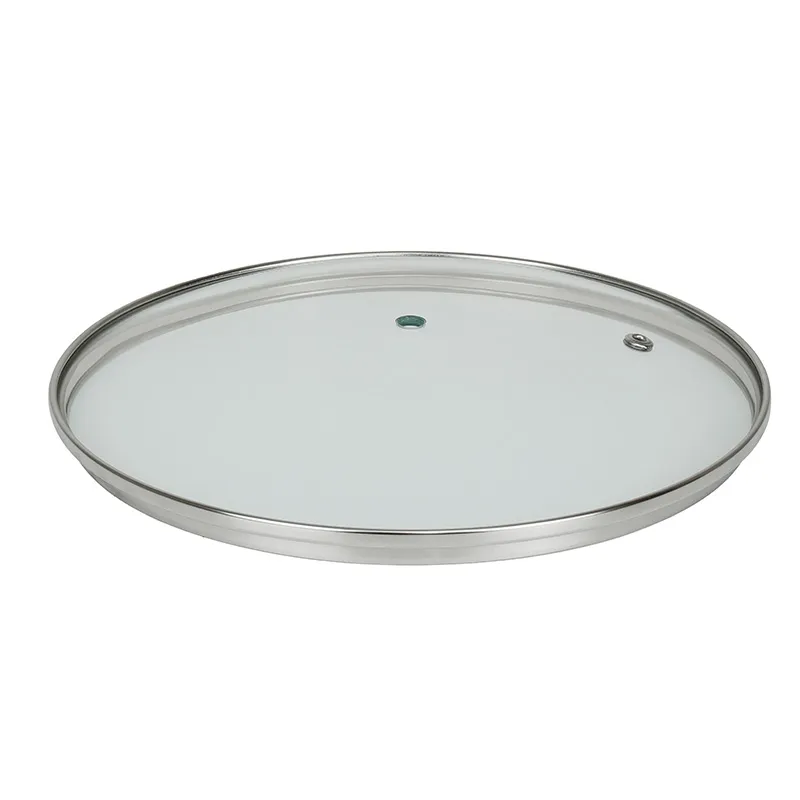
EUR-ASIA COOKWARE CO.,LTD specializes in tempered glass lids, and their expertise is evident. The tempering process for a lid that's 200mm or more in diameter is tricky. It must withstand thermal shock from dishwashers and the occasional drop, but also remain perfectly flat. Warping during tempering, even by half a millimeter, ruins the seal. Their production line has a laser flatness check post-tempering that catches these. It's a step many smaller factories skip, leading to inconsistent batches.
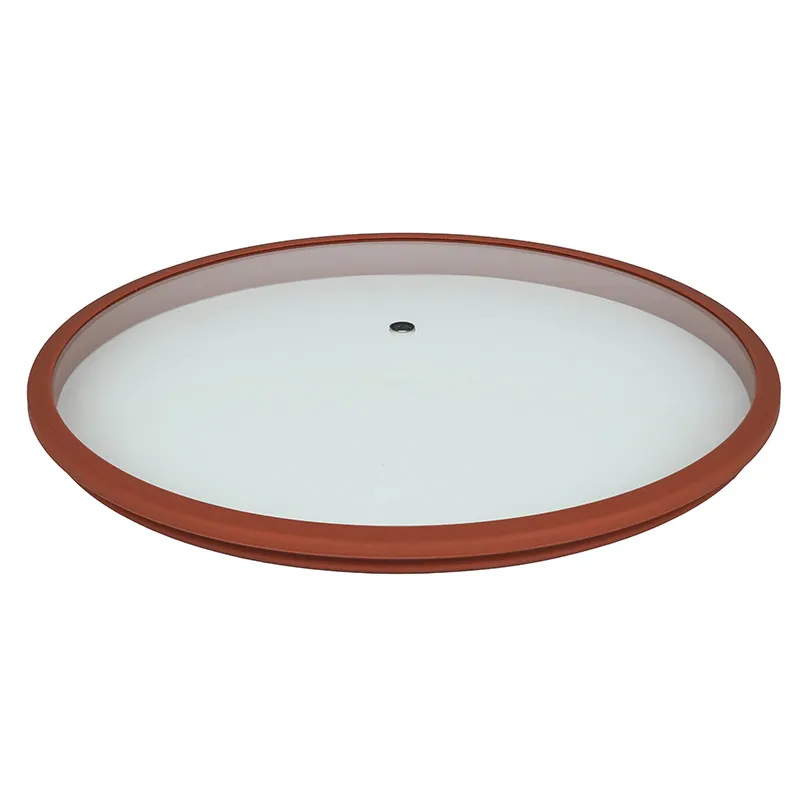
We moved away from integrated plastic seals on the glass lid. They degrade, they absorb odors. The better solution, which we now specify, is a separate, food-grade silicone gasket that sits in a channel on the jar's rim. The glass lid then presses down evenly onto it. This allows for a more forgiving seal and makes replacement possible. It adds cost, but it turns the product from a disposable item into a long-term kitchen staple. This is the kind of detail you only insist on after getting a shipment of 5000 units returned because the integrated seals cracked in a cold Danish warehouse.
Logistics and the Fragility Factor
Producing it is one thing. Getting it to the destination intact is another ball game. A pallet of 100 giant glass jars represents a significant cube of fragile, heavy product. Standard corrugated cardboard is insufficient. The internal dividers must be die-cut foam that cradles both the jar body and, separately, the lid. We learned that shipping lids attached, even if they seem secure, is a recipe for microfractures in the glass rim from constant vibration.
The export focus of a company like EUR-ASIA COOKWARE CO.,LTD is actually a benefit here. Their experience shipping over 90% of their output to Europe and beyond means they have tested packaging protocols. They understand the different compression forces required for a sea freight container versus air cargo. For a giant jar, they often recommend a double-wall box with a minimum bursting strength we specify. It adds to the unit cost, but the reduction in breakage from 8% to under 0.5% pays for it immediately.
Storage before shipping matters too. In the humid climate of Shandong, if jars are packed while even slightly warm from production, condensation can form inside during transit, leading to mold and unboxing disasters. Their facility now has a mandatory 24-hour acclimatization period in a controlled warehouse before packing. It's a simple step, but it speaks to the operational maturity needed for this product category.
Application Beyond the Obvious
Everyone thinks of pantry storage. That's the baseline. But where the giant glass jar with lid really proves its value is in commercial and specialty applications. We've supplied batches to boutique coffee roasters for bean storage—the glass is inert and doesn't hold odors, and the giant size fits a full 5kg sack. The key here was using an amber-tinted glass to block UV light, which EUR-ASIA COOKWARE CO.,LTD sourced the raw materials for.
Another niche is home fermentation. The large volume is perfect for big batches of kimchi or sauerkraut. This required a redesign of the lid to incorporate a simple water-seal airlock or at least a gasket robust enough to handle the CO2 pressure without buckling. We prototyped a three-piece lid system with them: a solid glass top, a food-grade plastic fermentation weight, and a silicone gasket. It worked technically, but the unit cost became prohibitive for the mass market. It's a reminder that not every functional idea is commercially viable at scale.
Then there's the retail display use. A clear, well-made giant jar is a visual magnet. A client in Italy uses them as dispensers for bulk grains and pasta in a zero-waste store. This required extreme durability and a wide-mouth design with a stainless-steel scoop-proof collar that we had to source separately. The jar itself became a semi-permanent fixture, so its build quality was paramount. This is where the high-level tempered glass from a specialized producer makes all the difference against cheaper, thin-walled alternatives.
The Economics of Scale and Perception
Producing 15 million pieces annually, as their intro states, gives a factory certain advantages. But for giant jars, it's a lower-volume, higher-value segment. The setup time for the tempering furnace for a 12-liter jar mold is different than for a standard saucepan lid. The yield per production run is lower. This is why many general glassware companies avoid the truly giant sizes—the margin for error is smaller, and the breakage rate in production can be higher.
Working with a specialist like the one behind https://www.glass-lid.com mitigates this. Their entire process is geared towards glass components. They have the data on annealing times, tempering temperatures, and stress profiles for large, flat(ish) glass objects. This isn't guesswork. When they quote a minimum order quantity, it's based on the thermal cycle efficiency of their furnaces. Pushing them below that MOQ results in a unit cost that makes the product unsellable in competitive markets like Germany or Japan.
The final perception is everything. A wobbly base, a lid that doesn't sit flush, a rim that's rough to the touch—these are immediate signals of low quality. In the showroom or online listing, the jar looks pristine. In the user's hands, the truth comes out. Our most successful iteration was when we spent three months just on the finishing: having their team grind and fire-polish the rim after tempering, and implementing a final inspection under raking light to check for optical distortions that indicate internal stress. It elevated the product from a commodity to a premium item. That's the journey of the giant glass jar—from a simple container to a testament of precise manufacturing and practical design.
Related Products
Related Products