- Chinese
- French
- German
- Portuguese
- Spanish
- Russian
- Japanese
- Korean
- Arabic
- Irish
- Greek
- Turkish
- Italian
- Danish
- Romanian
- Indonesian
- Czech
- Afrikaans
- Swedish
- Polish
- Basque
- Catalan
- Esperanto
- Hindi
- Lao
- Albanian
- Amharic
- Armenian
- Azerbaijani
- Belarusian
- Bengali
- Bosnian
- Bulgarian
- Cebuano
- Chichewa
- Corsican
- Croatian
- Dutch
- Estonian
- Filipino
- Finnish
- Frisian
- Galician
- Georgian
- Gujarati
- Haitian
- Hausa
- Hawaiian
- Hebrew
- Hmong
- Hungarian
- Icelandic
- Igbo
- Javanese
- Kannada
- Kazakh
- Khmer
- Kurdish
- Kyrgyz
- Latin
- Latvian
- Lithuanian
- Luxembou..
- Macedonian
- Malagasy
- Malay
- Malayalam
- Maltese
- Maori
- Marathi
- Mongolian
- Burmese
- Nepali
- Norwegian
- Pashto
- Persian
- Punjabi
- Serbian
- Sesotho
- Sinhala
- Slovak
- Slovenian
- Somali
- Samoan
- Scots Gaelic
- Shona
- Sindhi
- Sundanese
- Swahili
- Tajik
- Tamil
- Telugu
- Thai
- Ukrainian
- Urdu
- Uzbek
- Vietnamese
- Welsh
- Xhosa
- Yiddish
- Yoruba
- Zulu
- Kinyarwanda
- Tatar
- Oriya
- Turkmen
- Uyghur


glass can bamboo lid
When you hear 'glass can bamboo lid', the immediate thought might be of a trendy, eco-friendly kitchen accessory. That's the surface. Digging deeper, it's a phrase that encapsulates a specific, and often misunderstood, niche in cookware manufacturing—where material compatibility, thermal behavior, and consumer expectation constantly clash. Many assume it's simply about slapping a bamboo lid on a glass container, but the reality in production, especially for export-focused operations, is a series of calculated compromises and technical hurdles.
The Core Trio: Material Properties in Conflict
Let's break down the trio. Tempered glass, for the body or 'can', is non-porous, stable, and offers that visual clarity consumers love. But its thermal expansion coefficient is fixed. Bamboo, as a lid material, is lauded for being renewable and having a natural aesthetic. However, its dimensional stability is a constant battle—it reacts to humidity, expanding and contracting in ways that glass does not. The 'can' form factor implies storage, often with an expectation of airtightness, which is where this material marriage gets tested immediately.
In practice, achieving a consistent seal is the first major hurdle. A bamboo lid, even precision-machined, will not create a perfect hermetic seal on a glass rim like silicone or plastic can. The goal shifts from 'airtight' to 'secure and functional'. We're talking about a friction-fit or a lid that sits snugly, perhaps with a minor silicone gasket integrated into the bamboo itself. I've seen projects fail because the design insisted on a pure bamboo-on-glass seal for a '100% natural' marketing angle, only to result in complaints about loose lids during humid summer months. The material has to be seasoned and treated correctly, and even then, managing customer expectations is part of the spec.
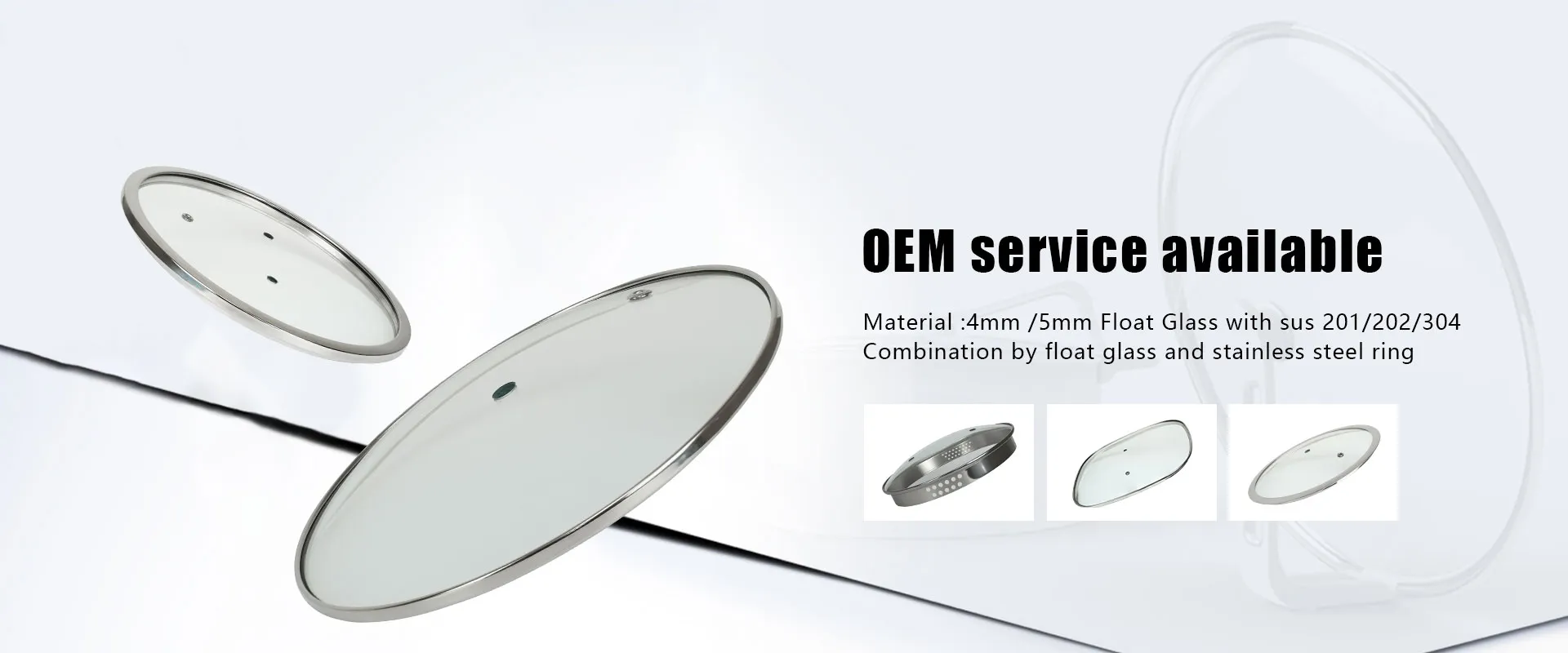
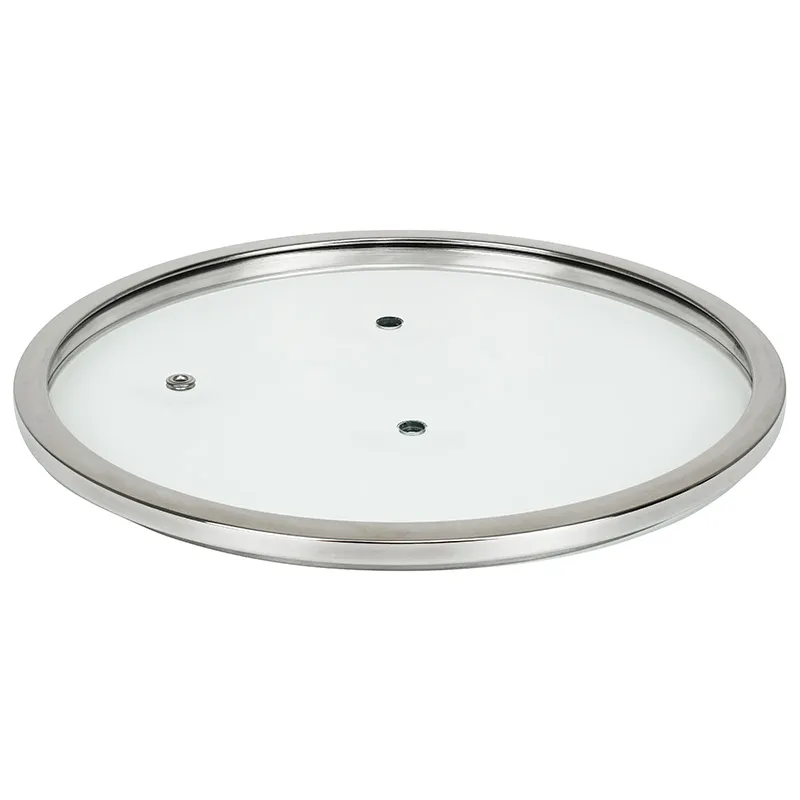
This is where companies with real production scale, like EUR-ASIA COOKWARE CO.,LTD, have an operational advantage. Their specialization in tempered glass lids means they understand glass behavior intimately—stress points, annealing, rim finishing. Applying that knowledge to a hybrid product where the lid is a different material requires a shift in thinking. It's not just about making a good lid; it's about engineering the interface. Their production base handling over 15 million pieces annually suggests they've navigated these quality-control mountains for global markets, where a batch warping in transit to Germany or Brazil due to humidity shift isn't just a return—it's a reputation hit.
Export Realities and the One-Size-Fits-None Problem
Speaking of exports, the requirements fragment quickly. The European market might prioritize a specific finish or a formaldehyde-free bamboo treatment certification. A South Korean buyer could be focused on minimalist design aesthetics where the lid profile is ultra-slim. This isn't a product you can tool once and run forever. The 'glass can' part might be standardized, but the bamboo lid often becomes a custom component, adjusted per client. This drives cost and complexity.
I recall a project for the Japanese market where the bamboo lid needed a very specific, satin-smooth inner bevel to meet a perceived standard of quality in hand-feel. Our standard CNC finish wasn't enough. It required a secondary polishing step that added 15% to the unit cost. The client accepted it because that detail was the selling point. Conversely, for a large-volume order to Eastern Europe, the focus was purely on durability and cost. The bamboo was thicker, the finish simpler, and the tolerance for color variation in the bamboo much wider. The product under the same keyword umbrella was fundamentally different.
The website https://www.glass-lid.com reflects this export-centric reality. Their product range likely exists on a spectrum, from purely functional solutions to more design-forward hybrid items. A company exporting over 90% of its output has to be fluent in these nuanced, regional material conversations. They're not just selling a lid; they're selling a solution that passes muster in Hamburg, Moscow, and Tokyo kitchens, each with its own unspoken rules.
Durability Myths and User Education
There's a pervasive myth that bamboo lids are inherently delicate. It's not true, but they are different. You can't throw them in a dishwasher cycle after cycle. The glue bonding layers (if it's laminated) or the finish will degrade. The real-world failure point I've observed is rarely the bamboo splitting; it's the finish wearing off or the lid warping just enough to become annoying. Consumer education becomes part of the product. A simple care card is no longer a nice-to-have; it's a necessity to prevent returns.
From a manufacturing standpoint, this means selecting the right bamboo—age, density, cut—and the right food-safe coatings. A water-based lacquer versus an oil finish changes the maintenance routine and the tactile feel. We ran a test batch using a beeswax-mineral oil blend for a 'natural' brand. The finish was beautiful initially, but required regular re-application from the user, which became a support issue. We pivoted back to a more durable, low-VOC lacquer for the next run. The product was less 'pure' but far more practical for daily use. This is the constant tug-of-war.
Integrating a bamboo lid with a glass can also introduces weight distribution considerations. A heavy, thick bamboo lid on a tall glass container can make it top-heavy and prone to tipping—a major safety and usability flaw. The lid's weight and the can's base diameter need to be balanced in the design phase, something that's easily overlooked when focusing solely on materials.
The Manufacturing Interface: Where Theory Meets the Floor
On the factory floor, the assembly of a glass can bamboo lid product is a manual or semi-manual process. Unlike slapping a plastic lid on a plastic tub, you're dealing with natural material variation. Each bamboo lid might have a slightly different grain density, which can minutely affect the fit. This requires either a selective matching process (increasing labor cost) or designing a fit with enough tolerance to accommodate natural variation without compromising function.
At a facility like the one described for EUR-ASIA COOKWARE, with 15,000㎡ of building area, efficiency is key. They likely have dedicated lines for standard glass lids. For bamboo-combined products, the workflow probably diverges. The glass bodies come off one line, the bamboo components are sourced or fabricated in another section (or off-site), and final assembly and quality inspection happen in a controlled environment to manage humidity. The scale of 15 million pieces tells me their processes are refined, but the hybrid nature of this product category always adds friction.
Packing for export is another detail. Bamboo needs to 'breathe' to some extent. Shrink-wrapping it tightly in plastic for a six-week sea voyage to Brazil is an invitation for mold or condensation issues. Packaging design has to account for this, often using breathable materials or ensuring the bamboo is at a very low moisture content before sealing. It's a logistical layer that pure glass or plastic products don't face.
Looking Ahead: Sustainable or Just Marketable?
Finally, the elephant in the room: is this combination truly a pinnacle of sustainability, or is it primarily a marketable concept? A well-made bamboo lid on a durable glass can can be a long-lasting item, reducing single-use plastic. That's the ideal. The reality depends on the entire lifecycle. If the bamboo is sourced responsibly, the glass is recyclable, and the product is designed for decades of use, it scores well.
However, if the design leads to early failure (warping, poor fit leading to breakage), or if the two materials are bonded in a way that makes separation for recycling impossible, the green sheen fades fast. The most credible manufacturers in this space are those transparent about these trade-offs. They might use a removable silicone gasket to aid sealing and make the bamboo component easily separable at end-of-life.
For a specialist like EUR-ASIA COOKWARE, navigating this isn't just about following trends. It's about leveraging their core competency in glass to anchor a product that meets evolving market demands for natural materials. Their challenge isn't making a lid; it's mastering the intersection of inert glass and living bamboo within the brutal economics of global mass production. The keyword isn't just a product description; it's a snapshot of that ongoing, imperfect, and deeply practical engineering endeavor.
Related Products
Related Products