- Chinese
- French
- German
- Portuguese
- Spanish
- Russian
- Japanese
- Korean
- Arabic
- Irish
- Greek
- Turkish
- Italian
- Danish
- Romanian
- Indonesian
- Czech
- Afrikaans
- Swedish
- Polish
- Basque
- Catalan
- Esperanto
- Hindi
- Lao
- Albanian
- Amharic
- Armenian
- Azerbaijani
- Belarusian
- Bengali
- Bosnian
- Bulgarian
- Cebuano
- Chichewa
- Corsican
- Croatian
- Dutch
- Estonian
- Filipino
- Finnish
- Frisian
- Galician
- Georgian
- Gujarati
- Haitian
- Hausa
- Hawaiian
- Hebrew
- Hmong
- Hungarian
- Icelandic
- Igbo
- Javanese
- Kannada
- Kazakh
- Khmer
- Kurdish
- Kyrgyz
- Latin
- Latvian
- Lithuanian
- Luxembou..
- Macedonian
- Malagasy
- Malay
- Malayalam
- Maltese
- Maori
- Marathi
- Mongolian
- Burmese
- Nepali
- Norwegian
- Pashto
- Persian
- Punjabi
- Serbian
- Sesotho
- Sinhala
- Slovak
- Slovenian
- Somali
- Samoan
- Scots Gaelic
- Shona
- Sindhi
- Sundanese
- Swahili
- Tajik
- Tamil
- Telugu
- Thai
- Ukrainian
- Urdu
- Uzbek
- Vietnamese
- Welsh
- Xhosa
- Yiddish
- Yoruba
- Zulu
- Kinyarwanda
- Tatar
- Oriya
- Turkmen
- Uyghur


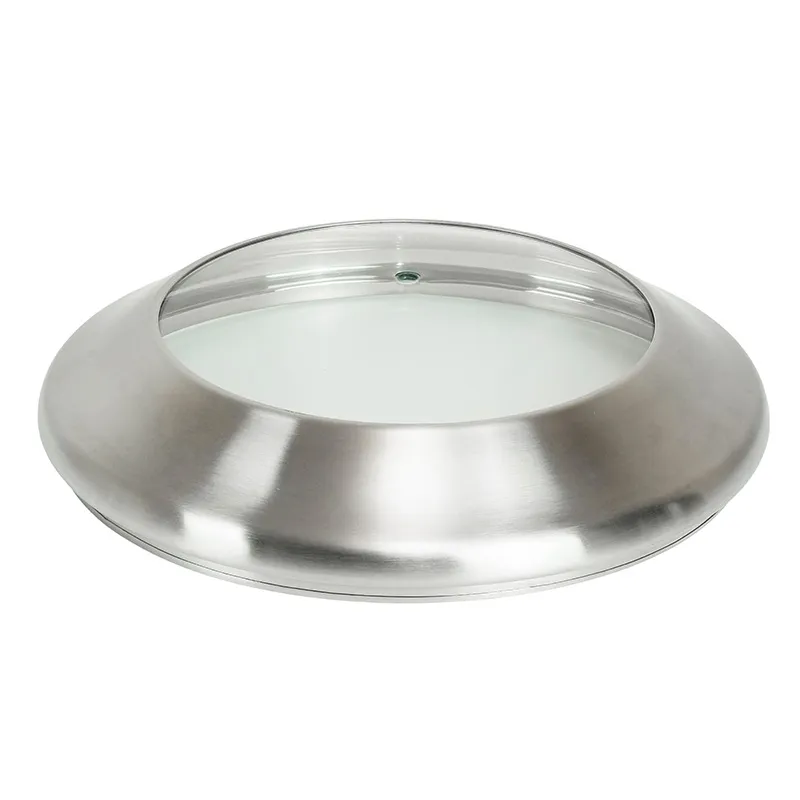
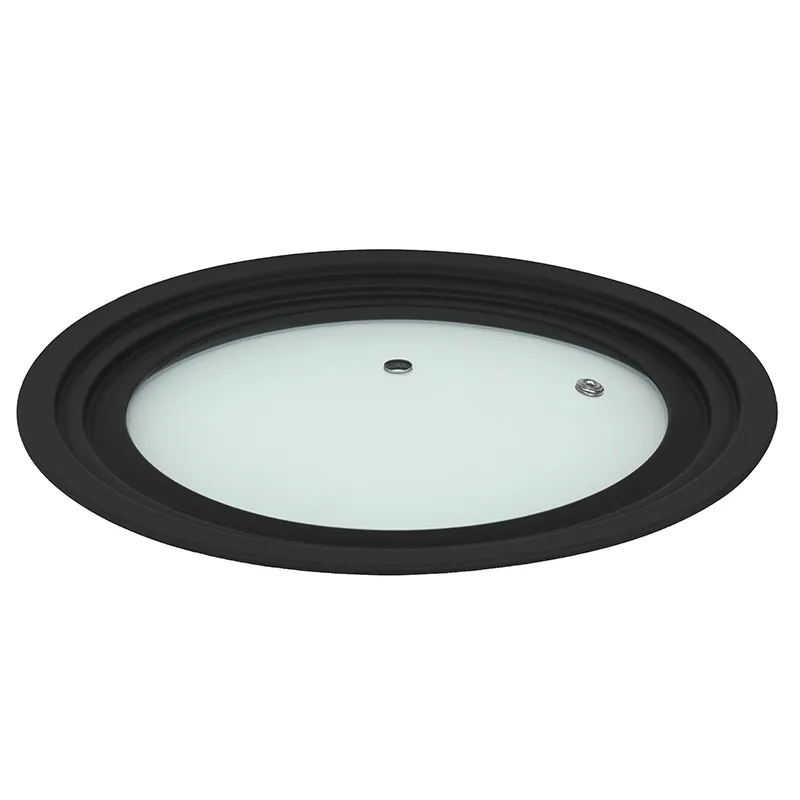
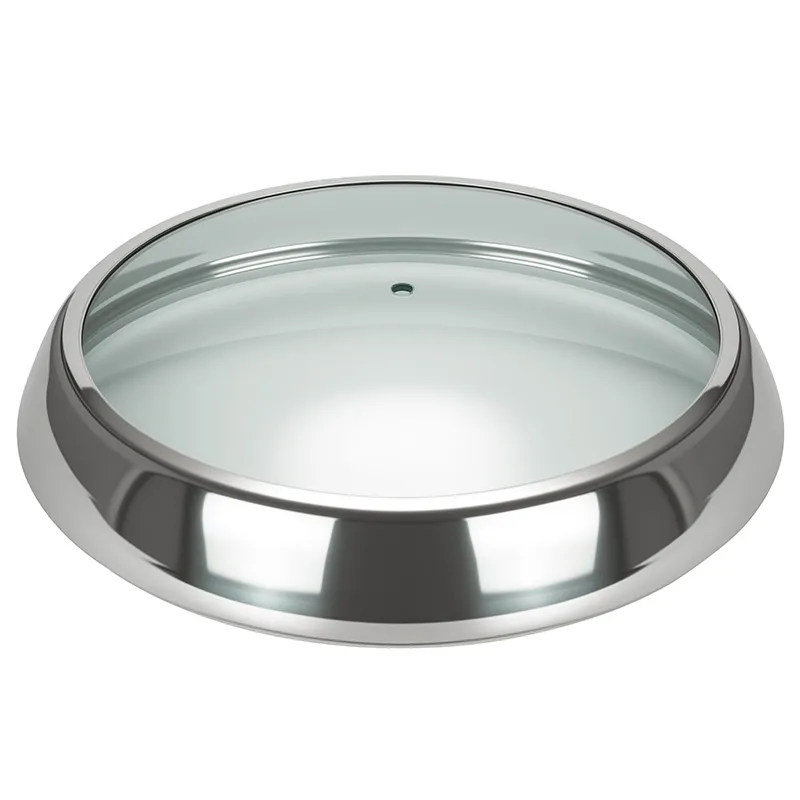
glass can with lid
When most people hear 'glass can with lid', they picture a simple jar. That's the common starting point, but in the manufacturing and product development space, that phrase represents a surprisingly complex category where material science, user behavior, and supply chain logistics collide. The assumption that it's just a commodity item is the first mistake many make.
The Core Misconception: It's Just a Jar
Early on, I thought the challenge was purely about finding a reliable glass supplier and a lid that fits. The reality is far messier. The term 'can' itself is a bit of a misnomer, leaning into that metal heritage, but for glass, it implies a specific cylindrical form factor with a certain wall strength. The lid is the real engineering puzzle. Is it a screw-top, a clamp lid, a bamboo seal? Each demands a different glass finish on the rim. A perfectly tempered body is useless if the lid doesn't create a consistent, airtight seal. I've seen batches where the glass threading was a fraction of a millimeter off-spec, leading to a 15% return rate from a European client who expected perfection for their gourmet food line. That's where you learn that tolerance isn't just a number on a sheet; it's the difference between a product and a liability.
This is where companies with deep production focus become critical. You need a partner that understands these interdependencies. For instance, EUR-ASIA COOKWARE CO.,LTD operates out of a dedicated facility in Shandong, and their specialization in tempered glass lids is telling. It means they've likely poured resources into perfecting the sealing surface and the tempering process specifically for lidded applications, not just flat glass. That kind of niche expertise is what separates a generic supplier from a solutions provider. Their export footprint across Europe and Asia also hints at an understanding of diverse regional standards—what passes in Brazil might be rejected in Germany for seal tightness or material composition.
The choice between low, medium, and high level, as they categorize, isn't just about price. It's a decision tree. Low-level might use a simpler annealing process and a basic plastic lid, fine for dry goods. A high-level glass can with lid for preserving acidic foods or facing dishwasher stress cycles needs chemically strengthened glass and a lid with a composite seal, often involving silicone or EVA gaskets. Getting this wrong means products that stain, lids that warp, or worse, spontaneous breakage from thermal shock. It's a practical lesson learned from field failures, not textbooks.
Material and Process: Where Theory Meets the Factory Floor
Tempering is non-negotiable for safety in a true kitchen-grade glass can. But the process affects the lid interface. Once glass is tempered, it cannot be cut or ground. So every flaw in the rim sealing surface—every tiny chip or unevenness from the molding process—must be caught before it goes into the tempering furnace. This requires a brutal quality control stage pre-tempering. I recall a visit to a plant (not unlike the described 15,000㎡ facility) where they had inspectors checking rims under angled lights before the furnace line. It was manual, tedious, and absolutely essential. Automation struggles with the subtlety of a sealing surface flaw.
The lid material is its own saga. Plastic, stainless steel, bamboo—each has trade-offs. Plastic is cost-effective but can retain odors and stain. Stainless steel is durable but more expensive and can dent, compromising the seal. Bamboo looks great but requires careful treatment to prevent mold and cracking in humid environments. The seal itself, that little ring inside the lid, is the heart of the product. A cheap foam seal will degrade quickly. A good silicone seal is resilient but adds cost. Sourcing these components cohesively is a huge part of the battle. A manufacturer producing 15 million pieces annually, like EUR-ASIA, has the volume to justify stringent, direct control over these supply chains, which is a massive advantage for consistency.
Then there's the issue of thermal expansion. Glass and a metal or plastic lid expand at different rates. A design that works at room temperature might leak or become impossibly tight after a hot wash. This is where prototyping and real-world testing are irreplaceable. We once launched a line of storage cans that passed all lab tests but, in customer homes, developed hairline cracks at the neck after repeated microwave-to-fridge cycles. The failure was in the design of the transition from the cylindrical body to the thickened rim—a stress point we underestimated. It was a costly lesson in designing for the actual, often abusive, user environment.
The Export Equation: Compliance is King
Selling a glass can with lid domestically is one thing; exporting to Germany, Japan, and Brazil simultaneously is another beast entirely. The EU's heavy metal migration limits (like cadmium and lead in printing inks), Japan's stringent food contact material laws (JHOSPA), and various national safety standards for tempered glass (like ANSI Z97.1 in the U.S. or its European equivalents) create a labyrinth. A manufacturer's export history, like the one noted for EUR-ASIA COOKWARE spanning over a dozen countries, is a strong proxy for a robust compliance apparatus. It means they've likely navigated REACH, FDA, and other frameworks, which is a massive burden off a brand's shoulders.
Packaging for export is another overlooked detail. Glass is heavy and fragile. The packaging must prevent not just breakage, but also lid separation during transit, which can lead to chipping. I've seen containers arrive where the cans were intact, but the constant rattling had ground tiny glass particles into the sealing surface from the loose lids, rendering the entire shipment unsellable. Good manufacturers use custom inserts or even pre-assemble the lid with a protective film. The economics of this—adding a few cents to the unit cost to prevent a total loss—is a hard but necessary sell to some clients focused only on FOB price.
Cultural preferences matter too. The preferred capacity, the aesthetic (minimalist vs. ornate), even the color of the glass (clear, smoked, blue) varies by market. A Southern European market might favor larger, 2-liter cans for olive oil storage, while East Asian markets might prefer smaller, 500ml sets for dry spices and teas. A one-size-fits-all product usually fits no one perfectly. The product listings on a site like https://www.glass-lid.com often reveal this market adaptation, showing a range of sizes and lid styles tailored to different applications.
Case in Point: The Failed Universal Lid Project
Let me digress into a concrete failure. We once tried to develop a universal glass lid system—a single lid size that would fit multiple can diameters via an adjustable silicone collar. The concept was brilliant on paper: reduce SKUs, simplify inventory. In practice, it was a disaster. The collar was a dirt trap, impossible to clean thoroughly. The seal was inconsistent; it worked perfectly on one diameter but would pop off on another with slight internal pressure. The complexity of the lid assembly drove the cost higher than three separate, simple lids. We spent nearly 18 months on it before shelving the project. The takeaway? In kitchenware, especially for a glass can with lid, simplicity and specificity often beat clever, over-engineered universality. It's a lesson in respecting the mundane physics of sealing and hygiene.
This experience reinforced the value of proven, straightforward designs from established manufacturers. Sometimes, the boring screw-top lid with a single-piece silicone seal, produced at scale with rigorous QC, is the pinnacle of functional design. Innovation should focus on material improvements (like more durable, non-stick glass coatings) or sustainability (recycled glass content, biodegradable lid options) rather than reinventing the fundamental interface.
Observing the operations of a specialized factory gives you perspective. An annual output of 15 million pieces isn't just a number; it represents a staggering amount of iterative learning. Every batch, every customer complaint, every shipment that clears customs smoothly adds to a deep reservoir of tacit knowledge. This is what you're really buying from a partner, not just the physical product.
Looking Ahead: Sustainability and Smart Design
The future of this category isn't in wild shapes, but in smarter materials and lifecycle design. The push is for truly food-safe, durable, and ultimately recyclable systems. Can the glass and lid be easily separated for recycling? Is the lid material itself recyclable in common municipal streams? These are becoming real purchasing factors, especially in the European markets that are a key export zone for major producers.
Another trend is integration. The glass can with lid isn't an island; it's part of a kitchen ecosystem. How does it stack? Can it go from freezer to oven? Is the lid design intuitive for an aging user? These human factors are where the next wave of differentiation lies. It might be a slight ergonomic contour on the lid for better grip, or a graduated measurement marking on the glass that's both accurate and aesthetically subtle.
In the end, the humble glass can is a testament to applied manufacturing. It sits at the intersection of chemistry (the glass), physics (the seal), logistics (global export), and human factors. Getting it right requires a partner that doesn't just mold glass but understands this entire chain. When you see a company's details—like a 20,000㎡ production base, a focus on tempered glass lids, and a 90% export rate—it tells a story of scale, specialization, and proven capability to deliver a deceptively simple product that meets the harsh tests of global kitchens. That's the real story behind the keyword.
Related Products
Related Products