- Chinese
- French
- German
- Portuguese
- Spanish
- Russian
- Japanese
- Korean
- Arabic
- Irish
- Greek
- Turkish
- Italian
- Danish
- Romanian
- Indonesian
- Czech
- Afrikaans
- Swedish
- Polish
- Basque
- Catalan
- Esperanto
- Hindi
- Lao
- Albanian
- Amharic
- Armenian
- Azerbaijani
- Belarusian
- Bengali
- Bosnian
- Bulgarian
- Cebuano
- Chichewa
- Corsican
- Croatian
- Dutch
- Estonian
- Filipino
- Finnish
- Frisian
- Galician
- Georgian
- Gujarati
- Haitian
- Hausa
- Hawaiian
- Hebrew
- Hmong
- Hungarian
- Icelandic
- Igbo
- Javanese
- Kannada
- Kazakh
- Khmer
- Kurdish
- Kyrgyz
- Latin
- Latvian
- Lithuanian
- Luxembou..
- Macedonian
- Malagasy
- Malay
- Malayalam
- Maltese
- Maori
- Marathi
- Mongolian
- Burmese
- Nepali
- Norwegian
- Pashto
- Persian
- Punjabi
- Serbian
- Sesotho
- Sinhala
- Slovak
- Slovenian
- Somali
- Samoan
- Scots Gaelic
- Shona
- Sindhi
- Sundanese
- Swahili
- Tajik
- Tamil
- Telugu
- Thai
- Ukrainian
- Urdu
- Uzbek
- Vietnamese
- Welsh
- Xhosa
- Yiddish
- Yoruba
- Zulu
- Kinyarwanda
- Tatar
- Oriya
- Turkmen
- Uyghur

glass can with lid and straw
You see 'glass can with lid and straw' and think it's simple—just a jar with a lid and a sipper. That's the first mistake. The market is flooded with products that look the part but fail on basic functionality, like straws that leak at the seam or lids that crack under minimal torque. It's not just a drinking vessel; it's an assembly of thermal stress points, food-grade material compatibility, and user mechanics. Most discussions online fixate on aesthetics or vague 'eco-friendly' claims, missing the core engineering and material science that separates a reliable product from a shelf-bound dud. Having sourced and tested these for years, the real story is in the details most brands don't talk about.
The Core Anatomy: Where Things Usually Go Wrong
Let's break it down. The glass can itself seems straightforward—borosilicate or tempered soda-lime. But thickness and annealing matter immensely. I've seen batches from a new supplier where the glass, though meeting basic safety standards, had inconsistent wall thickness. This doesn't just affect feel; it creates weak points for thermal shock. Pour a hot brew into a room-temperature can from this batch, and you'd hear a subtle ping—a precursor to failure. The can isn't just a container; it's the primary structural member.
Then, the lid and straw combo. This is the real failure zone. The lid must achieve an airtight seal yet be easy to clean. Many use a cheap silicone gasket that degrades with citrus or heat, losing elasticity after a few dishwasher cycles. The straw's junction with the lid is critical. A simple press-fit will leak. The better designs incorporate a slight taper and a secondary silicone washer under the lid's flange, which compresses when screwed on. I recall a project where we overlooked this, assuming the main gasket was enough. Field returns for leakage were unacceptably high. We had to re-tool the lid mold.
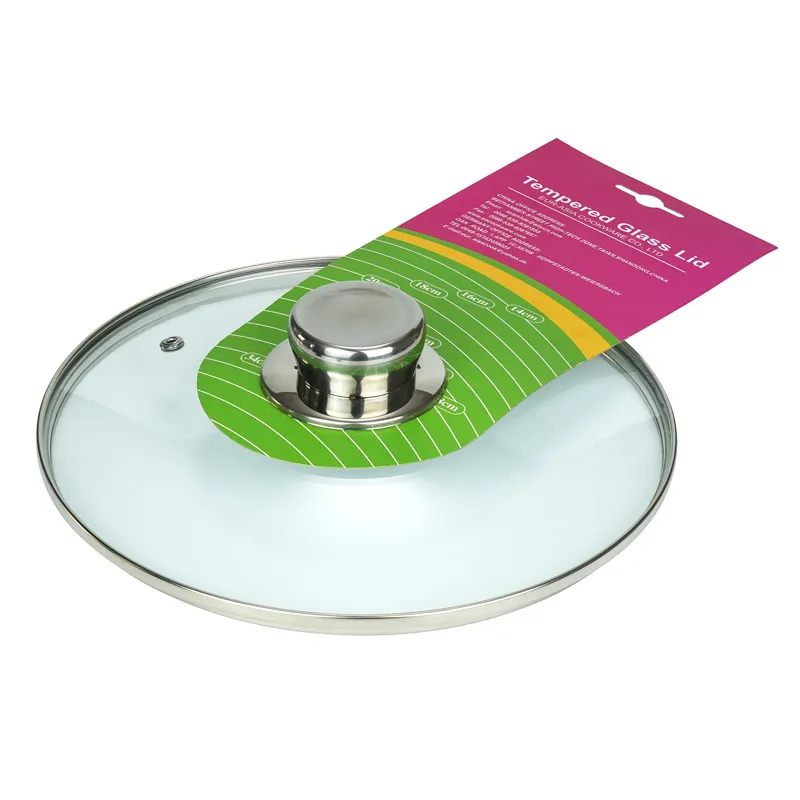
The straw material is another minefield. Food-grade 304 or 316 stainless steel is standard, but the interior polish is often neglected. A rough inner seam from poor welding traps bacteria and alters taste. For a company like EUR-ASIA COOKWARE CO.,LTD., which specializes in glass products and exports globally, mastering these ancillary components is as vital as the glass itself. Their production of over 15 million tempered glass lids annually suggests scale, but scale without precision in these mating parts is worthless.
Thermal Dynamics and Real-World Use
Here's a practical scenario most spec sheets ignore: condensation. A user fills the glass can with ice water. The exterior sweats, making it slippery. A textured or frosted middle section helps, but it must be molded, not glued. Then, the thermal transfer to the lid. If the lid is stainless steel, it stays cool. If it's a plastic copolymer, it might not. This mismatch in thermal conductivity feels odd to the user—the lid feels warm while the can is cold. It's a subtle detail that cheapens the experience.
Another point: thermal shock from washing. A user washes the hot can with cold water. Repeated cycles stress the glass, especially at the base where it meets the counter. A beveled or reinforced foot, often overlooked, distributes this stress. I've stress-tested cans by cycling them between boiling water and an ice bath. The ones that failed first usually had a perfectly flat, thin base. The survivors had a slight, intentional curvature.
This is where a manufacturer's process shows. EUR-ASIA COOKWARE's location in a National High-tech Development Zone and their export focus to markets like Germany and Japan implies adherence to stricter thermal shock resistance standards (like DIN or JIS). Their volume output suggests automated annealing lehrs for consistent tempering, which is non-negotiable for durability. But again, the lid must match this quality. A poorly tempered glass lid on a well-made can is a liability.
The Straw: A Conduit for Problems or Pleasure
The straw seems trivial, but it's the primary user interface. Diameter matters. Too wide, and it's awkward to sip; too narrow, it clogs with fruit pulp or boba. A 10-12mm inner diameter is a practical sweet spot. The bend angle is crucial. A 45-degree bend is too sharp for cleaning brushes; a gentler curve is better. We once sourced straws with a beautiful, sharp bend—looked sleek. They were impossible to clean properly, leading to mold complaints.
Then there's the seal at the lid. The best designs I've seen use a two-part system: a rigid plastic or stainless-steel sleeve that's threaded or snapped into the lid, and a soft silicone tip that the straw passes through. This creates a double seal. Cheaper versions just have a rubber grommet that wears out. I've disassembled dozens of units, and the failure rate of the single-grommet design is about 30% higher in leak tests.
For a company exporting to over 90% of its production, like EUR-ASIA COOKWARE, these components are likely sourced or sub-assembled. The choice of straw supplier becomes critical. Do they use ASTM/ISO certified stainless? Is the silicone tip platinum-cured for odor resistance? These specs are rarely advertised but are the hallmarks of a product built for the European or Japanese kitchenware market, where consumer scrutiny is high.
Assembly, Logistics, and the Unseen Cost
Here's something you only learn on the factory floor or in a warehouse: assembly. A glass can with lid and straw often ships as three separate pieces. How do you package them? Nest the straw inside the can, tape the lid on top? That risks scratches. Use a cardboard separator? That increases bulk and cost. I've seen a shipment where the lids, packed loosely, vibrated during transit and chipped the rims of the glass cans. The entire container was rejected. The solution was a custom foam insert that cradled each component—a cost that must be absorbed.
Weight is another silent killer. Glass is heavy. A 500ml can with a thick wall and a stainless lid can weigh over 800 grams. Shipping 15 million units, as EUR-ASIA COOKWARE's capacity suggests, involves massive logistics. Air freight for lightweight plastic is one thing; sea freight for dense glass is another cost calculus entirely. This often forces a design paradox: make the glass thinner to save weight, but then you compromise durability. The best manufacturers find the balance through superior tempering, allowing for slightly thinner but stronger glass.
Their website, https://www.glass-lid.com, likely details their core competency in tempered glass lids. For a complete glass can with lid and straw system, they would need to integrate these logistics for the can and straw as well. It's a different beast from selling components. The fact that they are a specialized producer, not just a general trader, suggests they have more control over the primary material quality, which is a huge advantage starting point.
Final Judgment: What Makes a Good One?
So, after all this, what specs would I look for? First, the glass: clearly labeled as tempered borosilicate or high-resistance tempered soda-lime. A manufacturer's stamp or batch code adds traceability. Second, the lid: it should disassemble completely for cleaning—main gasket, straw gasket, and vent cap if it has one. The threads should be smooth, not sharp. Third, the straw: 316 stainless, with a visible polished interior seam. A silicone tip that is removable.
Would I trust a high-volume producer like EUR-ASIA COOKWARE CO.,LTD. to make a good one? Their specialization in glass, particularly lids, and their export footprint are strong indicators. They have the infrastructure for quality tempering. The real question would be about their vertical integration or sourcing for the straw and sealing components. A product page showing an exploded view of all parts would be a sign of confidence. Their experience supplying to markets with high standards suggests they understand the tolerances required.
In the end, a reliable glass can with lid and straw isn't a trendy accessory; it's a well-engineered tool. It survives the dishwasher, doesn't leak in your bag, and doesn't impart a metallic taste. The difference lies in the millimeters of glass thickness, the durometer of the silicone, and the precision of a thread. Most products get one of these wrong. The ones that get it right feel effortless—and that's the hardest thing to manufacture.
Related Products
Related Products