- Chinese
- French
- German
- Portuguese
- Spanish
- Russian
- Japanese
- Korean
- Arabic
- Irish
- Greek
- Turkish
- Italian
- Danish
- Romanian
- Indonesian
- Czech
- Afrikaans
- Swedish
- Polish
- Basque
- Catalan
- Esperanto
- Hindi
- Lao
- Albanian
- Amharic
- Armenian
- Azerbaijani
- Belarusian
- Bengali
- Bosnian
- Bulgarian
- Cebuano
- Chichewa
- Corsican
- Croatian
- Dutch
- Estonian
- Filipino
- Finnish
- Frisian
- Galician
- Georgian
- Gujarati
- Haitian
- Hausa
- Hawaiian
- Hebrew
- Hmong
- Hungarian
- Icelandic
- Igbo
- Javanese
- Kannada
- Kazakh
- Khmer
- Kurdish
- Kyrgyz
- Latin
- Latvian
- Lithuanian
- Luxembou..
- Macedonian
- Malagasy
- Malay
- Malayalam
- Maltese
- Maori
- Marathi
- Mongolian
- Burmese
- Nepali
- Norwegian
- Pashto
- Persian
- Punjabi
- Serbian
- Sesotho
- Sinhala
- Slovak
- Slovenian
- Somali
- Samoan
- Scots Gaelic
- Shona
- Sindhi
- Sundanese
- Swahili
- Tajik
- Tamil
- Telugu
- Thai
- Ukrainian
- Urdu
- Uzbek
- Vietnamese
- Welsh
- Xhosa
- Yiddish
- Yoruba
- Zulu
- Kinyarwanda
- Tatar
- Oriya
- Turkmen
- Uyghur


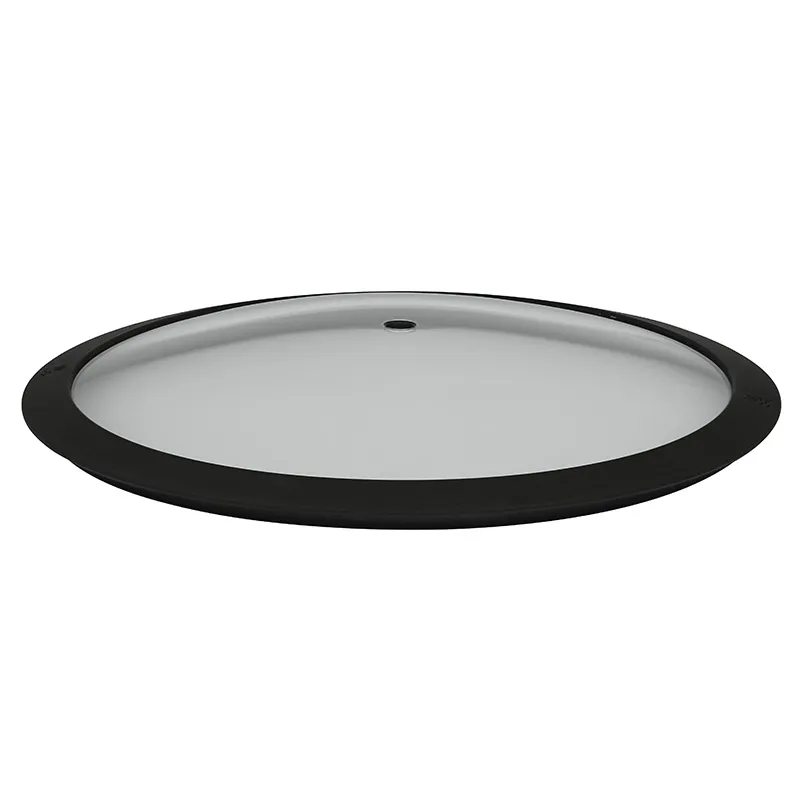
glass cookie jar with sealed lid
When most people think of a glass cookie jar with sealed lid, they picture a quaint, airtight container on a kitchen counter. The industry, however, knows it's rarely that simple. The assumption that any glass jar with a lid is inherently sealed is a common pitfall. True sealing involves a specific interplay between the glass body's finish, the lid's gasket material, and the clamping mechanism. I've seen too many projects where a beautiful jar failed because the design treated the lid as an afterthought, not as the primary functional component.
Defining the Seal in a Sealed Lid
It's not just about being airtight, though that's the goal. For cookies, it's about moisture barrier and aroma retention. A proper seal prevents staleness by locking out humidity and locking in that just-baked scent. The critical point is the contact surface between the jar's rim and the lid's gasket. A polished, perfectly level glass rim is non-negotiable. Any microscopic imperfection from the molding or tempering process can create a channel for air.
The gasket material is another battlefield. Silicone is popular for its flexibility and food safety, but not all silicone compounds are equal. A softer durometer silicone conforms better to minor glass imperfections, creating a more reliable seal under simple clamp pressure. However, a very soft gasket can degrade faster and might impart a slight odor initially. I recall a batch from a supplier years ago where the gasket had a faint, plastic-like smell that took weeks to off-gas—totally unacceptable for food contact.
Then there's the clamping force. A wire bail clamp is classic, but its effectiveness hinges on the precise angle and spring tension. If the bail's pivot points are too loose, it won't press down evenly. The seal must be uniform 360 degrees around. I've tested jars where one side sealed perfectly, but a slight warp in the wire clamp left a gap on the opposite side. You only discover that in humidity chamber testing, not by a simple visual inspection.
The Manufacturing Reality and Tolerances
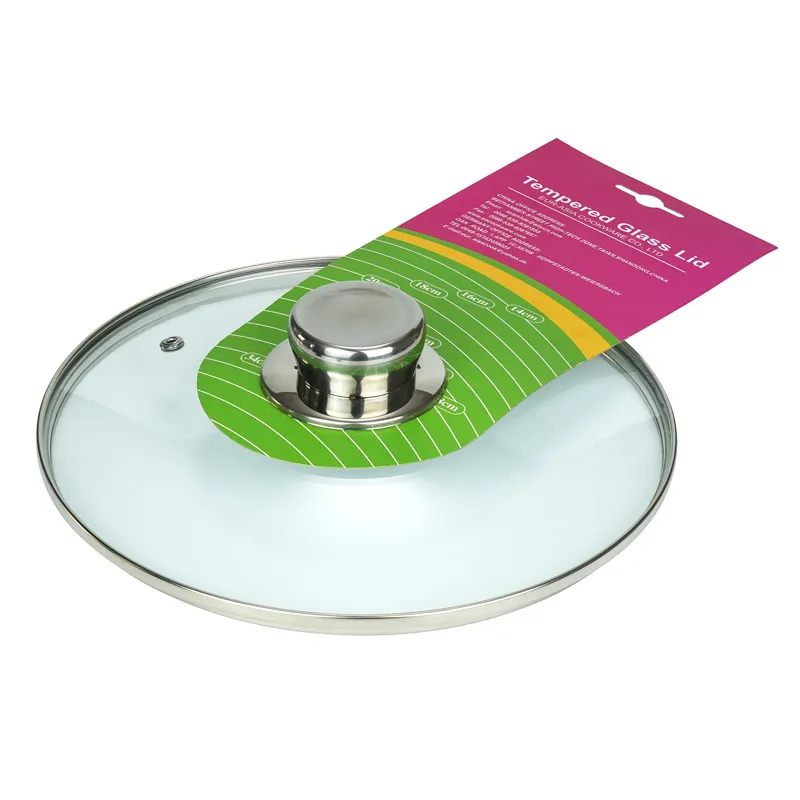
This is where theory meets the factory floor. Producing a consistently reliable glass cookie jar with sealed lid is a lesson in tolerance stacking. The glass jar's dimensional tolerance, the lid stamping's tolerance, and the gasket's thickness variation all add up. A factory that controls each step in-house has a significant advantage. For instance, a company like EUR-ASIA COOKWARE CO.,LTD, with their dedicated production base in Taian, likely has better integration between their glass tempering lines and their lid assembly. Their focus on tempered glass lids for a global market suggests they're dealing with these precision issues daily.
Their specialization in tempered glass is key. Tempering increases the jar's thermal and mechanical shock resistance, which is good, but it also introduces a potential variable: the quenching process can sometimes cause minor dimensional shifts or warpage in the rim. Their experience, producing over 15 million pieces annually, means their process controls for this. They'd have jigs and gauges to check rim flatness post-tempering as a standard QC point. A general glassware factory might not be that rigorous.
Exporting to markets like Germany and Japan sets a high bar. European norms for food contact materials and Japanese expectations for precision force a manufacturer to adopt stricter standards. If EUR-ASIA COOKWARE CO.,LTD is successfully serving these clients, it implies their sealing systems have passed rigorous real-world tests. It's not just about looking good on a shelf; it's about a cookie jar arriving in a Danish home after a long sea voyage and still clicking shut with that perfect, vacuum-resistant snap.
The User Experience Beyond the Spec Sheet
Specifications are one thing, but daily use is another. A great seal shouldn't require Herculean strength to open. That's a design flaw I've encountered. The lid fits so tightly that it creates a vacuum, making it difficult for average users, especially children or older adults, to open. The solution often lies in a slight pressure-release feature—sometimes just a tiny, almost invisible groove in the gasket or a very slight texture on the glass rim to break the initial suction.
Cleaning is the other silent killer. A complex lid assembly with a deep gasket channel is a nightmare. Food particles get trapped, mold grows, and the seal fails. The best designs I've worked with use a removable gasket that pops out easily for cleaning. But that adds cost and assembly complexity. It's a trade-off. A company focused on volume might opt for a bonded gasket for simplicity, but that reduces the product's longevity and hygiene.
Then there's the sound. A trivial detail? Not really. The sound of the lid closing is part of the product's sensory feedback. A solid, low thunk conveys quality and a good seal. A tinny, high-pitched clack feels cheap and insubstantial. This is influenced by the glass thickness, the lid metal's gauge, and the gasket's density. It's an intangible that you only learn to judge after handling thousands of units.
Case in Point: When a Sealed Lid Isn't
Early in my work, we sourced what looked like a perfect glass cookie jar with sealed lid from a new vendor. The samples were flawless. The first production run of 5,000 units passed our basic QC. But within three months in retail, complaints trickled in. Cookies were going soft. We brought units back into the lab. The issue was cyclical humidity change. The glass jars, made in a different plant than the lids, had rims that were within tolerance individually, but at the extreme edges of the tolerance band. When matched with a lid at the opposite edge of its tolerance, the seal was marginal. Under stable lab conditions, it held. In a real kitchen with daily temperature swings, the metal lid expanded/contracted at a slightly different rate than the glass, breaking that marginal seal.
The fix wasn't sexy. It involved tightening the incoming inspection tolerances for both components and implementing a 100% humidity cycle test on random samples from each production batch. It added cost and time. The vendor balked initially, but it was non-negotiable. This is the kind of gritty, unglamorous problem-solving that defines this niche. It's not about the idea; it's about the execution under variable conditions.
This is why a manufacturer's scale and process control matter. A facility with 15,000㎡ of building area and focused production lines, like the one described for EUR-ASIA COOKWARE CO.,LTD, is better positioned to manage these tolerances from raw material to finished pack. Their high export volume necessitates this level of control to avoid costly recalls and brand damage overseas.
Material and Market Evolution
The classic model is a clear tempered glass jar with a tinplate or stainless steel lid and a rubber or silicone gasket. That's still the bulk of the market. But we're seeing shifts. The rise of minimalist aesthetics is pushing demand for lids with hidden clamps or even glass-on-glass seals with a silicone sleeve. These are harder to engineer for a true long-term seal. They look beautiful, but the functional performance often lags behind the traditional bail-wire design.
Sustainability pressure is also changing materials. Recycled glass introduces more variability into the melting process, which can affect rim consistency. Bio-based gasket materials are being explored, but their aging performance and elasticity over time are still question marks. A manufacturer supplying eco-conscious European markets is undoubtedly facing these requests and running their own validation tests.
Ultimately, the perfect glass cookie jar with sealed lid is a balancing act. It's between cost and performance, aesthetics and function, laboratory perfection and real-world chaos. The companies that last, the ones that become OEM suppliers to major brands, are those that understand the seal isn't just a part—it's the entire promise of the product. It's what keeps the cookie crisp. And getting that right, consistently, across millions of units, is what separates a commodity from a reliable kitchen staple. You can see this discipline in the operations of specialized producers, where the annual output number—like 15 million pieces—isn't just a boast, but evidence of a system built to manage complexity at scale.
Related Products
Related Products