- Chinese
- French
- German
- Portuguese
- Spanish
- Russian
- Japanese
- Korean
- Arabic
- Irish
- Greek
- Turkish
- Italian
- Danish
- Romanian
- Indonesian
- Czech
- Afrikaans
- Swedish
- Polish
- Basque
- Catalan
- Esperanto
- Hindi
- Lao
- Albanian
- Amharic
- Armenian
- Azerbaijani
- Belarusian
- Bengali
- Bosnian
- Bulgarian
- Cebuano
- Chichewa
- Corsican
- Croatian
- Dutch
- Estonian
- Filipino
- Finnish
- Frisian
- Galician
- Georgian
- Gujarati
- Haitian
- Hausa
- Hawaiian
- Hebrew
- Hmong
- Hungarian
- Icelandic
- Igbo
- Javanese
- Kannada
- Kazakh
- Khmer
- Kurdish
- Kyrgyz
- Latin
- Latvian
- Lithuanian
- Luxembou..
- Macedonian
- Malagasy
- Malay
- Malayalam
- Maltese
- Maori
- Marathi
- Mongolian
- Burmese
- Nepali
- Norwegian
- Pashto
- Persian
- Punjabi
- Serbian
- Sesotho
- Sinhala
- Slovak
- Slovenian
- Somali
- Samoan
- Scots Gaelic
- Shona
- Sindhi
- Sundanese
- Swahili
- Tajik
- Tamil
- Telugu
- Thai
- Ukrainian
- Urdu
- Uzbek
- Vietnamese
- Welsh
- Xhosa
- Yiddish
- Yoruba
- Zulu
- Kinyarwanda
- Tatar
- Oriya
- Turkmen
- Uyghur


glass cover maker
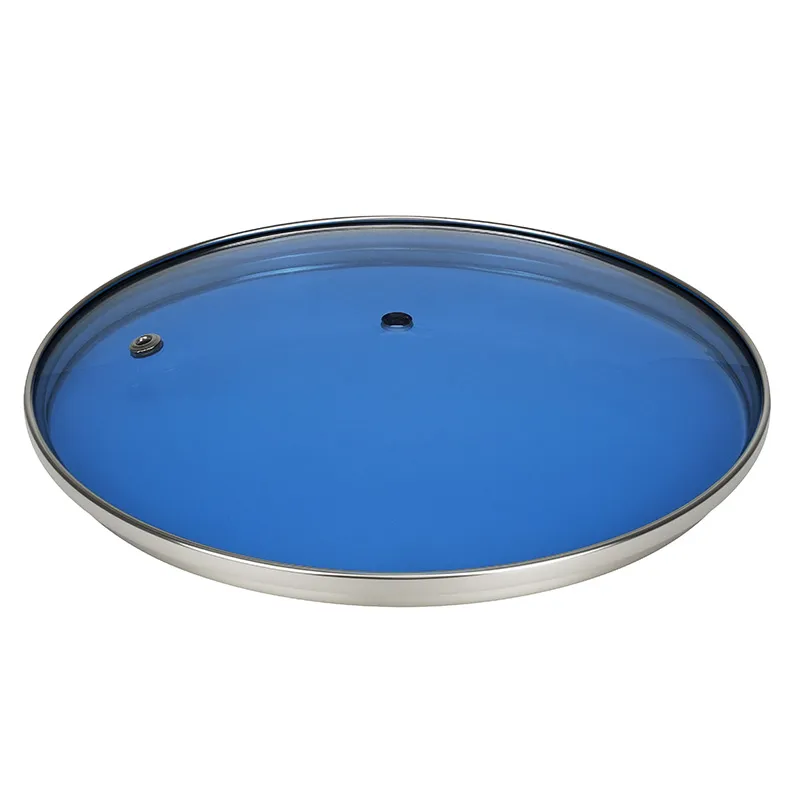
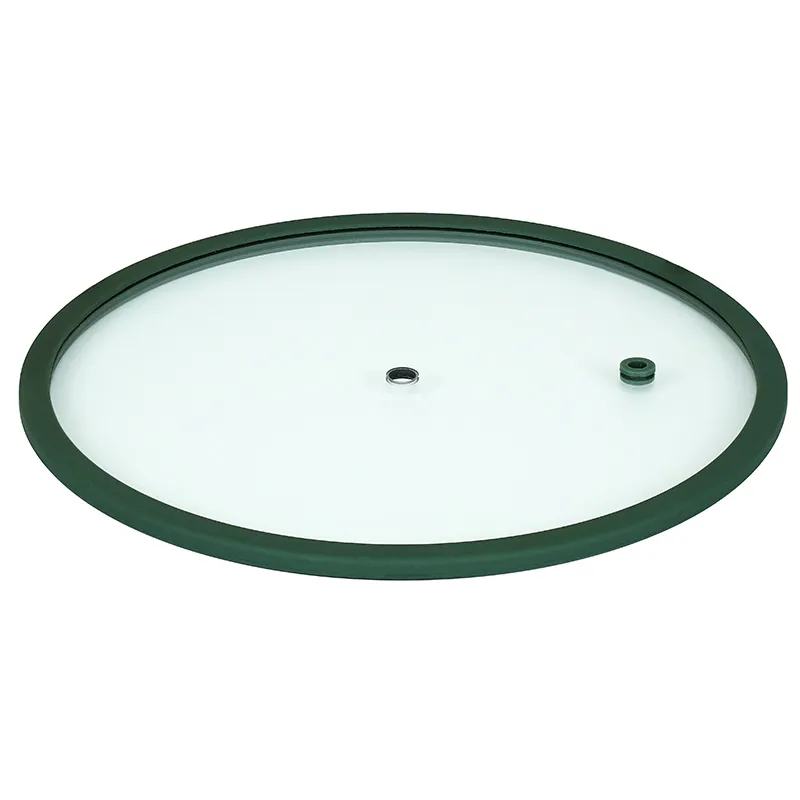
When people hear 'glass cover maker', the immediate thought is often a factory that just cuts glass and tempers it. That's the biggest misconception. It's not just about the physical product; it's about understanding the stress points of a pot lid in use, the thermal shock from a cold marble countertop, the way a silicone gasket degrades over hundreds of cycles. If you're just selling a piece of tempered glass, you're missing the point. You're selling a component that has to survive a domestic warzone.
The Core Misunderstanding: Durability vs. Application
Everyone asks about hardness and impact resistance. Sure, that's table stakes. The real test isn't a hammer—it's Monday night's frantic dinner prep. You pour cold stock into a searing hot Dutch oven and slam the lid on. That thermal gradient across the glass is where cheap covers fail, developing a network of micro-cracks you can't even see until the third or fourth time it happens. Then it just pops. I've seen batches from suppliers who passed all the standard ball-drop tests fail spectacularly in this real-world scenario. The issue wasn't the tempering level, but the cut edges. If the edge grinding isn't absolutely uniform, it creates a focal point for stress. It's a detail most overlook.
That's where the specialization of a company like EUR-ASIA COOKWARE CO.,LTD becomes relevant. With an annual output pushing 15 million pieces, they're not a boutique shop. That volume forces a certain rigor. When you're producing for German and Japanese markets—notorious for their quality thresholds—you can't afford to have a 2% failure rate. It'll bankrupt you in returns and reputation. Their focus on the entire ecosystem of household glass products and other kitchen accessories suggests they get that a lid isn't an island. It interacts with a rim, a handle, a gasket.
I remember a project years ago where we sourced what we thought was a perfectly good 18cm cover. Tests were fine. First production run, 5% shattered during assembly when being fitted into the stainless steel rim. The problem? The glass geometry was a hair off—a curvature radius that was technically within our drawing tolerance but, when combined with the metal's spring tension, created a pinpoint stress concentration. The glass cover maker argued the spec was met. We argued the application was failed. That's the gap. A real maker thinks in application, not just specification.
Material and Process: The Quiet Details
Soda-lime glass is the standard, but the composition nuances matter. Too much of certain impurities and the tempering process can create a slight warpage or optical distortion. For a clear lid, that's unacceptable—housewives want to see their stew bubbling without a funhouse mirror effect. The production base in Taian City likely has its glass feedstock specs locked down tight. You can't run a 15,000㎡ facility efficiently without controlling the raw material variance.
Tempering is another black box. The cycle time, the quench air pressure—it's an art backed by data. An under-tempered lid might survive impact but not thermal shock. An over-tempered one can have a brittle, almost glassy feel (pun intended) and can suffer from spontaneous breakage if a nickel sulfide inclusion is present. A competent glass cover maker will have a rigorous heat-soak testing protocol for their high-end lines destined for, say, Switzerland or Japan, to force any such inclusions to expand and break the glass in the factory, not in the customer's kitchen.
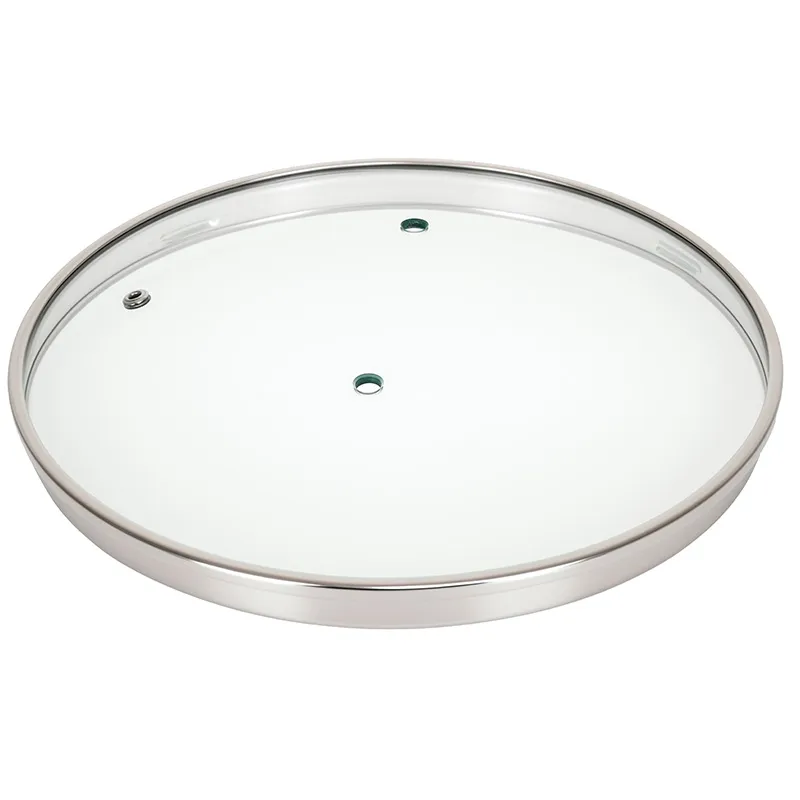
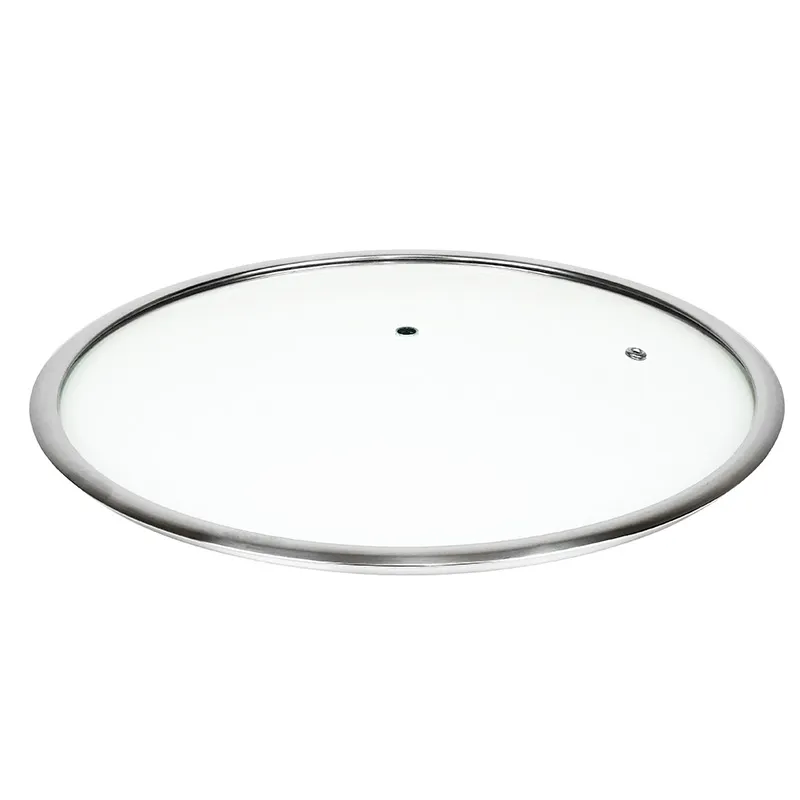
Then there's the hole. Drilling the handle attachment point after tempering is impossible—it destroys the tension layer. So it must be done before. The drilling and subsequent edge polishing of that borehole is critical. A micro-chip here is a guaranteed failure point. I've inspected lids where the fracture clearly originated from the handle hole. It's a tiny detail that carries the entire load when someone lifts the lid.
Export Realities and Market Fit
The fact that over 90% of EUR-ASIA's output is exported tells a story. The domestic Chinese market for premium kitchenware is growing, but the stringent, codified standards are still largely driven by Europe and East Asia. A French buyer isn't just buying a lid; they're buying compliance with a web of safety and material regulations. The maker has to navigate that. It's not glamorous work—it's paperwork, certification, and audit trails. But it separates a commodity supplier from a real manufacturing partner.
Different markets have different feels. A Southern European customer might prioritize a clear, brilliant glass for their stylish cookware lines. A Nordic buyer might focus on minimalist design and robust, dishwasher-safe edge finishes. The ability to tweak the product mix—be it the low, medium, or high-level products mentioned in their intro—for these diverse clients (from Brazil to South Korea) is a sign of manufacturing flexibility. It's not one-size-fits-all.
Logistics is a hidden nightmare. Glass is heavy and fragile. Packing 15 million lids a year for ocean freight without a 10% breakage rate is an engineering feat in itself. The foam molds, the box strength, the palletization—every step adds cost and risk. A maker that has consistently shipped to 10+ countries has this down to a science. You learn through broken containers, literally.
The Accessory Ecosystem
Their mention of other kitchen accessories is telling. It shows a business understanding. A lid rarely sells alone. It's part of a set, or needs a knob, or sits on a glass baking dish. Diversifying into the accessory ecosystem builds resilience. It also deepens material knowledge. The glass used for a lid versus a rectangular baking pan face different stresses. The pan has flat, broad surfaces that can bow under heat if not properly supported. The knowledge transfers.
We once tried to develop a combined glass lid with a built-in steam vent and silicone seal. It was a disaster. The different coefficients of thermal expansion between the glass, the stainless steel vent insert, and the silicone caused failure at every joint after a few cycles. We went back to the drawing board with a much simpler design. The lesson was that a glass cover maker excels at what glass does best: being a smooth, inert, heat-resistant viewing window. Adding too much complexity often undermines its core strength. Sometimes, the best innovation is perfecting the simplicity of the bevel on the edge to ensure a perfect seal.
Visiting a facility like the one described, you'd see the rhythm. The cutting lines, the tempering furnaces humming, the inspection stations where workers, almost subconsciously, tilt each lid under light to check for distortions. It's not high-tech robotics everywhere. It's a blend of automated processes and human judgment. That judgment—the employee who spots a barely visible grinding mark—is what catches the failures before they ship. With over 90 employees, that human layer of quality control is still irreplaceable.
Looking Forward: The Unsexy Evolution
The future for a glass cover maker isn't about radical reinvention. It's about incremental, unsexy improvements. Better coatings to reduce staining from steam residues. More environmentally friendly packaging that doesn't compromise protection. Even smaller batch flexibility for custom designer collaborations. The production of various types hints at this adaptability.
The real challenge now is cost pressure versus material innovation. Can you source raw glass with even greater consistency without a price hike? Can you reduce energy consumption in the tempering furnace? The margins are in these efficiencies. The annual output number—15 million pieces—is impressive, but it also represents a massive operational machine that needs constant fine-tuning to remain profitable across fluctuating export markets.
At the end of the day, it comes back to the product in use. A well-made glass lid is something the user never thinks about. It's clear, it's solid, it cleans easily, and it lasts for years. That invisibility is the maker's ultimate success. It means every stress point was considered, every edge softened just enough, every thermal cycle simulated. When you pick up a lid from a maker who understands this, it just feels right in the hand—balanced, substantial, and quietly competent. That feeling is the result of a million tiny decisions on a factory floor in Taian, and it's what the job is really all about.
Related Products
Related Products