- Chinese
- French
- German
- Portuguese
- Spanish
- Russian
- Japanese
- Korean
- Arabic
- Irish
- Greek
- Turkish
- Italian
- Danish
- Romanian
- Indonesian
- Czech
- Afrikaans
- Swedish
- Polish
- Basque
- Catalan
- Esperanto
- Hindi
- Lao
- Albanian
- Amharic
- Armenian
- Azerbaijani
- Belarusian
- Bengali
- Bosnian
- Bulgarian
- Cebuano
- Chichewa
- Corsican
- Croatian
- Dutch
- Estonian
- Filipino
- Finnish
- Frisian
- Galician
- Georgian
- Gujarati
- Haitian
- Hausa
- Hawaiian
- Hebrew
- Hmong
- Hungarian
- Icelandic
- Igbo
- Javanese
- Kannada
- Kazakh
- Khmer
- Kurdish
- Kyrgyz
- Latin
- Latvian
- Lithuanian
- Luxembou..
- Macedonian
- Malagasy
- Malay
- Malayalam
- Maltese
- Maori
- Marathi
- Mongolian
- Burmese
- Nepali
- Norwegian
- Pashto
- Persian
- Punjabi
- Serbian
- Sesotho
- Sinhala
- Slovak
- Slovenian
- Somali
- Samoan
- Scots Gaelic
- Shona
- Sindhi
- Sundanese
- Swahili
- Tajik
- Tamil
- Telugu
- Thai
- Ukrainian
- Urdu
- Uzbek
- Vietnamese
- Welsh
- Xhosa
- Yiddish
- Yoruba
- Zulu
- Kinyarwanda
- Tatar
- Oriya
- Turkmen
- Uyghur


glass cover manufacturer
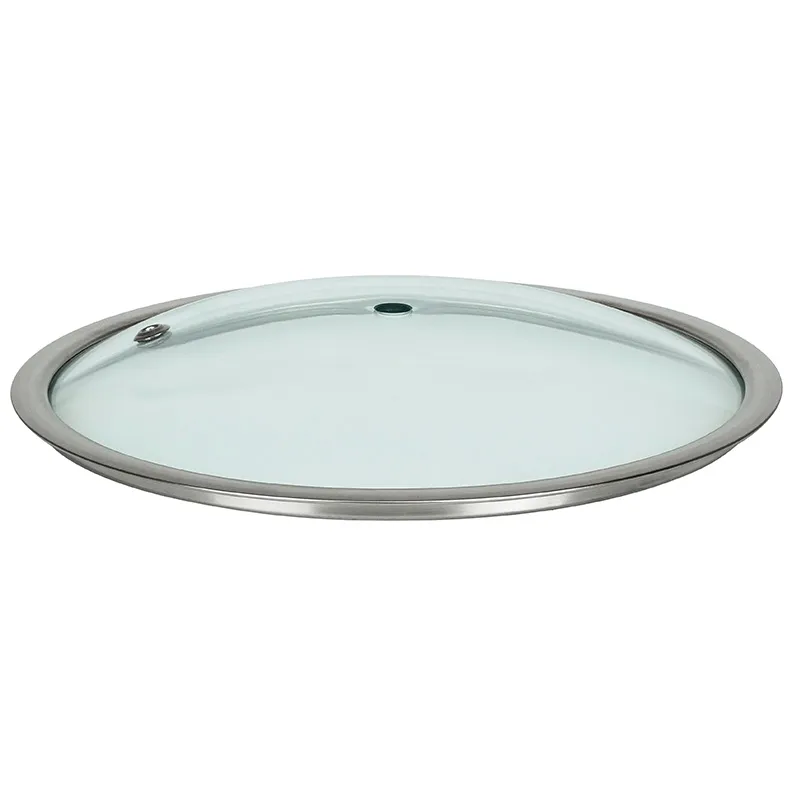
When most buyers or even some designers type 'glass cover manufacturer' into a search, they're usually just looking for a supplier who can meet a dimensional drawing and a basic tempering standard. That's the entry ticket, not the game. The real challenge, and where the cost and quality battles are won or lost, isn't just about making a piece of tempered glass that fits. It's about understanding what that cover will go through in a real kitchen, on a real pot, for years, and building that foresight into the manufacturing process from the raw glass sheet onward. Many assume all tempered glass lids are essentially the same, which is a costly misconception.
The Foundation: It Starts with the Raw Material
You can't talk about manufacturing without starting at the source. We learned this the hard way early on. Not all clear float glass is equal for tempering into covers. There's a world of difference in the consistency of the iron content, which affects clarity, and the subtle thickness tolerances. A variation that's acceptable for a window is a nightmare for a lid that needs to sit flush on a pot rim. We source specific grades, often with lower iron for that ultra-clear look the European market demands, but it means working closely with the glass plant, not just buying from a distributor.
Then there's the cutting and edging. This seems straightforward, but the edgework on a glass cover is critical for both safety and sealing. A sharp, minimally processed edge is a micro-fracture waiting to happen under thermal stress. We moved from simple straight-line edging to a more rounded, seamed edge profile. It costs more in grinding time and wheel wear, but it dramatically reduces the incidence of spontaneous edge-initiated breakage during the tempering process or later in the field. It's one of those details you only notice when it goes wrong.
I remember a batch for a client in South Korea where the breakage rate in their assembly line was slightly above their strict threshold. After tracing it back, it wasn't our tempering but a subtle inconsistency in the glass ribbon from that particular batch of raw material, causing uneven stress during heating. We absorbed the cost, replaced the batch, and tightened our incoming inspection. That's the unglamorous side of being a glass cover manufacturer – sometimes your problem is your supplier's problem, but it's still your problem.
The Tempering Process: Where Physics Takes Over
Tempering is the heart of it. The furnace cycle – heating to over 600°C and then quenching with high-pressure air – is what gives the glass its strength. But for lids, it's not just about achieving a high surface compression. It's about managing optical distortion. A lid is looked through constantly. If the quenching isn't perfectly uniform, you get subtle waves or patterns (what we call quench marks) that distort the view of the food underneath. It's a functional defect for the end-user.
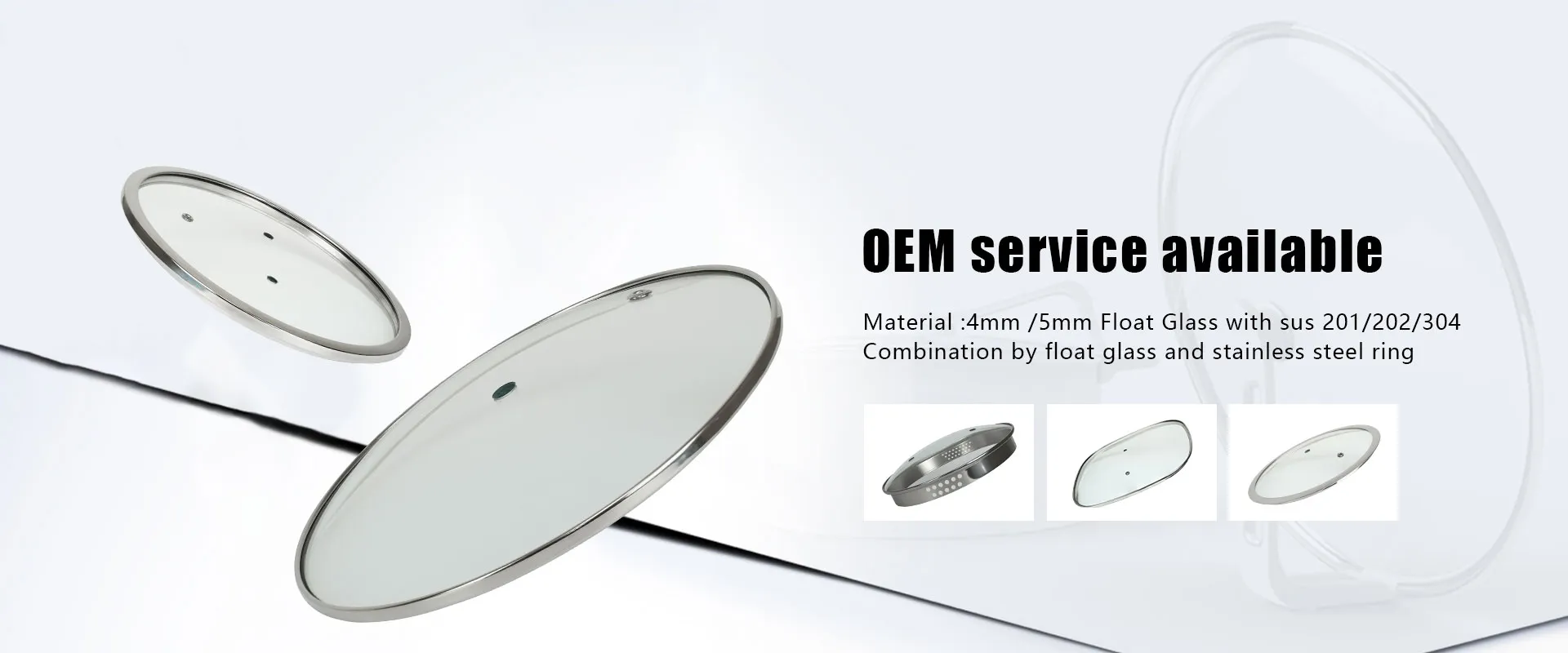
We run a separate, calibrated furnace line for our cover production, with different racking and airflow settings optimized for the typical sizes and thicknesses of lids, rather than mixing them with architectural glass. The racks themselves are a proprietary design to minimize contact points and reduce the risk of thermal pinch spots. It sounds minor, but this focus is what lets a company like EUR-ASIA COOKWARE CO.,LTD consistently supply to markets like Germany and Japan, where visual perfection is non-negotiable. You can see their approach on their site at glass-lid.com – their specialization in household glass products is evident in how they've scaled to an output of over 15 million pieces annually. That volume doesn't happen without process mastery.
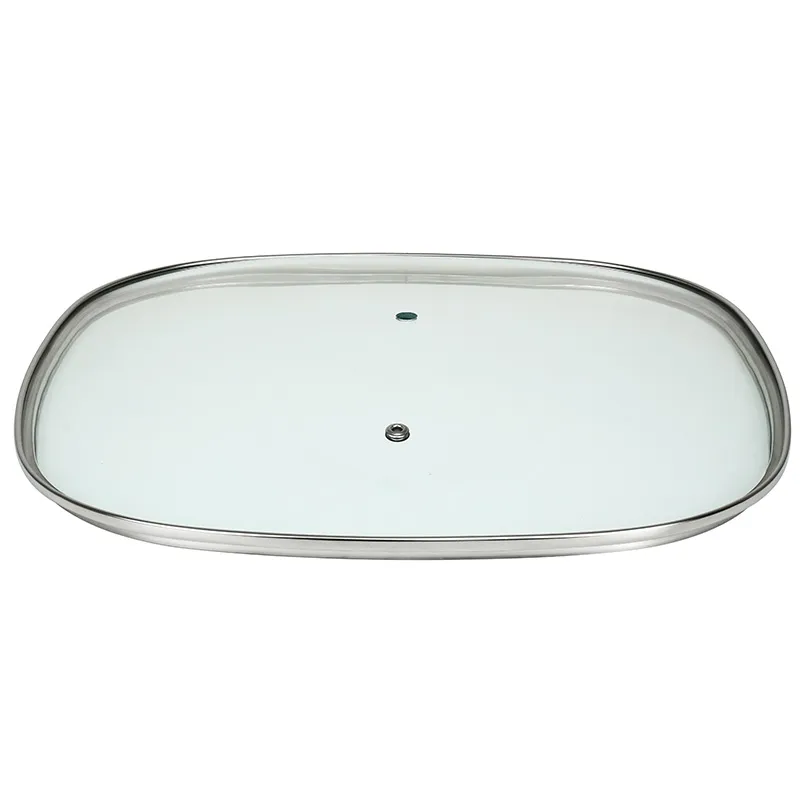
The other nuance is handling different shapes. Round is standard, but oval or rectangular lids for roasting pans are trickier. The stress distribution during tempering isn't symmetrical, so you have to adjust the heating and quenching parameters zone by zone along the furnace. We've got libraries of settings for different shapes and thicknesses, built from years of trial and error, some of which involved piles of broken glass in the early days.
Beyond the Glass: The Ecosystem of a Lid
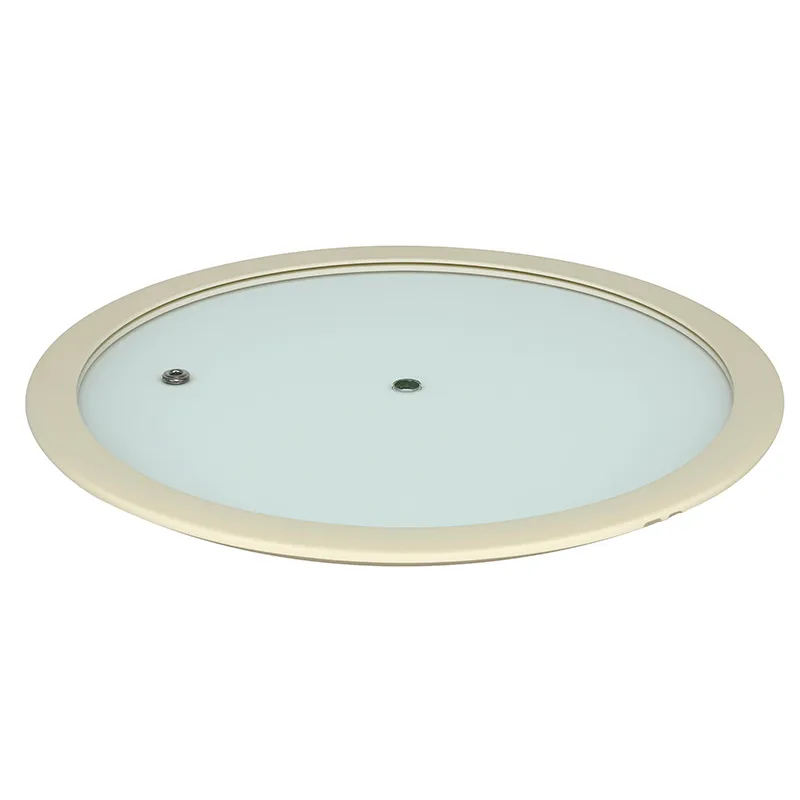
A glass cover is rarely just glass. It's a system. The knob or handle is the most obvious interface. The bonding method is a huge reliability factor. Metal knobs attached with high-temperature silicone adhesive are common, but the longevity depends entirely on the adhesive's thermal cycling resistance and the surface preparation. We switched to a two-part epoxy system rated for continuous high heat after some early failures where knobs simply detached after a year of use.
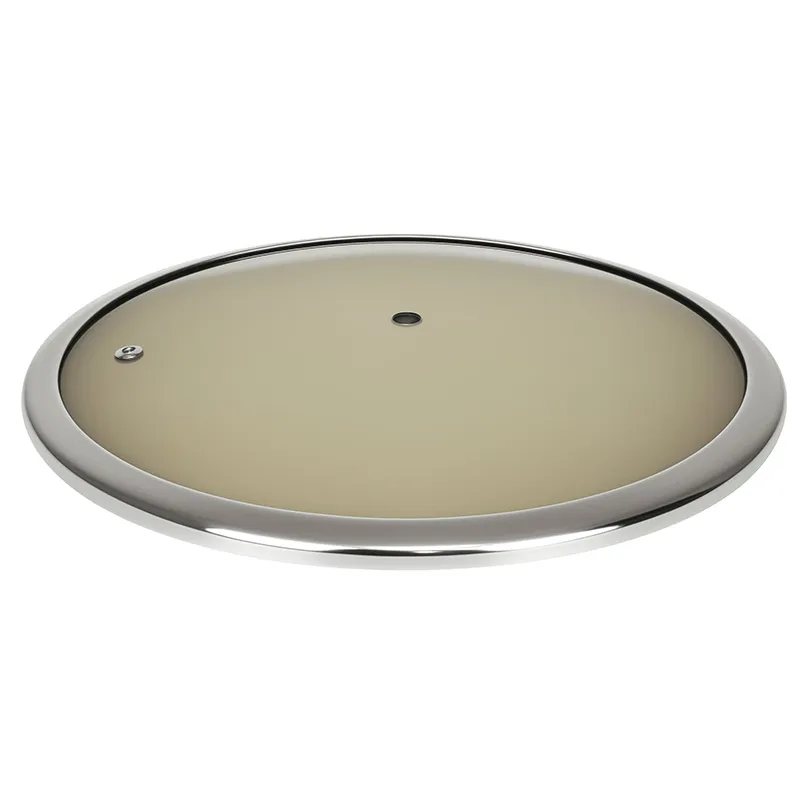
Then there's the seal. Many mid-to-high-end lids have a silicone gasket around the perimeter. Sourcing that gasket material is its own specialty – it must be food-safe, withstand repeated steam exposure without degrading or staining, and have just the right durometer (hardness) to seal without making the lid impossibly hard to remove. We don't make the gaskets, but we work with a single trusted supplier and have a jig system for consistent, secure application. The groove that holds the gasket on the glass edge also has to be precision-ground.
This systems thinking is what separates a parts maker from a true solutions provider. A buyer might come to us with a pot design and ask for a matching lid. Our job is to advise on the optimal glass thickness (3mm? 4mm?), the knob position for balance, the gasket type for their target seal level, and even the packaging to prevent transit damage. It's a consultative process.
Quality Control: The Unseen Cost Center
Everyone talks about QC, but in glass, it's brutal and non-negotiable. Every single lid gets a visual inspection under polarized light. This reveals stress patterns and hidden defects like shells or inclusions that could cause later failure. We also do batch-based destructive testing: impact tests (a steel ball drop) and thermal shock tests (moving from an ice bath to a 300°C oven). The failure rate here has to be statistically zero.
The most common failure point we catch isn't breakage, but dimensional creep. Over time, fixtures in the cutting or edging lines can wear minutely, causing a lid diameter to drift by a fraction of a millimeter. It might still fit the pot, but it won't have the consistent, snug feel a brand expects. We have gauge checks every two hours on production lines. This relentless attention is why a facility like EUR-ASIA's, with its 15,000㎡ building area, can reliably export over 90% of its products. Their mention of supplying to Germany, Italy, Brazil, etc., isn't just a sales pitch; it's a testament to a QC system that meets diverse international standards.
Packaging is the final, critical layer of QC. A perfectly made lid destroyed in transit is a total loss. We use molded EPS foam inserts that cradle the glass off its surfaces, within a sturdy corrugated box. The cost of this packaging is significant, but it's cheaper than a container of broken glass and a ruined client relationship.
The Real-World Test: Learning from Failures
You don't really know your product until it fails in the field. We had one instructive case years ago. A client reported lids cracking specifically when placed on a cold granite countertop straight from a warm dishwasher. Our tests had covered oven-to-counter shock, but not this specific, slower heat differential scenario. The granite was acting as a massive heat sink. We realized our tempering stress level, while meeting standards, had a narrow margin for this particular thermal pathway.
We didn't just increase the tempering intensity across the board (which can increase optical distortion). Instead, we worked on optimizing the cooling curve in the quench to create a more balanced stress profile through the thickness of the glass, not just on the surfaces. It made the lids more resilient to that kind of slow, uneven cooling. That adjustment came directly from a real-user problem.
Another lesson was about aesthetics versus function. We developed a beautiful, ultra-clear lid with a very low-iron glass. It looked stunning. But in the market, some users complained it showed water spots and steam residue more easily than the slightly greener standard glass. We had to re-educate clients and their end-users, and sometimes offer a choice. It was a reminder that the glass cover manufacturer has to think about cleaning and maintenance, not just the initial wow factor.
So, when you're evaluating a glass cover manufacturer, look beyond the catalog and the specs sheet. Ask about their raw material controls, their tempering process specifically for lids, their approach to components like knobs and gaskets, and their destructive testing regimen. The depth of their answers will tell you if you're dealing with a commodity shop or a partner who understands that a glass lid is a critical, high-use component of a cookware system. It's a specialized niche, and the expertise is earned one batch, and one solved problem, at a time.
Related Products
Related Products