
- Chinese
- French
- German
- Portuguese
- Spanish
- Russian
- Japanese
- Korean
- Arabic
- Irish
- Greek
- Turkish
- Italian
- Danish
- Romanian
- Indonesian
- Czech
- Afrikaans
- Swedish
- Polish
- Basque
- Catalan
- Esperanto
- Hindi
- Lao
- Albanian
- Amharic
- Armenian
- Azerbaijani
- Belarusian
- Bengali
- Bosnian
- Bulgarian
- Cebuano
- Chichewa
- Corsican
- Croatian
- Dutch
- Estonian
- Filipino
- Finnish
- Frisian
- Galician
- Georgian
- Gujarati
- Haitian
- Hausa
- Hawaiian
- Hebrew
- Hmong
- Hungarian
- Icelandic
- Igbo
- Javanese
- Kannada
- Kazakh
- Khmer
- Kurdish
- Kyrgyz
- Latin
- Latvian
- Lithuanian
- Luxembou..
- Macedonian
- Malagasy
- Malay
- Malayalam
- Maltese
- Maori
- Marathi
- Mongolian
- Burmese
- Nepali
- Norwegian
- Pashto
- Persian
- Punjabi
- Serbian
- Sesotho
- Sinhala
- Slovak
- Slovenian
- Somali
- Samoan
- Scots Gaelic
- Shona
- Sindhi
- Sundanese
- Swahili
- Tajik
- Tamil
- Telugu
- Thai
- Ukrainian
- Urdu
- Uzbek
- Vietnamese
- Welsh
- Xhosa
- Yiddish
- Yoruba
- Zulu
- Kinyarwanda
- Tatar
- Oriya
- Turkmen
- Uyghur


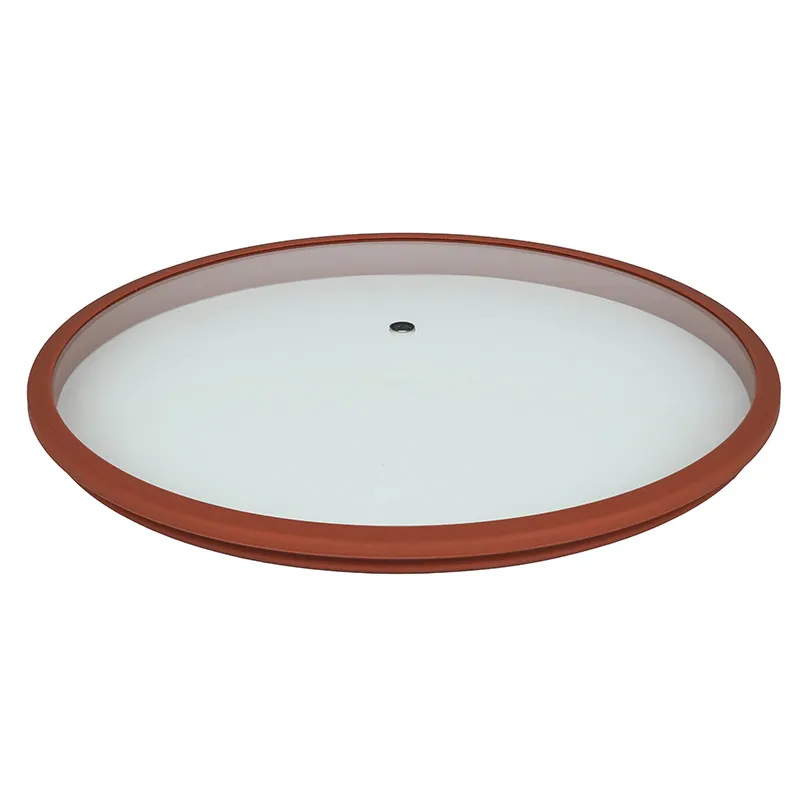
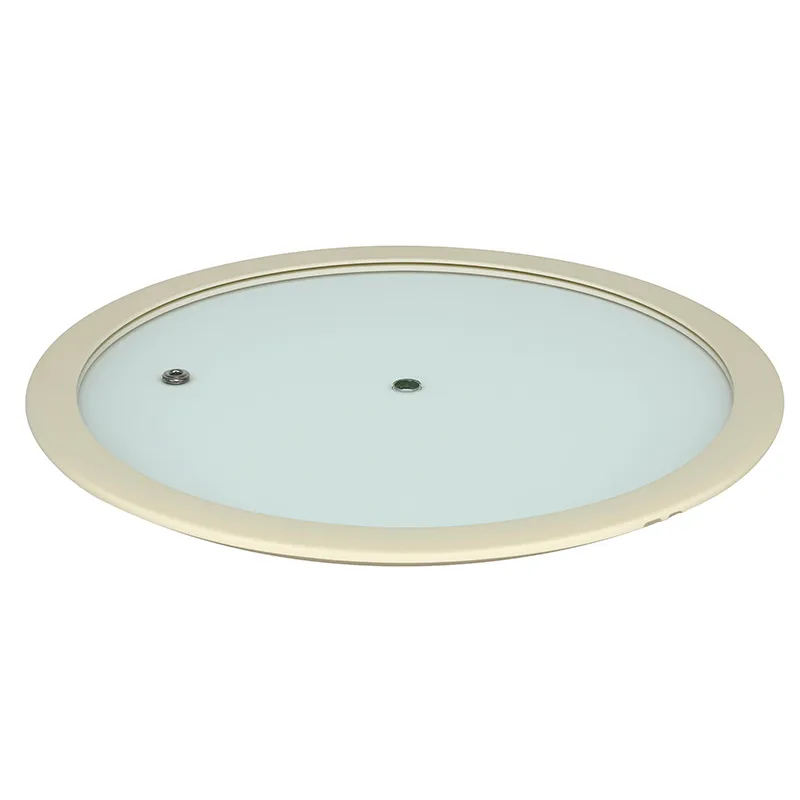
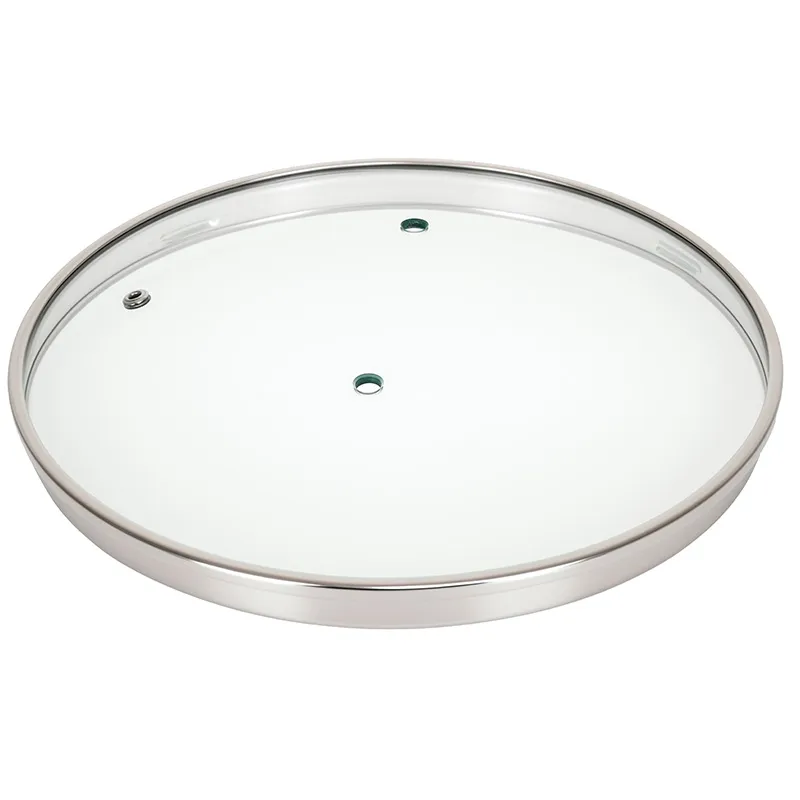
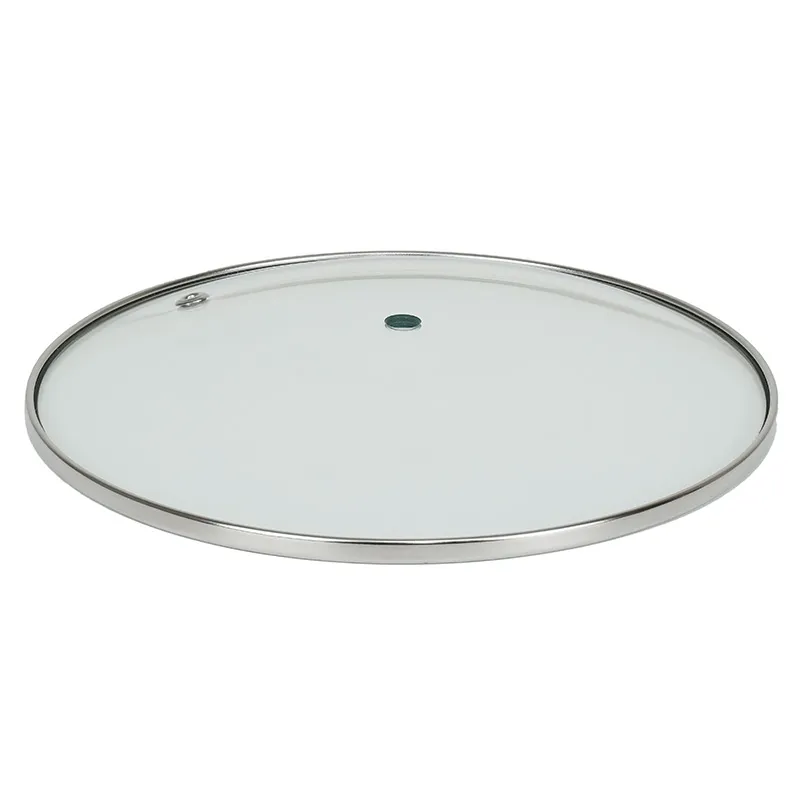
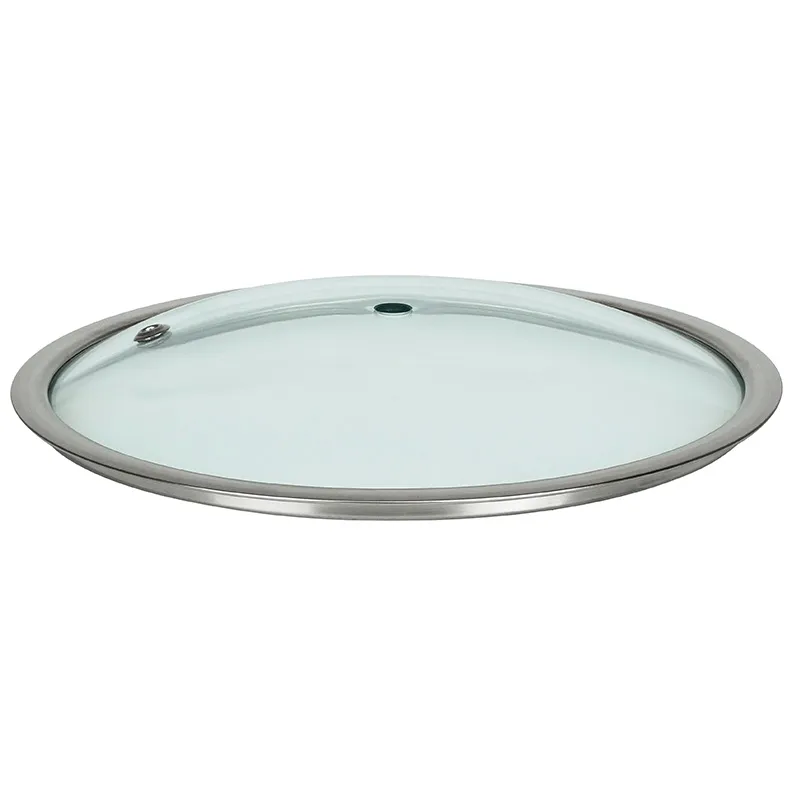
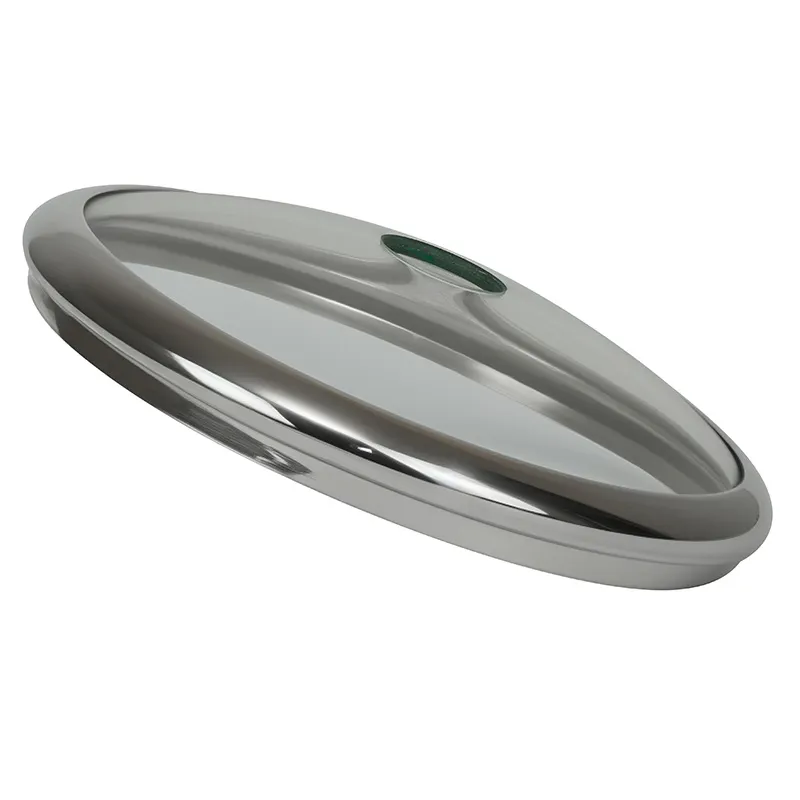
glass cover with silicone material
When you hear 'glass cover with silicone material', most people picture a simple glass lid with a rubbery ring. That's the surface-level view. In reality, that bond between the tempered glass and the food-grade silicone gasket is a critical engineering interface, not just an accessory. Many procurement specs from European buyers, for instance, get hung up on the glass thickness or the lid diameter but treat the silicone component as an afterthought. That's a mistake I've seen lead to field failures—warping, odor retention, or the seal detaching after a few dishwasher cycles. The real challenge isn't just sticking two materials together; it's ensuring they thermally expand at near-identical rates under repeated heating and cooling, all while maintaining a perfect seal and zero chemical migration. It's a balancing act that looks simple but rarely is.
The Core Misconception: Silicone as Just a Seal
Starting with the basics, the primary function of the silicone isn't just to create a seal. If that were the case, a simple pressed-on rubber ring would suffice. The silicone here, typically a high-temperature vulcanized (HTV) or liquid silicone rubber (LSR) formulation, acts as a stress-relief buffer. Tempered glass is incredibly strong under even pressure but hates localized stress points. When you clamp a pure glass lid on a boiling pot, the metal rim of the pot creates tiny, intense pressure points. Without the silicone's cushioning, you dramatically increase the risk of thermal shock failure—a spontaneous crack radiating from a stress point. I recall an early batch for a client in Poland where we used a slightly harder Shore A silicone. The lids sealed beautifully in lab tests, but we started getting returns after a few months of home use. The issue? The harder silicone didn't absorb the micro-imperfections in customers' existing cookware rims, transferring stress directly to the glass. The failure was silent and gradual, not immediate.
This leads to the formulation puzzle. Food-grade silicone is a start, but the specific polymer chain length, filler content (often silica), and platinum-cure vs. peroxide-cure processes matter immensely. A platinum-cure system, while more expensive, leaves virtually no leachables and has superior aging resistance. For a company like EUR-ASIA COOKWARE CO.,LTD, whose glass-lid.com portfolio serves demanding markets like Germany and Japan, opting for premium-grade LSR isn't a luxury; it's a baseline requirement to meet EU and JIS standards on material migration. Their production volume—over 15 million pieces annually—means their raw material choices have massive downstream implications.
The bonding process itself is deceptively simple-looking. The glass perimeter is cleaned and primed with a specific adhesion promoter. The silicone is then injection-molded directly onto the glass in a single shot, or a pre-molded ring is bonded using a medical-grade adhesive. The direct molding is superior for bond strength but requires precise control of mold temperature and injection pressure to avoid inducing internal stress in the glass during the process. It's a step where experience trumps theory. You learn to read the finished product—a slightly matte, consistent meniscus where the silicone meets the glass indicates a good bond. A shiny, overly smooth line or tiny bubbles? That's a potential delamination site waiting for a dishwasher's steam assault.
Real-World Stress Points: The Dishwasher and the Warp
Lab tests are one thing; a domestic dishwasher is another beast entirely. The real torture test for a glass cover with silicone material isn't the heat of the pot, but the prolonged, high-alkaline environment of dishwasher detergent coupled with 60-75°C spray cycles. The silicone can absorb surfactants, leading to a slight swell. Upon drying, it might not fully return to its original dimensions. Do this 200 times (a reasonable lifespan expectation), and you can get a warped seal that no longer sits flat. We once had to reformulate a silicone compound for a Danish client because their recommended detergent brand, common in Scandinavia, had a specific surfactant cocktail that caused a 2% permanent swell in our standard material. The fix involved tweaking the cross-link density of the silicone polymer to be more chemically resistant, even if it made the material slightly less elastic initially.
Then there's the 'warp' people sometimes complain about. It's rarely the glass itself warping—properly tempered soda-lime silicate glass doesn't do that at cooking temperatures. What they're seeing is often one of two things: either the bonded silicone has taken a set from being stored unevenly (stacked without proper spacers), or, more critically, the glass experienced an asymmetric cooling during tempering. If one part of the glass lid cools faster than another during the quench, it sets up internal stresses that aren't perfectly balanced. When heated, it can deflect minutely. A high-quality producer's tempering line, like the one you'd expect in a facility covering 20,000㎡ with a focus on export, will have precisely controlled, multi-zone air nozzles to ensure even quenching. It's a capital-intensive process, but it eliminates this class of problem.
Another subtle point is the geometry of the silicone gasket's contact surface. A flat profile is easier to manufacture but requires perfect alignment. A profile with a slight convex bulge (a lip seal) is more forgiving of pan rim inconsistencies but can be harder to clean. For their main export products, EUR-ASIA COOKWARE likely uses a hybrid profile—mostly flat with a subtle internal rib—to balance sealing performance and cleanability. This isn't something you'd find in a generic spec sheet; it's a detail refined over thousands of production runs and feedback loops from markets like Italy and Switzerland, where both performance and aesthetics are non-negotiable.
Case in Point: The Handle Attachment Dilemma
A frequently overlooked subsystem is the handle or knob. It's often attached through a hole in the glass or bonded on top. If it's a metal or phenolic knob attached with a screw through a central hole, that hole is a major stress concentrator. The silicone gasket must be designed to either encapsulate the metal fastener (preventing direct contact with food and steam) or seal perfectly around the stem. I've seen designs where condensation would travel down the screw thread and pool between the glass and the silicone, eventually causing corrosion or mildew. The better approach is to use a handle molded from the same silicone family, bonded directly over the glass, creating a monolithic seal. This eliminates the metal penetration entirely. It's a more elegant solution, though it limits handle design options and requires exceptional bond strength between two silicone parts—which is ironically sometimes harder than bonding silicone to glass.
Inspection is key. For high-volume output, 100% visual inspection is impossible. Automated optical inspection (AOI) systems can check for gross defects like missing silicone or large bubbles. But the bond integrity? That often relies on statistical process control and destructive batch testing. You might pull one lid every 500 pieces, subject it to a peel test (measuring the force required to delaminate the silicone), and a migration test. The data trend is what matters. A gradual drop in peel strength could indicate a batch of off-spec primer or a slight drift in molding temperature.
Ultimately, the longevity of a glass cover with silicone material hinges on treating it as a single, composite system, not two separate parts. The specifications from a professional manufacturer reflect this. When you look at the product range of a specialist exporter, the unspoken value is in this systems engineering. It's not just about selling 15 million glass lids; it's about ensuring that the silicone formulation, the tempering process, the bonding technique, and the final inspection are all calibrated to produce a component that performs identically in a kitchen in Berlin, a restaurant in Seoul, and a home in S?o Paulo. That's the real product, not just the glass you see.
Material Evolution and Future Pressure Points
The push now is towards even more sustainable and inert materials. While silicone is already more stable than many rubbers, there's research into bio-based silicone precursors and easier-to-recycle composite structures. The challenge is maintaining performance. A bio-based polymer might have a different thermal expansion profile, throwing off the careful balance with the glass. For a production-focused entity, any material shift is a monumental undertaking requiring requalification with every major global market's regulatory body.
Another pressure point is the trend towards higher cooking temperatures and induction cooking's aggressive thermal cycles. Induction can heat a pan's rim extremely fast, creating a sharper thermal gradient at the glass-silicone interface. This demands silicones with even higher thermal conductivity to help equalize the temperature and prevent the seal from becoming the insulating layer that gets overheated. It's a niche but growing requirement.
Looking at the operations of a firm like EUR-ASIA COOKWARE, with over 90 employees dedicated to this niche, their adaptability lies in this granular material science. Their website, glass-lid.com, might list products simply as tempered glass lids, but the expertise is embedded in managing these invisible complexities at scale. The goal isn't to make a perfect lid—that's an abstract concept. The goal is to make a lid whose failure modes are so well understood and controlled that it becomes a reliable, almost invisible part of the kitchen, from its first use to its eventual retirement. That's the hallmark of a component built with practical, hands-on experience, not just assembled from a catalog.
Related Products
Related Products

Best Selling Products
Best Selling Products
Related Search
Related Search- tempered glass cover made in China
- glass jar with black lid target
- glass lid for instant pot 8 qt
- tempered glass cover with handle
- hexclad hybrid cookware set w lids
- beer can glass with bamboo lid
- C type tempered glass cover
- threshold glass jar and metal lid
- glass jar with round cork lid
- replacement glass lid for rival crock pot


