- Chinese
- French
- German
- Portuguese
- Spanish
- Russian
- Japanese
- Korean
- Arabic
- Irish
- Greek
- Turkish
- Italian
- Danish
- Romanian
- Indonesian
- Czech
- Afrikaans
- Swedish
- Polish
- Basque
- Catalan
- Esperanto
- Hindi
- Lao
- Albanian
- Amharic
- Armenian
- Azerbaijani
- Belarusian
- Bengali
- Bosnian
- Bulgarian
- Cebuano
- Chichewa
- Corsican
- Croatian
- Dutch
- Estonian
- Filipino
- Finnish
- Frisian
- Galician
- Georgian
- Gujarati
- Haitian
- Hausa
- Hawaiian
- Hebrew
- Hmong
- Hungarian
- Icelandic
- Igbo
- Javanese
- Kannada
- Kazakh
- Khmer
- Kurdish
- Kyrgyz
- Latin
- Latvian
- Lithuanian
- Luxembou..
- Macedonian
- Malagasy
- Malay
- Malayalam
- Maltese
- Maori
- Marathi
- Mongolian
- Burmese
- Nepali
- Norwegian
- Pashto
- Persian
- Punjabi
- Serbian
- Sesotho
- Sinhala
- Slovak
- Slovenian
- Somali
- Samoan
- Scots Gaelic
- Shona
- Sindhi
- Sundanese
- Swahili
- Tajik
- Tamil
- Telugu
- Thai
- Ukrainian
- Urdu
- Uzbek
- Vietnamese
- Welsh
- Xhosa
- Yiddish
- Yoruba
- Zulu
- Kinyarwanda
- Tatar
- Oriya
- Turkmen
- Uyghur

glass decanter with lid
When most people hear 'glass decanter with lid', they picture a fancy carafe for whiskey or water, something for display. That's the common trap—thinking it's purely about aesthetics. In reality, especially from a manufacturing and daily-use standpoint, the lid is the critical component that defines functionality. It's not an afterthought; it's what separates a simple pourer from a proper storage vessel. I've seen too many designs fail because the lid was treated as a mere cap, not an integral seal.
The Lid as a Functional Seal
The primary job isn't just to keep dust out. It's about managing the environment inside. For spirits, it's slowing evaporation and oxidation. For water or juice on a table, it's about hygiene and preventing spills. A poorly fitted lid, even with a beautiful decanter body, renders the whole product somewhat useless. The tolerance has to be precise—too tight and it's a struggle to remove, too loose and it rattles or, worse, lets air in. We learned this the hard way with an early batch for a European client. The lids looked perfect, a sleek silicone-banded design, but in a dry climate, the material contracted just enough to create a faint whistle when air passed through the micro-gap. Customers noticed. It wasn't a defect per se, but it was a functional annoyance that came from not testing across enough environmental conditions.
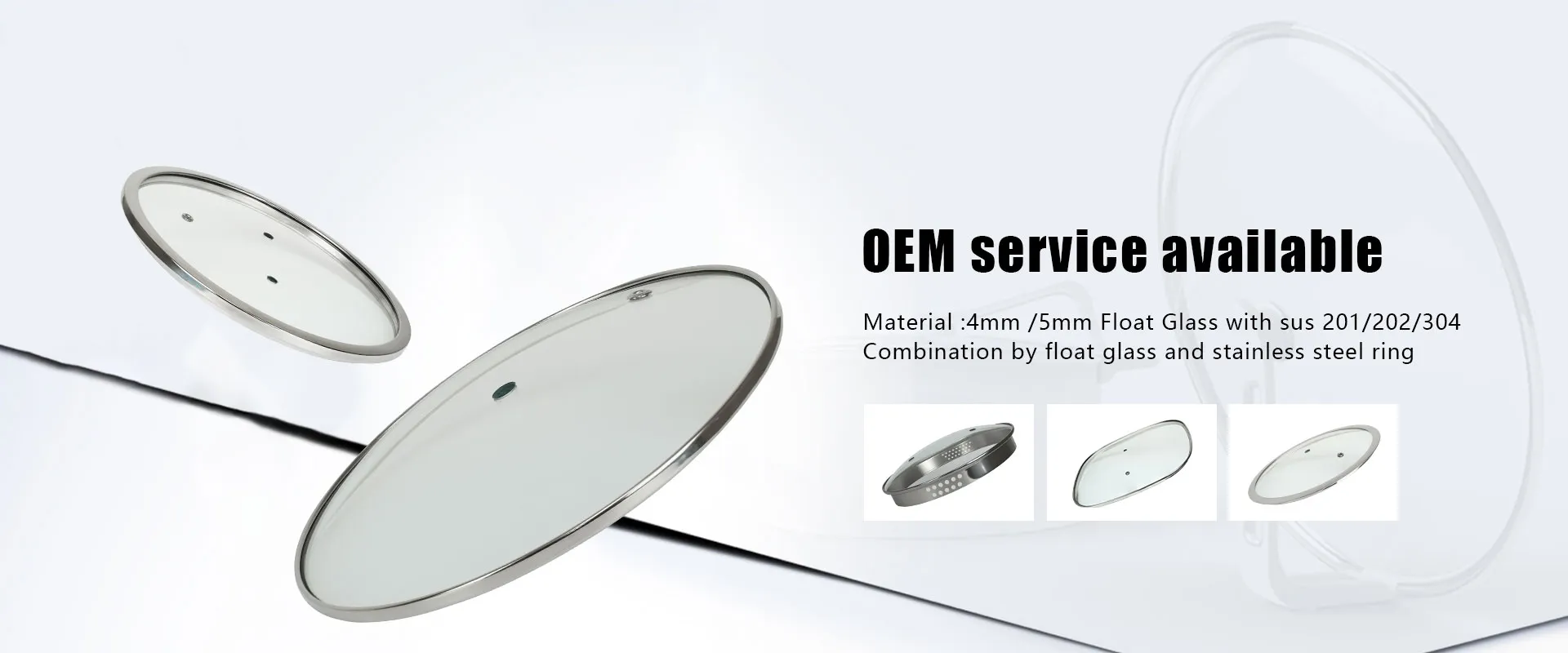
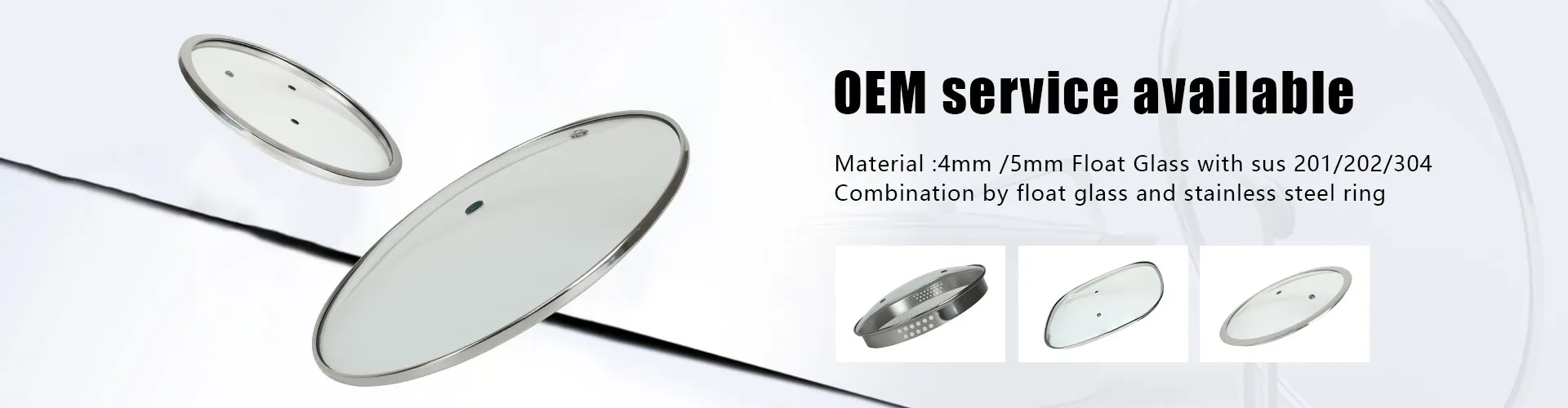
That's where companies with a serious production focus differentiate themselves. Take a supplier like EUR-ASIA COOKWARE CO.,LTD. You can see their specialization on their site at glass-lid.com—they're not just making decanters; they're fundamentally in the business of precision glass components. Their core is tempered glass lids. When a factory's entire identity is built around the lid, you approach the glass decanter with lid as a system, not as two separate pieces. Their experience in exporting to markets like Germany and Japan, where technical standards are brutal, suggests they understand the precision required for a lid that doesn't just sit on top but actually seals.
Material pairing is another subtle point. Borosilicate glass decanters are common for thermal shock resistance, but the lid material must complement it. A stainless steel lid with a glass knob? You have to consider the differential expansion rates. A pure glass lid with a ground glass stopper is classic, but for a decanter meant for daily use, not just occasional brandy, that friction fit can become stubborn if a residue like fruit pulp or sugar from cocktails builds up. That's why you see more hybrid designs now—glass body, perhaps a wooden or stainless steel top with a soft food-grade silicone gasket hidden inside. It provides a consistent seal without the maintenance headache of a ground glass joint.
Beyond the Bar: Unexpected Use Cases
We get pigeonholed into thinking decanters are for alcohol. But the glass decanter with lid has found a solid niche in the modern kitchen and dining room for non-alcoholic purposes. I've worked with clients who order them specifically for premium olive oil, for infused waters, or even for dispensing homemade cold-brew coffee. The need changes slightly. For oil, you want a lid that completely seals to prevent rancidity, often with a drip-proof spout. For cold-brew, you might want a wider mouth for easy cleaning and a lid that seals tightly for refrigeration.
This shift in use exposes different stress points. A decanter that lives on a bar cart deals with room temperature and occasional washing. One that shuttles from fridge to table deals with condensation and more frequent thermal cycling. The lid's gasket material becomes paramount—it must resist cold hardening. I recall a batch where we used a common rubber gasket. At room temperature, it sealed beautifully. After a week in a client's fridge, the rubber lost just enough elasticity that the seal was compromised, leading to odors from the fridge being absorbed. A failure in application, not in initial design. We switched to a specific food-grade silicone compound rated for low temperatures.
This is where a manufacturer's broader portfolio is telling. Looking at EUR-ASIA COOKWARE's scope—household glass products and other kitchen accessories—indicates they're thinking about the kitchen ecosystem. A decanter isn't an isolated barware item; it's a kitchen storage and serving vessel. Their production volume, over 15 million pieces annually, suggests they're tooled for consistency at scale, which is what you need when a retailer orders 50,000 units and expects every lid to fit the same way on every decanter, year after year.
The Manufacturing Nuances Most Don't See
Producing a high-quality glass decanter with lid is a dance between two different manufacturing disciplines. The decanter body is about hot-end work—blowing, shaping, annealing. The lid, especially if it's a multi-material assembly, is about cold-end precision: cutting, grinding, inserting gaskets, assembling hinges or knobs. If these two processes aren't in sync, you get mismatch. The factory floor layout matters. Are the lid and body production lines adjacent? Is quality control checking them as a married unit?
A common cost-cutting move is to source lids from a separate, cheaper specialist. This almost always introduces variance. The benefit of a vertically-oriented manufacturer like the one mentioned, with a 20,000㎡ base dedicated to glass, is that they likely control both processes under one roof. Their description of specializing in tempered glass lid and other glass products hints at this integration. Tempering is a specific, controlled process for increasing impact resistance—crucial for a lid that gets handled daily and could be knocked against the decanter's neck.
Another nuance is the finish on the grinding. The area where the lid meets the decanter's neck, usually called the landing or seat, must be perfectly smooth. Any microscopic chip or rough edge from grinding will compromise the seal and, over time, wear down the gasket or even cause stress fractures. This is a step that's easy to rush in high-volume production. You need automated optical inspection or incredibly diligent manual checks. It's not glamorous, but it's what separates a product that lasts from one that starts leaking in six months.
Design Trends and Practical Compromises
The current trend is towards minimalist, clean lines. That's pushing lids to be flatter, more integrated. The challenge is that physics doesn't always agree with aesthetics. A very wide, flat lid on a narrow-necked decanter can be top-heavy and prone to tipping when placed on a side table. We've prototyped designs that looked stunning in CAD but were annoyingly unstable in real life. The solution often involves weighting the base of the decanter more or making the lid itself slightly concave or with a lower center of gravity.
Then there's the pour. A lid that must be completely removed is less convenient than one that flips or hinges open. But adding a hinge mechanism is a complexity bomb—more parts, more potential failure points (springs, pins), and a nightmare to clean if it's used for anything other than clear spirits. For a versatile glass decanter with lid meant for various liquids, the simple, fully removable lid is often the most practical, if slightly less convenient in the moment. It's a trade-off: ease of cleaning versus ease of pouring.
Color and coating on lids are also tricky. A painted or coated metal lid can chip. Anodized aluminum holds up better. A wooden lid adds warmth but requires care to avoid warping and shouldn't be soaked. The most durable, low-maintenance option for the lid top often remains stainless steel or plain, thick glass. It's about matching the design to the expected user behavior—is this a showpiece or a workhorse?
Final Thoughts: The Unseen Benchmark
So, what makes a great glass decanter with lid? It's the absence of thought from the user. When you don't have to fight the lid to open it, when it doesn't leak after a year, when it cleans up without residue in crevices, when it feels balanced in the hand—that's success. It's a product that recedes into the background of the experience, whether you're serving an expensive Scotch or iced tea.
The industry knowledge comes from solving these unglamorous problems. It's knowing that the gasket material must be FDA-approved and resistant to citrus oils if you market it for cocktails. It's understanding that the annealing cycle for the glass body affects its long-term stability and how snugly the neck will hold the lid over years of thermal changes. It's the logistics of packaging them so the lid doesn't chip the decanter neck during shipping.
When evaluating a source, I now look less at the catalog images of the finished decanter and more at the company's foundational expertise. A producer deeply versed in the science and mass production of the lid itself, like a company operating at the scale of EUR-ASIA COOKWARE, brings a level of fundamental competency to the table. They understand the component that truly makes or breaks the vessel. The decanter body holds the liquid, but the lid protects its purpose. That’s the real takeaway, born from seeing both elegant successes and mundane failures on the production line.
Related Products
Related Products