- Chinese
- French
- German
- Portuguese
- Spanish
- Russian
- Japanese
- Korean
- Arabic
- Irish
- Greek
- Turkish
- Italian
- Danish
- Romanian
- Indonesian
- Czech
- Afrikaans
- Swedish
- Polish
- Basque
- Catalan
- Esperanto
- Hindi
- Lao
- Albanian
- Amharic
- Armenian
- Azerbaijani
- Belarusian
- Bengali
- Bosnian
- Bulgarian
- Cebuano
- Chichewa
- Corsican
- Croatian
- Dutch
- Estonian
- Filipino
- Finnish
- Frisian
- Galician
- Georgian
- Gujarati
- Haitian
- Hausa
- Hawaiian
- Hebrew
- Hmong
- Hungarian
- Icelandic
- Igbo
- Javanese
- Kannada
- Kazakh
- Khmer
- Kurdish
- Kyrgyz
- Latin
- Latvian
- Lithuanian
- Luxembou..
- Macedonian
- Malagasy
- Malay
- Malayalam
- Maltese
- Maori
- Marathi
- Mongolian
- Burmese
- Nepali
- Norwegian
- Pashto
- Persian
- Punjabi
- Serbian
- Sesotho
- Sinhala
- Slovak
- Slovenian
- Somali
- Samoan
- Scots Gaelic
- Shona
- Sindhi
- Sundanese
- Swahili
- Tajik
- Tamil
- Telugu
- Thai
- Ukrainian
- Urdu
- Uzbek
- Vietnamese
- Welsh
- Xhosa
- Yiddish
- Yoruba
- Zulu
- Kinyarwanda
- Tatar
- Oriya
- Turkmen
- Uyghur

glass jar acacia lid
When you hear 'glass jar acacia lid', the immediate image might be a rustic, artisanal preserve jar. But in the trade, that phrase often masks a tangle of material specs, sourcing headaches, and client expectations that don't always align. The assumption that acacia wood is a monolithic, uniformly ideal material for sealing glass is where many, including us early on, start to trip up. It's not just about a wooden disc on a jar; it's about moisture interaction, machining tolerance against the glass finish, and the long-term dance between the two materials.
The Acacia Wood Conundrum: Beyond Aesthetics
Let's get specific about the wood. 'Acacia' covers a vast genus. The stuff sourced from Southeast Asia behaves differently from African varieties in terms of grain density and initial moisture content. We learned this the hard way on an early batch for a German client. The lids, made from a beautifully grained but less-stable acacia, developed minor warps after a simulated six-month shelf life test. The seal wasn't compromised, but the visual consistency was off—a deal-breaker for that market. It wasn't a failure of the wood, but a failure of our specification. Now, we drill down to the species and region before a single log is cut.
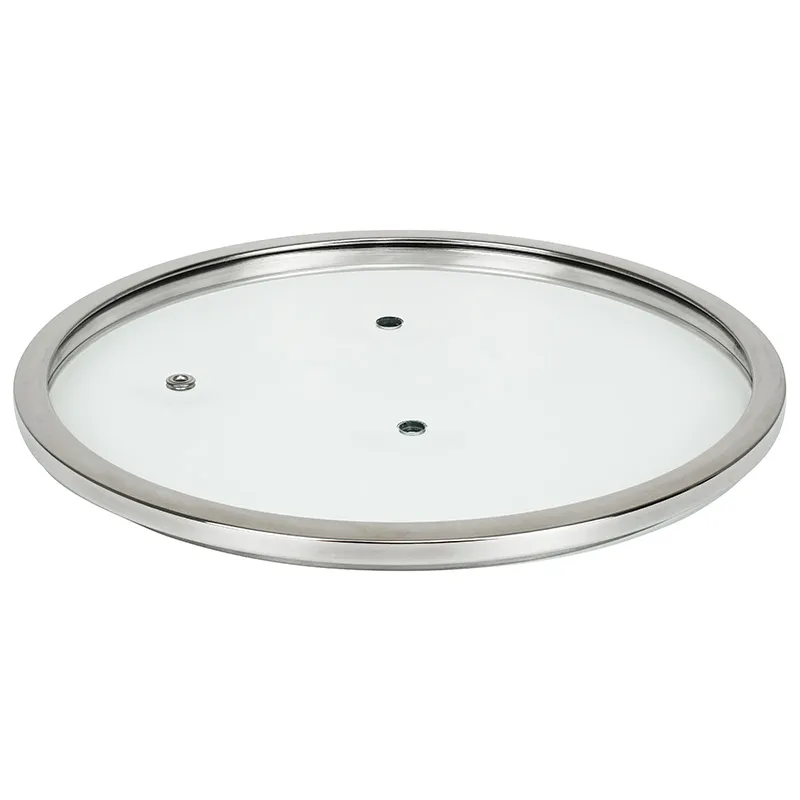
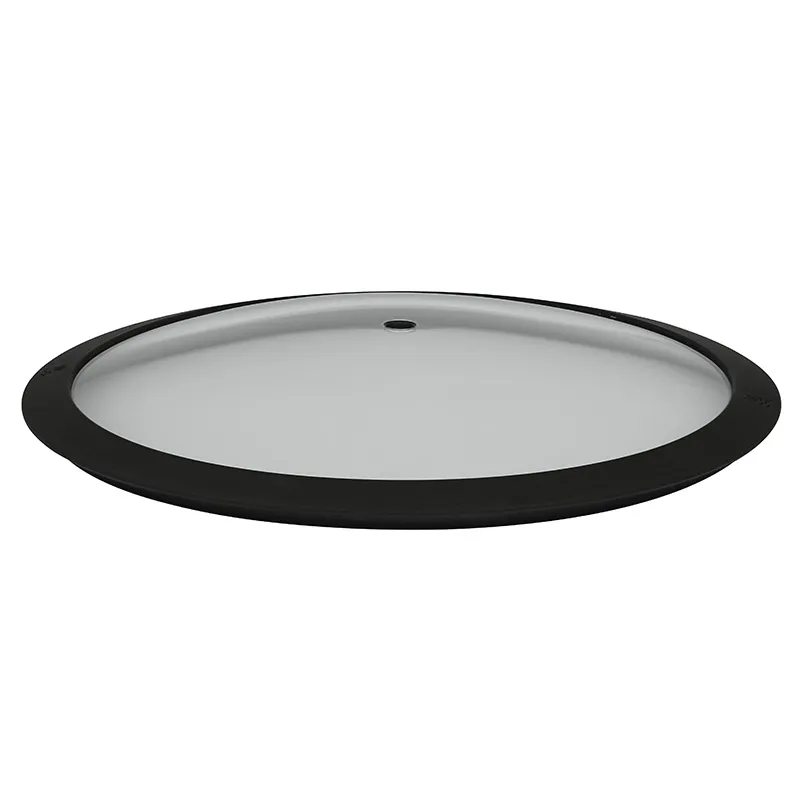
This ties directly to production with partners like EUR-ASIA COOKWARE CO.,LTD. Their focus on tempered glass lids means they understand material stability. When we discuss a glass jar acacia lid project, the conversation isn't just about diameter and thickness. It's about the tempering curve of their glass (which affects the exact inner rim geometry) and matching it with a wood that has been kiln-dried to a precise, single-digit moisture percentage. Their facility in Taian, with its volume output, forces a discipline in specs that smaller shops might gloss over.
The finishing process is another pitfall. A pure oil finish might look natural but can transfer odor. A heavy lacquer seals the wood but can create a slight dimensional bulge, risking the snap-fit on the glass jar. The sweet spot we've found is a thin, food-grade wax infusion. It protects, maintains dimensional integrity, and that's the kind of detail you only land on after seeing a few hundred lids come off the line with a less-than-ideal finish.
Integration with Tempered Glass: A Precision Dance
This is where the rubber meets the road, or rather, the wood meets the glass. The lid isn't an independent component. The critical interface is the inner sealing surface. EUR-ASIA COOKWARE CO.,LTD produces over 15 million tempered glass pieces annually, and that scale teaches consistency. For a successful acacia lid, the wooden underside must have a machined channel that perfectly mates with the fire-polished rim of their tempered glass jar.
We once tried to cut costs by having the wood lid machining done separately from the glass production, using nominal measurements. Bad idea. Even a 0.3mm variance—invisible to the eye—resulted in some lids being too snug, requiring excessive force, or too loose, failing the vacuum seal test. The lesson? The lid production needs to be calibrated against the specific batch of glass jars. It's a synchronous process. Now, we insist on using sample jars from the actual production run as the physical template for the CNC setup on the wood side.
Then there's the tempering strength. Their glass is tempered for thermal shock resistance, crucial for jars that might go from fridge to table. But that same process sets the glass's final size. An acacia lid designed for annealed (non-tempered) glass will almost certainly not fit after the glass undergoes its tempering heat cycle. This is a fundamental point of alignment between the woodworker and the glass manufacturer that is often overlooked in initial design phases.
Real-World Failures and the Export Standard Hurdle
Talking about success is easy. The real education is in the failures. A batch destined for Denmark was held up at customs. The issue? The acacia wood, while finished impeccably, lacked the specific phytosanitary certification paperwork that batch required. The wood was fine, the paperwork was incomplete. It was a logistical, not qualitative, failure that cost time and trust. This is the unsexy side of the glass jar acacia lid business.
Considering that companies like EUR-ASIA export over 90% of their products to markets like Germany, France, and Japan, their entire workflow is built around passing these hurdles. Working with such a supplier indirectly forces your wood sourcing and processing to meet a similar bar. For instance, the EU's EU 10/2011 regulation for food-contact materials applies to both the glass and the wooden lid. The finish on the acacia must be compliant, which often rules out many traditional, non-certified natural oils.
Another practical hiccup: seasonal humidity. A lid that passes inspection in a dry October in Shandong might swell slightly by the time it lands in humid Brazil in February. We now build in a climate-controlled conditioning phase post-machining, letting the wood acclimate to a median humidity level before final packing. It's a small step, but it has cut down on post-shipping complaint rates significantly.
The Illusion of the Universal Lid
You'll see catalogs offering a 75mm acacia lid for glass jars. It's a useful shorthand, but it's practically a myth. A 75mm lid for a threaded Mason-style jar is a completely different beast from a 75mm lid for a flip-top clamp jar. The former relies on thread engagement with a metal band, the latter on a direct seal against the glass rim and pressure from the clamp.
The acacia lid for a clamp jar needs a very specific durometer (firmness) of a bonded sealing ring inserted into its underside groove. If the wood is too hard, the ring doesn't seat well; too soft, and the clamp mechanism can compress the wood over time. We sourced a lovely, hard acacia for a clamp jar project, only to find the stainless steel clamp was biting into the wood surface after repeated use. The solution was a slight redesign of the clamp's contact point, not a change in wood—an outcome that required collaboration between the lid maker, glass jar supplier (glass-lid.com comes to mind for their expertise in hinge and clamp systems), and the metal parts fabricator.
This is where the specialization of a manufacturer matters. A company focused on tempered glass lid production, like EUR-ASIA, has deep libraries of jar neck finishes. When you approach them with an acacia lid idea, they can immediately tell you, For that neck finish code, you'll need a lid tolerance of X, and we recommend avoiding a beveled edge because of the clamp path. That's actionable, field-earned insight.
Moving Forward: Substance Over Trend
The market for natural material lids is cyclical, but the technical requirements only get stricter. The trend is towards the rustic look, but the underlying demand is for industrial-grade reliability. The challenge is to deliver the former without compromising the latter. It's not about making a photogenic lid; it's about making a lid that performs identically to a plastic or metal one but happens to be made of wood.
Future development, in my view, lies in hybrid approaches. Perhaps an acacia top veneer for aesthetics bonded to a dimensionally stable composite base for the sealing function. Or advanced stabilization techniques for the wood itself. The goal is to remove the material's inherent variables while keeping its soul. Partners with strong R&D in glass, like a firm with a 15,000㎡ facility dedicated to glass products, are key to testing these hybrids, as they can provide the consistent, high-volume glass component needed for valid trials.
In the end, a glass jar acacia lid is a beautiful object when done right. But getting it right is a process of eliminating romantic assumptions about the material and engaging with it as an engineer would. It's about respecting both the organic nature of wood and the precise science of glass tempering. The successful product sits quietly at the intersection of craft and rigorous specification, a fact you appreciate most after you've navigated the failures that come from ignoring either side.
Related Products
Related Products