- Chinese
- French
- German
- Portuguese
- Spanish
- Russian
- Japanese
- Korean
- Arabic
- Irish
- Greek
- Turkish
- Italian
- Danish
- Romanian
- Indonesian
- Czech
- Afrikaans
- Swedish
- Polish
- Basque
- Catalan
- Esperanto
- Hindi
- Lao
- Albanian
- Amharic
- Armenian
- Azerbaijani
- Belarusian
- Bengali
- Bosnian
- Bulgarian
- Cebuano
- Chichewa
- Corsican
- Croatian
- Dutch
- Estonian
- Filipino
- Finnish
- Frisian
- Galician
- Georgian
- Gujarati
- Haitian
- Hausa
- Hawaiian
- Hebrew
- Hmong
- Hungarian
- Icelandic
- Igbo
- Javanese
- Kannada
- Kazakh
- Khmer
- Kurdish
- Kyrgyz
- Latin
- Latvian
- Lithuanian
- Luxembou..
- Macedonian
- Malagasy
- Malay
- Malayalam
- Maltese
- Maori
- Marathi
- Mongolian
- Burmese
- Nepali
- Norwegian
- Pashto
- Persian
- Punjabi
- Serbian
- Sesotho
- Sinhala
- Slovak
- Slovenian
- Somali
- Samoan
- Scots Gaelic
- Shona
- Sindhi
- Sundanese
- Swahili
- Tajik
- Tamil
- Telugu
- Thai
- Ukrainian
- Urdu
- Uzbek
- Vietnamese
- Welsh
- Xhosa
- Yiddish
- Yoruba
- Zulu
- Kinyarwanda
- Tatar
- Oriya
- Turkmen
- Uyghur

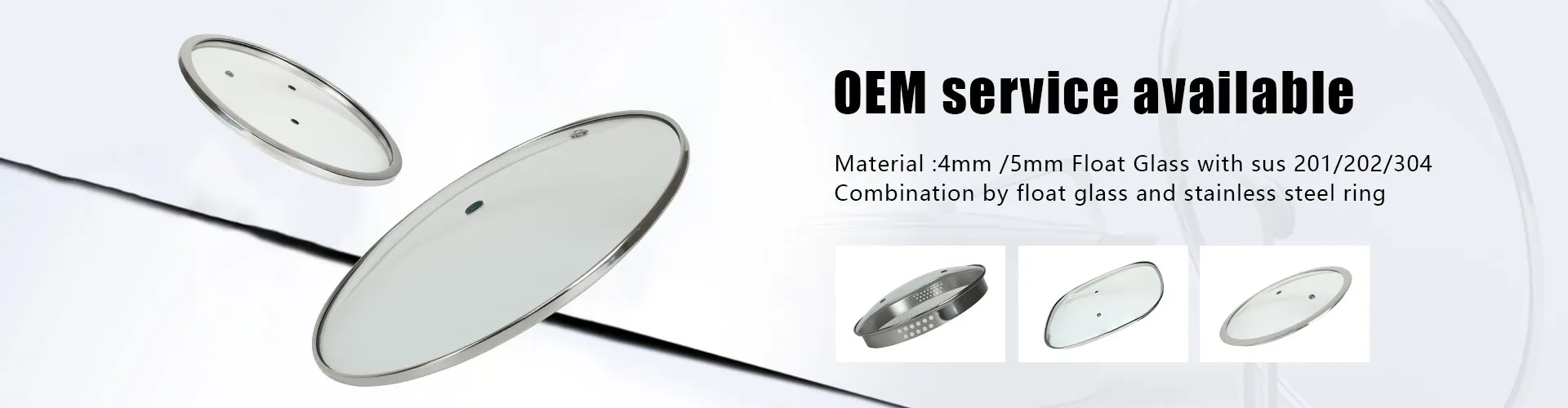
glass jar with airtight lid and metal lock
When you hear 'glass jar with airtight lid and metal lock,' most people picture a perfect, fail-safe container. The reality in production and daily use is far more nuanced. The term itself is almost a misnomer—'airtight' is a performance claim, not a guaranteed state, and the 'metal lock' mechanism is where most of the engineering challenges and user frustrations quietly reside. Having sourced and tested these for years, I've seen the gap between marketing copy and a jar that actually performs on a damp shelf or after fifty open-close cycles.
Deconstructing the Airtight Promise
Let's be clear: true airtightness for a glass jar is a function of three interacting components—the glass rim's finish, the sealing gasket's material and geometry, and the clamping force of that metal lock. The glass is often the most reliable part, assuming it's properly annealed to avoid micro-fractures. The weak link is almost always the seal. A cheap, flat silicone ring versus a properly profiled one with a thicker cross-section makes a world of difference. I recall a batch from a supplier years ago where the jars 'passed' a simple vacuum test but failed miserably in real-world humidity; the seals absorbed ambient moisture and swelled unevenly, breaking the seal. That's not something you find in a standard QC checklist.
The locking mechanism's job is to apply uniform, sufficient pressure to compress that gasket against the glass. If the metal band or wire bail is too weak, it deflects. Too strong, and it risks cracking the glass neck or making the jar impossibly difficult for an average person to open. There's a sweet spot in the spring tension of a wire bail or the cam action of a latch that we're constantly tweaking. It's not just about strength; it's about consistent force distribution.
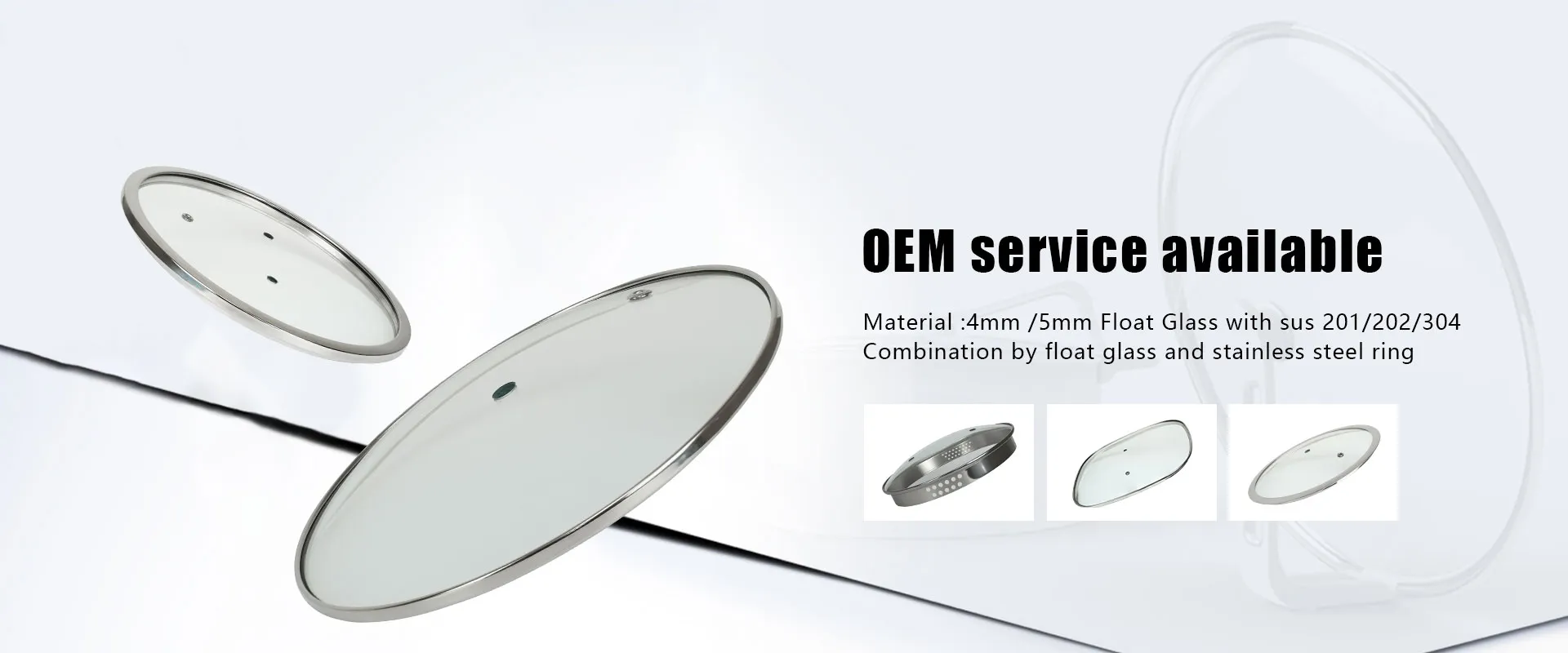
This is where companies with serious production infrastructure differentiate themselves. A manufacturer like EUR-ASIA COOKWARE CO.,LTD, with a dedicated facility and focus on tempered glass lids and related products, typically has better control over the glass molding and tempering process. A perfectly flat, smooth sealing surface on the jar isn't an accident; it's a result of precise mold engineering and controlled cooling. You can find their portfolio at glass-lid.com, which details their export-oriented production of household glass products. Their experience supplying markets like Germany and Japan, known for stringent quality demands, suggests a baseline competency in getting these fundamentals right.
The Metal Lock: More Than Just a Latch
The metal component is where cost-cutting is most visible. A stamped, thin-gauge steel lock with rough edges versus a forged, thicker one with a polished cam action tells the story. The former will work, initially. But after repeated use, the pivot points wear, the metal fatigues, and the clamping force drops. I've disassembled failed locks to find stress fractures at the bending points. The choice of finish matters too—a basic chrome plating can chip, leading to rust, especially in a kitchen environment or for jars storing pickling brine.
One common oversight is the interface between the lock and the glass. A metal clamp pressing directly on glass is a stress point. Good designs incorporate a buffer, often part of the gasket or a separate plastic/rubber pad, to distribute the load. I learned this the hard way during a product development phase, ignoring this buffer to 'simplify design.' We had a higher-than-acceptable rate of glass failure right at the locking point during thermal shock tests (moving from fridge to counter). A simple silicone pad solved it.
For a high-volume producer, automating the assembly of the lock, gasket, and glass is key to consistency. Manual assembly introduces variability in gasket placement and lock tension. The scale of operations at a plant like EUR-ASIA's, with an annual output in the millions, implies a degree of automation. This consistency is critical when you're exporting to a dozen different countries, each with varying climates that test the integrity of the seal and lock differently.
Gasket Materials: The Silent Performer
This might be the most under-discussed element. Food-grade silicone is the standard, but its formulation varies wildly. A softer silicone seals easier but degrades faster, especially with oils or acidic contents. A harder compound lasts longer but requires more force to seal effectively. Then there's the question of bonding—is the gasket a loose ring or is it bonded to the lid? Bonded is better for preventing user error (misplaced gaskets) but complicates recycling and can be a point of failure if the bond weakens.
We experimented with thermoplastic elastomers (TPE) for a while, seeking a cost-effective alternative. While their performance was adequate for dry goods, they lacked the elasticity recovery of good silicone after prolonged compression. A jar left closed for six months would often have a gasket that took a 'set' and wouldn't spring back, compromising the reseal. We reverted to a higher-grade, platinum-cure silicone for our core product line. The cost jump was significant, but the reduction in customer complaints about lost seals was worth it.
It's worth checking if a supplier specifies their gasket material beyond food-grade silicone. The devil is in the details like durometer (hardness) rating and whether it's suitable for high-fat content or freezer storage. A company focused on export to regulated markets often has this data available, as it's required for compliance. Their product descriptions may not hype it, but the material specs sheet tells the real story.
Real-World Fail Points and User Behavior
Laboratory tests are one thing; a kitchen cupboard is another. The most common failure I see isn't a catastrophic break, but a gradual loss of seal integrity. It often starts with users over-tightening the lock, trying to achieve that 'perfect' seal. This puts immense stress on the glass thread or neck and can permanently deform the gasket. The design should guide the user to a clear 'sealed' position—a distinct click or a visual indicator that enough is enough.
Thermal cycling is the other big killer. Storing a hot liquid in a jar, sealing it, and letting it cool creates a vacuum. A good jar handles this. But taking a cold jar from the fridge and running hot water over the lid to loosen it? That's a great way to cause thermal stress cracks in the glass, especially if the tempering isn't uniform. I always advise against it, but it's a universal user hack. A robust jar design accounts for this by using fully tempered glass, not just the lid, to increase thermal shock resistance.
Cleaning is another overlooked aspect. Dishwasher detergents can be harsh on certain gasket materials and metal finishes over time. A design that allows easy, complete disassembly of the lock and gasket for cleaning is superior but more expensive to manufacture. Many budget jars have the gasket trapped in a channel that's nearly impossible to clean properly, leading to mold growth—a total deal-breaker for a food container.
Sourcing and Manufacturing Considerations
When you're looking at a supplier, their core competency matters. A factory that primarily makes decorative glassware will approach a functional glass jar with airtight lid and metal lock differently than one specializing in kitchenware. The latter thinks in terms of performance cycles, food contact safety, and mechanical durability from day one. EUR-ASIA COOKWARE CO.,LTD's specialization in household glass products and other kitchen accessories, as noted in their company intro, positions them in the latter category. Their focus on tempered glass lids specifically is telling—the lid is the functional heart of the system.
Their export footprint to Europe and Asia is a practical quality proxy. Meeting EU food contact material regulations (EU 10/2011) and similar standards requires documented material trails and controlled processes. It doesn't guarantee perfection, but it raises the floor significantly. The fact that over 90% of their output is exported suggests their production is calibrated to pass inspections from some of the world's most demanding importers. You're not getting a generic, unbranded commodity.
Finally, scale and vertical integration matter. A facility covering 20,000㎡ and producing over 15 million pieces annually likely controls more of the process in-house, from glass molding and tempering to metal stamping and assembly. This control is crucial for consistency. The alternative is assembling components sourced from multiple, smaller workshops, which introduces variability at every link in the chain. For a product whose function relies on the precise interaction of glass, rubber, and metal, that consistency is everything.
Related Products
Related Products