- Chinese
- French
- German
- Portuguese
- Spanish
- Russian
- Japanese
- Korean
- Arabic
- Irish
- Greek
- Turkish
- Italian
- Danish
- Romanian
- Indonesian
- Czech
- Afrikaans
- Swedish
- Polish
- Basque
- Catalan
- Esperanto
- Hindi
- Lao
- Albanian
- Amharic
- Armenian
- Azerbaijani
- Belarusian
- Bengali
- Bosnian
- Bulgarian
- Cebuano
- Chichewa
- Corsican
- Croatian
- Dutch
- Estonian
- Filipino
- Finnish
- Frisian
- Galician
- Georgian
- Gujarati
- Haitian
- Hausa
- Hawaiian
- Hebrew
- Hmong
- Hungarian
- Icelandic
- Igbo
- Javanese
- Kannada
- Kazakh
- Khmer
- Kurdish
- Kyrgyz
- Latin
- Latvian
- Lithuanian
- Luxembou..
- Macedonian
- Malagasy
- Malay
- Malayalam
- Maltese
- Maori
- Marathi
- Mongolian
- Burmese
- Nepali
- Norwegian
- Pashto
- Persian
- Punjabi
- Serbian
- Sesotho
- Sinhala
- Slovak
- Slovenian
- Somali
- Samoan
- Scots Gaelic
- Shona
- Sindhi
- Sundanese
- Swahili
- Tajik
- Tamil
- Telugu
- Thai
- Ukrainian
- Urdu
- Uzbek
- Vietnamese
- Welsh
- Xhosa
- Yiddish
- Yoruba
- Zulu
- Kinyarwanda
- Tatar
- Oriya
- Turkmen
- Uyghur

glass jar with bamboo lid wholesale
When you type 'glass jar with bamboo lid wholesale' into a search bar, you're probably picturing a clean, aesthetic product ready for your private label. The reality of sourcing it, however, is a different beast. Many buyers, especially those new to importing, underestimate the nuance between a generic 'glass jar with lid' and a properly specified product that meets market regulations and consumer expectations. The bamboo lid alone introduces variables—sourcing, treatment, fit, and compliance—that can make or break a shipment. It's not just about finding a supplier; it's about finding a partner who understands these layers.
The Core Product: More Than Just a Pretty Pairing
Let's break down the product. A glass jar with bamboo lid isn't a single SKU. The glass needs specification: is it soda-lime or borosilicate? Tempered or annealed? The capacity tolerance, the finish of the rim (ground and polished is non-negotiable for a good seal), and the wall thickness all matter. I've seen containers fail because the glass was too thin for the intended dry goods, leading to a higher breakage rate in transit that wiped out the margin.
The bamboo component is where things get tricky. 'Bamboo' is almost a marketing term. Is it laminated bamboo ply? Solid bamboo? The processing method is critical. Untreated or poorly treated bamboo can mold, especially in humid climates or during sea freight. A reliable supplier will have documentation on the treatment process, often involving high-temperature baking and food-safe coatings. The fit is another pain point. The lid must sit flush without rocking, and the tolerance between the glass thread (if it's a twist lid) or the inner diameter (for a friction-fit lid) and the bamboo insert has to be precise to within a millimeter.
I recall a shipment from a factory that wasn't specialized in this combo. The jars were fine, but the lids warped slightly after a month in storage because the bamboo's moisture content wasn't properly controlled pre-assembly. We ended up with a warehouse of jars and useless lids. That's when you learn to ask for moisture content certificates for the bamboo raw material, not just the final product inspection report.
Sourcing and the Supplier Landscape
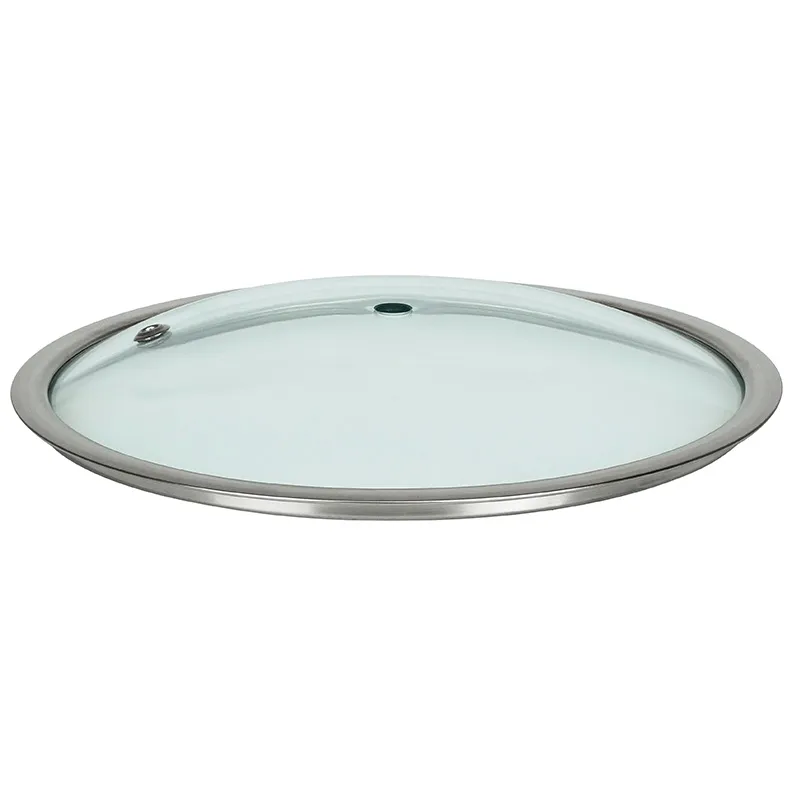
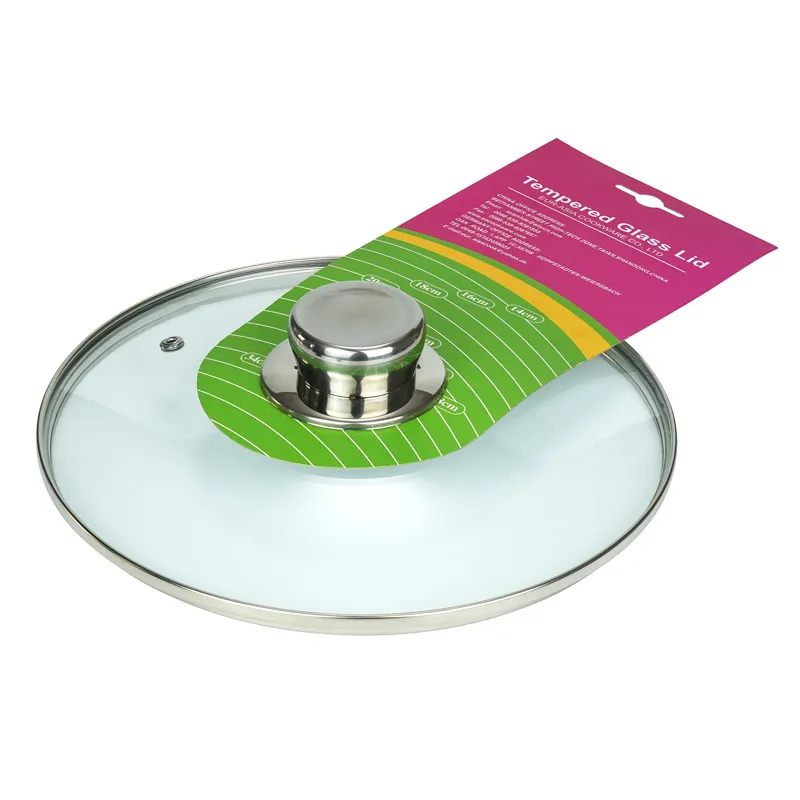
This brings me to the wholesale landscape. Alibaba is flooded with listings, but for consistent, compliant volume, you need manufacturers with a track record in glass and bamboo assembly, not just traders. The production base location is telling. Areas with a cluster of glassware industries, like Shandong Province in China, often have more mature supply chains for both materials. For instance, a company like EUR-ASIA COOKWARE CO.,LTD, operating out of Taian City in that region, typifies the kind of integrated manufacturer worth vetting. Their focus on tempered glass lids and export markets (over 90% export rate to Europe and beyond) suggests an understanding of international quality and safety standards, which is a baseline for any serious wholesale inquiry.
When evaluating a supplier's website, such as glass-lid.com, don't just look at the gallery. Look for evidence of scale and specialization. Their stated capacity—an annual output of over 15 million pieces of tempered glass lids—indicates they're tooled for volume. For a glass jar with bamboo lid wholesale project, you need this scale to ensure consistency across a 10,000-unit order. A small workshop can't reliably maintain the bamboo quality across that volume.
The export footprint is a key filter. A supplier whose products regularly land in Germany, France, or Japan has already navigated some of the world's strictest import controls and retailer compliance checks (think LFGB in Germany, FDA guidelines). This doesn't mean their product is automatically perfect for you, but it drastically reduces the risk profile compared to a supplier with no such history. It implies they have systems for material traceability and factory audits.
Pitfalls in the Buying Process
Negotiating price per unit is just the start. The real conversation happens around packaging. How are these units packed for ocean freight? A standard 20-foot container can fit a surprising number of jars, but if the inner packaging—the partition inserts, the bubble wrap—is insufficient, you'll receive a container of cullet. I always insist on seeing the master carton drop-test report and the full container load plan. For bamboo lids, packing with desiccant packets is a must, and that cost needs to be factored in upfront.
Payment terms are another area. For a first order, 30% deposit with balance against copy of Bill of Lading is common. But with a complex product like this, I've pushed for a pre-shipment inspection hold point. You pay the deposit for production, but before the balance is paid, an independent inspector (or your agent) checks a random sample from the finished batch. This is where you catch lid fit issues, check bamboo finish, and verify labeling. It costs a few hundred dollars but can save tens of thousands.
Lead time is almost always underestimated. A supplier might quote 30 days. But that clock starts after they've sourced the bamboo raw material to spec, which can add 10-15 days if they don't have it in stock. Always clarify if the lead time is from order confirmation or from material readiness. During the pandemic, we had a project delayed by 60 days because the specific bamboo ply we approved was stuck in a lockdown zone. Now, we discuss and approve backup material sources in the contract.
Compliance and Market Fit
This isn't just about quality; it's about legality. If you're selling in the EU or North America, your glass jar with bamboo lid is a food contact material. The glass needs to meet heavy metal migration limits. The bamboo lid, however, is the wild card. The adhesive used to laminate the ply (if laminated), the food-safe coating or oil finish, and any decorative inks must all be compliant. I always request a Declaration of Conformity and supporting test reports from an accredited lab, not an in-house factory sheet.
There's also a design consideration for different markets. In Europe, a simple, minimalist bamboo lid on a straight-sided jar is popular for pantry staples. In the US, you might see more demand for a bail-lock jar with a bamboo-inspired plastic seal for better airtightness. Understanding this before you spec your product is crucial. I once developed a beautiful friction-fit lid for the European market, only to find US buyers wanted a threaded metal ring with a bamboo top—a completely different manufacturing process.
Finally, think beyond the initial shipment. What about spare parts? If you're selling these jars for reuse, customers will eventually need replacement lids. Does your wholesale supplier have a policy for low-volume reorders of lids only? Establishing this channel early can be a significant customer retention tool for your own business. A company like EUR-ASIA COOKWARE CO.,LTD, with its production scale, is more likely to accommodate a pallet of replacement lids a year down the line than a smaller factory.
Concluding Thoughts: Building the Relationship
So, glass jar with bamboo lid wholesale isn't a transactional keyword; it's the start of a technical sourcing project. The goal is to move from a buyer to a partner in the supplier's eyes. This means clear communication, realistic timelines, and sometimes visiting the facility. When you find a manufacturer that gets the details—like the importance of the bamboo grain direction for structural integrity or the exact tempering curve for the glass—you stick with them.
The website for EUR-ASIA COOKWARE CO.,LTD mentions specialization in low to high-level household glass. That range is important. It suggests they can likely work with you to develop a product at your target price point without compromising on the critical safety and fit aspects. They're not just selling a commodity; they're selling manufacturing capability.
In the end, success in wholesale comes down to specification, inspection, and relationship. You specify every detail, you inspect relentlessly at agreed milestones, and you build a relationship where the supplier is invested in your product's success because they see you as a long-term channel. The jar and lid are just the tangible outputs of that much deeper process.
Related Products
Related Products