- Chinese
- French
- German
- Portuguese
- Spanish
- Russian
- Japanese
- Korean
- Arabic
- Irish
- Greek
- Turkish
- Italian
- Danish
- Romanian
- Indonesian
- Czech
- Afrikaans
- Swedish
- Polish
- Basque
- Catalan
- Esperanto
- Hindi
- Lao
- Albanian
- Amharic
- Armenian
- Azerbaijani
- Belarusian
- Bengali
- Bosnian
- Bulgarian
- Cebuano
- Chichewa
- Corsican
- Croatian
- Dutch
- Estonian
- Filipino
- Finnish
- Frisian
- Galician
- Georgian
- Gujarati
- Haitian
- Hausa
- Hawaiian
- Hebrew
- Hmong
- Hungarian
- Icelandic
- Igbo
- Javanese
- Kannada
- Kazakh
- Khmer
- Kurdish
- Kyrgyz
- Latin
- Latvian
- Lithuanian
- Luxembou..
- Macedonian
- Malagasy
- Malay
- Malayalam
- Maltese
- Maori
- Marathi
- Mongolian
- Burmese
- Nepali
- Norwegian
- Pashto
- Persian
- Punjabi
- Serbian
- Sesotho
- Sinhala
- Slovak
- Slovenian
- Somali
- Samoan
- Scots Gaelic
- Shona
- Sindhi
- Sundanese
- Swahili
- Tajik
- Tamil
- Telugu
- Thai
- Ukrainian
- Urdu
- Uzbek
- Vietnamese
- Welsh
- Xhosa
- Yiddish
- Yoruba
- Zulu
- Kinyarwanda
- Tatar
- Oriya
- Turkmen
- Uyghur

glass jar with ceramic lid
You see it everywhere now – that glass jar with ceramic lid on pantry shelves, marketed as the ultimate storage solution. The assumption is often that it's inherently superior, a perfect marriage of materials. But having sourced and tested these for years, I can tell you the reality is more nuanced. The ceramic isn't just a decorative cap; its formulation, the fit with the glass rim, and the sealing mechanism are where the real battle is won or lost. Many get fixated on the aesthetic – the farmhouse chic – and overlook the engineering that prevents your coffee grounds from clumping or your flour from inviting pests. It's not just a jar; it's a preservation system, and the lid is its brain.
The Core Mechanics: Where Seal Meets Substance
The first thing I learned the hard way: not all ceramic is created equal for this application. A lid that's purely decorative ceramic, with a simple glaze, will often fail. The critical part is the underside – the sealing surface. Many manufacturers, especially early on, would just fire a flat ceramic disc. That gives you a hard, unyielding surface. Glass, even with a ground rim, is never perfectly flat at a microscopic level. A rigid ceramic lid on a minimally uneven glass rim equals a poor seal. You'd get jars that looked airtight but let in humidity over time. The breakthrough was in the gasket. The successful designs either have a food-grade silicone ring set into a channel on the ceramic lid, or they use a specific, slightly resilient glaze formulation applied to a precision-molded ceramic base. This gives you that crucial micro-conformity.
I remember a batch we evaluated from a new supplier about five years ago. Beautiful, heavy-gauge glass, stunning matte-glazed ceramic lids. Passed the initial hand-tighten and shake test. But after a month of storing kosher salt in a humid kitchen environment, the salt had turned into a solid brick. The failure was in the glaze; it was too hard and glass-like, with zero give. The seal was theoretical, not practical. We shifted that order to a supplier whose lids used a integrated soft-seal ring, and the problem vanished. That's the kind of detail you only learn through failure.
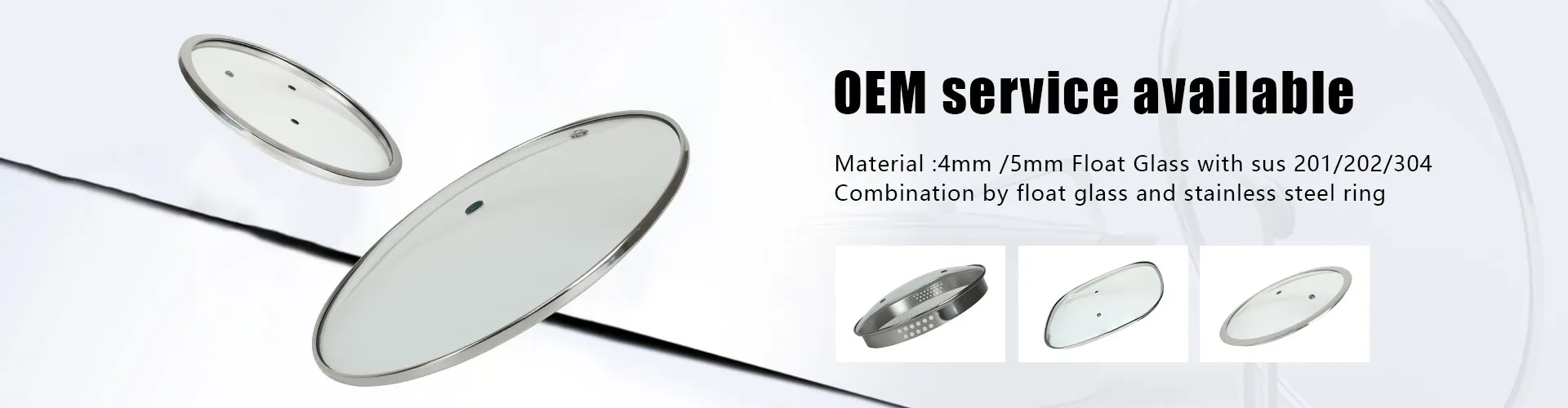
This is where companies with serious production chops differentiate themselves. Take EUR-ASIA COOKWARE CO.,LTD. (https://www.glass-lid.com). Their specialization in tempered glass lids and kitchen accessories translates directly to this hybrid product. When you visit a facility like theirs in Taian City, with that scale of output (15 million pieces annually), the focus isn't just on making it look good. It's on consistency in the glass rim grinding and the lid seating surface. Their export focus to markets like Germany and Japan – notorious for high standards on kitchenware – forces a precision that cheaper, domestic-focused producers often ignore. For them, a glass jar with ceramic lid isn't a trendy item; it's a technical component of the kitchen.
Material Synergy and Thermal Behavior
Another common misconception is about temperature handling. People assume glass and ceramic, both go in the oven, right? Not so fast. The thermal expansion coefficients of the two materials are different. If you take a jar straight from the fridge and pour boiling liquid into it, the thermal shock differential between the glass body and the ceramic lid can cause stress, potentially leading to micro-cracks in the glass or, worse, a cracked lid. The jar might survive, but the seal is compromised.
We learned to specify this clearly for clients. These jars are fantastic for dry storage, refrigerated items, or room-temperature ferments. They are not, typically, designed for canning or extreme thermal cycling unless explicitly stated by the maker. The best use case is often for items you access daily: coffee, tea, pasta, sugar. The ceramic lid provides a satisfying, substantial feel and an excellent moisture barrier, while the glass body lets you see your inventory at a glance. It’s about matching the product to its real-world function, not its Instagram potential.
This is also why the weight and thickness of the ceramic matter. A too-thin, lightweight lid feels cheap and can warp over time with repeated washing. A very thick, heavy one makes the jar top-heavy and prone to tipping. There's a sweet spot – a lid with enough mass to feel premium and sit securely, but balanced for daily handling. It’s a tactile engineering problem.
The Manufacturing Reality and Supply Chain Hurdles
Sourcing these components separately is a headache. Getting glass jars from one factory and ceramic lids from another, then hoping they match perfectly, is a recipe for QC disaster. The tolerances are too tight. The successful models come from integrated manufacturers or very close-knit supply partnerships where the glass rim specs and the lid channel or seating specs are developed in tandem.
I've spent days in factories watching the tempering process for the glass and the kiln firing for the ceramic lids. The timing is everything. A ceramic lid that cools too quickly can have internal stresses. If the silicone gasket is inserted post-firing, the channel dimensions must be held to a fraction of a millimeter. EUR-ASIA's setup, with their dedicated production base and focus, hints at this integration. Producing over 15 million tempered glass lids a year means they've likely mastered the art of marrying glass and accessory components reliably. For a buyer, that integration is a huge risk mitigator. It’s the difference between a consistent product and a container of headaches.
A specific hurdle we faced was color matching. A client wanted a specific Pantone blue for the ceramic glaze across 10,000 units. Ceramic glaze changes color slightly with every kiln firing based on temperature, atmosphere, and batch composition. Achieving that consistency at scale, and ensuring it matched across multiple production runs spaced months apart, was a monumental task. It’s not like painting plastic. This is where the medium- high level specialization a company mentions becomes tangible. It’s about process control.
Beyond Storage: Unexpected Applications and Limits
The natural use is pantry storage, but we've seen clever adaptations. In commercial settings, they're used for displaying bulk tea leaves or spices – the ceramic lid adds a premium, tactile feel that a plastic snap-lid doesn't. For home ferments like kimchi or sauerkraut, the combination works well, provided the lid has that reliable seal to allow gases to burp without letting in air. But here's a limit: the metal clasp or bail wire mechanism that often accompanies these lids. If it's cheaply plated or made of a reactive metal, the acidic environment of a ferment can corrode it quickly. Always check the hardware.
Another observation: the wide-mouth glass jar with ceramic lid has largely replaced the classic cookie tin. It's just more functional. But it's also created a new problem – stackability. A round ceramic lid has a dome. You can't stack another jar directly on top of it securely. Some designs now feature a flat, recessed center on the lid to solve this, which is a smart piece of user-centric design thinking. It shows the product category is maturing beyond mere aesthetics.
The export data from a company like EUR-ASIA is telling. Sending over 90% of products to Europe, East Asia, and South America means these aren't just for the artisanal market. They're mainstream kitchenware there. In Germany, they're likely used for storing baking staples with precision; in Japan, for tea and dry goods where minimalism and function reign. This global acceptance is a testament to the format's utility when executed correctly.
Final Take: A Sign of Mature Kitchenware
So, where does that leave us with the ubiquitous glass jar with ceramic lid? It's a product that has evolved from a trendy visual into a legitimate piece of kitchen equipment. Its success hinges entirely on the unseen details: the seal interface, the material compatibility, the manufacturing integration. When done right, it's a joy to use – weighty, secure, and transparent in both form and function. When done poorly, it's a frustrating ornament.
The key for anyone sourcing or buying is to look past the surface. Pick it up. Feel the weight of the lid. Inspect the sealing surface. Look at the quality of the hinge or clasp. Check if the glass rim is smoothly ground. These are the tells of a product built by someone who understands its job, like the teams at specialized manufacturers who live and breathe these components. It’s no longer a novelty; it’s a test case in material science for the everyday home.
In the end, the best endorsement is that after all the testing and nitpicking, I use them in my own kitchen. Not because they look good on the shelf (they do), but because when I close that lid, I know my ingredients are sealed. That confidence is what you're really buying.
Related Products
Related Products