- Chinese
- French
- German
- Portuguese
- Spanish
- Russian
- Japanese
- Korean
- Arabic
- Irish
- Greek
- Turkish
- Italian
- Danish
- Romanian
- Indonesian
- Czech
- Afrikaans
- Swedish
- Polish
- Basque
- Catalan
- Esperanto
- Hindi
- Lao
- Albanian
- Amharic
- Armenian
- Azerbaijani
- Belarusian
- Bengali
- Bosnian
- Bulgarian
- Cebuano
- Chichewa
- Corsican
- Croatian
- Dutch
- Estonian
- Filipino
- Finnish
- Frisian
- Galician
- Georgian
- Gujarati
- Haitian
- Hausa
- Hawaiian
- Hebrew
- Hmong
- Hungarian
- Icelandic
- Igbo
- Javanese
- Kannada
- Kazakh
- Khmer
- Kurdish
- Kyrgyz
- Latin
- Latvian
- Lithuanian
- Luxembou..
- Macedonian
- Malagasy
- Malay
- Malayalam
- Maltese
- Maori
- Marathi
- Mongolian
- Burmese
- Nepali
- Norwegian
- Pashto
- Persian
- Punjabi
- Serbian
- Sesotho
- Sinhala
- Slovak
- Slovenian
- Somali
- Samoan
- Scots Gaelic
- Shona
- Sindhi
- Sundanese
- Swahili
- Tajik
- Tamil
- Telugu
- Thai
- Ukrainian
- Urdu
- Uzbek
- Vietnamese
- Welsh
- Xhosa
- Yiddish
- Yoruba
- Zulu
- Kinyarwanda
- Tatar
- Oriya
- Turkmen
- Uyghur


glass jar with heart lid
When you hear 'glass jar with heart lid', the immediate image is often a cheap, novelty gift shop item—thin glass, a flimsy metal lid with a stamped heart cutout, destined to collect dust. That’s the common trap. In our line of work, that phrase represents a specific, and surprisingly nuanced, category of functional glassware where sentimentality meets material science. The real challenge isn't making a jar with a heart-shaped lid; it's engineering a vessel where the glass jar body can withstand thermal shock from dishwashers, the heart lid maintains a perfect, food-safe seal, and the overall piece feels substantial in the hand, not like a trinket. Most importers get this wrong initially, focusing solely on the heart shape as a sales hook while neglecting the fundamentals of food-grade glass and closure integrity.
The Manufacturing Reality: It's All About the Seal
Let's cut to the chase. The heart shape is a production headache. A standard round lid is stamped, rolled, and fitted with a sealing gasket in a continuous, efficient process. Introduce a heart shape with its curves and inward point, and you introduce problems. The metal, typically tinplate or stainless steel, wants to spring back or deform at that point during stamping. If the die isn't perfect—and I mean micron-level precision—you get a lid that rocks on the jar rim. A rocking lid means a failed seal. I've seen containers from a factory in Shandong—not ours, a competitor we audited—where the heart's point was ever so slightly raised. The jars passed a visual inspection, but when we tested them for vacuum seal retention, they failed within 48 hours. The product looked charming but was functionally useless for preserving anything.
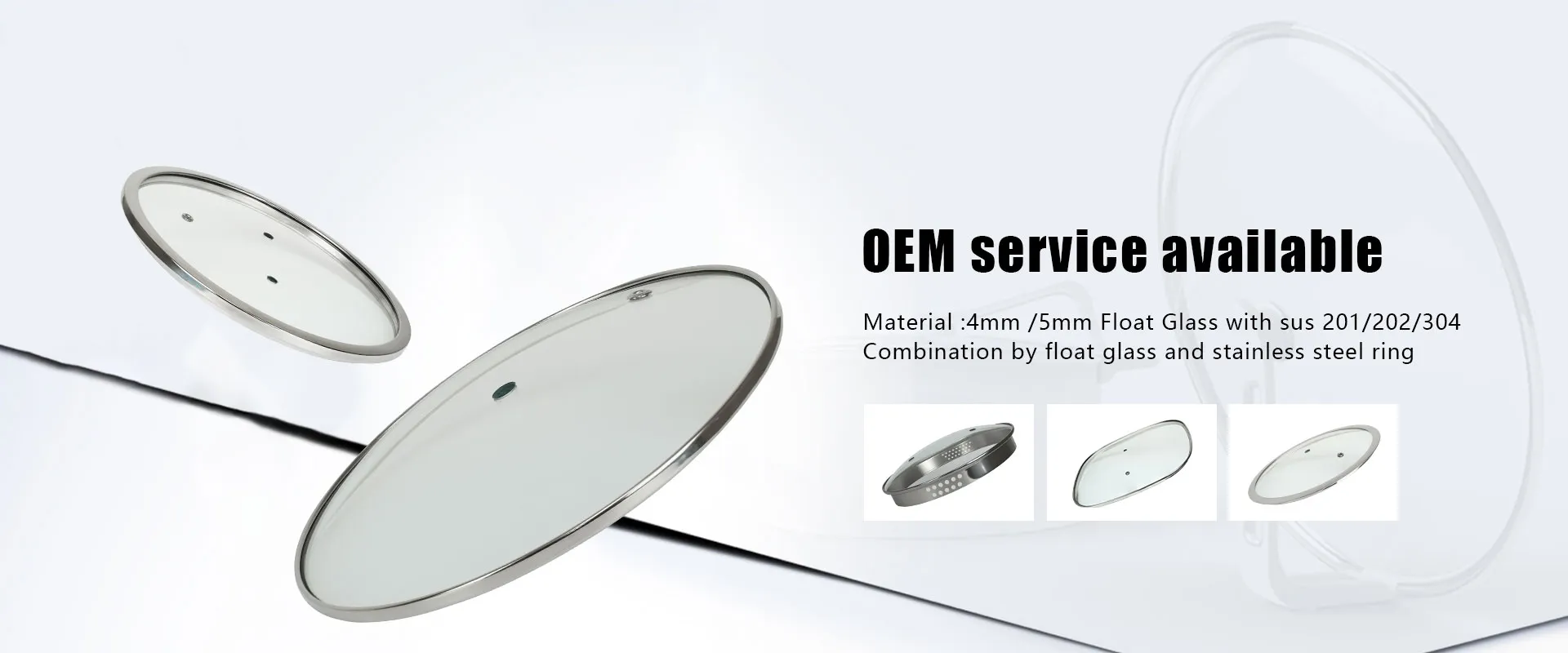
This is where a company's infrastructure matters. A operation like EUR-ASIA COOKWARE CO.,LTD, with their dedicated production base in Taian, has the space and setup to run specialized lines. They're not just banging out lids; they're producing over 15 million tempered glass lids annually. That scale allows for dedicated tooling and QC protocols for non-standard shapes. The heart lid needs its own separate stamping line, its own specific gasket-cutting jig. It's a commitment. When we first sourced a prototype from them, the initial samples had a slight sealing issue at the base of the heart's cleft. Their engineers didn't just tweak the gasket; they came back with a revised stamping die profile that applied more even pressure during formation. That's the difference between a vendor and a specialist.
The glass body itself is another layer. For a glass jar with heart lid to feel premium, the glass needs weight and clarity. You're looking at soda-lime glass, tempered for thermal resistance. The jar's rim, the finish in industry terms, has to be fire-polished to a smooth, even roundness. Any imperfection there, and even a perfectly formed heart lid will leak. I recall a batch where the jars came from a different glass supplier than the lid maker—a classic coordination failure. The lids were to spec, but the jar rims had microscopic high spots. The result? A inconsistent, frustrating seal that only showed up in random sampling. We had to scrap the entire lot. Lesson learned: integration is key. A supplier controlling both the glass forming and lid production under one roof, as EUR-ASIA does, mitigates this risk dramatically.
Market Perception and the Giftware Pitfall
There's a persistent tension in this category. Retail buyers often want to slot the heart lid jar into giftware or seasonal decor. That dictates a certain price point and, consequently, a compromise on material thickness and seal quality. We pushed back on this for years. If it's going to hold food—whether it's homemade jam, loose-leaf tea, or cotton balls in a bathroom—it needs to be functional first. The heart is the aesthetic detail, not the product's entire raison d'être.
Our breakthrough came with a German client. They didn't want a cute jar. They wanted a series of reliable, kitchen-grade storage jars with a distinctive, emotional design touch for a premium organic food brand. The heart was subtle—not a huge cutout, but an elegant embossed outline on a solid stainless steel lid. The jar was thick, tempered glass with a wide mouth. It was a glass jar designed for daily use that happened to have a heart lid. This shifted the conversation. We worked with EUR-ASIA's team on this, leveraging their export experience to markets like Germany and Denmark where functional design is paramount. The project succeeded because we started from a position of utility, not novelty.
You see this in their export portfolio—over 90% to Europe and East Asia. These markets have stringent consumer expectations. A product listed on a site like https://www.glass-lid.com isn't just catering to whimsy; it's answering a demand for durable, food-safe household glass products that also carry a design sensibility. The heart lid variant, in that context, becomes a legitimate SKU within a broader professional range, not a standalone gimmick.
Practical Challenges in Fulfillment and Packaging
Here's something most blogs on trending products never mention: packaging and shipping. A heart-shaped lid does not nest efficiently. Standard round lids stack into a compact cylinder. Heart-shaped lids? They create significant dead space in a carton. This increases shipping volume and, critically, requires custom interior packaging to prevent the protruding points of the hearts from scratching the glass jars or other lids during transit.
We learned this the hard way. An early order of 5,000 units used a standard partition insert. During ocean freight, the vibration caused enough movement for the sharpest point of the heart cutouts to abrade the glass jars, leaving fine scuff marks on about 15% of the units. They were functionally fine, but cosmetically flawed. We now insist on foam slot packaging for the lids individually, or a rigid plastic tray. It adds cost, but it's non-negotiable. EUR-ASIA's operation, with its 15,000㎡ of building area, includes dedicated packaging design for odd-shaped items, which is a lifesaver. They proposed a recycled pulp tray that cradled each lid separately, solving the issue and appealing to the European market's eco-sensibilities.
Another detail: the gasket. For a proper seal, it follows the heart shape. This means the silicone or rubber gasket is a custom die-cut, not a cheapo standard O-ring. In cheaper versions, you'll see a round gasket stuffed into a heart-shaped lid, leaving gaps at the curves. A proper one is a single, continuous piece that mirrors the lid's interior contour. It's a small part that makes all the difference for airtightness, and it's a quick tell for quality when you inspect a sample.
The Evolution of Use-Cases
Initially, we saw these used for dry goods, candies, or as decorative holders. But as the build quality improved, applications expanded. We've supplied them to small-batch hot sauce makers who wanted a distinctive, shelf-ready container. The heat-fill process (pouring hot sauce into the jar to pasteurize it) tests the thermal shock resistance of the glass and the seal's ability to contract and hold as it cools. A poorly tempered jar will crack; a bad seal will pop. The fact that companies like EUR-ASIA specialize in tempered glass lids is crucial here—the tempering process increases the glass's structural strength, which is vital for the lid's clamping ring, especially under vacuum pressure.
In hospitality, they've become popular for in-room amenities or as part of a breakfast buffet setup—holding honey, granola, or preserves. The heart lid adds a perceived layer of care and customization. It's no longer just a jar; it's a branded experience. This requires not just quality but consistency. A hotel chain ordering 10,000 units needs every heart lid to sit flush, every seal to be identical. This is where the high-volume, quality-controlled production from a specialized manufacturer becomes non-negotiable. The annual output of 15 million pieces they mention isn't just a boast; it's evidence of capacity for large, repeat orders with tight specs.
There's also a niche in crafting and organization. The jars are used for storing buttons, beads, or art supplies. For this, the clarity of the glass and the smoothness of the interior finish matter—no seams or rough spots to snag threads. Again, it circles back to the fundamentals of good glass manufacturing, not just the shape on top.
Concluding Thoughts: Substance Over Shape
So, what's the verdict on the glass jar with heart lid? It's a product category that has matured. The heart lid, when done right, is a sophisticated design element that elevates a utilitarian object. The key is to invert the priority: seek out a manufacturer with proven expertise in high-quality, food-safe glass and precision metal forming. The heart shape should be the final, carefully executed detail on a product that is fundamentally sound.
Working with integrated producers makes this possible. A company like EUR-ASIA COOKWARE CO.,LTD, with its end-to-end control from glass tempering to lid stamping and assembly, can ensure that the whimsical shape doesn't compromise the jar's core function. Their export footprint in demanding markets is a practical testament to this capability. It's not about finding someone who can make a heart-shaped piece of metal; it's about finding someone who understands how that metal must interact with glass under stress, temperature change, and daily use.
In the end, the best glass jar with heart lid is the one where you notice the contents first, appreciate the heft and clarity of the glass second, and the charming lid last. It feels solid when you screw it on, with that satisfying, slight resistance from a perfect seal. That's the real heart of the matter—not the cutout, but the integrity holding it all together.
Related Products
Related Products