- Chinese
- French
- German
- Portuguese
- Spanish
- Russian
- Japanese
- Korean
- Arabic
- Irish
- Greek
- Turkish
- Italian
- Danish
- Romanian
- Indonesian
- Czech
- Afrikaans
- Swedish
- Polish
- Basque
- Catalan
- Esperanto
- Hindi
- Lao
- Albanian
- Amharic
- Armenian
- Azerbaijani
- Belarusian
- Bengali
- Bosnian
- Bulgarian
- Cebuano
- Chichewa
- Corsican
- Croatian
- Dutch
- Estonian
- Filipino
- Finnish
- Frisian
- Galician
- Georgian
- Gujarati
- Haitian
- Hausa
- Hawaiian
- Hebrew
- Hmong
- Hungarian
- Icelandic
- Igbo
- Javanese
- Kannada
- Kazakh
- Khmer
- Kurdish
- Kyrgyz
- Latin
- Latvian
- Lithuanian
- Luxembou..
- Macedonian
- Malagasy
- Malay
- Malayalam
- Maltese
- Maori
- Marathi
- Mongolian
- Burmese
- Nepali
- Norwegian
- Pashto
- Persian
- Punjabi
- Serbian
- Sesotho
- Sinhala
- Slovak
- Slovenian
- Somali
- Samoan
- Scots Gaelic
- Shona
- Sindhi
- Sundanese
- Swahili
- Tajik
- Tamil
- Telugu
- Thai
- Ukrainian
- Urdu
- Uzbek
- Vietnamese
- Welsh
- Xhosa
- Yiddish
- Yoruba
- Zulu
- Kinyarwanda
- Tatar
- Oriya
- Turkmen
- Uyghur


glass jar with lid 1 kg
When you hear 'glass jar with lid 1 kg', most people picture a simple storage item. But in this line of work, that phrase represents a specific set of expectations and, frankly, a minefield of common misunderstandings. Many assume all 1-kg jars are created equal, focusing only on the capacity. The reality is, the lid mechanism, the glass thickness, and even the shoulder design for stacking are where the real decisions—and problems—happen.
The Weight of a Kilogram: It's Not Just About Volume
Specifying a 1 kg capacity is a start, but it's ambiguous. Is that 1 kg of flour, honey, or pickles? The product's true utility is defined by its glass jar with lid 1 kg working volume and neck width. For dry goods, a wider mouth is preferable; for liquids or viscous products, a standard neck with a good seal is critical. I've seen orders go sideways because a client sourcing for granola wanted the same jar a supplier had optimized for jam, leading to clumsy filling and customer complaints. The jar's shape, dictated by its intended contents, is the first professional filter.
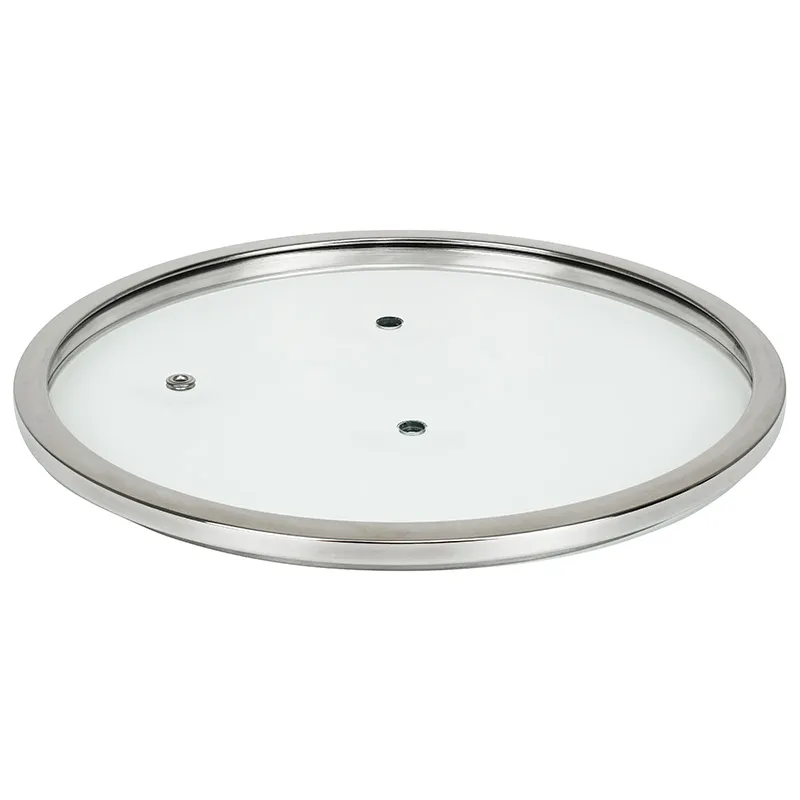
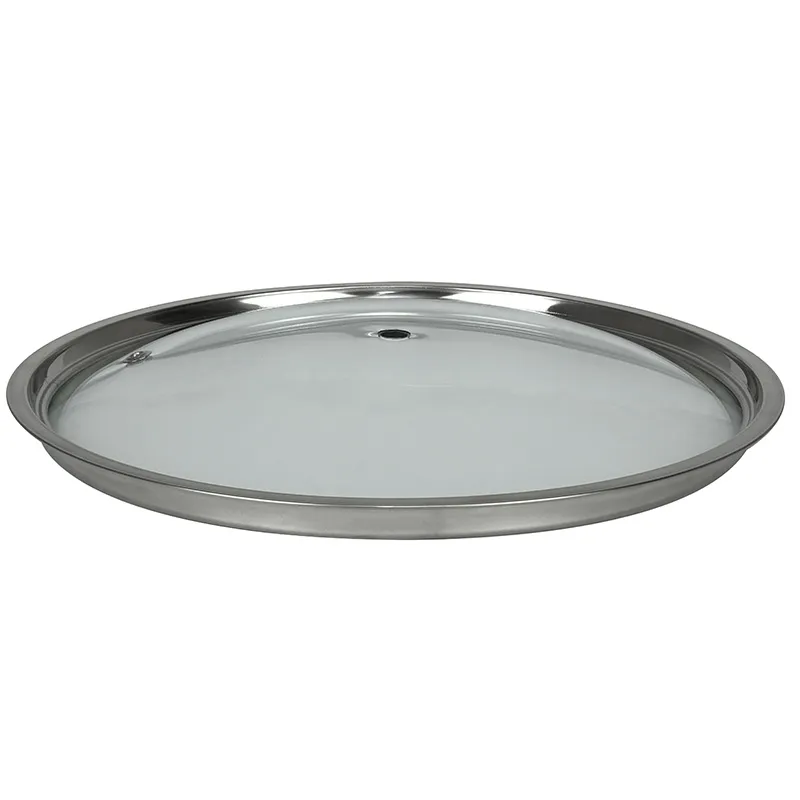
Then there's the glass itself. A true 1-kg filled jar needs strength, especially for shipping. Tempered glass is non-negotiable for anything beyond light pantry duty. I recall a batch from a cut-rate factory years ago—they used thinner, annealed glass. The breakage rate during transit was appalling, a total loss. That's why I tend to look at operations with proper tempering lines, like EUR-ASIA COOKWARE CO.,LTD. Their specialization in tempered glass lids and products suggests an understanding of the structural requirements, which translates directly to the jar bodies. It's a good signal.
The base diameter and sidewall verticality are unsung heroes. A slightly concave or unstable base makes a filled jar wobbly on a shelf—a retail disaster. The verticality affects labeling and automated packing. If the sidewall has even a minor curve, your labeler will wrinkle the film every time. These are the gritty details you only learn by watching lines stall or getting angry calls from distributors.
The Lid: Where the Seal Meets the Deal
This is arguably the most critical component. A glass jar with lid 1 kg is only as good as its seal. The industry standard for food preservation often involves a metal twist-off lid with a plastisol compound lining. The torque required to open and close it needs to be consistent—too tight, and you alienate customers; too loose, and you compromise freshness.
We experimented with different lining materials once for an organic client wanting to avoid certain compounds. We tried a PVC-free alternative. In lab tests, it sealed perfectly. In real-world, summertime warehouse storage, the seal failed under minor thermal expansion. The entire batch had to be recalled. It was a costly lesson in not messing with proven lid chemistry without extensive field testing.
Companies that export to stringent markets like Germany or Japan, as EUR-ASIA COOKWARE does, typically have their lid specs dialed in. Their product page at https://www.glass-lid.com likely details these specs. For a professional buyer, that export portfolio isn't just for show; it's a proxy for compliance with EU and other international safety and performance standards, which cover everything from metal release to seal integrity.
Logistics and the Unseen Cost
Here's a practical headache: packaging for shipment. A pallet of empty glass jar with lid 1 kg units is heavy and fragile. The interleaving—those cardboard or foam sheets between each jar—is a cost factor many overlook. Cheap interleaving compresses, leading to lid-on-glass abrasion during ocean freight, resulting in scuffed, unsellable goods.
A supplier's location matters logistically. Taian City, Shandong, where EUR-ASIA COOKWARE's production base is, is inland. That means added land transport cost to a port like Qingdao compared to a coastal factory. However, a 20,000㎡ facility with dedicated production lines often signals better quality control and scale, which can offset that freight differential through lower unit costs and consistency. It's a trade-off calculation.
The annual output they mention—over 15 million pieces—tells you they're geared for volume orders. For a buyer, this means mold consistency. High-volume runs from a single mold ensure your 10,000 jars look and perform identically, which isn't a guarantee with smaller shops cycling molds frequently.
Application Pitfalls and Real-World Use
You don't just pick a jar; you pick it for a job. For instance, using a standard glass jar with lid 1 kg for hot-fill products (like some sauces) requires verifying the glass's thermal shock resistance. Pouring 85°C product into a jar at 20°C can cause immediate cracking if the glass isn't up to spec.
Another nuance is the finish on the glass rim. It must be perfectly smooth, fire-polished. Any microscopic chip or rough spot from the forming process will break the seal with the lid gasket. We implemented a simple, low-tech QC step after a bad batch: running a cotton swab around the rim of sample jars from each production run. If the cotton snags, the whole lot gets checked. It's these hands-on checks that save you.
For companies like EUR-ASIA COOKWARE CO.,LTD., whose business is over 90% export, their products are likely subjected to these exact scrutiny points by their international clients. Their survival in markets like Switzerland or South Korea depends on it. As a buyer, you're indirectly benefiting from that rigorous external audit cycle.
Beyond the Spec Sheet: The Supplier Relationship
Finally, the human element. A spec sheet for a glass jar with lid 1 kg is static. The dynamic part is how a supplier handles a problem. Will they work with you to adjust a lid's thread profile if your capping machine is jamming? Having over 90 employees, as they note, suggests dedicated departments for sales, production, and QC, which is better than a one-person operation where everything is a crisis.
Their website, https://www.glass-lid.com, is a starting point. The real test is in sample evaluation and communication. Do they ask you about your filling line speed, your product's pH, your storage conditions? A good supplier thinks about the jar's entire lifecycle, not just the sale.
In the end, a glass jar with lid 1 kg is a deceptively complex piece of engineering. It bridges kitchenware and industrial packaging. Getting it right isn't about finding the cheapest option; it's about finding the partner whose production depth, like that seen in specialized manufacturers, aligns with the physical and commercial risks of your specific product. The jar is just the vessel; the reliability inside it is what you're really buying.
Related Products
Related Products