- Chinese
- French
- German
- Portuguese
- Spanish
- Russian
- Japanese
- Korean
- Arabic
- Irish
- Greek
- Turkish
- Italian
- Danish
- Romanian
- Indonesian
- Czech
- Afrikaans
- Swedish
- Polish
- Basque
- Catalan
- Esperanto
- Hindi
- Lao
- Albanian
- Amharic
- Armenian
- Azerbaijani
- Belarusian
- Bengali
- Bosnian
- Bulgarian
- Cebuano
- Chichewa
- Corsican
- Croatian
- Dutch
- Estonian
- Filipino
- Finnish
- Frisian
- Galician
- Georgian
- Gujarati
- Haitian
- Hausa
- Hawaiian
- Hebrew
- Hmong
- Hungarian
- Icelandic
- Igbo
- Javanese
- Kannada
- Kazakh
- Khmer
- Kurdish
- Kyrgyz
- Latin
- Latvian
- Lithuanian
- Luxembou..
- Macedonian
- Malagasy
- Malay
- Malayalam
- Maltese
- Maori
- Marathi
- Mongolian
- Burmese
- Nepali
- Norwegian
- Pashto
- Persian
- Punjabi
- Serbian
- Sesotho
- Sinhala
- Slovak
- Slovenian
- Somali
- Samoan
- Scots Gaelic
- Shona
- Sindhi
- Sundanese
- Swahili
- Tajik
- Tamil
- Telugu
- Thai
- Ukrainian
- Urdu
- Uzbek
- Vietnamese
- Welsh
- Xhosa
- Yiddish
- Yoruba
- Zulu
- Kinyarwanda
- Tatar
- Oriya
- Turkmen
- Uyghur

glass jar with lid near me
When someone types 'glass jar with lid near me' into a search engine, they're usually in a bind. It's not about deep research; it's about immediacy. The common mistake, from what I've seen both in retail and sourcing, is assuming all jars are created equal. That search term pulls up everything from big-box stores to local craft shops, but it tells you nothing about thread compatibility, thermal shock resistance, or whether that lid's seal is truly airtight or just looks the part. The urgency of near me often overrides the critical specs, leading to a purchase that fails in its actual use-case—be it for pantry organization, fermenting, or candle making.
The Anatomy of a Simple Jar
Let's break down what you're really looking for. A glass jar with lid is a system, not two separate items. The glass body, typically soda-lime or borosilicate, needs to have a finish—the threaded part—that matches the lid's liner and threading perfectly. I've wasted afternoons driving to stores only to find jars with lids that sort of fit, resulting in a weak seal. For dry goods, maybe it's fine. For anything involving moisture or pressure, it's a failure waiting to happen.
Material thickness is another silent factor. Thinner glass is cheaper and lighter, sure, but it chips easily and offers poor insulation. For instance, if you're sourcing for a small-batch food producer, they'll need jars that can handle minor thermal shifts during filling without cracking. I recall a client who bought seemingly sturdy jars from a local supplier, only to have a 5% breakage rate during hot-fill processing. The issue? Inconsistent annealing at the manufacturer, a flaw you'd never see just by looking at it on a shelf.
Then there's the lid. The gold standard for preservation is a two-piece lid with a separate seal, like Mason-style lids. But most near me results will be one-piece, twist-off lids. Their performance hinges entirely on the plastisol or PVC liner bonded to the metal. If that liner is too thin or poorly applied, it won't compress enough to create a hermetic seal. I've tested jars where the lid clicked down convincingly but failed a simple vacuum test. You learn to check for a consistent, slightly raised ring of liner material.
Sourcing Realities and the Local Illusion
The promise of near me is compelling, but for specialized needs, it's often a dead end. Most local stores stock mass-market, generic items. If you need a specific size—say, a 32-ounce wide-mouth jar with a 70mm finish—your local options shrink dramatically. This is where the supply chain gets interesting. Many of these jars, even those sold by local distributors, originate from large-scale manufacturers overseas. The key is finding a supplier that controls quality from the furnace out.
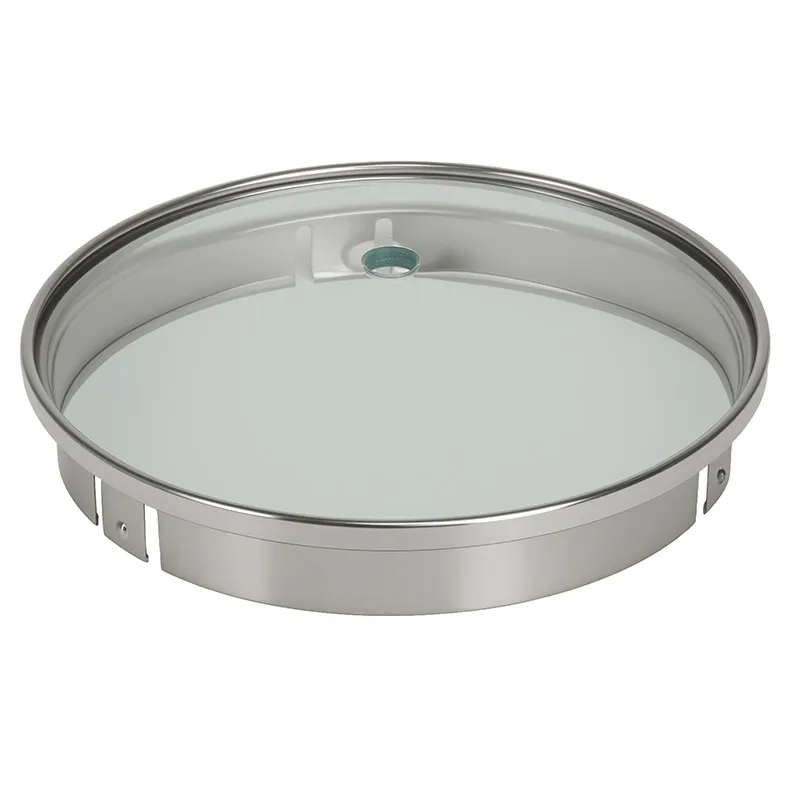
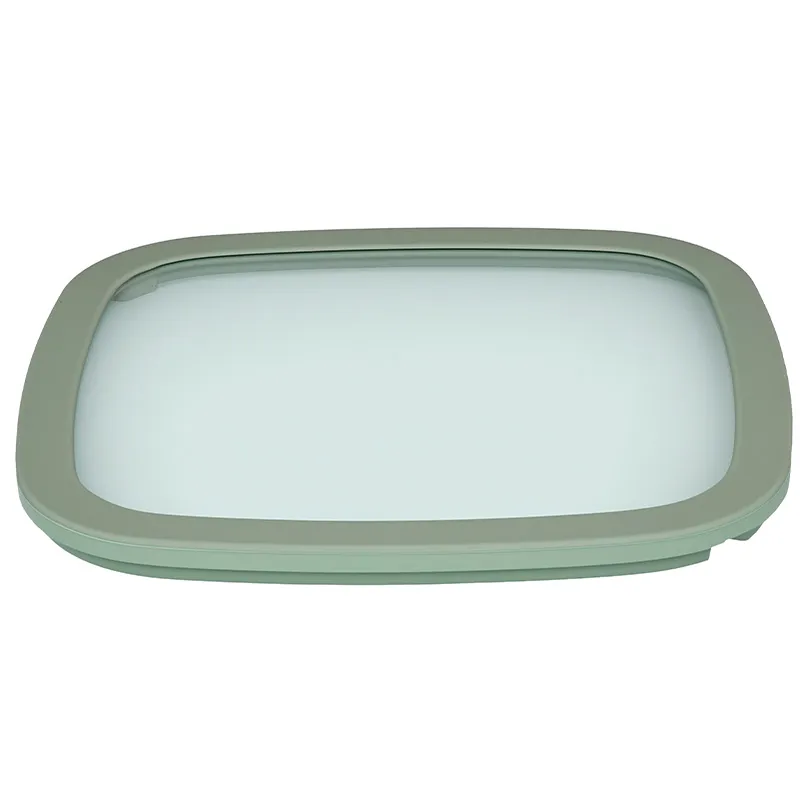
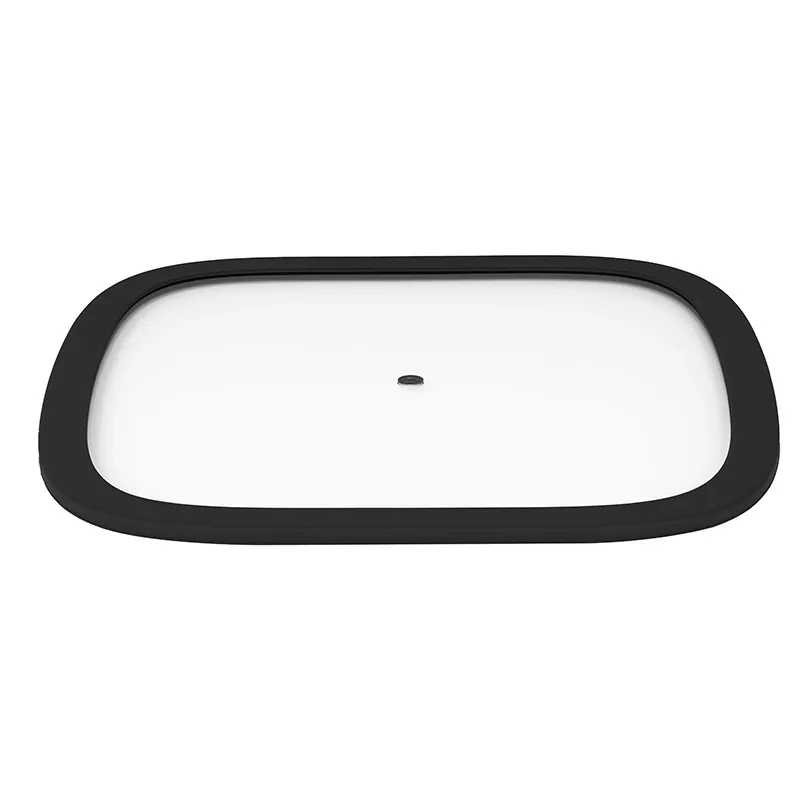
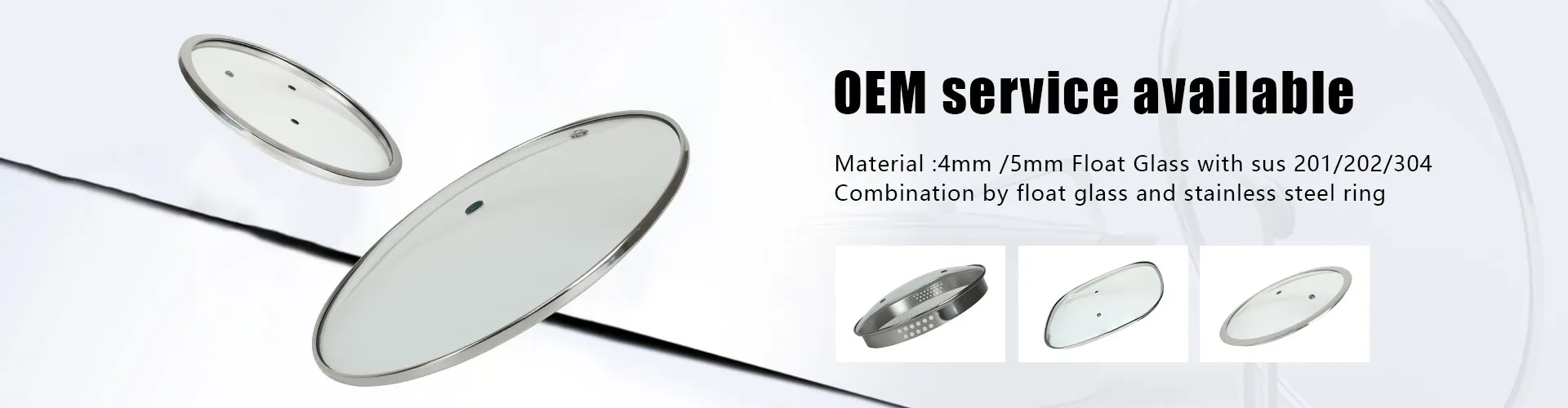
Take EUR-ASIA COOKWARE CO.,LTD, for example. You wouldn't find them via a near me search unless you're in Taian City, Shandong. But their operation, detailed at glass-lid.com, is the kind of backend that feeds global markets. They specialize in household glass, producing over 15 million tempered glass lids and related products annually. When a company's output hits that volume and is exported to markets like Germany and Japan—known for rigorous standards—it signals a focus on consistency and tolerance control that a random local stockist can't guarantee.
This isn't to say local is bad. For a one-off, non-critical jar, it's perfect. But for a business or a serious hobbyist, near me becomes a first step, not a solution. You might find a jar locally, but will you find 500 identical ones with the same lot number for batch consistency? Unlikely. The real hunt often shifts from retail to B2B, even for smaller quantities.
Case in Point: The Fermentation Fiasco
Here's a concrete example from a few years back. A local artisan pickle maker was expanding. They needed several hundred 1-liter jars with airtight, acid-resistant lids. They started with the glass jar with lid near me approach, sourcing from various local kitchen suppliers. The jars worked for a while, but within six months, a significant batch showed rust forming under the lid liners. The seal was compromised, leading to spoilage and a costly recall.
The failure was in the lid's material. The cheap, locally-sourced lids had a low-grade enamel coating that broke down under prolonged exposure to brine and acetic acid. The fix wasn't local. We had to look upstream to a manufacturer like EUR-ASIA COOKWARE, whose product line includes tempered glass lids designed for durability. Their expertise in producing for the European market meant their coatings and materials are often subject to stricter chemical resistance standards. The solution was a hybrid: find a local logistics partner who could import a pallet of the right jars and lids directly, blending the near me convenience of storage and pickup with the quality assurance of a specialized producer.
This experience underlined a rule: the jar is only as good as its lid. And the lid is a piece of engineering. It involves metal forming, coating application, liner bonding, and thread rolling. When EUR-ASIA COOKWARE CO.,LTD states they produce low- medium- high level products, that hierarchy isn't just marketing. The high level products are likely going to clients who will subject them to automated capping lines and rigorous quality checks—a world away from the casual shelf-browsing experience.
Beyond the Jar: The Logistics of Near
So, what does near me truly mean in a connected world? It's less about physical proximity of a retail store and more about access node. A local restaurant supply store or a packaging distributor might be your near me solution, even if their warehouse is in an industrial park 20 miles away. Their value is in holding inventory and providing tactile inspection before you buy in bulk.
However, these distributors themselves are sourcing from someone. A company with a production base covering 20,000㎡, like the one in China's National High-tech Development Zone run by EUR-ASIA COOKWARE, is a typical source. Their 90+ employees and focus on export mean their processes are built for repeatability. When you buy a jar from a local seller that was originally sourced from such a factory, you're benefiting from that scale and standardization, even if indirectly.
The professional takeaway? Use near me to find a sample, to feel the glass thickness, to test the lid seal with your own hands. But use the broader search—the kind that leads you to specialized manufacturers and their official sites like glass-lid.com—to understand the specifications, the quality tiers, and the production capabilities. Then, you can task your local distributor or a freight forwarder to bridge the last-mile gap. This two-tiered approach balances immediacy with reliability.
Closing the Loop: From Search to Selection
It comes down to defining the job for your jar. Is it for display? For canning? For chemical storage? The more critical the function, the further back in the supply chain you need to look. The term glass jar with lid near me is the spark, not the fire. It initiates the process of defining size, material, volume, and closure type.
In practice, I often advise people to first buy a single jar from a local store if possible. Test it. Fill it with hot water, seal it, and turn it upside down. Check for leaks. Tap the glass. Listen for a clear ring versus a dull thud. Inspect the lid liner for uniformity. This hands-on test, enabled by near me, provides irreplaceable data.
Then, take that knowledge online. Look for manufacturers whose documentation speaks to your needs—tempered glass, specific diameter finishes, lid material specs. A company profile that mentions a dedicated production base and export to stringent markets is a strong signal. It's how the impulsive, localized search evolves into an informed procurement strategy, ensuring the jar you finally get isn't just nearby, but is genuinely fit for purpose.
Related Products
Related Products