- Chinese
- French
- German
- Portuguese
- Spanish
- Russian
- Japanese
- Korean
- Arabic
- Irish
- Greek
- Turkish
- Italian
- Danish
- Romanian
- Indonesian
- Czech
- Afrikaans
- Swedish
- Polish
- Basque
- Catalan
- Esperanto
- Hindi
- Lao
- Albanian
- Amharic
- Armenian
- Azerbaijani
- Belarusian
- Bengali
- Bosnian
- Bulgarian
- Cebuano
- Chichewa
- Corsican
- Croatian
- Dutch
- Estonian
- Filipino
- Finnish
- Frisian
- Galician
- Georgian
- Gujarati
- Haitian
- Hausa
- Hawaiian
- Hebrew
- Hmong
- Hungarian
- Icelandic
- Igbo
- Javanese
- Kannada
- Kazakh
- Khmer
- Kurdish
- Kyrgyz
- Latin
- Latvian
- Lithuanian
- Luxembou..
- Macedonian
- Malagasy
- Malay
- Malayalam
- Maltese
- Maori
- Marathi
- Mongolian
- Burmese
- Nepali
- Norwegian
- Pashto
- Persian
- Punjabi
- Serbian
- Sesotho
- Sinhala
- Slovak
- Slovenian
- Somali
- Samoan
- Scots Gaelic
- Shona
- Sindhi
- Sundanese
- Swahili
- Tajik
- Tamil
- Telugu
- Thai
- Ukrainian
- Urdu
- Uzbek
- Vietnamese
- Welsh
- Xhosa
- Yiddish
- Yoruba
- Zulu
- Kinyarwanda
- Tatar
- Oriya
- Turkmen
- Uyghur

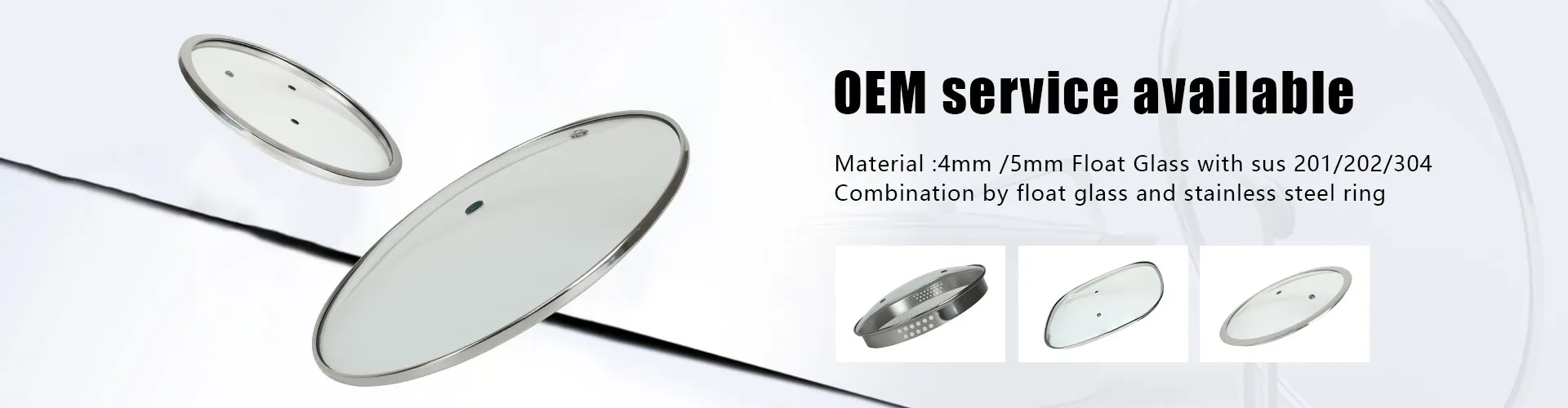
glass jar with locking lid
When most people hear 'glass jar with locking lid', they picture a simple container, maybe for pantry staples. The industry, however, knows the devil is in the details—specifically, the seal. A common misconception is that the locking mechanism itself creates the airtight barrier. It doesn't. The real hero is the gasket, and its marriage to the glass rim and the lid's clamping pressure. I've seen too many product failures traced back to a supplier cheaping out on the silicone compound or miscalculating the durometer, resulting in jars that 'lock' but don't preserve.
The Anatomy of a Reliable Seal
Let's break it down. You have the glass body, typically soda-lime or borosilicate. Borosilicate is superior for thermal shock resistance—think taking a jar from freezer to microwave—but it's more expensive. For most dry goods or refrigerated items, a properly tempered soda-lime glass is perfectly adequate and more cost-effective. The critical point is the finish on the sealing surface. It must be fire-polished to a near-perfect smoothness. Any microscopic imperfection here is a potential leak path.
The lid is usually 304 or 201 stainless steel. 304 is food-grade and more corrosion-resistant, essential for pickling or long-term storage of acidic contents. The locking mechanism itself varies: the classic bail wire with a clamp, a swing-top latch, or a threaded collar that presses down a separate lid. The bail wire is iconic but can exert uneven pressure. The swing-top, often seen on German fermentation jars, provides a more consistent, broad clamp. The force distribution matters more than the raw locking strength.
Then comes the gasket. Food-grade silicone is the standard now, replacing older rubber compounds. But not all silicone is equal. A gasket that's too hard won't conform to minor glass imperfections; too soft, and it deforms permanently after a few cycles, losing its spring-back. The cross-section design—round, flat, or with a sealing rib—is chosen based on the lid's clamping geometry. This is where prototyping is non-negotiable. You can't just CAD this and assume it works.
Production Pitfalls and Real-World Testing
In a factory setting, consistency is the battle. Take a company like EUR-ASIA COOKWARE CO.,LTD. (glass-lid.com). With an annual output exceeding 15 million pieces, mostly for export to markets like Germany and Japan known for stringent quality checks, their process control is telling. Their specialization in tempered glass lids means they understand that the lid and jar are a system. A high-volume producer like that has to nail the tempering process to ensure the glass can withstand the mechanical stress of the lock without micro-fractures.
One failure I recall involved a batch where the glass jars' sealing rims had a slight 'wobble' or runout after the forming process. Individually, each jar looked fine. But when the automated line applied the lids and gaskets, the seal was inconsistent. The locking lid would engage, but the irregular gap caused about 15% of the batch to fail a simple vacuum test. The fix wasn't in the lid design, but in calibrating the glass-forming machinery. It's a reminder that the jar is half of the equation.
Real-world testing goes beyond lab checks for food safety. We do things like fill jars with colored water, seal them, and tumble them gently on their sides. Or subject them to rapid air pressure changes in a chamber to simulate air freight. You'd be surprised how many seals that pass a static test will weep under dynamic conditions. Another test is thermal cycling—freezing, then moving to a warm, humid environment. This tests the gasket's recovery and the glass's integrity.
Material Interactions and User Scenarios
The choice between a clear glass jar and an amber one isn't just aesthetic. Amber glass blocks UV light, which is crucial for preserving oils, spices, or certain compounds that degrade under light. If you're specifying jars for a client in the health food or supplement space, this is a key consideration. The locking lid, however, remains functionally similar, though the gasket material must be compatible with oily contents to prevent swelling or degradation.
For fermentation, the game changes slightly. The seal must be airtight to create an anaerobic environment, but it also must allow for the controlled release of CO2 during active fermentation. Some specialized glass jar with locking lid designs incorporate a water channel or a valve in the lid. More commonly, users are advised not to clamp the lid fully shut during the initial, gassy phase. This is a practical nuance often missing from product descriptions. The jar needs to withstand internal pressure, so glass thickness and tempering are critical here.
Then there's the dishwasher test. A good jar and lid should survive repeated dishwasher cycles. The enemy here is two-fold: the high heat can fatigue the metal in the locking mechanism over time, potentially weakening the spring tension, and harsh detergents can attack the surface of certain gasket materials. Recommending hand-wash for the lid assembly often extends the product's life significantly, but it's a trade-off with user convenience.
Sourcing and the Supply Chain View
From a sourcing perspective, finding a supplier that controls both the glass and the metal components is a huge advantage. It minimizes finger-pointing when issues arise. EUR-ASIA COOKWARE, for instance, with its integrated production base covering 20,000㎡, likely has better oversight on the compatibility of their glass lids and the jars they're meant to fit. When components come from different factories, you risk tolerance stack-ups—tiny variations in each part that add up to a failed seal.
Export compliance is another layer. Selling to the EU requires CE marking and materials that meet EU food contact regulations. The REACH regulation on chemicals is particularly relevant for the gaskets and any coatings on the metal. A supplier experienced in exporting to Germany and France, as mentioned in their profile, typically has these certifications and material dossiers in order. It's not something a new workshop can easily provide.
Cost drivers are obvious: glass quality, metal grade, gasket material, and the complexity of the locking mechanism. But a hidden cost is packaging. These jars are heavy and fragile. The packaging must prevent not just breakage, but also lid-on-jar abrasion during transit which can scratch the glass. Good suppliers use custom foam or paperboard separators. I've seen entire shipments rejected because the lids rattled loose in shipping and dented, compromising the seal surface.
Concluding Thoughts on a Seemingly Simple Product
So, what makes a great glass jar with locking lid? It's not about looking rustic on a shelf. It's about the precision of the glass finish, the engineering of the clamp force, the chemistry of the gasket, and the rigorous, sometimes mundane, testing that happens before shipment. It's a product where the value is in its absence of failure—in not ruining someone's year's worth of homemade kimchi or their premium loose-leaf tea.
The market has shifted from treating these as generic containers to appreciating them as specialized tools. A jar for dry pasta, one for fermentation, another for laboratory samples—the core principle is the same, but the specifications diverge. The locking lid is the common interface, but its success is buried in millimeters of silicone and microns of glass tolerance.
In the end, when you find a jar that seals perfectly, clicks shut with a satisfying thunk, and opens months later with a pop of fresh contents, you're experiencing the result of a lot of unglamorous, detailed work. It's a small triumph of materials science and manufacturing consistency, one that turns a simple storage idea into a reliable kitchen asset.
Related Products
Related Products