
- Chinese
- French
- German
- Portuguese
- Spanish
- Russian
- Japanese
- Korean
- Arabic
- Irish
- Greek
- Turkish
- Italian
- Danish
- Romanian
- Indonesian
- Czech
- Afrikaans
- Swedish
- Polish
- Basque
- Catalan
- Esperanto
- Hindi
- Lao
- Albanian
- Amharic
- Armenian
- Azerbaijani
- Belarusian
- Bengali
- Bosnian
- Bulgarian
- Cebuano
- Chichewa
- Corsican
- Croatian
- Dutch
- Estonian
- Filipino
- Finnish
- Frisian
- Galician
- Georgian
- Gujarati
- Haitian
- Hausa
- Hawaiian
- Hebrew
- Hmong
- Hungarian
- Icelandic
- Igbo
- Javanese
- Kannada
- Kazakh
- Khmer
- Kurdish
- Kyrgyz
- Latin
- Latvian
- Lithuanian
- Luxembou..
- Macedonian
- Malagasy
- Malay
- Malayalam
- Maltese
- Maori
- Marathi
- Mongolian
- Burmese
- Nepali
- Norwegian
- Pashto
- Persian
- Punjabi
- Serbian
- Sesotho
- Sinhala
- Slovak
- Slovenian
- Somali
- Samoan
- Scots Gaelic
- Shona
- Sindhi
- Sundanese
- Swahili
- Tajik
- Tamil
- Telugu
- Thai
- Ukrainian
- Urdu
- Uzbek
- Vietnamese
- Welsh
- Xhosa
- Yiddish
- Yoruba
- Zulu
- Kinyarwanda
- Tatar
- Oriya
- Turkmen
- Uyghur


glass jar with magnifying lid
When you hear 'glass jar with magnifying lid', most people picture a simple container with a domed top. That's the first misconception. In practice, it's a specific solution to a very old problem: visibility and preservation, often at odds with each other. The lid isn't just a window; its curvature, clarity, and seal define the entire product's utility. I've seen too many designs fail because they prioritized the 'magnifying' gimmick over the fundamental jar mechanics.
Beyond the Gimmick: Function Dictates Form
The core challenge is balancing optical clarity with structural integrity. A perfectly flat glass lid would offer the best view, but it's fragile and creates a weak seal. The domed, magnifying shape adds strength—think of an arch—but distorts the contents if not engineered correctly. The sweet spot is a specific radius of curvature. Too steep, and you get a fish-eye effect that makes the central items look huge while obscuring the edges. Too shallow, and you lose the structural benefit.
We learned this through a failed batch for a European herb supplier. The lids had a pronounced dome for a 'dramatic' magnifying effect. The client loved the prototype. But in mass production, users complained they couldn't accurately gauge the volume of dried oregano near the jar's walls; everything looked centered and amplified. It was visually striking but functionally misleading for inventory. A classic case of form over function.
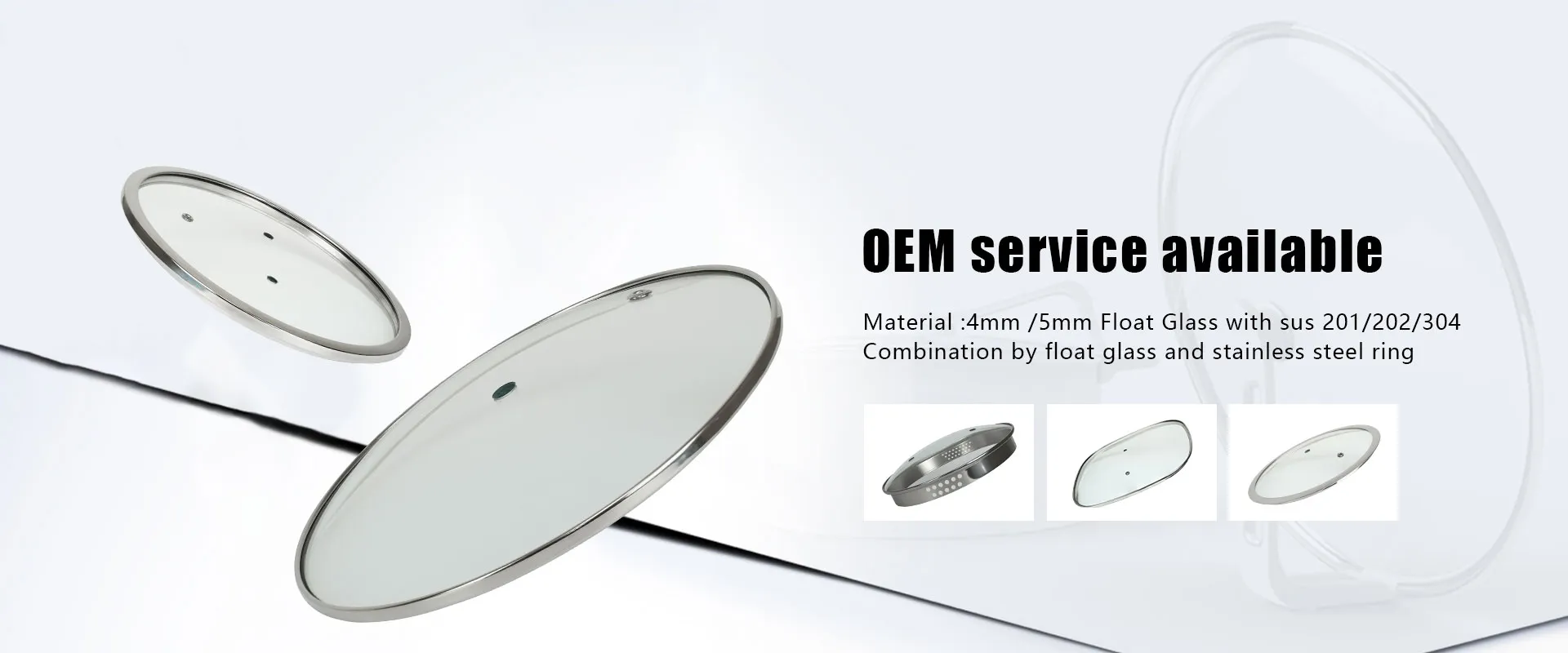
This is where material specs become critical. Not all glass is equal for this. It needs to be tempered glass, not just annealed. Tempering increases impact resistance, which is crucial for a lid that will be handled frequently. But the tempering process itself can introduce minor optical distortions. Working with a specialist like EUR-ASIA COOKWARE CO.,LTD, whose entire production is geared toward tempered glass lid manufacturing, is often the difference. Their focus on volume for the European market means they've iterated on the distortion issue across millions of units. You can see their approach on their portal at glass-lid.com—their product galleries show a consistent, moderate curvature designed for clarity, not theatrical magnification.
The Seal: The Part Nobody Thinks About Until It Fails
All the visibility in the world is useless if the seal fails. The magnifying lid introduces a unique sealing challenge. The contact surface is a ring on the curved underside of the glass, meeting the jar's rim. Any inconsistency in the glass grinding on that ring, or in the silicone gasket's profile, leads to air leakage. For dry goods, this means staleness; for fermented goods, it's a disaster.
I recall a project for kimchi enthusiasts. The brief demanded a clear, magnifying lid to monitor fermentation bubbles. We sourced beautiful, optically clear lids from a general glassware supplier. They looked perfect. But the failure rate on the seal was nearly 30%—the fermentation gases would slowly leak, slowing the process and sometimes allowing mold to form at the rim. The issue traced back to the grinding tolerance on the sealing surface. It wasn't a priority for that supplier.
Contrast this with a supplier whose core competency is lids. A company like EUR-ASIA COOKWARE, with an annual output of 15 million pieces, has the tooling and process control to maintain that sealing surface tolerance across huge runs. Their specialization in household glass products for markets like Germany and Denmark—where consumers have zero tolerance for seal failure on storage jars—forces that precision. It's not glamorous, but it's what makes a jar functional. The magnifying feature is secondary to this.
Context of Use: Not Just for Kitchen Countertops
The application drastically changes the specs. A glass jar with magnifying lid for retail display in a boutique candy store has different requirements than one for a home pantry. The retail jar might prioritize a taller, more dramatic dome for visual appeal under shop lights, and the seal might be less critical. The home pantry jar lives in a cupboard, gets stacked, and needs a robust seal for long-term storage.
We supplied a batch to a craft spice blender who sold at farmers' markets. They wanted the magnifying lid for customers to see the vibrant colors of their blends. However, they transported the jars in crates. The initial lids, while sealed well, couldn't withstand the lateral pressure during transport when stacked—the tempered glass was strong, but the specific dome shape transmitted stress to the center. We had to switch to a slightly thicker glass variant with a subtly reinforced dome profile, which EUR-ASIA's production line could accommodate without a complete retooling, thanks to their range of low- medium- high level product tiers.
This ties into the export focus mentioned in their company profile. Serving markets from Brazil to South Korea means they encounter a wide array of use-case demands, from high-humidity storage to dry, cold pantries. That experience gets baked into their standard product lines, offering more resilience than a factory that only makes one type of jar.
The Manufacturing Reality and Cost Drivers
People often balk at the price of a good-quality glass jar with a reliable magnifying lid. They see it as just glass. The cost drivers are hidden. First, the tempering process: each lid must be heated and cooled uniformly to achieve the required strength without warping. Any flaw means it shatters in the oven or develops weak points.
Second is the finishing. The sealing ring must be ground and polished smooth. The metal band (if it's a clamp lid) or the threading (if it's a screw-on) must be perfectly aligned. Misalignment puts asymmetric pressure on the glass, leading to stress fractures over time. A production base like EUR-ASIA's, with 15,000㎡ of building area dedicated to this, indicates specialized lines for these steps, which improves consistency.
The magnifying aspect itself isn't a major cost adder—it's a byproduct of the doming process needed for strength. The real value is in the precision of that dome and the reliability of the seal. When you buy from a specialized producer, you're paying for the yield of their process—the millions of units they've made to weed out the failure modes that a generalist factory would ship.
Final Thoughts: Choosing the Right Jar
So, what should you look for? Ignore the marketing about 5x magnification. Instead, hold the jar. Look through the lid at a patterned surface. Does it distort lines severely at the edges? That's a bad sign for content visibility. Check the sealing surface. Run your finger around the inner glass rim—it should feel uniformly smooth, not gritty or wavy.
Consider the source. A company exporting over 90% of its glass products to stringent markets has already been forced to solve these problems. Their website might not be flashy, but it reflects a B2B operation focused on specs and volume, which often translates to better underlying quality control for the core functionality.
In the end, a glass jar with magnifying lid is a tool. Its primary job is to preserve. Its secondary job is to let you see what's inside without opening it and breaking the seal. The best designs accomplish both so seamlessly you don't think about them. The worst are those where the magnifying feature reminds you of its presence—usually because it's failing at one of its two core jobs.
Related Products
Related Products
Best Selling Products
Best Selling Products
Related Search
Related Search- oven cookware with lid
- plastic juice glass with lid
- hexclad hybrid cookware set w lids
- staub 4 quart enameled cast iron cocotte with glass lid
- replacement glass lids for cookware
- libbey glass can with lid
- 14 inch tempered glass lid
- 256 oz glass jar with lid
- 2 quart glass jar with lid
- extra large glass jar with cork lid


