- Chinese
- French
- German
- Portuguese
- Spanish
- Russian
- Japanese
- Korean
- Arabic
- Irish
- Greek
- Turkish
- Italian
- Danish
- Romanian
- Indonesian
- Czech
- Afrikaans
- Swedish
- Polish
- Basque
- Catalan
- Esperanto
- Hindi
- Lao
- Albanian
- Amharic
- Armenian
- Azerbaijani
- Belarusian
- Bengali
- Bosnian
- Bulgarian
- Cebuano
- Chichewa
- Corsican
- Croatian
- Dutch
- Estonian
- Filipino
- Finnish
- Frisian
- Galician
- Georgian
- Gujarati
- Haitian
- Hausa
- Hawaiian
- Hebrew
- Hmong
- Hungarian
- Icelandic
- Igbo
- Javanese
- Kannada
- Kazakh
- Khmer
- Kurdish
- Kyrgyz
- Latin
- Latvian
- Lithuanian
- Luxembou..
- Macedonian
- Malagasy
- Malay
- Malayalam
- Maltese
- Maori
- Marathi
- Mongolian
- Burmese
- Nepali
- Norwegian
- Pashto
- Persian
- Punjabi
- Serbian
- Sesotho
- Sinhala
- Slovak
- Slovenian
- Somali
- Samoan
- Scots Gaelic
- Shona
- Sindhi
- Sundanese
- Swahili
- Tajik
- Tamil
- Telugu
- Thai
- Ukrainian
- Urdu
- Uzbek
- Vietnamese
- Welsh
- Xhosa
- Yiddish
- Yoruba
- Zulu
- Kinyarwanda
- Tatar
- Oriya
- Turkmen
- Uyghur

glass jar with red lid
When most people hear 'glass jar with red lid', they picture a simple storage container. In the trade, that phrase immediately brings to mind a specific set of challenges and considerations that go far beyond just color and material. It's not just a jar; it's a sealing system, a chemical compatibility puzzle, and a branding statement all in one. A lot of sourcing managers or even smaller brand owners get tripped up thinking the red lid is purely aesthetic, but the resin compound, the liner formulation, and the thread design under that lid are where the real game is played. I've seen too many projects stall because someone fell in love with a Pantone shade without considering the food-grade pigment's stability or the sealing performance under thermal stress.
Beyond the Color: Material and Sealing Integrity
The red isn't just red. It's a masterbatch of pigments in polypropylene or, for higher-end applications, a phenolic compound. The choice here dictates everything. A standard PP lid with a cheap colorant might bleed or fade under UV exposure, which is a disaster for shelf presence. More critically, the material determines the torque strength and the liner compatibility. For a hermetic seal, you're looking at an injected liner—often a foam PE or a plastisol PVC compound—bonded to the underside of that red lid. The colorant can sometimes interact with the liner adhesive during the high-temperature molding process, leading to weak spots. I recall a batch for a European client where the vibrant red pigment caused a slight warping in the lid skirt after the liner was applied, resulting in a consistent 10% failure rate in vacuum seal tests. We traced it back to a mismatch in the thermal expansion coefficients between the colored PP and the liner adhesive. The fix wasn't changing the red, but switching to a different grade of PP resin that could handle the pigment load and the subsequent heat from the liner application.
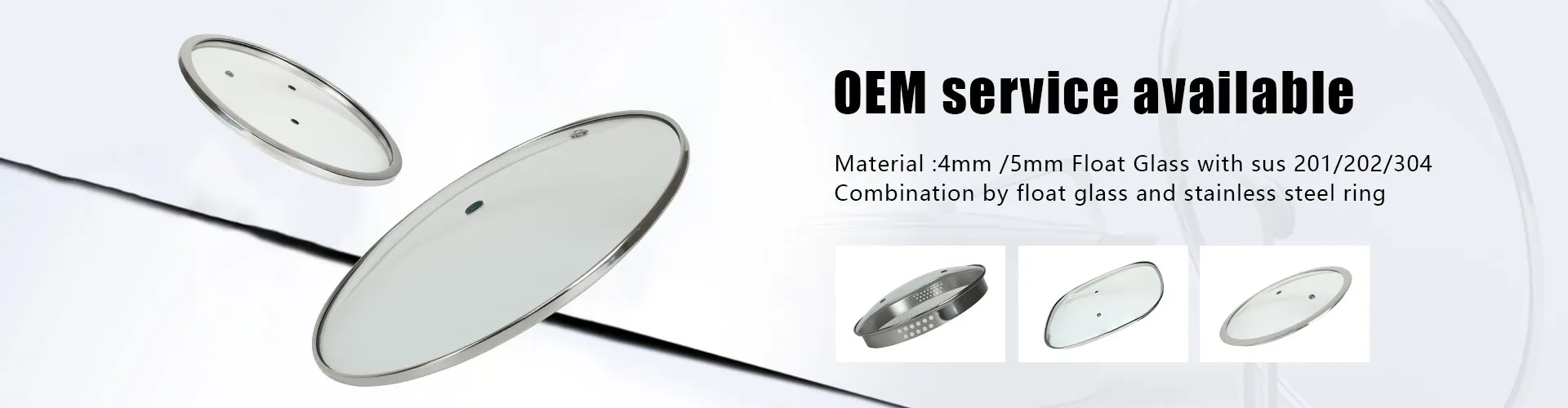
This is where working with a specialized manufacturer makes a difference. A company like EUR-ASIA COOKWARE CO.,LTD, which lists tempered glass lids as a core product, understands the marriage between glass and closure systems. While their main site glass-lid.com focuses on cookware, the principles are transferable. Their expertise in heat-treated glass means they inherently grasp thermal dynamics, which is half the battle with jars. A jar isn't subjected to stovetop heat, but it might go through hot-fill processing or pasteurization. The lid must expand and contract in harmony with the glass finish. Their production of over 15 million pieces annually suggests a deep, practical knowledge of molding and material science that many general suppliers lack.
The thread design is another silent hero. European continuous threads differ from American lug styles. That red lid needs to be engineered for the specific thread standard of the jar. A mismatch, even by a millimeter in pitch, leads to consumer complaints of hard to open or, worse, doesn't seal. We learned this through a failed attempt to use a stock red lid from one mold on a jar from a different German glass factory. They were both 63mm, but the thread profiles were subtly different. The result was a seal that felt tight but failed the oxygen transmission rate (OTR) test miserably. It was a costly lesson in assuming standardization.
The Manufacturing Reality and Supply Chain Hurdles
Scaling production of a consistent glass jar with red lid is where theoretical knowledge meets factory-floor reality. It's not just about making a red lid; it's about making the same red lid, for 500,000 units, over six months, across multiple production runs. Color consistency is a notorious challenge. The pigment must be measured with near-pharmaceutical precision. A shift in the barrel temperature of the injection molding machine can alter the shade. I've spent hours with a Pantone book under D65 lighting, arguing with a factory manager about why batch 23 has a slightly orange undertone compared to batch 18. For a global brand, this is unacceptable.
This is where a manufacturer's infrastructure tells the story. EUR-ASIA COOKWARE CO.,LTD's facility, with its 20,000㎡ area and focus on export to markets like Germany and Japan, is built for this kind of rigor. Those markets have zero tolerance for variation. Their experience likely means they have established protocols for color matching, likely using spectrophotometers, and maintain strict batch control. When over 90% of output is exported, your quality control systems aren't a suggestion; they are the core of your business. For a buyer, this translates to fewer inspection failures and less risk of retail returns.
Logistics also bite you in unexpected ways. Those red lids, stacked in cartons, are relatively light but bulky. Ocean freight costs are driven by volume, not just weight. Optimizing the nestability of the lids—how they stack inside each other—can save a fortune in shipping costs. A poorly designed lid with a deep skirt or protruding features won't nest well, wasting up to 40% of the carton space. I've seen projects where the per-unit cost of the lid was great, but the shipping cost nullified all savings. It's a detail you only learn by managing the entire chain, from the mold design to the container ship.
Application-Specific Failures and Lessons
Not every product belongs in a glass jar with red lid. The romantic notion of artisan honey or handmade jam in such a jar is strong, but it can be a pitfall. High-sugar products can crystallize and essentially glue the lid shut if the liner isn't perfectly resistant to sugar adhesion. We had a client with a luxury caramel sauce. The product was a hit, but customer service was flooded with I can't open this emails. The issue was two-fold: the caramel would creep into the microscopic gap between the glass finish and the liner during cooling, and the red phenolic lid material was too rigid. The solution was a switch to a more flexible PP compound with a specially formulated saran-coated liner that provided a barrier against the syrup. The red color remained, but the material science behind it changed completely.
Another lesson came from the health food sector. A client wanted a red lid for a powdered greens supplement. The powder was slightly alkaline. After three months of storage, customers reported a faint plastic smell. The alkaline powder was off-gassing and interacting with the stabilizers in the red pigment masterbatch. The failure wasn't in the seal, but in the headspace atmosphere. We moved to a lid with an FDA-approved epoxy-phenolic coating on the interior surface, creating a barrier between the product and the colored plastic. The exterior remained the signature red, but the interior was a neutral white. Problem solved, but it added cost and complexity.
These aren't hypotheticals. They are the gritty, expensive realities of bringing a simple concept to market. It's why partnering with a producer who has seen these issues across different markets is invaluable. A company exporting to Brazil, Turkey, and Switzerland, as EUR-ASIA does, has encountered a wild array of climatic conditions (humidity, altitude) and consumer use cases, informing a more robust product design from the outset.
The Branding Weight of a Red Lid
Finally, let's talk about the red lid as a brand asset. It's visual shorthand. Think of a certain Italian tomato product. That red lid is a trademark on the shelf. But protecting that involves more than just a trademark application. It requires controlling the exact shade and finish across your entire supply chain. If you're sourcing jars and lids separately, or if you allow a co-packer to source the lid, you lose that control. The red can drift toward maroon or fire-engine red. Consistency is brand equity.
For a manufacturer, this means holding a color standard and auditing against it relentlessly. It means understanding that a matte finish will absorb light and look different from a glossy finish, even with the same pigment. The decision between a plastic glass jar with red lid and a metal lid with a red plastisol coating is also a branding one. Metal offers a different pop and sound (that satisfying click), but it's often more expensive and can dent. Plastic is more forgiving and can be molded with custom embossed logos directly into the top—a nice touch for brand recognition.
In the end, specifying a red lid is the start of a conversation, not the end of an order. It opens questions about contents, processing, filling lines, shelf life, shipping, and brand identity. The most successful projects I've been part of treated the glass jar with red lid not as a commodity, but as a critical component system. They involved the glass supplier, the closure molder (or a single-source provider like EUR-ASIA who manages both), and the filler in early-stage discussions. That collaboration turns a potential minefield of failures into a seamless, shelf-ready product that looks simple to the consumer but is, in fact, a small marvel of practical engineering.
Related Products
Related Products