- Chinese
- French
- German
- Portuguese
- Spanish
- Russian
- Japanese
- Korean
- Arabic
- Irish
- Greek
- Turkish
- Italian
- Danish
- Romanian
- Indonesian
- Czech
- Afrikaans
- Swedish
- Polish
- Basque
- Catalan
- Esperanto
- Hindi
- Lao
- Albanian
- Amharic
- Armenian
- Azerbaijani
- Belarusian
- Bengali
- Bosnian
- Bulgarian
- Cebuano
- Chichewa
- Corsican
- Croatian
- Dutch
- Estonian
- Filipino
- Finnish
- Frisian
- Galician
- Georgian
- Gujarati
- Haitian
- Hausa
- Hawaiian
- Hebrew
- Hmong
- Hungarian
- Icelandic
- Igbo
- Javanese
- Kannada
- Kazakh
- Khmer
- Kurdish
- Kyrgyz
- Latin
- Latvian
- Lithuanian
- Luxembou..
- Macedonian
- Malagasy
- Malay
- Malayalam
- Maltese
- Maori
- Marathi
- Mongolian
- Burmese
- Nepali
- Norwegian
- Pashto
- Persian
- Punjabi
- Serbian
- Sesotho
- Sinhala
- Slovak
- Slovenian
- Somali
- Samoan
- Scots Gaelic
- Shona
- Sindhi
- Sundanese
- Swahili
- Tajik
- Tamil
- Telugu
- Thai
- Ukrainian
- Urdu
- Uzbek
- Vietnamese
- Welsh
- Xhosa
- Yiddish
- Yoruba
- Zulu
- Kinyarwanda
- Tatar
- Oriya
- Turkmen
- Uyghur

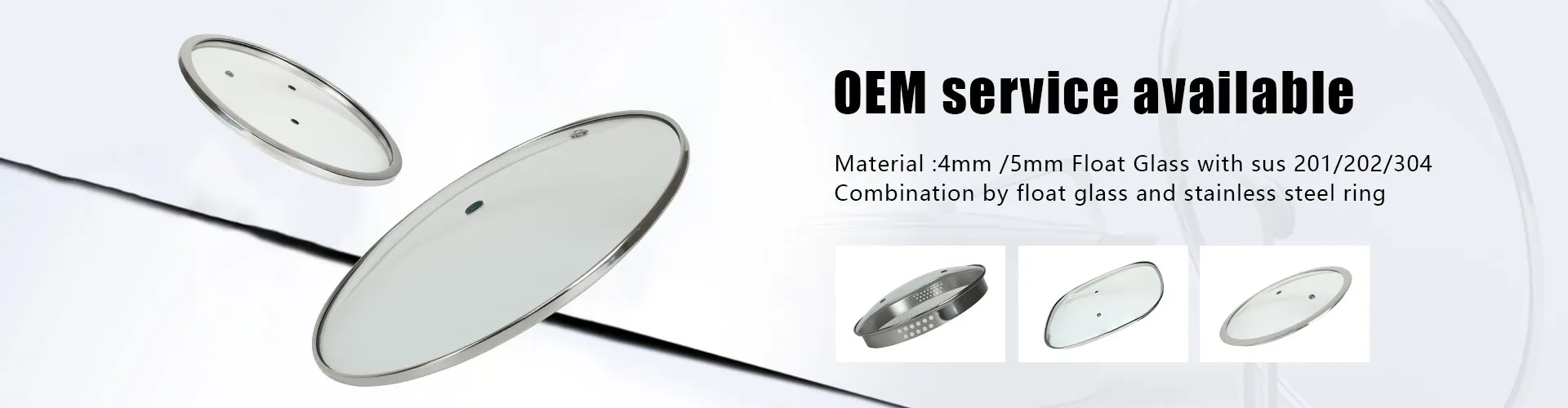
glass jar with rose gold lid
When you hear 'glass jar with rose gold lid', you probably picture something straight off a lifestyle blog—clean, minimalist, aspirational. That's the marketing ideal. But from where I stand, having sourced and specified these for years, that phrase immediately brings to mind a whole set of practical headaches and material negotiations that most brands and consumers never see. The allure is obvious, but the path from a CAD drawing to a shelf-ready product is where the real story is, and it's rarely as seamless as the final Instagram shot suggests.
Deconstructing the Allure: More Than Just a Color
The 'rose gold' finish is the first hurdle, and it's a classic case of expectation versus reality. It's not a single, universal Pantone code. Clients often send a reference image—a trendy kitchen photo—expecting an exact match. But rose gold on aluminum differs from stainless steel, and both differ from a PVD (Physical Vapor Deposition) coating over plastic. For a glass jar, the lid substrate is key. Is it tinplate, aluminum, or stainless? Each takes color differently. The warm, pinkish-copper hue requires a specific alloy target and coating process; get the base metal wrong, and you end up with a brassy orange or a dull pink. I've seen batches rejected because the color under warehouse fluorescents didn't match the sample approved under studio LED lights.
Then there's the finish itself. A true, durable rose gold effect for mass production usually means PVD coating. It's more consistent and wear-resistant than older electroplating methods. But PVD has its limits—the curvature of the lid, the presence of a sealing gasket groove, and the clamping method during coating can all cause subtle color shifts or thin spots. You're chasing a cosmetic perfection that sits on top of a functional object. A company like EUR-ASIA COOKWARE CO.,LTD, with their focus on export-grade tempered glass lids, understands this tension. Their production scale—over 15 million pieces annually—means they've had to solve for consistency across huge orders, where a minor color drift can mean a whole container being held at customs for not matching the shipment sample.
The glass jar part, ironically, is often the simpler component, provided you're working with a competent producer. Tempered glass is standard for safety. But the fit between the glass thread and the metal rose gold lid thread is a silent nightmare. Too loose, and it fails a leak test; too tight, and customers complain they can't open it. The thermal expansion rates of glass and metal are different, which can affect the seal after hot-filling or dishwashing. This is where a manufacturer's experience shows. It's not just about making each part; it's about engineering the interface.
The Supply Chain Reality: Where Specs Meet the Line
Let's talk about sourcing. You don't just order a 'glass jar with rose gold lid'. You spec the glass: height, diameter, wall thickness, capacity in milliliters and fluid ounces for different markets. You spec the lid: material gauge, thread type (continuous or intermittent), liner material (often silicone or EVA foam), and of course, the rose gold coating standard—often referencing something like a German RAL color. This is where a supplier's infrastructure matters. Visiting a facility like EUR-ASIA's in Taian, you see the integration: the glass tempering lines feeding into assembly stations where lids from the metal stamping and coating workshops are matched up. That vertical control is what prevents the logistical chaos of coordinating three separate suppliers across different provinces.
One specific problem I recall was with electrostatic attraction. During automatic capping on a high-speed filling line, the PVD-coated rose gold lids would sometimes cling to the plastic guide rails, causing jams. It was a small, maddening issue that didn't show up in low-volume manual assembly. The fix involved tweaking the coating recipe slightly to reduce static and adjusting the rail material. It's the kind of granular, line-level problem you only learn from moving millions of units. Their export focus to markets like Germany and Japan, known for stringent quality control, suggests they've had to solve countless such micro-issues.
Another point is packaging. A beautiful rose gold finish is easily scratched in transit. The choice of inner separators—foam, paper pulp, PE bags—becomes critical. A cheap bag with a rough inner surface can scuff the coating during ocean freight vibrations. I've opened a shipment to find a haze of fine scratches on every lid, rendering them unsellable. Now, we insist on anti-scratch PE sleeves as a minimum, which adds a fraction of a cent to the unit cost but saves thousands in losses.
Market Misconceptions and the Instagram vs. IKEA Divide
There's a clear market bifurcation. On one end, you have the high-end, low-volume 'lifestyle' brand jar. Here, the glass jar with rose gold lid is a hero product. The lid might be thicker gauge stainless steel, the PVD coating richer, the glass might have a beveled edge or a unique shape. Cost is secondary to aesthetics. On the other end, you have the volume-driven, private-label goods for large retailers. Here, cost-per-unit is king. The rose gold might be a thinner coating on aluminum, the glass might be a stock mold. The challenge for a manufacturer is to serve both without compromising the core integrity of the product.
A common brand misconception is that a heavier lid equals higher quality. It's not that simple. A well-engineered aluminum lid with a robust thread and a good seal can be lighter and perform better than a poorly made, heavier stainless one. Weight adds to shipping costs, too. The skill is in achieving the perceived premium feel—the satisfying 'snick' of a good seal, the smooth rotation—without over-engineering. Looking at EUR-ASIA's range of low to high-level products, this is exactly their play: offering tiered solutions based on the same core manufacturing competence.
The export data mentioned for EUR-ASIA—over 90% to Europe, Americas, and Asia—tells a story. It means their products pass EU REACH regulations for materials, meet FDA standards for food contact, and satisfy the varied aesthetic and functional tastes from Poland to Brazil. A rose gold shade that sells in Milan might be adjusted slightly for Seoul. This isn't just color theory; it's a database of market preferences built from actual orders.
Failure as a Teacher: When the Rose Gold Fades
We had a project a few years back for a subscription service. The glass jars were to be reused monthly, going through frequent dishwashing. We specified a standard PVD rose gold on stainless steel, assuming it was durable. Initial samples were perfect. But after about 50 cycles in a commercial-grade dishwasher with aggressive detergent, the lids developed a milky haze and lost their luster. The coating hadn't failed, but it had degraded aesthetically. The client was furious.
The post-mortem revealed the issue: the specific detergent chemistry, combined with high heat and spray impact, was attacking the top layer of the coating. The solution was to switch to a more expensive, harder PVD variant with a different top layer chemistry, essentially a dishwasher-proof grade. It increased the lid cost by nearly 30%. That experience taught me to always ask, How will it be cleaned, and with what? Now, it's a standard line item in our spec sheet. A producer that understands these nuances will ask these questions upfront, rather than just accepting the color sample.
This is why the backend of a site like https://www.glass-lid.com is more telling than the front. It's not about flashy renders; it's about whether their technical datasheets list parameters like coating hardness (e.g., Vickers hardness), acid/alkali resistance ratings, and cycle test results. That's the professional language of this trade.
Looking Ahead: Sustainability and the Next Finish
The conversation is slowly shifting. Rose gold had its moment, and it's still strong, but there's pressure on materials. Brands are asking about recycled metal content in lids and whether the coatings affect recyclability. A PVD coating, while thin, can complicate the recycling stream for the metal substrate. Some European buyers are starting to inquire about alternative, more easily removable finishes or anodizing options, though they rarely match the exact rose gold aesthetic.
From a manufacturing perspective, this means R&D into new surface treatments. Can we achieve a similar effect with a less problematic process? It's an open question. The other trend is towards monomaterials—a glass jar with a glass lid, for instance—but that sacrifices the metallic aesthetic entirely. For the classic glass jar with rose gold lid combo, the future is about refining the environmental profile without losing the look that sells.
Ultimately, it comes down to partnership. It's not about finding the cheapest supplier, but the one whose engineers understand that a lid is a sealing device first and a decorative object second. When they can talk knowledgeably about thread tolerances, liner compression sets, and coating adhesion tests in the same breath as color trends, you know you're not just buying a product, you're buying their problem-solving history. That's what turns a trendy keyword into a reliable, shelf-worthy item. The rest is just photography.
Related Products
Related Products