- Chinese
- French
- German
- Portuguese
- Spanish
- Russian
- Japanese
- Korean
- Arabic
- Irish
- Greek
- Turkish
- Italian
- Danish
- Romanian
- Indonesian
- Czech
- Afrikaans
- Swedish
- Polish
- Basque
- Catalan
- Esperanto
- Hindi
- Lao
- Albanian
- Amharic
- Armenian
- Azerbaijani
- Belarusian
- Bengali
- Bosnian
- Bulgarian
- Cebuano
- Chichewa
- Corsican
- Croatian
- Dutch
- Estonian
- Filipino
- Finnish
- Frisian
- Galician
- Georgian
- Gujarati
- Haitian
- Hausa
- Hawaiian
- Hebrew
- Hmong
- Hungarian
- Icelandic
- Igbo
- Javanese
- Kannada
- Kazakh
- Khmer
- Kurdish
- Kyrgyz
- Latin
- Latvian
- Lithuanian
- Luxembou..
- Macedonian
- Malagasy
- Malay
- Malayalam
- Maltese
- Maori
- Marathi
- Mongolian
- Burmese
- Nepali
- Norwegian
- Pashto
- Persian
- Punjabi
- Serbian
- Sesotho
- Sinhala
- Slovak
- Slovenian
- Somali
- Samoan
- Scots Gaelic
- Shona
- Sindhi
- Sundanese
- Swahili
- Tajik
- Tamil
- Telugu
- Thai
- Ukrainian
- Urdu
- Uzbek
- Vietnamese
- Welsh
- Xhosa
- Yiddish
- Yoruba
- Zulu
- Kinyarwanda
- Tatar
- Oriya
- Turkmen
- Uyghur


glass jar with sealed lid
You see a lot of talk about glass jar with sealed lid units these days, often lumped into generic food storage categories. The common mistake is thinking any jar with a lid that clicks is properly sealed. In practice, that click is just the start; the real seal happens in the interface between the glass finish and the sealing compound in the lid, a detail most marketing glosses over entirely. I've spent years sourcing and testing these for various product lines, and the gap between a good jar and a passable one is vast, often hidden in millimeters of glass thickness and the Shore hardness of that rubber gasket.
Defining the Seal in Sealed Lid
When we say sealed, we're not just talking about keeping dust out. We're talking about a hermetic or near-hermetic barrier against oxygen and moisture, critical for anything from dry goods to fermented products. The seal is a system, not a part. It involves the precision of the glass jar's threading or lug finish, the concentricity of the opening (is it perfectly round, or does it have a slight ovality?), and the mating surface where the lid's liner makes contact. I've seen batches where the glass jar mouth was slightly elliptical from the molding process—maybe only half a millimeter off—and that was enough to cause a 30% failure rate in vacuum seal tests, even though every lid clicked on just fine.
The lid itself is another world. A true sealing lid for a glass jar with sealed lid application typically has a plastisol or rubber-based gasket bonded to the metal. The thickness and compressibility of this gasket are calculated based on the intended closure torque and the jar's finish. Too soft, and it extrudes or degrades over time; too hard, and it never forms a complete seal unless you apply excessive torque, which risks breaking the glass. It's a balancing act most cheap imports get wrong, leading to shelf-life failures.
One practical test we always do, beyond the standard laboratory tests, is the hot-fill and invert check. You fill the jar with near-boiling water, seal it, and immediately invert it. If the seal is imperfect, the heat and pressure will force a leak. It's a brutal, old-school method, but it instantly reveals weaknesses in the glass-lid interface that slower, cold tests might miss. You'd be surprised how many aesthetically perfect jars fail this simple, real-world simulation.
The Manufacturing Reality: From Glass Melt to Final Inspection
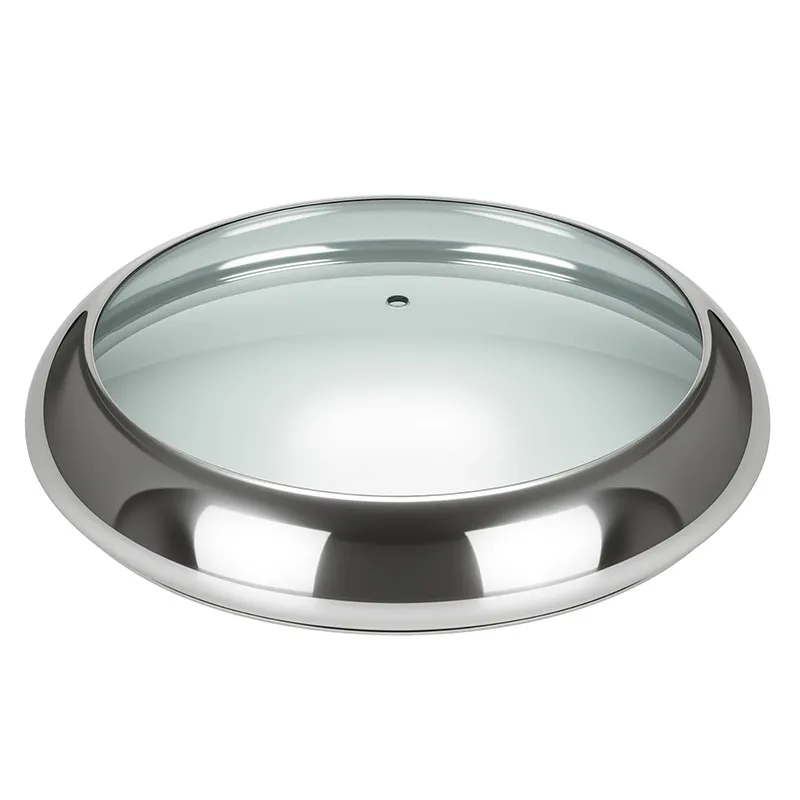
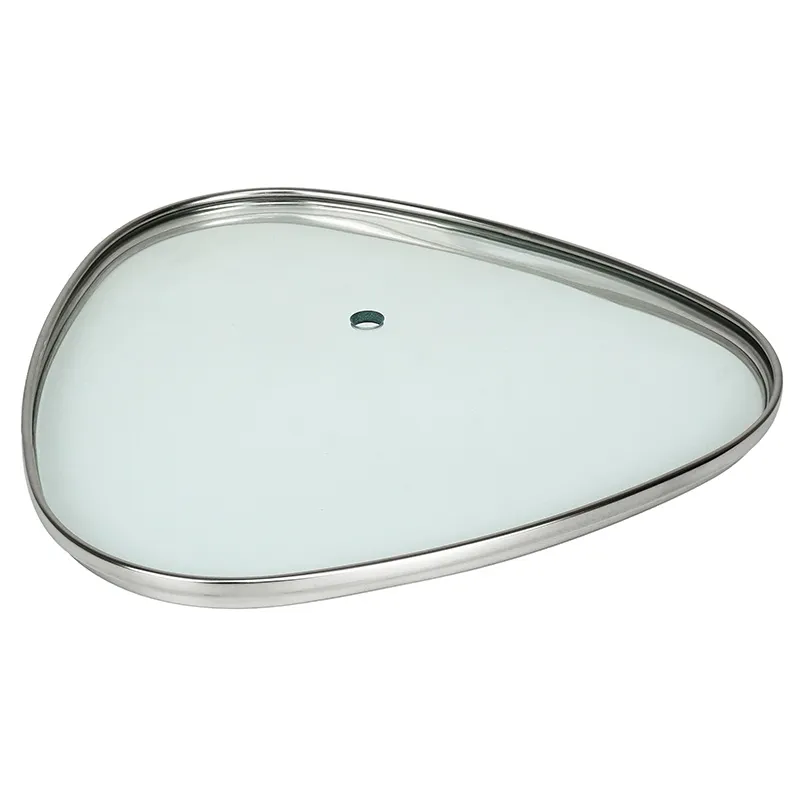
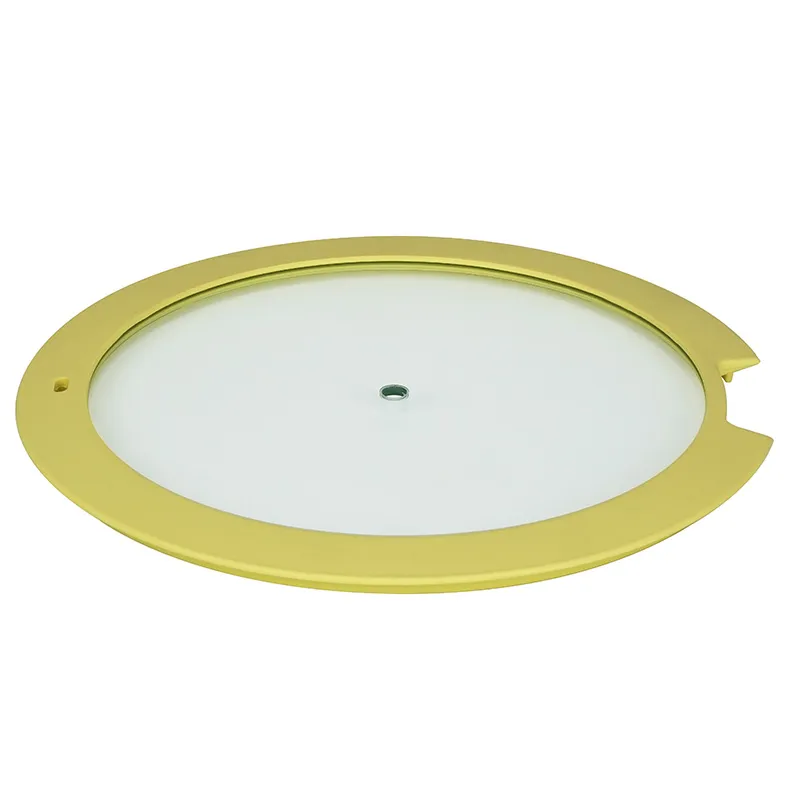
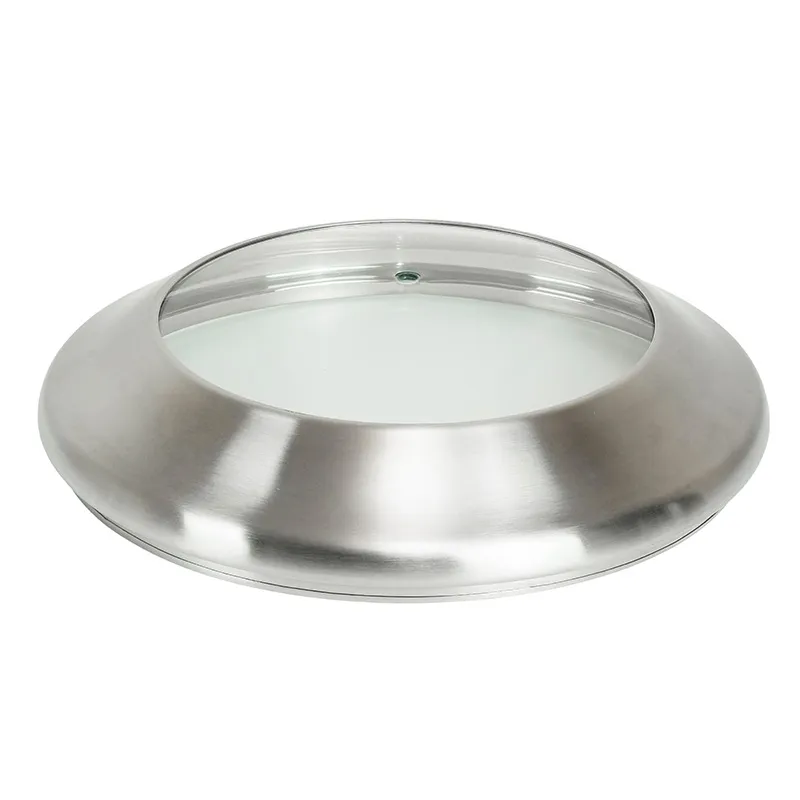
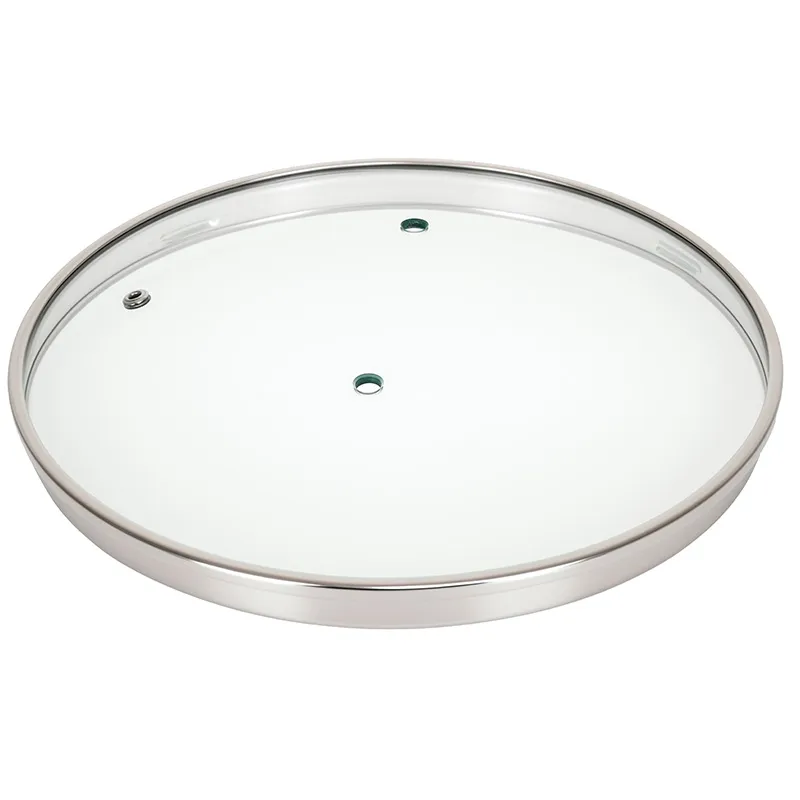
This is where working with a specialized manufacturer makes all the difference. Take a company like EUR-ASIA COOKWARE CO.,LTD (https://www.glass-lid.com). Their focus isn't just on glass jars, but specifically on glass jar with sealed lid systems, particularly tempered glass lids for cookware. That specialization is key. A factory making drinking glasses and one making sealing jars are operating on different tolerances. EUR-ASIA's production of over 15 million tempered glass lids annually suggests a deep, ingrained process for managing the thermal strengthening of glass—a critical step for any jar meant to handle thermal shock from canning or dishwashing.
Their location in Shandong's National High-tech Development Zone isn't incidental. The supply chain for quality soda-lime silica glass and precision molding equipment is strong there. When you visit a facility like that, you notice the focus on the finish. The grinding and fire-polishing of the jar's top sealing surface is a dedicated station. It's not an afterthought. A poorly fire-polished rim will have microscopic peaks and valleys that the gasket can't fully fill, creating channels for air. I've seen their quality control sheets—they track mouth flatness and inner diameter variation on a statistical process control chart, which is exactly what you want to see.
Their export focus (over 90% to markets like Germany, Japan, South Korea) is a de facto quality signal. Those markets have rigorous, often legally enforced standards for food contact materials and sealing performance. A jar that passes muster for the German retail market has already been vetted for heavy metals release, thermal shock resistance, and closure integrity under pressure. It tells me their glass jar with sealed lid products are built to a compliance standard that exceeds many domestic requirements, which is a practical shortcut for any buyer.
Common Pitfalls and Failure Modes
Even with a good manufacturer, things go wrong in application. One classic pitfall is assuming all lids are interchangeable. We once sourced beautiful jars from one supplier and sealing lids from another, both claiming standard 70mm finishes. They threaded on, but we had persistent seal failures. The root cause? The thread pitch on the glass jar was slightly different—by a fraction of a millimeter—from the lid's thread profile. They seemed compatible, but the mismatch prevented the lid from seating with consistent, axial pressure, causing the gasket to compress unevenly. The lesson: always treat the jar and lid as a married pair, tested together.
Another failure mode is storage environment. The sealing compound in lids has a shelf life and can be affected by heat and UV. Storing pallets of lids in a non-climate-controlled warehouse in summer can soften or cure the gasket prematurely. We learned this the hard way, receiving a shipment of lids that looked perfect but had lost their elasticity, resulting in a brittle seal that cracked under torque. Now, we specify storage conditions to our suppliers and audit their warehouse practices if possible.
Then there's the user error factor. The sealed in glass jar with sealed lid implies a correct usage. Over-tightening is a major issue. People think tighter is better, but excessive torque can warp the lid's skirt, permanently distort the gasket, or even chip the glass threading. We started including simple pictorial instructions—tighten until snug, then a quarter-turn more—which drastically reduced returns. It's a small detail, but it bridges the gap between engineered performance and real-world use.
Material Choices and the Tempering Question
Why temper the glass for a jar? It's not always necessary for cold storage, but for any thermal processing—hot filling, pasteurization, oven use—it's non-negotiable. Tempering puts the glass surface into compression, making it 3-5 times stronger against thermal and mechanical shock. A company like EUR-ASIA, with their volume in tempered lids, understands this intimately. The process involves heating the formed glass to near its softening point and then quenching it with air jets. The trick is uniformity; uneven cooling creates stress patterns that can lead to spontaneous breakage later.
But tempering has a trade-off: the glass can no longer be cut or drilled. The entire jar must be formed and finished before the tempering stage. This means the design and tooling must be perfect upfront. Any defect in the rim or threading is locked in after tempering and will render the entire jar unusable for sealing. This elevates the importance of the pre-tempering inspection. When I've toured facilities, I spend more time at the inspection stations before the tempering furnace than after it.
The lid material is another decision point. For a true hermetic glass jar with sealed lid, you're typically looking at a metal lid—tinplate or aluminum—with a separate sealing compound. Some newer designs use all-in-one plastic lids with integrated gaskets, which are great for dry goods but often lack the structural rigidity for vacuum sealing. The choice depends entirely on the contents. For high-acid foods, you need a lacquered tinplate that resists corrosion. For dry spices, an aesthetic, lightweight aluminum lid might suffice. It's about matching the material science to the product chemistry.
Practical Sourcing and Final Thoughts
So, how do you source a reliable glass jar with sealed lid? You start with the application. Is it for retail packaging, home canning, or commercial food service? The performance requirements differ. Then, you look for manufacturers whose core competency aligns. A company profile like EUR-ASIA COOKWARE CO.,LTD's—specializing in household glass, with a high-volume output and a dominant export business to quality-conscious markets—is a strong starting point. It suggests they have the scale to be cost-competitive and the compliance experience to meet stringent standards.
Never skip the pilot batch. Order a few thousand units and run them through your actual filling, sealing, and storage process. Test them over time. Check seal integrity after one week, one month, three months. Subject them to the temperature cycles they'll face in transit and storage. This pilot phase is where you'll discover if the theoretical seal works in your practical, messy reality.
In the end, a glass jar with sealed lid is a deceptively simple piece of engineering. Its success hinges on the invisible details: the chemistry of the gasket, the physics of the tempering process, the microns of precision in the glass molding. Getting it right means partnering with makers who respect those details, not just as a sales point, but as the fundamental basis of their production line. The good ones, you'll find, are almost obsessive about the parts nobody ever sees—the finish of the glass rim, the consistency of the air quench, the storage of the gasket material. That's where the real seal is made.
Related Products
Related Products