- Chinese
- French
- German
- Portuguese
- Spanish
- Russian
- Japanese
- Korean
- Arabic
- Irish
- Greek
- Turkish
- Italian
- Danish
- Romanian
- Indonesian
- Czech
- Afrikaans
- Swedish
- Polish
- Basque
- Catalan
- Esperanto
- Hindi
- Lao
- Albanian
- Amharic
- Armenian
- Azerbaijani
- Belarusian
- Bengali
- Bosnian
- Bulgarian
- Cebuano
- Chichewa
- Corsican
- Croatian
- Dutch
- Estonian
- Filipino
- Finnish
- Frisian
- Galician
- Georgian
- Gujarati
- Haitian
- Hausa
- Hawaiian
- Hebrew
- Hmong
- Hungarian
- Icelandic
- Igbo
- Javanese
- Kannada
- Kazakh
- Khmer
- Kurdish
- Kyrgyz
- Latin
- Latvian
- Lithuanian
- Luxembou..
- Macedonian
- Malagasy
- Malay
- Malayalam
- Maltese
- Maori
- Marathi
- Mongolian
- Burmese
- Nepali
- Norwegian
- Pashto
- Persian
- Punjabi
- Serbian
- Sesotho
- Sinhala
- Slovak
- Slovenian
- Somali
- Samoan
- Scots Gaelic
- Shona
- Sindhi
- Sundanese
- Swahili
- Tajik
- Tamil
- Telugu
- Thai
- Ukrainian
- Urdu
- Uzbek
- Vietnamese
- Welsh
- Xhosa
- Yiddish
- Yoruba
- Zulu
- Kinyarwanda
- Tatar
- Oriya
- Turkmen
- Uyghur


glass jar with silicone lid
Let's cut through the noise. When you hear 'glass jar with silicone lid', the immediate image is often a trendy, airtight container for pantry staples. The reality in production and daily use is more nuanced. A common misconception is that the silicone seal alone guarantees perfect preservation; it's a critical component, but the interplay between the glass finish, the lid's durometer (hardness), and the sealing geometry dictates real-world performance. I've seen too many designs fail because they prioritized aesthetics over the physics of the seal.
The Anatomy of a Reliable Seal
It starts with the glass. The jar's rim isn't just a smooth edge; it needs a specific, consistent curvature. If the tempering process or the molding leaves micro-imperfections, even the softest silicone won't conform perfectly. I recall a batch from a supplier—the jars looked flawless, but we had a 15% failure rate in our vacuum tests. The issue? A barely perceptible 'high spot' on the rim from a worn mold. The silicone lid would seal everywhere else but leave a hairline gap there.
The silicone compound is another minefield. Food-grade is a baseline. The real choice is between a softer silicone for easier manual compression (good for daily-use jars) and a firmer one that maintains seal integrity under thermal stress or pressure changes (think refrigerating a hot soup). A softer lid might feel more 'sealed' when you press it, but a firmer one often performs better over time, resisting deformation. It's a trade-off between user feel and long-term function.
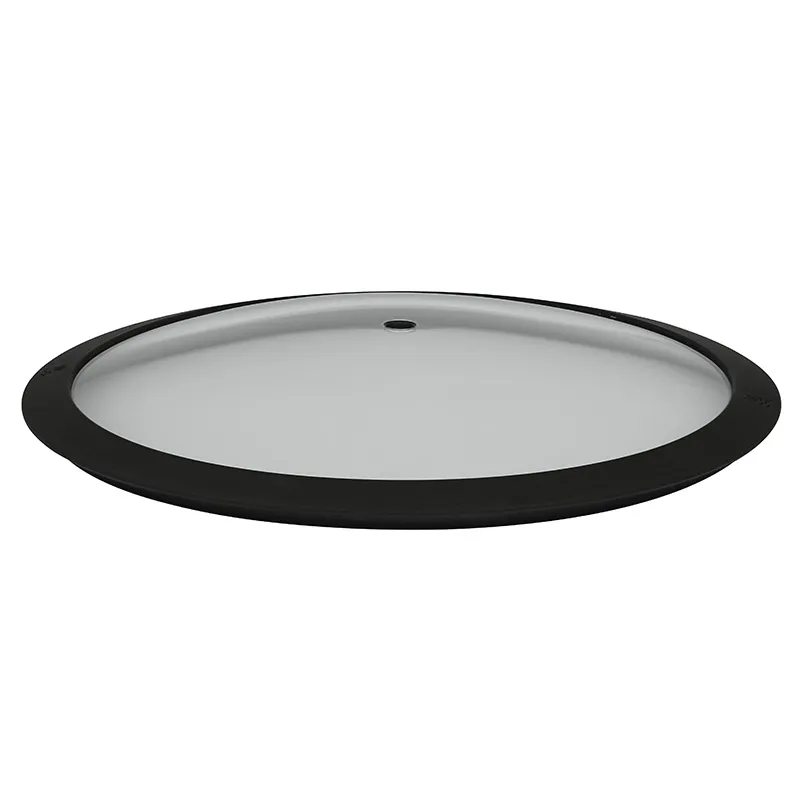
Then there's the lid design itself. A simple flat silicone disc sitting on a rim is rarely sufficient. Effective designs incorporate a sealing bead—a raised ring on the underside of the silicone that presses into a corresponding channel on the glass rim. This creates two sealing surfaces. The clamping mechanism, whether it's a wire bail, a plastic latch, or a simple friction fit, must apply even pressure around this bead. Uneven pressure is the silent killer of shelf life.
Manufacturing Realities and EUR-ASIA's Niche
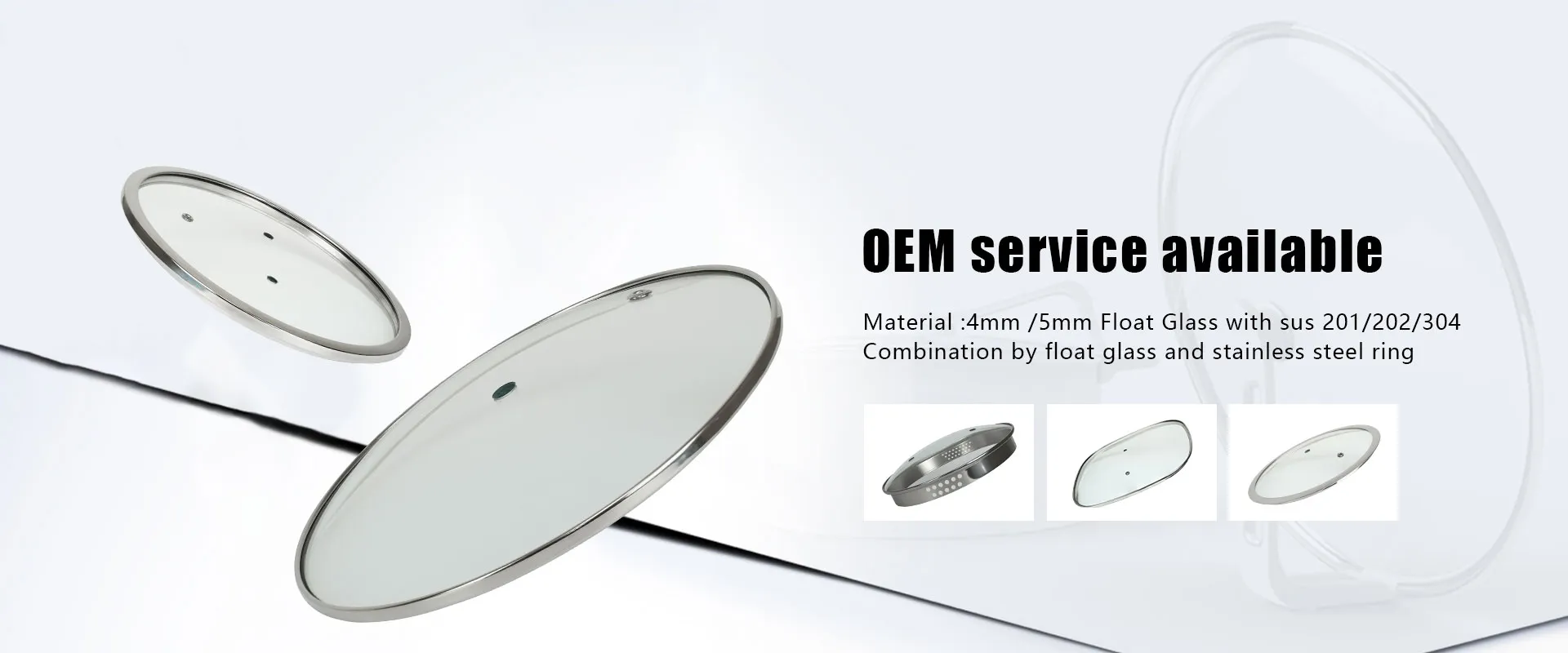
This is where scale and specialization matter. Producing a truly reliable glass jar with silicone lid assembly requires tight control over both components. A company like EUR-ASIA COOKWARE CO.,LTD. (you can find their portfolio at glass-lid.com) operates in an interesting space. Their focus, as their name suggests, is heavily on glass lids and tempered glass products. This specialization in glass is key. When I've reviewed their production specs, the emphasis is on the glass component's consistency—the very foundation for any good seal.
Their operation, based in Taian City, Shandong, with an annual output in the millions, is geared for volume. This isn't artisanal pottery. The challenge for such a manufacturer is ensuring that every one of those 15 million-plus tempered glass lids has a rim geometry that matches their (or their client's) specified silicone gasket. Their export focus to markets like Germany and Japan is telling—these are regions with stringent quality expectations for kitchenware. A jar that fails to seal properly in Germany's dry, controlled environments or Japan's humid ones won't get repeat orders.
However, it's crucial to understand their model. EUR-ASIA specializes in production. They are likely a source for brands that then pair their glass components with sourced silicone lids and clamping systems. The synergy—or lack thereof—happens at this integration point. A brand might buy beautiful tempered glass jars from them and generic silicone seals from another vendor, leading to compatibility hiccups. The most successful products often come from close collaboration where the glass and silicone are engineered as a single system.
Field Failures and User Behavior
You can engineer the perfect jar, and users will find ways to challenge it. One persistent issue is over-tightening. With a screw-on metal band holding a silicone lid, people crank it down, permanently compressing and distorting the silicone bead. The seal is great for one use, then it's compromised. We moved some designs towards a 'click-fit' or bail system that gives clear tactile feedback when sealed, preventing this.
Dishwasher damage is another. High heat and aggressive detergents can cause silicone to become brittle or to absorb odors over time. It's not that they aren't dishwasher safe—they are—but the material degrades faster. I always advise hand-washing the lid to prolong its sealing life, even if the jar itself is fine in the dishwasher. This is a detail often buried in the care instructions.
Then there's the 'storage of strong odors' problem. Silicone is porous at a microscopic level. Storing garlic, spices, or fermented foods for extended periods will impart smells. No amount of washing fully removes it. For this, a glass jar with a truly hermetic seal, like a swing-top with a rubber gasket designed for canning, is better. The standard glass jar with silicone lid is ideal for dry goods, coffee, tea, or refrigerated items, but it has its limits. Setting correct user expectations is part of the job.
The Evolution of the Category
The market isn't static. Early designs were clunky, often using thick, opaque silicone. The trend now is toward thinner, transparent or translucent silicone that shows the contents, and lower-profile closures. The challenge is maintaining sealing performance as the material gets thinner. It requires more precise molding and higher-grade silicone.
We're also seeing more hybrid lids. A plastic or bamboo outer lid with a silicone gasket inset. This protects the silicone from direct UV exposure (which can degrade it) and gives a more rigid structure for handling. However, it adds complexity and cost. For a high-volume producer, adding an assembly step for a multi-part lid changes the production line dynamics.
Looking at the output of a factory like EUR-ASIA's, the sheer volume—over 15 million pieces annually—shows the demand is for standardized, reliable components. The innovation often happens at the brand level, who take these high-quality glass bases and experiment with lid mechanisms, shapes, and sizes. The factory's role is to provide the consistent, dependable canvas.
Concluding Thoughts: Substance Over Style
So, what makes a good glass jar with silicone lid? It's not the Instagram appeal. It's the millimeter precision of the glass rim, the food-grade stability of the silicone, and the intelligent design of the clamping force. It's understanding that this is a system, not just two items stuck together.
When evaluating a product or a component supplier, dig into the details. Ask about the silicone's durometer. Inquire about the glass rim tolerance. Test the seal not just with dry rice, but with a powdered substance like flour or cocoa, and test it after thermal cycling (fridge to room temp). The failures will reveal the truth.
Companies like EUR-ASIA COOKWARE CO.,LTD. represent the industrial backbone of this category. Their value is in mastering the mass production of the primary component—the tempered glass—to a standard that meets global scrutiny. The final product's success, however, hinges on treating the jar and lid as an inseparable, engineered pair. That's the lesson learned from both triumphs and leaks on the warehouse shelf.
Related Products
Related Products