
- Chinese
- French
- German
- Portuguese
- Spanish
- Russian
- Japanese
- Korean
- Arabic
- Irish
- Greek
- Turkish
- Italian
- Danish
- Romanian
- Indonesian
- Czech
- Afrikaans
- Swedish
- Polish
- Basque
- Catalan
- Esperanto
- Hindi
- Lao
- Albanian
- Amharic
- Armenian
- Azerbaijani
- Belarusian
- Bengali
- Bosnian
- Bulgarian
- Cebuano
- Chichewa
- Corsican
- Croatian
- Dutch
- Estonian
- Filipino
- Finnish
- Frisian
- Galician
- Georgian
- Gujarati
- Haitian
- Hausa
- Hawaiian
- Hebrew
- Hmong
- Hungarian
- Icelandic
- Igbo
- Javanese
- Kannada
- Kazakh
- Khmer
- Kurdish
- Kyrgyz
- Latin
- Latvian
- Lithuanian
- Luxembou..
- Macedonian
- Malagasy
- Malay
- Malayalam
- Maltese
- Maori
- Marathi
- Mongolian
- Burmese
- Nepali
- Norwegian
- Pashto
- Persian
- Punjabi
- Serbian
- Sesotho
- Sinhala
- Slovak
- Slovenian
- Somali
- Samoan
- Scots Gaelic
- Shona
- Sindhi
- Sundanese
- Swahili
- Tajik
- Tamil
- Telugu
- Thai
- Ukrainian
- Urdu
- Uzbek
- Vietnamese
- Welsh
- Xhosa
- Yiddish
- Yoruba
- Zulu
- Kinyarwanda
- Tatar
- Oriya
- Turkmen
- Uyghur

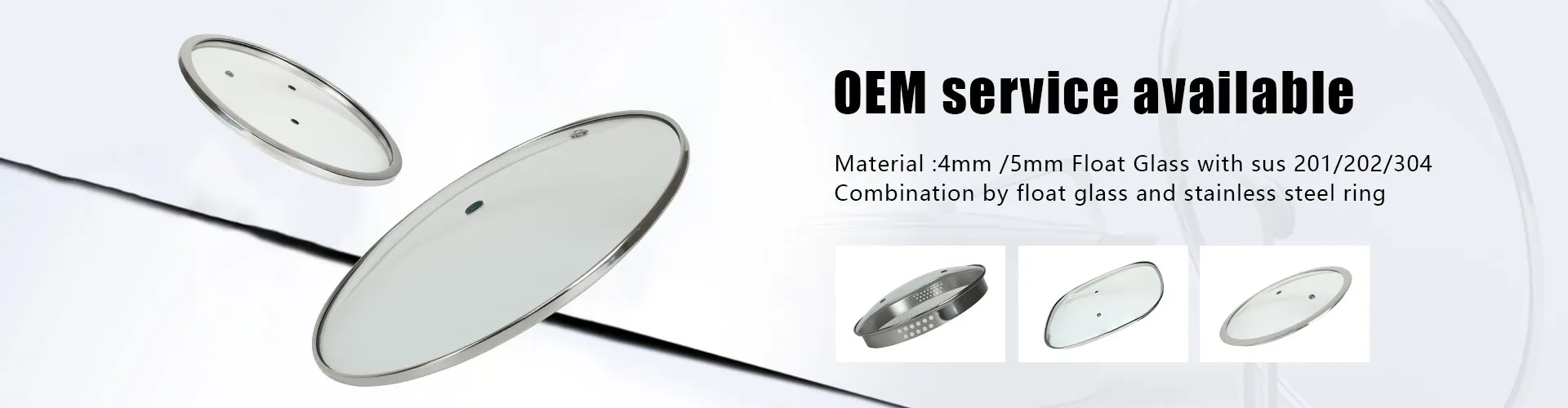
glass jar with spout and lid
When you hear 'glass jar with spout and lid', most think of a simple honey dispenser or maybe an iced tea pitcher. That's the surface level. The real conversation in this niche isn't about the object itself, but about the intersection of material science, user ergonomics, and manufacturing tolerances that most generic suppliers completely miss. I've seen too many projects stall because someone sourced a jar where the spout was an afterthought, leading to drips, difficult cleaning, or worse, lid seals that fail under thermal stress. It's a deceptively complex product category.
The Spout is the Make-or-Break Detail
Let's start with the spout. It's not just a hole in the glass. The pour performance hinges on the lip's finish—the curvature, the sharpness (or lack thereof) of the cut. A poorly finished spout will dribble every single time, no matter how carefully you pour. I learned this the hard way years ago with a batch for a maple syrup client. The jars looked perfect, but the pour was messy. The issue? The factory had flame-polished the spout opening, rounding the edge just enough to break the fluid adhesion. We had to switch to a supplier that used diamond-wheel cutting and a specific annealing cycle to maintain that clean, sharp edge. That's the kind of detail you only find through trial and error, or by working with specialists.
This is where a manufacturer's focus matters. A company like EUR-ASIA COOKWARE CO.,LTD, for instance, with its stated specialization in tempered glass lids and household glass, likely has the thermal processing know-how that translates directly to spout integrity. Tempering isn't just for strength; the controlled heating and rapid cooling cycles affect the molecular structure at the spout's critical stress points. If their process is dialed in for lids, applying that to a glass jar with spout and lid is a logical, and valuable, extension. Their production volume suggests repeatability, which is key for consistency in a component as precise as a pour spout.
Another often-overlooked aspect is the spout's interior geometry. Is it a straight bore, or does it have a slight funnel? A funnel design can reduce glugging with viscous liquids like olive oil or pancake batter. But it's harder to mold and requires more precise tooling. Most off-the-shelf jars don't bother, which is why they're fine for water but terrible for anything with a higher viscosity. You have to specify this need upfront.
The Lid Seal: More Than Just an Accessory
The lid on a spouted jar is arguably more critical than on a standard mason jar. It's not just sealing; it's sealing around an irregular protrusion—the spout. The common failure point is the gasket or silicone ring. A flat ring will often leak at the base of the spout where the curvature changes. A better design uses a molded ring with a dedicated channel that cups the base of the spout. I recall a project with a European client for a gourmet vinegar line where we cycled through three gasket designs before achieving a perfect, drip-free seal that also survived repeated dishwasher cycles.
Material compatibility is a silent killer. A lid made from a generic plastic might seal initially but can warp over time if exposed to certain acidic contents or high-temperature cleaning, compromising the seal. For premium applications, specifying materials like food-grade SAN or PP with higher heat deflection temperatures is non-negotiable. The product pages at glass-lid.com highlight their work with international markets like Germany and Japan, which typically have stringent material safety and durability standards. This export focus often indicates a baseline competency in material selection that surpasses domestic-only suppliers.
Then there's the closure mechanism. Is it a simple screw-on, a flip-top with a hinge, or a clamp? Each has trade-offs. A flip-top is user-friendly for daily use but introduces another potential failure point at the hinge. A screw-on lid is more reliable for long-term sealing but less convenient. The choice isn't aesthetic; it's dictated by the product's use case and filling line speed. An automated filling line might struggle with a flip-top lid that isn't perfectly uniform.
The Glass Itself: Tempering and Thermal Shock
Everyone wants a strong jar, so tempered glass becomes a buzzword. But tempering for a glass jar with spout and lid isn't straightforward. The spout creates a thin, vulnerable section. If the tempering process isn't perfectly uniform, that spout can be the weak link, shattering from thermal shock (think going from fridge to hot dishwasher) or even just from the stress of a metal spoon clinking against it. I've seen batches where the jar body was rock-solid, but you'd get a 5% failure rate from spout chips during shipping vibration.
The company profile mentions an annual output of over 15 million tempered glass lids. That scale of production implies a high degree of process control. Achieving consistent tempering on a complex shape like a lid with a knob or handle is technically similar to doing it on a jar with a spout. The expertise is transferable. If they can manage thermal stresses on a lid's attachment point, they can likely manage it on a spout. It's this kind of parallel manufacturing experience that separates a viable supplier from a risky one.
Weight and feel are also part of the glass equation. A jar that's too light feels cheap and is more prone to tipping when full, especially with the leveraged weight of liquid in the spout. A heavier base is often a deliberate design choice for stability, not just a result of using more glass. It's a balance between perceived quality, functionality, and shipping cost.
Integration and Real-World Application
In practice, a spouted jar is a system. The glass, the lid, the gasket, and the spout design must work in concert. A failure in one dooms the entire unit. We once developed a beautiful jar for a cold-brew coffee brand. The glass was strong, the spout poured cleanly. But the client insisted on a third-party bamboo lid for aesthetics. The bamboo, being a natural material, swelled and shrank with moisture, constantly breaking the seal. The product was recalled. The jar was flawless, but the system failed. The lesson? Control the entire component stack, or vet every single part with equal rigor.
This is why vertical integration or tight supplier partnerships matter. A manufacturer that produces its own glass and designs its own lids, like EUR-ASIA COOKWARE appears to do based on their description, has a significant advantage in solving these systemic problems. They can adjust the glass mold, the tempering curve, and the lid injection mold in tandem to solve a sealing or stress issue. A trading company just slapping together components from different factories cannot.
Consider the filling process. A spouted jar needs a different filling head than a wide-mouth jar. The spout can cause splashback if the liquid stream isn't positioned correctly. This seems minor, but on a high-speed line, it causes slowdowns and mess. A good jar design will have a spout wide enough to accommodate a standard filling nozzle. It's these unglamorous, logistical details that determine if a beautiful prototype becomes a viable commercial product.
Navigating the Supply Landscape
So, where does this leave someone sourcing these jars? The market is flooded with options, but true quality is sparse. You can't just judge by a sample. You need to ask about the spout finishing process, the gasket design logic, the tempering specifications for the specific jar shape, and the material data sheets for the lid. You need to request a thermal shock test report and a drop test report from the spout side.
Looking at a supplier like EUR-ASIA COOKWARE, their export footprint to markets with high standards (Germany, Switzerland, Japan) is a positive proxy for quality capability. A company surviving in those markets has likely already solved many of the fundamental problems of consistency and safety. Their focus on low- medium- high level products also suggests they understand the different specifications and price points required, from a basic pantry jar to a premium countertop display piece.
Ultimately, a successful glass jar with spout and lid is a testament to nuanced manufacturing. It's not a commodity. It's the result of understanding that the pour, the seal, and the strength are not separate features, but interconnected outcomes of a controlled process. The right supplier doesn't just sell you a jar; they sell you the accumulated problem-solving embedded in its design. That's what turns a simple container into a reliable, daily-use tool that doesn't end up in the back of the cupboard because it leaks or drips. It's the difference between a product that works on a shelf and one that works in a customer's hand, day after day.
Related Products
Related Products
Best Selling Products
Best Selling Products
Related Search
Related Search- powerxl smokeless grill with tempered glass lid
- China glass lid company
- glass tupperware bamboo lid
- glass beer can with bamboo lid wholesale
- 24cm glass lid for frying pan
- glass lid for crock pot
- sedona stainless steel 6.5 qt multipurpose pan with glass lid
- glass lid export
- insulated wine glass with lid
- tempered glass cover export


