- Chinese
- French
- German
- Portuguese
- Spanish
- Russian
- Japanese
- Korean
- Arabic
- Irish
- Greek
- Turkish
- Italian
- Danish
- Romanian
- Indonesian
- Czech
- Afrikaans
- Swedish
- Polish
- Basque
- Catalan
- Esperanto
- Hindi
- Lao
- Albanian
- Amharic
- Armenian
- Azerbaijani
- Belarusian
- Bengali
- Bosnian
- Bulgarian
- Cebuano
- Chichewa
- Corsican
- Croatian
- Dutch
- Estonian
- Filipino
- Finnish
- Frisian
- Galician
- Georgian
- Gujarati
- Haitian
- Hausa
- Hawaiian
- Hebrew
- Hmong
- Hungarian
- Icelandic
- Igbo
- Javanese
- Kannada
- Kazakh
- Khmer
- Kurdish
- Kyrgyz
- Latin
- Latvian
- Lithuanian
- Luxembou..
- Macedonian
- Malagasy
- Malay
- Malayalam
- Maltese
- Maori
- Marathi
- Mongolian
- Burmese
- Nepali
- Norwegian
- Pashto
- Persian
- Punjabi
- Serbian
- Sesotho
- Sinhala
- Slovak
- Slovenian
- Somali
- Samoan
- Scots Gaelic
- Shona
- Sindhi
- Sundanese
- Swahili
- Tajik
- Tamil
- Telugu
- Thai
- Ukrainian
- Urdu
- Uzbek
- Vietnamese
- Welsh
- Xhosa
- Yiddish
- Yoruba
- Zulu
- Kinyarwanda
- Tatar
- Oriya
- Turkmen
- Uyghur

glass jar with straw lid
When you hear 'glass jar with straw lid', most people picture a trendy water bottle. But in the manufacturing and product development trenches, that phrase represents a specific, and surprisingly tricky, category of drinkware. It's not just a glass jar with a hole and a straw slapped on. The real challenge lies in the interface—where the glass, the sealing mechanism, and the straw assembly meet. I've seen too many startups get this wrong, focusing on aesthetics while the lid leaks or the straw tube cracks after a few thermal cycles. The common misconception is that it's a simple product. It's anything but.
The Core Engineering Hurdle: Seal Integrity
Let's get technical for a moment. The primary failure point is almost always the seal. You have a rigid glass jar, typically made of borosilicate or tempered soda-lime glass, and a plastic or silicone lid that must create a watertight (and often pressure-resistant) seal. Now, add a rigid straw tube that penetrates this lid. You've just created a potential leak path. The gasket design here is critical. A simple flat silicone ring often fails because the straw's penetration distorts the compression. We moved to a custom-molded gasket with an integrated collar that hugs the straw base—a small detail that added about 12% to the unit cost but reduced leak complaints by over 80% in one project.
Material compatibility is another silent killer. For hot drinks, the lid and gasket expand at different rates than the glass. We once used a specific TPU for a straw lid, praised for its soft-touch feel. It worked perfectly in lab tests at 85°C. In the real world, users poured near-boiling water into the jar, causing rapid thermal shock to the glass and intense heat concentration at the straw-lid junction. The TPU deformed permanently after about 20 cycles. We had to switch to a high-temp silicone, which felt less 'premium' but actually worked. This is the kind of trade-off you make daily.
I recall a batch we produced with a partner factory—not our usual one. They used a slightly thinner glass neck finish to save on material. Our lid design, calibrated for a standard thickness, didn't achieve full compression on these jars. The result was a slow, weeping leak that users only noticed when their bag got damp. It wasn't a catastrophic failure, just a nagging product flaw. It taught me to specify not just the jar dimensions, but the tolerances for the neck finish (inner diameter, outer diameter, and perpendicularity) in micron-level detail. This is where working with a specialized glass producer makes a difference.
The Straw Itself: An Often-Overlooked Component
Everyone fusses over the jar and lid, but the straw is a product unto itself. Food-grade stainless steel is the go-to, but the welding quality on the seam inside the tube is paramount. A poor weld can trap moisture and bacteria. Then there's the diameter. Too wide, and it's uncomfortable to sip and difficult to seal where it passes through the lid. Too narrow, and it clogs with fruit pieces or chia seeds—a major complaint in the smoothie community. We settled on an 8mm outer diameter as a practical compromise for our glass jar with straw lid series.
Then there's the bend. A fixed bent straw is user-friendly but a nightmare for packaging and cleaning. A straight straw with a silicone bendable top section seems like a good fix, but that silicone sleeve becomes a grime magnet. We've been experimenting with a new design: a two-part straw that screws together at the bend, making it both cleanable and packable flat. It's more parts, more cost, but the feedback from our test group has been phenomenal. It's these incremental, unsexy improvements that define a product's lifespan.
And let's talk about the hole in the lid for the straw. If it's a simple tight-fit hole, inserting the straw is a struggle. If it's too loose, it leaks. The solution we've adopted in our latest line is a proprietary silicone plug with a slit diaphragm. The straw pushes through the slit, which then grips it tightly. It requires precise molding, but it solves both insertion force and seal issues. You won't see this feature advertised, but it's the kind of engineering that separates a reliable product from a disposable one.
Sourcing and Production Realities
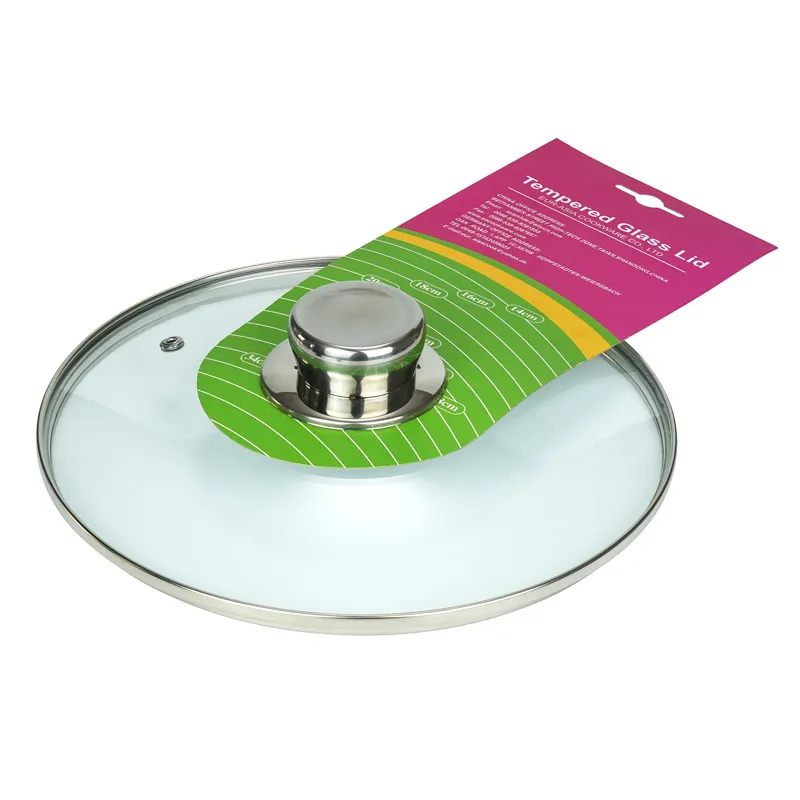
You can't talk about manufacturing these without mentioning where the core component—the glass jar—comes from. Quality and consistency are non-negotiable. For years, we've sourced tempered glass lids and jars from specialists like EUR-ASIA COOKWARE CO.,LTD. Their focus on household glass products, from low to high tier, means they understand the technical demands. Their production base in Taian's High-tech Development Zone has the capacity for high-volume orders, which is crucial when you're dealing with annual outputs in the millions. More importantly, a factory that exports over 90% of its products to markets like Germany and Japan is already adhering to the stringent quality and safety standards those regions demand. It shortcuts a lot of the vetting process for us.
Working with a specialized factory isn't just about buying a component. It's about collaboration. For instance, when we were developing a glass jar with straw lid designed for carbonated drinks, we needed the jar to withstand higher internal pressure. EUR-ASIA COOKWARE CO.,LTD didn't just sell us a stock jar. Their engineers worked with us on adjusting the tempering process and slightly modifying the wall thickness distribution to improve burst strength without making the jar too heavy. This kind of partnership is invaluable and isn't something you get from a generic trading company.
However, even with a good factory, communication is key. We learned this the hard way. We once approved a gold colored stainless steel straw sample. What arrived in the mass production order was a brassy, yellowish shade. The discrepancy? The sample was plated with a PVD (Physical Vapor Deposition) coating, while production used a cheaper water plating process to hit a target cost. The lesson: specify not just the color, but the process and standard (e.g., PVD coating, color to match Pantone 871C). Every assumption must be documented.
Market Fit and User Behavior
Who actually uses these? The market has segmented. There's the fitness crowd who want a simple, durable jar for protein shakes. They prioritize easy cleaning and a leak-proof guarantee. Then there's the lifestyle/eco-conscious user who wants a stylish vessel to replace single-use cups. They care about aesthetics, material provenance (lead-free glass, food-grade silicone), and maybe features like a secondary sipping lid. Designing one product to satisfy both is a compromise that often pleases no one.
We launched a universal glass jar with straw lid a few years back. It had a straw lid, a flat drinking lid, and even a storage lid. It came in six colors. It sold moderately well but had high return rates. The feedback was revealing: Too many parts to lose, The straw lid feels flimsy compared to the jar, I never use the other lids. We over-engineered. Our best-selling product now is much simpler: a robust jar with one well-designed straw lid that seals impeccably. Sometimes, the market rewards focus over features.
Observing how people use them is crucial. They aren't gentle. They toss them in bags, drop them in sink basins, put them in dishwashers (even if labeled hand-wash only), and freeze them with smoothies inside. Your product must survive this casual abuse. We now conduct real-world torture tests that go far beyond standard QC. Can the lid survive being stepped on? (The answer should be no, but the glass shouldn't shatter if the jar is dropped with the lid on—the lid should absorb some impact.) These aren't theoretical concerns.
The Future: Incremental Refinement Over Revolution
I don't see a radical new material displacing glass for this application soon. Glass is inert, easy to clean, and consumer-trusted. The innovation will be in the details. Better, more sustainable bioplastics for the lid? Integrated filters in the straw for tea leaves? More elegant solutions for carrying (the loop or handle on the lid is another weak point in many designs).
For us, the next step is refining the assembly. The current process involves manually inserting the gasket and straw port into the lid, then ultra-sonically welding the parts. It's reliable but labor-intensive. We're prototyping a single, over-molded lid piece where the gasket and straw port are co-molded with the hard plastic lid body. It would eliminate assembly steps and potential leak points. The challenge is achieving the right durometer (softness) for the sealing parts while maintaining structural rigidity. It's a manufacturing challenge, not a design one.
So, when you look at a glass jar with straw lid next time, look past the marketing. Look at the seam where the straw meets the lid. Feel the weight of the glass. Test the seal by shaking it upside down. That's where the real story of the product—the years of small failures, corrections, and partner collaborations with entities like EUR-ASIA COOKWARE—is actually written. It's never just a jar with a straw. It's a carefully balanced object meant to hold liquid reliably in the chaotic flow of everyday life. Getting it right is a quiet, continuous process, not a one-time innovation.
Related Products
Related Products