- Chinese
- French
- German
- Portuguese
- Spanish
- Russian
- Japanese
- Korean
- Arabic
- Irish
- Greek
- Turkish
- Italian
- Danish
- Romanian
- Indonesian
- Czech
- Afrikaans
- Swedish
- Polish
- Basque
- Catalan
- Esperanto
- Hindi
- Lao
- Albanian
- Amharic
- Armenian
- Azerbaijani
- Belarusian
- Bengali
- Bosnian
- Bulgarian
- Cebuano
- Chichewa
- Corsican
- Croatian
- Dutch
- Estonian
- Filipino
- Finnish
- Frisian
- Galician
- Georgian
- Gujarati
- Haitian
- Hausa
- Hawaiian
- Hebrew
- Hmong
- Hungarian
- Icelandic
- Igbo
- Javanese
- Kannada
- Kazakh
- Khmer
- Kurdish
- Kyrgyz
- Latin
- Latvian
- Lithuanian
- Luxembou..
- Macedonian
- Malagasy
- Malay
- Malayalam
- Maltese
- Maori
- Marathi
- Mongolian
- Burmese
- Nepali
- Norwegian
- Pashto
- Persian
- Punjabi
- Serbian
- Sesotho
- Sinhala
- Slovak
- Slovenian
- Somali
- Samoan
- Scots Gaelic
- Shona
- Sindhi
- Sundanese
- Swahili
- Tajik
- Tamil
- Telugu
- Thai
- Ukrainian
- Urdu
- Uzbek
- Vietnamese
- Welsh
- Xhosa
- Yiddish
- Yoruba
- Zulu
- Kinyarwanda
- Tatar
- Oriya
- Turkmen
- Uyghur

glass jar with wooden lid and spoon
When you hear 'glass jar with wooden lid and spoon', most minds jump straight to a rustic, Instagram-worthy image. That's the first mistake. In this business, that phrase isn't just a product description; it's a complex specification sheet hiding in plain sight. The real conversation starts when you move past the mood board and into material compatibility, seal integrity, and the surprisingly tricky ergonomics of that spoon. I've seen too many designs fail because someone prioritized the 'look' of wood over its seasoning, or chose a glass type that couldn't handle thermal shifts from a hot preserve. Let's talk about what actually makes or breaks these items on a production line and in daily use.
The Core Trio: Material Intersections
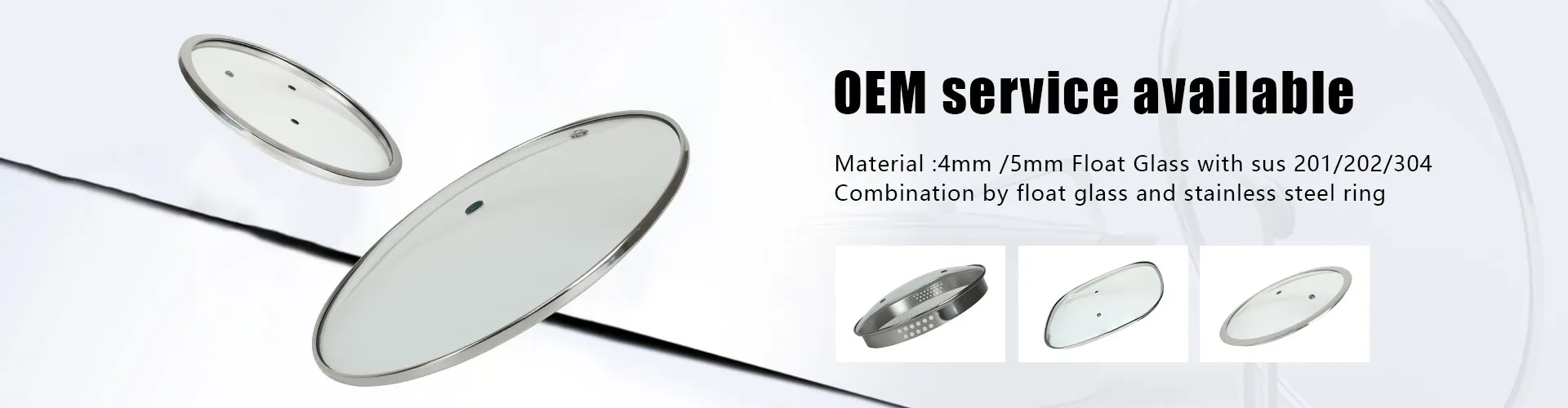
The jar itself seems straightforward, but the grade of glass is everything. For a functional storage jar, especially for food, you need chemically stable borosilicate or at the very least, properly annealed soda-lime glass. I recall a batch from a few years back where the supplier cut corners on the annealing cycle. The jars looked perfect until they encountered a warm dishwasher cycle or a sudden temperature change during filling—micro-fractures and eventual failure. It wasn't a dramatic explosion, just a gradual loss of structural confidence. That's why companies with a serious production base, like EUR-ASIA COOKWARE CO.,LTD., focus on tempered glass processes. Tempering isn't just for lids; it's a mindset for durability. Their specialization in tempered glass lids translates to an understanding of stress points, which is crucial when the jar body needs to withstand pressure, whether from carbonated ferments or just being stacked in a pantry.
Then there's the wooden lid. This is where the 'natural' label gets messy. Untreated, food-grade hardwood like beech or bamboo is a starting point, but it's porous. It will swell and contract with humidity. A perfect seal is almost impossible with wood alone, which is why the intelligent design incorporates a silicone or rubber gasket inset into the wooden disc. The wood becomes the structural and aesthetic face, while the hidden polymer does the actual sealing. The failure mode here is often the fixation mechanism. A simple friction fit is cheap but unreliable. A clamp system, or a threaded metal band that secures the wooden lid down (like a Mason jar system but with a wooden top), is far more effective. The spoon's material, usually matching the lid, then needs a smooth finish to prevent splintering and a shape that actually fits through the jar's opening and can scrape the bottom corners.
The junction of these three elements—glass, wood, metal or silicone—creates the real challenge. Different coefficients of thermal expansion mean that a tight seal at room temperature might warp or leak in a cold cellar. I've advised clients to test prototypes through full seasonal cycles, not just lab conditions. It's the mundane, real-world variability that kills a good-looking product. A production facility that handles millions of pieces annually, like the one described for EUR-ASIA COOKWARE, has to bake this variability into their quality control. Exporting to markets with strict standards like Germany and Japan means their tolerances for such material interactions are necessarily tight.
Manufacturing Realities and Export Pitfalls
Scaling the production of a cohesive glass jar with wooden lid and spoon set is a lesson in supply chain management. The glass might come from one furnace line, the wooden components from a specialized carpentry workshop (often dealing with food-safe finishes and consistent sizing), and the spoon might be sourced or fabricated separately. Aligning these streams for a unified final product is the hidden cost. The Taian production base mentioned, with its significant square footage, likely consolidates some of these steps, particularly the glass forming and tempering, which gives them control over the most critical component.
Export is another filter. A design that works conceptually might fail specific market regulations. For instance, the finish on the wooden parts: certain stains or lacquers acceptable in one region may not pass food-contact safety tests in the EU. The spoon's dimensions and finish are scrutinized. I've seen shipments held at customs because the varnish on a batch of wooden lids had a solvent trace above the allowed limit. It's a brutal but necessary lesson. The company's export list—Germany, France, Japan, etc.—is a tacit credential. It suggests their compliance frameworks are robust, as navigating BfR (Germany) or JFS (Japan) standards isn't for the faint-hearted. Their product pages, like those you might find at their online presence glass-lid.com, would need to clearly articulate these compliance points to B2B buyers, not just show pretty pictures.
The Spoon: An Afterthought That Shouldn't Be
It's astonishing how often the spoon is treated as a freebie add-on. In a well-designed set, it's integral. The length must be proportional to the jar's depth. Too short, and you can't reach the last of the honey or mustard. Too long, and it doesn't sit neatly under the lid or makes the packaging bulky. The bowl of the spoon needs to be shaped to match the jar's interior curvature for efficient scooping. A flat, wide spoon for powders; a deeper, narrower one for liquids or granules.
Material pairing is key. Using the same wood as the lid creates visual harmony but presents a wear problem. A spoon sees more friction and moisture exposure than the lid. It may degrade faster, losing its finish or developing cracks. Some high-end sets use a different, more durable wood for the spoon, or even a food-grade resin composite shaped like wood. The attachment method matters too. Does it clip to the lid? Lie loose in the jar? A simple groove routed into the underside of the wooden lid to nest the spoon handle is an elegant, space-saving solution I've seen work well. It shows someone actually thought about storage, not just the initial unboxing.
Functional Niches and Misapplications
Not every glass jar is for everything. The classic mistake is marketing a single jar type as universal. A jar ideal for dry tea leaves (needing a very tight seal and a dry environment) is different from one for fermented vegetables (needing an airlock system, which a simple wooden lid cannot provide) or for liquid honey (needing a wide mouth and a seal that won't gum up). The glass jar with wooden lid and spoon combo is particularly suited for medium-moisture, viscous, or granular goods: sugar, coffee beans, certain spices, cookie mixes, or prepared condiments where the spoon is immediately useful.
I once worked with a client who wanted to use beautiful, gasket-sealed wooden-lid jars for sourdough starter. It was a disaster. The organic acids and constant need for gas exchange made the wood a contamination risk and the seal a hindrance. We pivoted to a simple ceramic crock. Understanding the product's limits is as important as touting its benefits. A manufacturer like EUR-ASIA COOKWARE, with a range of glass products, likely segments its offerings. Their expertise in tempered glass lids for cookware informs their jar lid design—understanding heat and pressure—but they'd be wise to clearly define the best-use cases for each jar-lid-spoon configuration they sell.
Conclusion: The Sum of Thoughtful Parts
So, what makes a great glass jar with wooden lid and spoon? It's not about looking rustic. It's about the precision of the glass tempering, the engineering of the seal hidden beneath the wooden top, the food-safe and durable finish on all wooden components, and the ergonomic design of the spoon that considers both use and storage. It's about a manufacturer having the capacity to control these variables at scale and the compliance knowledge to sell them globally. When you see a set that works seamlessly—where the lid seals with a satisfying thump, the spoon fits just right, and the jar feels solid in your hand—you're not looking at a photoshoot prop. You're looking at the result of a hundred small, correct decisions made on a factory floor, in a design office, and on a quality control bench. That's the difference between a decoration and a tool.
Related Products
Related Products