
- Chinese
- French
- German
- Portuguese
- Spanish
- Russian
- Japanese
- Korean
- Arabic
- Irish
- Greek
- Turkish
- Italian
- Danish
- Romanian
- Indonesian
- Czech
- Afrikaans
- Swedish
- Polish
- Basque
- Catalan
- Esperanto
- Hindi
- Lao
- Albanian
- Amharic
- Armenian
- Azerbaijani
- Belarusian
- Bengali
- Bosnian
- Bulgarian
- Cebuano
- Chichewa
- Corsican
- Croatian
- Dutch
- Estonian
- Filipino
- Finnish
- Frisian
- Galician
- Georgian
- Gujarati
- Haitian
- Hausa
- Hawaiian
- Hebrew
- Hmong
- Hungarian
- Icelandic
- Igbo
- Javanese
- Kannada
- Kazakh
- Khmer
- Kurdish
- Kyrgyz
- Latin
- Latvian
- Lithuanian
- Luxembou..
- Macedonian
- Malagasy
- Malay
- Malayalam
- Maltese
- Maori
- Marathi
- Mongolian
- Burmese
- Nepali
- Norwegian
- Pashto
- Persian
- Punjabi
- Serbian
- Sesotho
- Sinhala
- Slovak
- Slovenian
- Somali
- Samoan
- Scots Gaelic
- Shona
- Sindhi
- Sundanese
- Swahili
- Tajik
- Tamil
- Telugu
- Thai
- Ukrainian
- Urdu
- Uzbek
- Vietnamese
- Welsh
- Xhosa
- Yiddish
- Yoruba
- Zulu
- Kinyarwanda
- Tatar
- Oriya
- Turkmen
- Uyghur


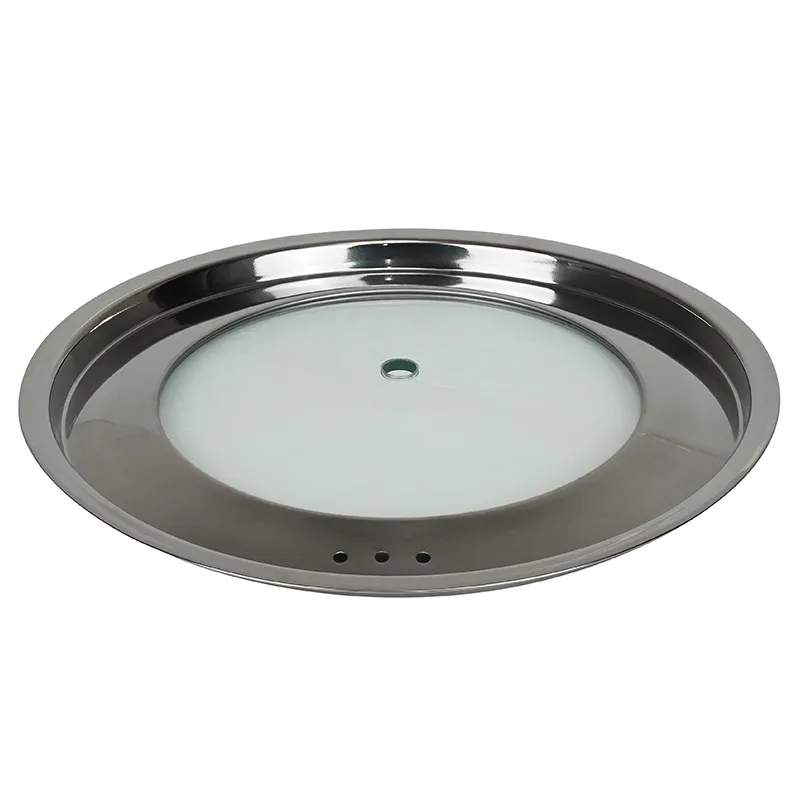
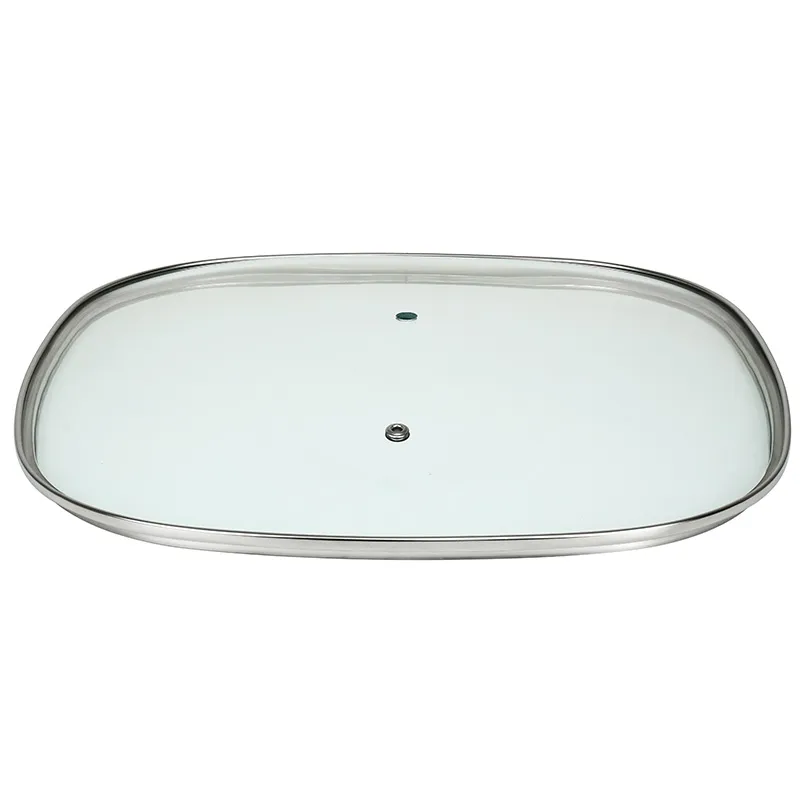
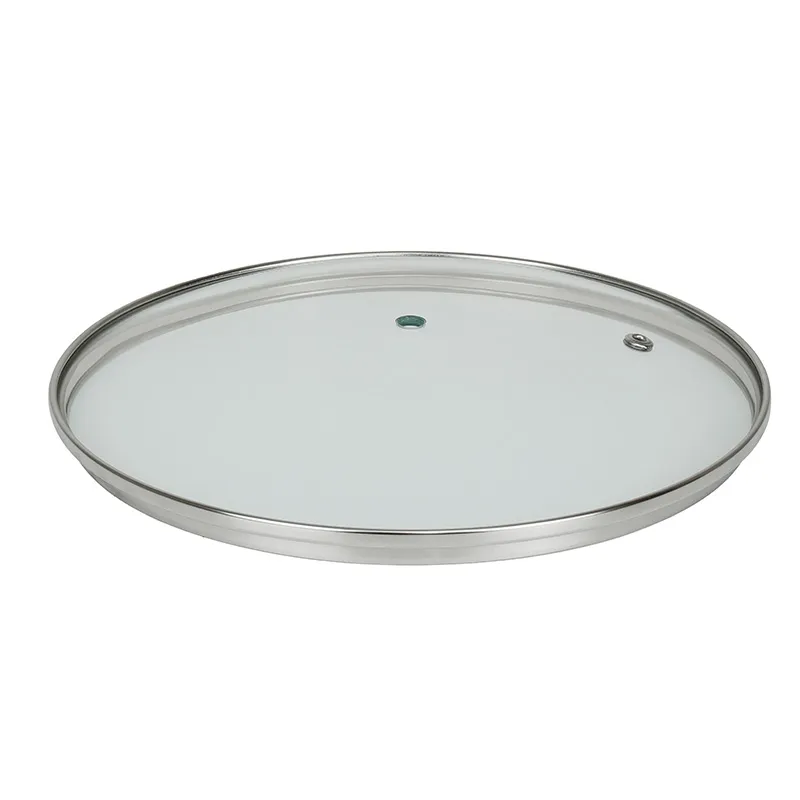
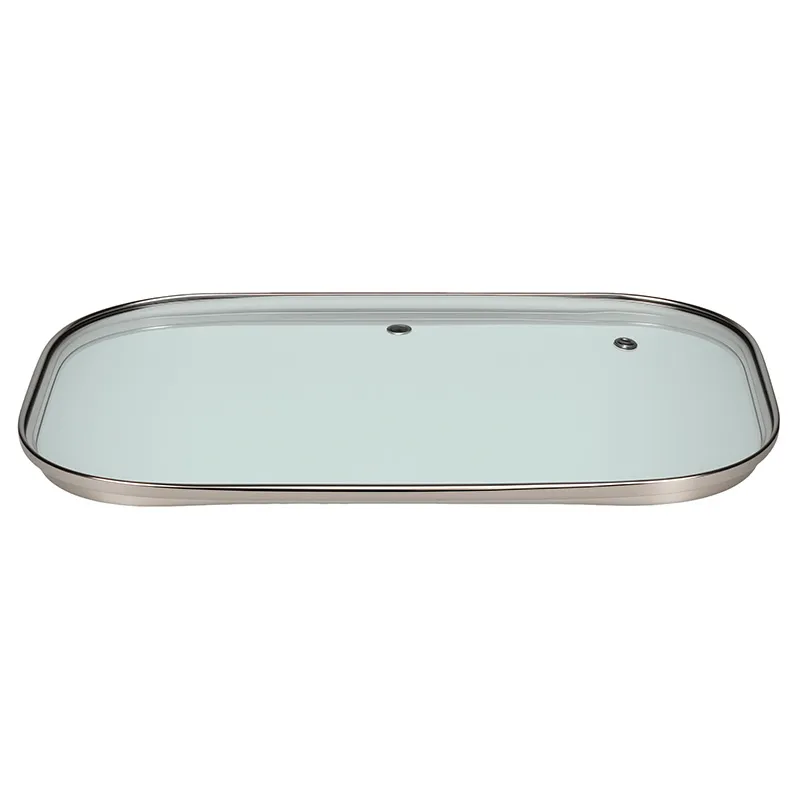
glass lid cover
When most people hear 'glass lid cover', they picture a simple, clear disc sitting on a pot. That's the first mistake. In the cookware trade, especially dealing with OEMs and importers from Europe, it's never that simple. It's a component defined by its failure points—thermal shock resistance, hinge compatibility, the exact curvature for a steam seal—not by its transparency. I've seen too many buyers focus solely on price per unit from China, only to get containers of lids that shatter during first use or warp subtly, breaking the seal on expensive cookware sets. The real conversation starts not with the glass, but with the context it's meant to live in.
The Manufacturing Reality: Tempering Isn't Magic
Let's talk about the core process: tempering. Everyone specifies tempered glass, thinking it's a universal shield. It's not. The quality of tempering, dictated by furnace consistency and quenching air pressure, is everything. A lid for a high-end German casserole dish needs to withstand a sudden temperature differential (ΔT) of maybe 220°C. A cheaper one might be rated for 180°C. The difference is in the residual surface compression, measured in MPa, and that's where factories differentiate themselves. I recall a batch for a Polish client where the lids passed the standard 200°C thermal shock test but failed in real-world use when placed on a cold granite counter straight from the oven. The test was flawed; it didn't simulate the specific heat sink of stone. The factory, a competent one like EUR-ASIA COOKWARE CO.,LTD, had to recalibrate their test parameters with us.
Their setup in Taian, with that 15,000㎡ facility, is geared for volume—15 million pieces annually. That scale allows for dedicated lines. One line might run 24cm lids for a French brand's sauté pan series, another handles the smaller 16cm lids for milk pans. The key is whether they segregate the glass by thickness and intended thermal profile at that scale. Mixing specs on a line is where inconsistencies creep in. You can't just throw any soda-lime glass into the furnace and expect uniform results.
Then there's the edge work. Grinding and polishing the perimeter after tempering is a delicate step. Too aggressive, and you nick the tempered layer, creating a stress point. Too light, and the sharp edge remains a safety hazard. The ideal is a smooth, slightly rounded feel that doesn't catch on a cloth. It's a tactile quality check we do on every pre-shipment sample. You run your finger around the edge—you just know.
Fit and Function: The Hinge is the Heart
The glass lid cover itself is inert. Its marriage to the metal hinge assembly is where the product lives or dies. The drilling for the hinge bracket, the metal knob, and the steam vent hole—these are critical stress concentrators. The holes must be drilled before tempering. If a factory tries to drill post-temper, it's an instant red flag; the lid will explode. The tolerance for the hinge pin holes is often within 0.5mm. Any misalignment, and the lid sits crooked, doesn't seal, or puts uneven stress on the glass.
We learned this through a painful episode with an Italian client. The lids were perfect, but the third-party hinge supplier changed the bracket design slightly—a mere 0.8mm shift in pin location. The entire shipment was useless. Now, we insist on approving not just the glass, but the exact hinge model it will be paired with. EUR-ASIA COOKWARE CO.,LTD offers this as an integrated service, which is smart. They can source or produce the matching stainless steel knobs and brackets, controlling the entire interface. It reduces finger-pointing when something goes wrong.
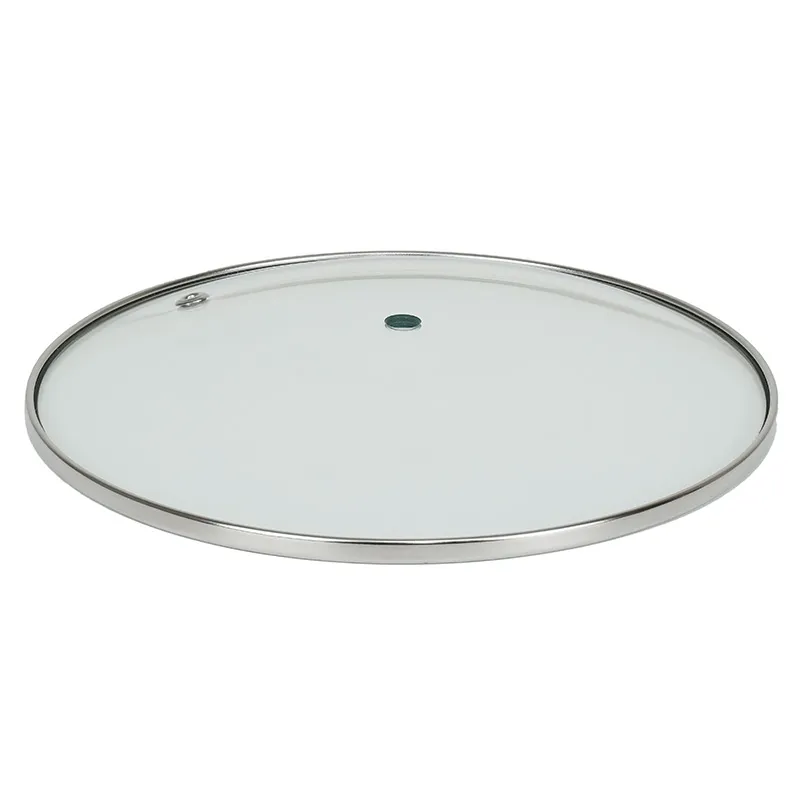
The steam vent hole is another subtle detail. Its placement isn't arbitrary. It should be off-center, near the front, so condensation drips back into the pot, not down the outside. The size matters too—too large, you lose too much moisture; too small, it can clog with starchy foods. I've seen lids where the vent hole was simply punched, leaving a micro-fractured edge. A properly finished, fire-polished hole is a sign of attention to detail that prevents cracking from that point.
Material and Clarity: Not All Glass is Equal
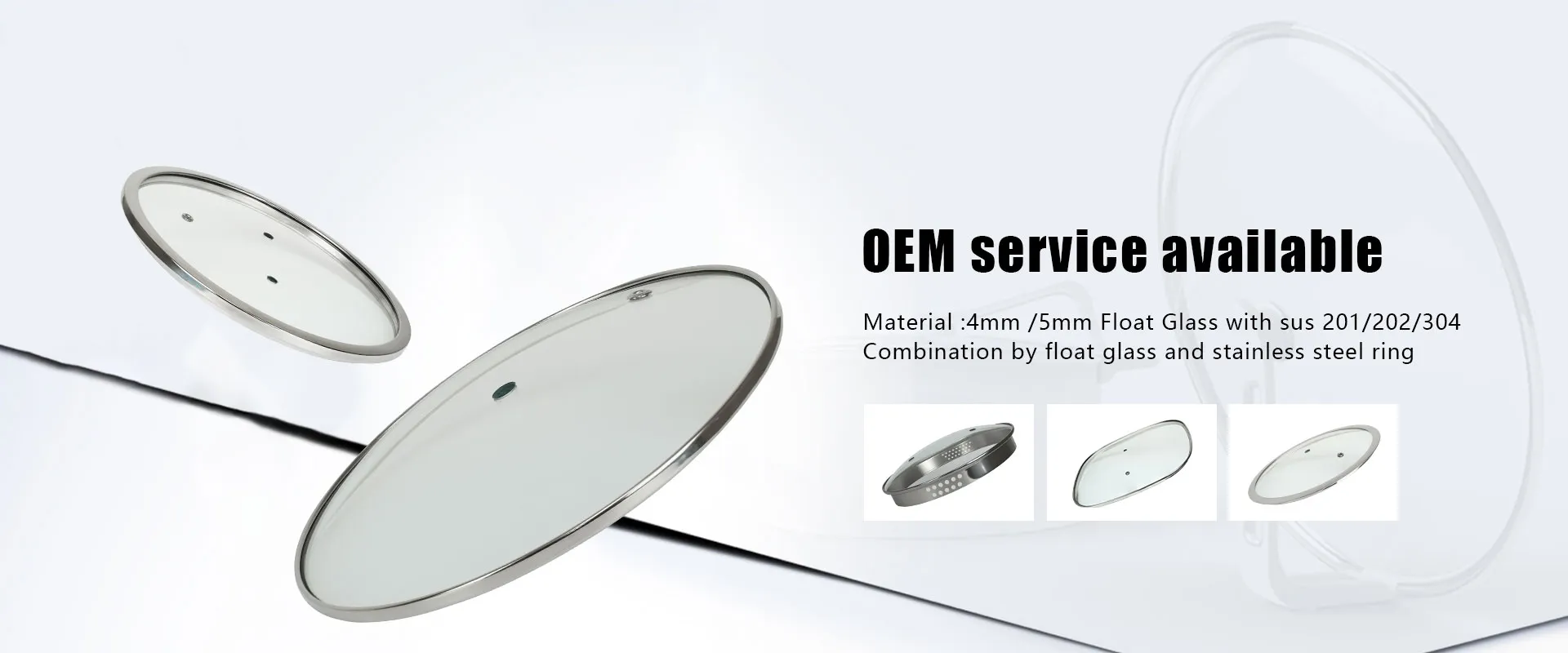
Clear glass is a naive spec. You have standard soda-lime, which can have a slight greenish tint on the edge (from iron oxide impurities). For high-end lines, you specify low-iron glass, often called crystal clear or ultra-clear. It's more expensive, but it makes the food look better—a real selling point for brands. The clarity also affects laser etching for logos and measurement markings. Etching on low-iron glass is sharper, more legible.
Then there's the thickness. 3mm, 4mm, 5mm? It's not just about durability. A thicker lid is heavier, which can be good for a seal, but it also changes the balance of a pan with a lightweight handle. For a large stockpot lid, you might need 5mm for rigidity across the span. For a small saucepan, 3mm is sufficient. The wrong thickness feels cheap or clumsy. I advise clients to choose based on the pot's diameter and intended use (slow braising vs. rapid boiling), not just a blanket rule.
Borosilicate glass is the other option, famed for its thermal shock resistance. But it's more expensive and often has a different refractive index—it doesn't look as sparkly as soda-lime to some eyes. For most household cookware applications, properly tempered soda-lime is perfectly adequate. The push for borosilicate is sometimes marketing overkill, unless you're dealing with professional kitchen gear or specific high-heat scenarios.
Logistics and the Fragile Reality
Producing 15 million lids a year, with over 90% for export, means packaging is a core competency. It's not just about avoiding breakage in transit. It's about stackability, carton dimensions to maximize container load, and moisture resistance. Those lids are moving to climates from humid Brazil to cold Denmark. The cardboard must not warp. The plastic sleeve or foam interlayers must not degrade or transfer odor to the glass.
A common failure is container shock. Even if individually packaged well, if the pallet isn't unitized properly, the entire load can shift during ocean freight. You open a container in Hamburg to find a pyramid of broken glass. Factories that export consistently, like the one behind glass-lid.com, have this down to a science. They use reinforced corner posts and stretch wrap in specific patterns. It's a mundane detail, but it's the difference between profit and a total loss on a shipment.
Another point: labeling. Each carton needs clear, waterproof labeling with item code, quantity, and PO number. It sounds basic, but when a warehouse in Poland is receiving 20 different SKUs of lids, a smudged label causes chaos. The professional factories use printed labels, not handwritten ones.
The Market Niche and Future Pressure
Companies like EUR-ASIA COOKWARE CO.,LTD occupy a crucial niche. They're not selling finished cookware sets under their own brand. They're the component specialists. Their success hinges on consistent quality, reliable volume, and the ability to adapt to each brand's design language—a slightly domed lid for one, a completely flat one for another, a specific knob shape.
The pressure now is on sustainability. European buyers are increasingly asking about recycled glass content and the environmental footprint of the tempering process. Can the factory use cullet (recycled glass) in their mix? What's their energy source? This isn't a mainstream demand yet, but it's on the horizon. The other trend is towards colored glass or tinted glass for specific aesthetic lines, which introduces another layer of complexity in maintaining thermal and physical properties.
Looking at their export map—Germany, Italy, Japan, South Korea—you see they're serving markets with high standards. That's telling. It means their processes are audited, their material certifications are in order. For someone sourcing these components, that history is as important as the price sheet. The glass lid cover is a humble part, but its journey from a sheet of raw material to a reliably clicking shut on a family's dinner pot encapsulates the entire challenge of modern manufacturing: invisible precision at scale.
Related Products
Related Products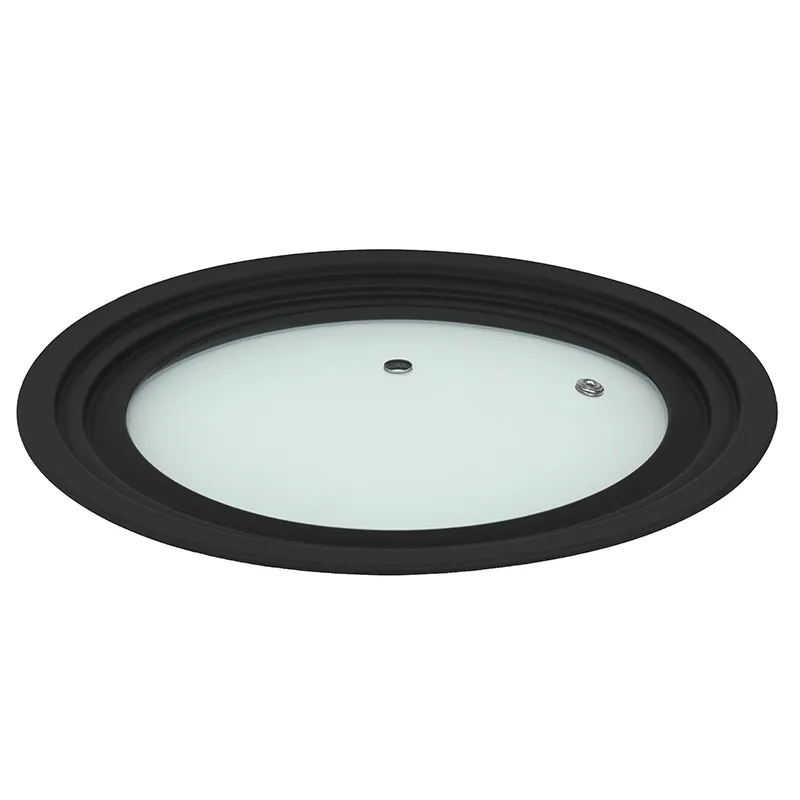
Best Selling Products
Best Selling Products
Related Search
Related Search- hexclad hybrid cookware set w lids
- glass can with lid and straw
- tempered glass cover export
- beer can glass with bamboo lid and straw
- G type tempered glass cover
- 10 inch tempered glass lid
- tempered glass lid export
- China glass cover manufacturer
- 1 2 gallon glass jar with airtight lid
- tempered glass lid with stainless steel ring


