
- Chinese
- French
- German
- Portuguese
- Spanish
- Russian
- Japanese
- Korean
- Arabic
- Irish
- Greek
- Turkish
- Italian
- Danish
- Romanian
- Indonesian
- Czech
- Afrikaans
- Swedish
- Polish
- Basque
- Catalan
- Esperanto
- Hindi
- Lao
- Albanian
- Amharic
- Armenian
- Azerbaijani
- Belarusian
- Bengali
- Bosnian
- Bulgarian
- Cebuano
- Chichewa
- Corsican
- Croatian
- Dutch
- Estonian
- Filipino
- Finnish
- Frisian
- Galician
- Georgian
- Gujarati
- Haitian
- Hausa
- Hawaiian
- Hebrew
- Hmong
- Hungarian
- Icelandic
- Igbo
- Javanese
- Kannada
- Kazakh
- Khmer
- Kurdish
- Kyrgyz
- Latin
- Latvian
- Lithuanian
- Luxembou..
- Macedonian
- Malagasy
- Malay
- Malayalam
- Maltese
- Maori
- Marathi
- Mongolian
- Burmese
- Nepali
- Norwegian
- Pashto
- Persian
- Punjabi
- Serbian
- Sesotho
- Sinhala
- Slovak
- Slovenian
- Somali
- Samoan
- Scots Gaelic
- Shona
- Sindhi
- Sundanese
- Swahili
- Tajik
- Tamil
- Telugu
- Thai
- Ukrainian
- Urdu
- Uzbek
- Vietnamese
- Welsh
- Xhosa
- Yiddish
- Yoruba
- Zulu
- Kinyarwanda
- Tatar
- Oriya
- Turkmen
- Uyghur


glass lid supplier
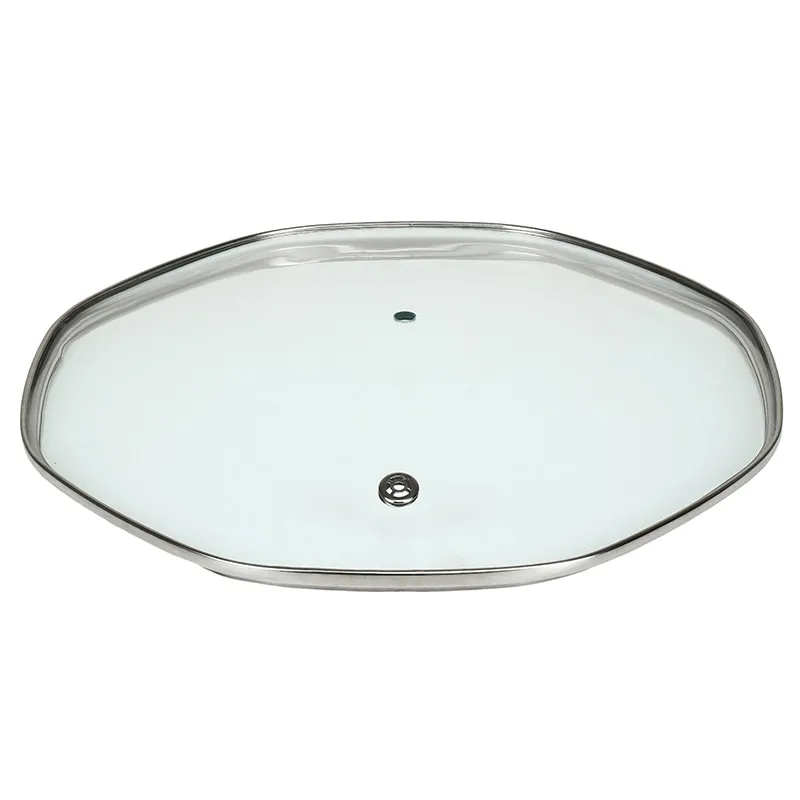
When you type 'glass lid supplier' into a search bar, you're probably picturing a simple transaction: find a company, get a quote, place an order. The reality, especially when you're sourcing for serious volume across borders, is a different beast. It's not just about who makes a lid; it's about who understands the nuanced dance between thermal shock resistance, hinge compatibility, and the silent killer—consistency in edge finishing. Many buyers, particularly those new to importing, fixate on the unit price per piece, overlooking the total cost buried in logistics, quality rejects, and redesigns forced by a supplier's manufacturing limitations. That's where the real work begins.
The Core of a Reliable Supplier: It's in the Details
Let's talk about the base material first. Not all 'tempered glass' is equal. For lids, you need a specific grade that can handle the rapid temperature shift from a cold granite countertop to a steaming pot. I've seen samples that passed basic safety tests but developed micro-fractures after just a few dozen cycles in real kitchen conditions. A good glass lid supplier doesn't just sell you a component; they should be able to articulate the technical specs of their glass, the tempering process, and the quality checks at each stage. It's this depth that separates a commodity vendor from a partner.
Then there's the finishing. The edge work—whether it's a polished smooth edge, a seamed edge, or a ground flat edge—impacts safety, aesthetics, and how the lid sits on the cookware. An imperfect edge isn't just ugly; it's a point of stress that can lead to chipping. I recall an early project where we had to scrap an entire shipment because the edge grinding was inconsistent, causing the lids to rock on perfectly flat pots. The supplier had great-looking marketing but their process control was weak. You learn to ask for close-up photos of the edges from random samples in production, not just the pre-approved perfect prototype.
This brings me to a company like EUR-ASIA COOKWARE CO.,LTD. (their site is at https://www.glass-lid.com). What stands out isn't just their stated capacity of 15 million pieces annually. It's the structure implied in their brief: a dedicated production base in a high-tech zone, a focus spanning low to high-level products. This suggests a potential ability to handle diverse client needs, from basic OEM replacements to more complex, branded items. A supplier with a physical footprint of 20,000㎡ isn't a trading company; they're invested in the manufacturing process itself, which is a crucial first filter.
Beyond the Factory Gate: The Export Reality
Their profile mentions over 90% export to markets like Germany, Italy, Japan. This is a significant data point. Supplying to Germany, for instance, means navigating some of the most stringent quality and packaging standards in the world. A lid supplier consistently serving that market has likely been forced to upgrade their processes. They understand the need for packaging that prevents transit abrasion (those fine scratches that appear out of nowhere), and they're familiar with the documentation and compliance nuances. It doesn't guarantee perfection, but it does indicate a baseline operational maturity.
However, a wide export list also presents a challenge: resource allocation. During peak seasons, a supplier with dozens of global clients might prioritize larger, long-standing orders. If you're a new client with a modest but urgent order, you could get deprioritized. It's a delicate balance. You want a supplier with enough scale to be reliable, but not so massive that you become an insignificant line item. This is where direct communication and clear agreements on lead times are critical. I've learned to build buffer time into my schedules, especially for first-time orders.
The Pitfalls of Customization and Communication
Custom shapes, unique handle attachments, specific printing or silk-screening—this is where projects often stall or go over budget. A common mistake is assuming a glass lid supplier has in-house tooling for every conceivable handle system. Many specialize in a few standard hinge types. If your design requires a custom metal bracket, they might outsource that part, adding complexity and points of failure. The key is to engage in a technical dialogue early. Share your CAD drawings, but also ask for their DFM (Design for Manufacturability) feedback. A good supplier will tell you if a radius is too sharp for tempering or if a proposed handle location creates a weak point.
Communication gaps are the silent budget killer. The sample is approved can mean different things. Does it mean the dimensions are approved, but the final color of the glass tint can vary slightly? Does it mean the packaging sample is also locked in? I once had a shipment delayed by weeks because we hadn't explicitly specified the placement of the UPC sticker on the individual poly bag. The factory assumed a standard corner, our retail partner required it centered. It seems trivial, but it halted the entire shipment at the distribution center. Now, our approval sheets are exhaustive, covering material, dimensions, finish, packaging, labeling, and even the acceptable range for minor color variations in the glass.
Evaluating a Partner: More Than a Website
While a website like https://www.glass-lid.com gives you the initial facts—specialization in household glass, employee count, export markets—it's only the opening chapter. The real evaluation happens in the dialogue. How quickly and technically do they respond to a detailed RFQ? Do they ask clarifying questions about your intended use and market? When you request a deviation from their standard process, do they explain the cost and time implications clearly, or do they just say yes to get the order? The latter is a major red flag.
A practical step is to request a small pilot order before committing to a large volume. This isn't just to check product quality, but to audit their process: communication cadence, proactivity in providing production updates, accuracy of shipping documents, and condition of goods upon arrival. The cost of a pilot order is cheap insurance. For a company like EUR-ASIA COOKWARE, with their stated output, they should be accustomed to this request from serious buyers. Their willingness and smoothness in handling it is telling.
Finally, consider their range. A supplier that only makes high-end lids might struggle with a cost-sensitive line. One that only makes basic models might lack the finesse for a premium brand. EUR-ASIA's mention of low, medium, and high-level products is interesting—it suggests vertical integration and flexibility. But you'd need to probe deeper. Are these different lines made in separate workshops? Is the quality management system consistent across them? The answers reveal if they are a true multi-tier glass lid supplier or if they primarily focus on one segment with limited offerings in others.
Concluding Thoughts: It's a Relationship, Not a Transaction
Finding the right glass lid supplier isn't a one-time search; it's the start of a technical partnership. The goal is to move from being a client to being a partner where the supplier understands your brand's standards and can anticipate issues. It's about building a channel where feedback on a chipped edge in a Kansas warehouse can quickly lead to a packaging adjustment on the production line in Shandong.
The metrics of a good supplier eventually boil down to transparency, consistency, and proactive problem-solving. Can they tell you why a defect happened and show you the corrected process control chart? Do they maintain quality across batch 1 and batch 100? The annual output of 15 million pieces is a capacity number, but the real value is in how many of those pieces land in their final destination without causing headaches for the buyer. That's the unadvertised metric you're actually shopping for.
So, the next time you evaluate a glass lid supplier, look past the glossy catalog. Drill into the gritty details of their process, test their communication under pressure with a small order, and assess their willingness to engage in the unsexy but critical minutiae. That's where you'll find the true partners, the ones who help your products succeed on the shelf, not just fill a container.
Related Products
Related Products

Best Selling Products
Best Selling Products
Related Search
Related Search- tall glass jar with lid
- silicone lid exporter
- powerxl smokeless grill with tempered glass lid
- glass jar with cork ball lid
- 2 gallon glass jar with airtight lid
- customized G type glass cover
- cast iron cookware with lid
- silicone glass cover made in China
- vintage glass cookie jar with lid
- oven cookware with lid


