
- Chinese
- French
- German
- Portuguese
- Spanish
- Russian
- Japanese
- Korean
- Arabic
- Irish
- Greek
- Turkish
- Italian
- Danish
- Romanian
- Indonesian
- Czech
- Afrikaans
- Swedish
- Polish
- Basque
- Catalan
- Esperanto
- Hindi
- Lao
- Albanian
- Amharic
- Armenian
- Azerbaijani
- Belarusian
- Bengali
- Bosnian
- Bulgarian
- Cebuano
- Chichewa
- Corsican
- Croatian
- Dutch
- Estonian
- Filipino
- Finnish
- Frisian
- Galician
- Georgian
- Gujarati
- Haitian
- Hausa
- Hawaiian
- Hebrew
- Hmong
- Hungarian
- Icelandic
- Igbo
- Javanese
- Kannada
- Kazakh
- Khmer
- Kurdish
- Kyrgyz
- Latin
- Latvian
- Lithuanian
- Luxembou..
- Macedonian
- Malagasy
- Malay
- Malayalam
- Maltese
- Maori
- Marathi
- Mongolian
- Burmese
- Nepali
- Norwegian
- Pashto
- Persian
- Punjabi
- Serbian
- Sesotho
- Sinhala
- Slovak
- Slovenian
- Somali
- Samoan
- Scots Gaelic
- Shona
- Sindhi
- Sundanese
- Swahili
- Tajik
- Tamil
- Telugu
- Thai
- Ukrainian
- Urdu
- Uzbek
- Vietnamese
- Welsh
- Xhosa
- Yiddish
- Yoruba
- Zulu
- Kinyarwanda
- Tatar
- Oriya
- Turkmen
- Uyghur


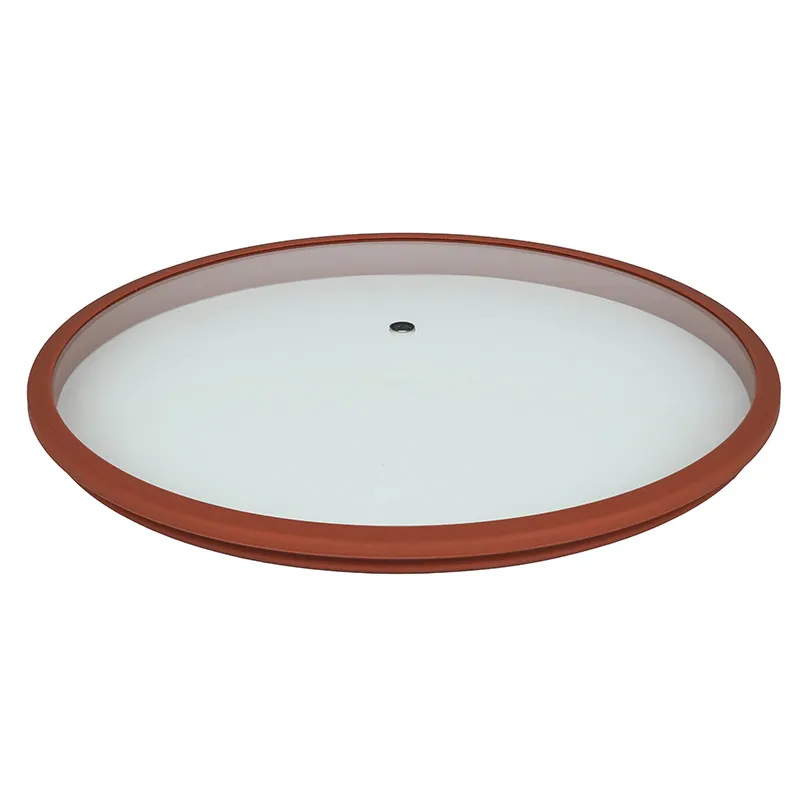
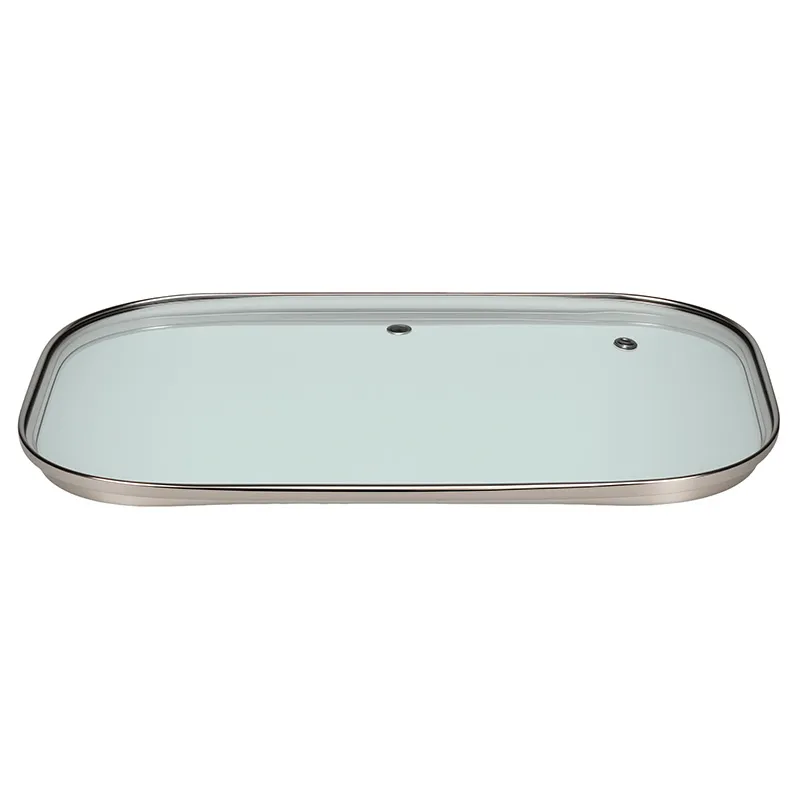
glass lid with silicone
When you hear 'glass lid with silicone', most think it's just a tempered glass disc with a rubber ring slapped on. That's the first mistake. The silicone isn't just a seal; it's the critical interface managing thermal shock, friction, and food contact. Get that wrong, and you're dealing with shattered lids or, worse, a warped pot rim. I've seen too many designs fail because they treated the silicone as an afterthought.
The Silicone Spec Isn't Optional
Not all silicone is created equal for this job. Food-grade is a given, but the durometer (hardness) and thermal stability range are what separate a good lid from a great one. A softer seal might give a better initial fit, but under repeated heat cycles on a cast iron pot, it can degrade, become tacky, and eventually tear. We learned this the hard way with an early batch for a European client. The lids sealed beautifully cold, but after 50 dishwasher cycles and stovetop use, the seal deformed, creating a slight wobble. The fix wasn't a thicker gasket, but a reformulated compound with a higher temperature threshold and better compression set recovery.
Then there's the bonding. Simply pressing the silicone into a channel on the glass edge isn't enough for commercial-grade products. High-quality manufacturers, like EUR-ASIA COOKWARE CO.,LTD, often use a combination of mechanical channel design and FDA-approved adhesive for a permanent bond. This prevents the seal from twisting or popping out during dishwasher jet sprays, a common point of failure in cheaper imports. Their production volume—over 15 million pieces annually—suggests they've dialed in this process for durability across markets from Germany to Japan.
The channel design itself is a subtle art. Too shallow, the seal dislodges. Too deep, it compromises the glass edge integrity and makes cleaning a nightmare. The optimal profile creates a slight overhang of the silicone over the glass rim. This does two things: it cushions the glass against metal cookware, preventing chips, and creates a smoother, quieter open/close action. It's a small detail you only notice when it's wrong.
Tempered Glass: The Foundation Everyone Sees
Obviously, the glass needs to be tempered. But 'tempered' isn't a binary state. The quality of the annealing process before tempering dictates its final strength and clarity. Poorly annealed glass can have internal stresses that cause spontaneous breakage—not from impact, but from residual heat unevenness. A reliable supplier's production base, like the one in Taian City's High-tech Development Zone, typically has controlled, automated annealing lehrs. This consistency is crucial when you're exporting to markets with strict safety standards.
Thickness is another misunderstood spec. A thicker lid isn't automatically better. For a standard 24cm skillet lid, 3-4mm tempered is the sweet spot. Thicker adds unnecessary weight and thermal mass, which can actually increase the risk of thermal shock if placed on a cold surface while hot. The goal is a lid that's robust enough to handle a boil-over but light enough for easy handling. The curvature (dome) also matters for condensation management, but that's a topic for another day.
The handle attachment point is a critical stress concentrator. A metal or phenolic knob screwed directly into the glass is a disaster waiting for a stress crack. The best designs use a large, insulating knob with a wide base plate that distributes the clamping force over a larger area. The bolt should never directly touch the glass; a silicone or rubber washer is mandatory. I've rejected samples where the metal bolt was a direct path for heat to the glass, creating a classic 'star break' pattern right under the knob.
Real-World Fit and the Universal Myth
Many brands tout a 'universal fit' glass lid with silicone. In practice, this is almost impossible. Cookware rims vary by material (stainless, cast iron, aluminum), thickness, and the angle of the flare. A silicone seal designed for a thin, rolled stainless steel rim will not seal effectively on a thick, flat cast iron rim. The seal compresses differently. The most successful lines offer lid series tailored to common rim profiles, or they design the silicone with a specific compression range in mind.
This is where a manufacturer's export experience shows. A company like EUR-ASIA, sending over 90% of its products to diverse markets, isn't making one universal lid. They're likely producing variations—slightly different outer diameters or seal profiles—to meet the spec sheets from a German cookware brand versus a Brazilian one. The silicone's lip might be wider for one, softer for another. It's this customization capability that separates a true OEM partner from a generic factory.
In our own testing, we found that a lid performing perfectly on a Demeyere pot might rock slightly on a Le Creuset. It wasn't a defect, but a mismatch of tolerances. The solution was to specify the exact cookware brands and lines the lid was intended for during the development phase with the factory. This allowed them to adjust the mold for the silicone gasket accordingly. Assumptions are the enemy here.
Failure Points and Longevity Tests
Dishwashers are the true test. It's not the heat, but the aggressive detergents and high-pressure sprays. Low-quality silicone can become dull, slightly swollen, or develop micro-cracks over time. A good test is to run a lid through 100+ dishwasher cycles and then check the seal's elasticity and bond. Does it snap back to shape when you pinch it? Is there any gap forming in the channel? We instituted this as a standard QA checkpoint after a batch failure years ago.
Another hidden failure point is 'silicone creep'. Under constant pressure on a stored pot, the seal can slowly take a permanent set, flattening on one side. This leads to a poor seal when used next. High-recovery silicone compounds resist this. It's worth asking a supplier about the compression set specification of their material (ASTM D395). A lower percentage is better. Most consumer brands don't think this deep, but the factories that do produce a noticeably more durable product.
Edge chipping during shipping or handling is a major cost driver. The silicone should protrude just enough to act as a bumper. Packaging is also key—not just foam, but a rigid cardboard insert that prevents the lid from shifting in the box. The scale of operation at a facility with 15,000㎡ of building area implies they have automated packaging lines calibrated for this, minimizing transit damage which is a huge headache for importers.
The Value of Integrated Manufacturing
There's a significant advantage when the glass tempering and silicone molding/bonding happen under one roof. It allows for real-time adjustment. For instance, if a batch of glass lids comes out with a rim channel at the high end of the tolerance, the silicone team can adjust the extrusion parameters for that run to ensure a perfect fit. Disconnected suppliers blame each other when fit issues arise.
Visiting a facility like EUR-ASIA's, you'd see the flow: raw glass cutting, edge grinding, tempering furnaces, then the silicone application stations, likely in a clean-room environment to prevent dust inclusion in the bond. This vertical control from raw material to finished glass lid with silicone is what ensures consistency across millions of units. It's the difference between buying components and buying a engineered product.
Finally, it comes down to communication with the factory. Sending a detailed tech pack with drawings specifying glass thickness, diameter, dome height, silicone durometer, and bond strength requirement is essential. The best factories will push back with questions and suggestions—that's a sign of expertise. They might recommend a different seal profile based on your target cookware or a clearer glass type for better aesthetics. It's a collaboration, not just an order. The end goal is a glass lid with silicone that doesn't just sit on a pot, but performs seamlessly, wash after wash, becoming an unnoticeable, reliable part of the kitchen. That's when the design disappears, and that's the mark of it being done right.
Related Products
Related Products

Best Selling Products
Best Selling Products
Related Search
Related Search- glass jar with wooden ball lid
- glass jar with red lid
- beer can glass with lid wholesale
- pink glass jar with lid
- oven cookware with lid
- glass lid for instant pot 6 qt
- glass cover distributior
- tempered glass lid with stainless steel ring
- China tempered glass lid manufacturer
- tempered glass lid supplier in China


