
- Chinese
- French
- German
- Portuguese
- Spanish
- Russian
- Japanese
- Korean
- Arabic
- Irish
- Greek
- Turkish
- Italian
- Danish
- Romanian
- Indonesian
- Czech
- Afrikaans
- Swedish
- Polish
- Basque
- Catalan
- Esperanto
- Hindi
- Lao
- Albanian
- Amharic
- Armenian
- Azerbaijani
- Belarusian
- Bengali
- Bosnian
- Bulgarian
- Cebuano
- Chichewa
- Corsican
- Croatian
- Dutch
- Estonian
- Filipino
- Finnish
- Frisian
- Galician
- Georgian
- Gujarati
- Haitian
- Hausa
- Hawaiian
- Hebrew
- Hmong
- Hungarian
- Icelandic
- Igbo
- Javanese
- Kannada
- Kazakh
- Khmer
- Kurdish
- Kyrgyz
- Latin
- Latvian
- Lithuanian
- Luxembou..
- Macedonian
- Malagasy
- Malay
- Malayalam
- Maltese
- Maori
- Marathi
- Mongolian
- Burmese
- Nepali
- Norwegian
- Pashto
- Persian
- Punjabi
- Serbian
- Sesotho
- Sinhala
- Slovak
- Slovenian
- Somali
- Samoan
- Scots Gaelic
- Shona
- Sindhi
- Sundanese
- Swahili
- Tajik
- Tamil
- Telugu
- Thai
- Ukrainian
- Urdu
- Uzbek
- Vietnamese
- Welsh
- Xhosa
- Yiddish
- Yoruba
- Zulu
- Kinyarwanda
- Tatar
- Oriya
- Turkmen
- Uyghur

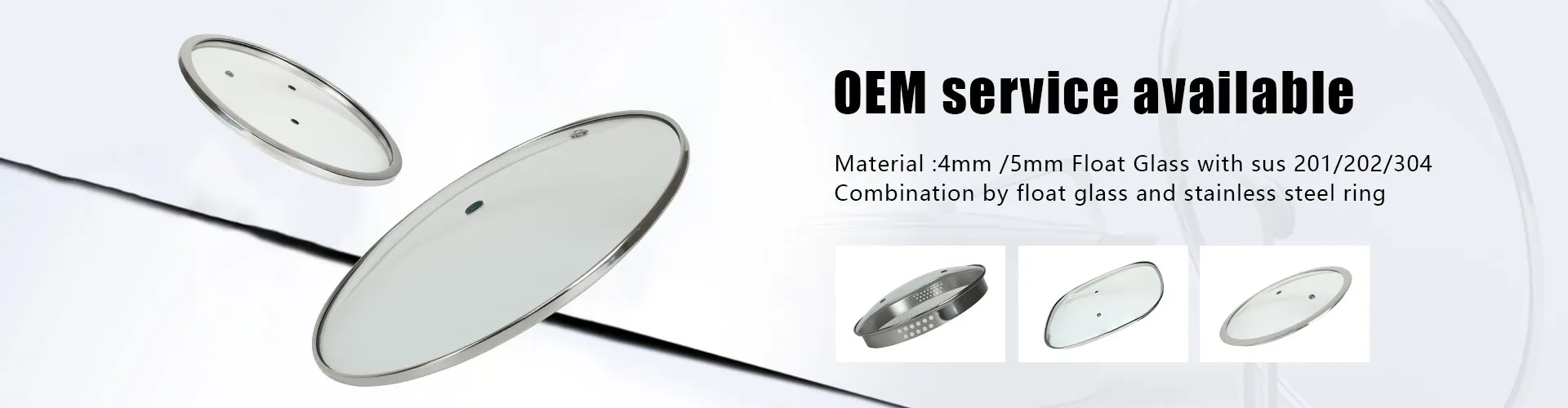
glass milk carton with lid
When you hear 'glass milk carton with lid', most think of a simple, nostalgic container. The reality in production is far messier. It's not just about pouring milk into a glass bottle and capping it. The real challenge lies in the marriage of the glass milk carton body to a secure, functional, and often overlooked component: the lid. Many assume any lid will do, but that's where failures begin—leaks, breakage, and user frustration. Having seen countless prototypes and field returns, I can say the lid is the make-or-break point.
The Lid is the Real Product
Let's talk about the lid first. It seems trivial, but its engineering dictates the entire product's viability. We're not just talking about a piece of plastic or glass sitting on top. For a milk carton, you need a seal that withstands thermal stress from washing, maintains freshness, and is easy for all ages to open and close securely. The snap-fit mechanism is a nightmare to get right. Too tight, and the glass neck chips under stress; too loose, and it leaks. I recall a batch for a European client where we used a slightly different polymer blend for the plastic lid. Lab tests were fine, but in real-world fridge temperatures, the material contracted just enough to break the seal. The entire shipment had slow, creeping leaks. That was a costly lesson in material science.
This is where specialized manufacturers make a difference. A company like EUR-ASIA COOKWARE CO.,LTD (their site is at https://www.glass-lid.com) has the focus we often lack. While they are known for tempered glass lids for cookware, their precision in molding and tempering glass for specific applications is relevant. Their production of over 15 million pieces annually, mostly for export to strict markets like Germany and Japan, speaks to a deep understanding of tolerances and material behavior. For a glass milk carton with lid system, that expertise in creating a perfectly tempered glass lid—not just a plastic one—could be a game-changer for premium markets seeking a fully glass, oven-safe solution.
So, the choice isn't just 'glass bottle + lid'. It's a system. Are you using a plastic screw cap, a hinged glass lid, a cork stopper, or a tempered glass snap-lid? Each path branches into different production lines, mold costs, and user experiences. The all-glass route, using a separately tempered lid, is elegant but introduces the risk of glass-on-glass contact during closure. You need a perfect chamfer and consistent tempering to prevent micro-fractures. It's a high-wire act.
The Carton Body: More Than Shape
Now, the carton itself. 'Carton' implies paper, but here we mean the glass vessel. The form seems straightforward—a square or rectangular body for stability. But the corners are stress concentrators. Tempering is non-negotiable, but even then, the design must facilitate even cooling. We once tried a very sleek, sharp-cornered design. It looked fantastic on the render. The first production run saw a 30% breakage rate during the cooling phase post-tempering. The corners cooled faster than the flat panels, creating internal stress points. We had to go back, radius the corners slightly, and recalibrate the quenching process. The aesthetic took a hit, but the product survived the dishwasher.
Another often-ignored detail is the pouring lip. For milk, you want a clean pour without dripping. This seems simple, but the molding of that lip, combined with the attachment point for the lid's sealing gasket, is a precision task. If the lip's finish is even slightly rough or uneven, it compromises the seal. I've spent hours with magnifiers inspecting lip seams from different mold cavities. Variability is the enemy.
Capacity is another trap. Scaling up a 250ml design to a 1-liter version isn't linear. The weight distribution changes, the center of gravity shifts, and the lid's leverage on the neck changes. A 1-liter glass milk carton with lid that feels sturdy empty can become top-heavy and tippy when full. This requires thickening the base or changing its footprint, which then affects the thermal profile during tempering. It's a domino effect.
Assembly and the Human Factor
This is where theory meets the factory floor. How do you assemble the lid to the carton? Is it manual, semi-automatic, or fully automatic? For a snap-on lid, the force required for a perfect seal is critical. An automatic capping machine must apply consistent pressure. Too much force, and you risk cracking the glass neck; too little, and the seal is ineffective. We implemented a force-sensor system on the line after a batch where the machine's pneumatic pressure drifted over a shift, resulting in inconsistent seal quality. The feedback loop from assembly back to design is vital. Perhaps the neck needs a wider landing zone for the lid to seat more forgivingly.
Then there's packaging. A glass milk carton with lid must survive shipping. The lid must not pop off during transit vibrations. Our standard test involves dropping a packed unit from a specific height onto its corner. The initial failure was often the lid dislodging, which then allowed the bottle to shift and crack. The solution wasn't stronger glass, but a packaging insert that applied slight upward pressure on the lid, keeping it seated. Sometimes the fix is outside the product itself.
Consider also the end-user. An elderly person or a child must be able to open it. The opening force is a key metric. We use a torque gauge to measure it. There's a sweet spot between 'secure enough not to leak' and 'easy enough to open'. Finding it requires iterative testing with real user groups, not just lab equipment.
Material Sourcing and Hidden Costs
Where does your glass come from? Not all soda-lime glass is equal. The composition affects clarity, strength, and how it behaves in the tempering furnace. For a product that will hold milk, you also need to consider the compatibility of the glass surface with the fat content—will it clean easily without residue? We sourced from a new supplier once, and the glass had a slightly different thermal expansion coefficient. It tempered beautifully but reacted differently to sudden temperature changes (like going from fridge to warm water rinse), leading to a higher rate of thermal shock failure in the field.
The lid material, if not glass, is another minefield. Food-grade PP or silicone gaskets? Each requires different mold designs and has different aging properties. Silicone seals better long-term but costs more. PP can become brittle over repeated dishwasher cycles. This is a cost vs. longevity calculation that defines the product's market tier. A producer like EUR-ASIA COOKWARE CO.,LTD, with their focus on household glass products, likely has established, vetted supply chains for high-quality raw materials, which is half the battle won for consistency.
And don't forget decoration. Is the bottle screen-printed, labeled, or laser-etched? Each method interacts differently with the tempered surface and affects the feel of the final product. A painted logo on the lid can chip if it's on the contact surface. These are small details that become big complaints.
Case in Point: The Export Reality
Look at the markets EUR-ASIA COOKWARE CO.,LTD serves: Germany, Japan, Switzerland. These are markets with arguably the most stringent consumer quality expectations and safety standards. For a product to survive there, it cannot have hidden flaws. A glass milk carton with lid destined for Germany must pass not just basic durability tests, but also specific migration tests (if any plastic is involved) and rigorous lifecycle tests for dishwashers. The tolerance for 'good enough' is zero.
This brings me to a broader point: specialization matters. A company that produces 15 million tempered glass lids a year has seen every possible failure mode. They understand that a lid for a milk carton, while different from a cookware lid, operates on similar principles of thermal management, sealing, and user interface. Their expertise in producing for export means they are adept at navigating certification labyrinths (like LFGB in Germany), which is a massive hurdle for newcomers.
In practice, developing a reliable glass milk carton with lid is less about a flash of inspiration and more about grinding through these granular, often frustrating, technical and procedural details. It's about anticipating how a material will behave not just in your factory, but in a customer's kitchen in Denmark, two years later. The final product that seems simple on the shelf is, in fact, the sum of a hundred small, correct decisions and a few painful lessons learned from getting them wrong.
Related Products
Related Products
Best Selling Products
Best Selling Products
Related Search
Related Search- tempered glass lid manufacturer in China
- extra large glass jar with cork lid
- tempered glass cover distributior
- China glass lid company
- 13 inch glass lid for frying pan
- yera glass jar with steel lid
- staub cast iron cocotte with glass lid 4qt
- glass lid for instant pot 6 qt
- staub 4 qt cocotte glass lid
- silicone glass lid manufacturing


