- Chinese
- French
- German
- Portuguese
- Spanish
- Russian
- Japanese
- Korean
- Arabic
- Irish
- Greek
- Turkish
- Italian
- Danish
- Romanian
- Indonesian
- Czech
- Afrikaans
- Swedish
- Polish
- Basque
- Catalan
- Esperanto
- Hindi
- Lao
- Albanian
- Amharic
- Armenian
- Azerbaijani
- Belarusian
- Bengali
- Bosnian
- Bulgarian
- Cebuano
- Chichewa
- Corsican
- Croatian
- Dutch
- Estonian
- Filipino
- Finnish
- Frisian
- Galician
- Georgian
- Gujarati
- Haitian
- Hausa
- Hawaiian
- Hebrew
- Hmong
- Hungarian
- Icelandic
- Igbo
- Javanese
- Kannada
- Kazakh
- Khmer
- Kurdish
- Kyrgyz
- Latin
- Latvian
- Lithuanian
- Luxembou..
- Macedonian
- Malagasy
- Malay
- Malayalam
- Maltese
- Maori
- Marathi
- Mongolian
- Burmese
- Nepali
- Norwegian
- Pashto
- Persian
- Punjabi
- Serbian
- Sesotho
- Sinhala
- Slovak
- Slovenian
- Somali
- Samoan
- Scots Gaelic
- Shona
- Sindhi
- Sundanese
- Swahili
- Tajik
- Tamil
- Telugu
- Thai
- Ukrainian
- Urdu
- Uzbek
- Vietnamese
- Welsh
- Xhosa
- Yiddish
- Yoruba
- Zulu
- Kinyarwanda
- Tatar
- Oriya
- Turkmen
- Uyghur

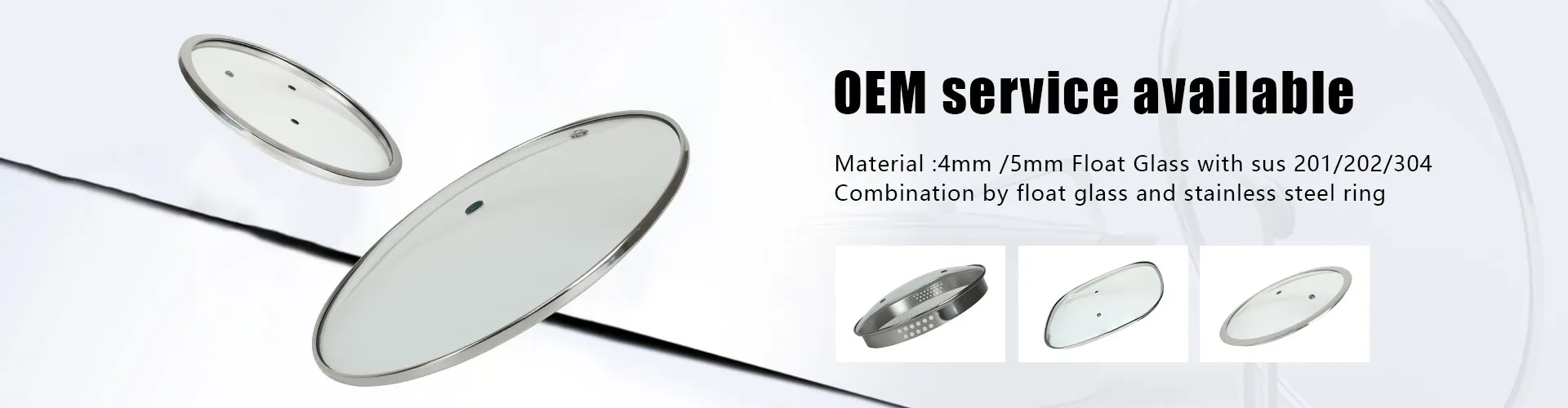
glass sheet
When most people hear 'glass sheet', they picture a simple, inert pane. In our line of work, that's the first misconception to dismantle. It's not an off-the-shelf commodity; it's the foundational substrate whose properties dictate everything from thermal shock resistance in a lid to the clarity of a high-end serving tray. The choice between a soda-lime, borosilicate, or aluminosilicate base isn't academic—it's a decision made on the factory floor, with real cost and performance trade-offs that can make or break a product line, especially when you're supplying to markets with stringent standards like Germany or Japan.
The Core: Material Selection and Its Hidden Complexities
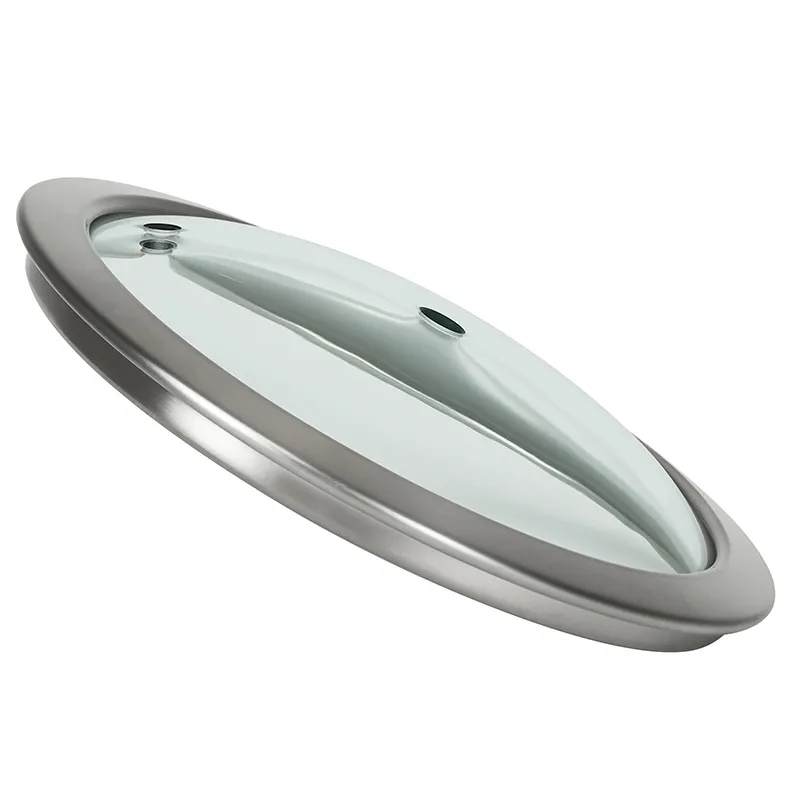
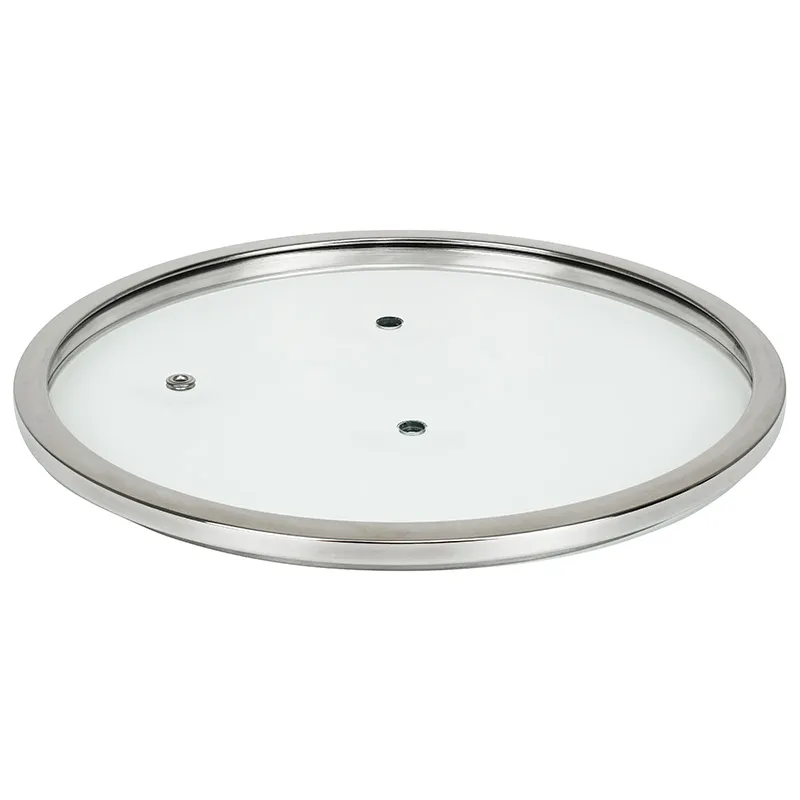
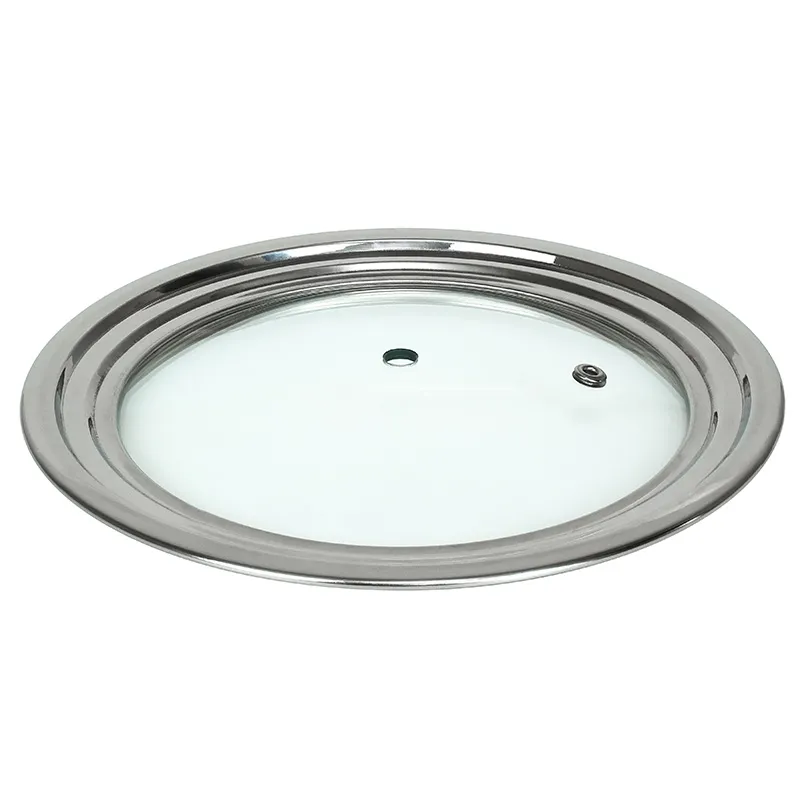
Let's start with the raw sheet itself. Soda-lime is the workhorse, affordable and decent for many applications. But for cookware lids, which is a significant portion of our output at EUR-ASIA COOKWARE, thermal durability is non-negotiable. That's where borosilicate comes in. The catch? Not all borosilicate is created equal. The coefficient of thermal expansion (CTE) is the magic number. A true low-CTE borosilicate glass sheet can handle a direct move from a freezer to a hot stovetop, while a lower-grade variant might micro-crack over time. We learned this the hard way early on with a batch destined for Poland. The lids passed initial tests but showed stress marks after simulated consumer use cycles. The failure was traced back to inconsistencies in the raw glass sheet composition from a supplier who claimed spec compliance. Now, we run our own preliminary thermal shock tests on sample sheets before they even enter the production line.
Then there's thickness tolerance. A spec of 3.2mm doesn't mean every sheet is exactly 3.2mm. A variance of even ±0.2mm can cause havoc in automated tempering furnaces, leading to uneven stress distribution and optical distortion. You develop an eye for it—holding a tempered lid up to fluorescent lights and looking for the subtle, wavy patterns of uneven quenching. It's a quality checkpoint no machine fully replaces.
Aluminosilicate is another beast—incredibly strong, used for high-end applications. But the cost and processing difficulty (it requires higher tempering temperatures) mean it's not for every project. We might use it for a premium line, but for the volume needed to hit an annual output of 15 million pieces, the logistics of sourcing and processing such specialized glass sheet become a major operational puzzle.
From Sheet to Product: The Tempering Crucible
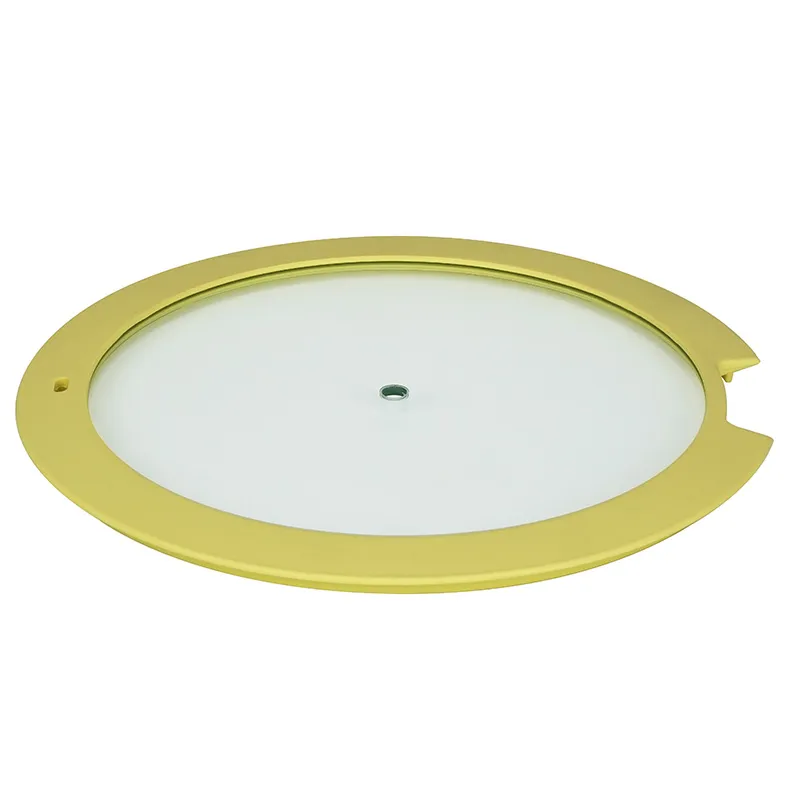
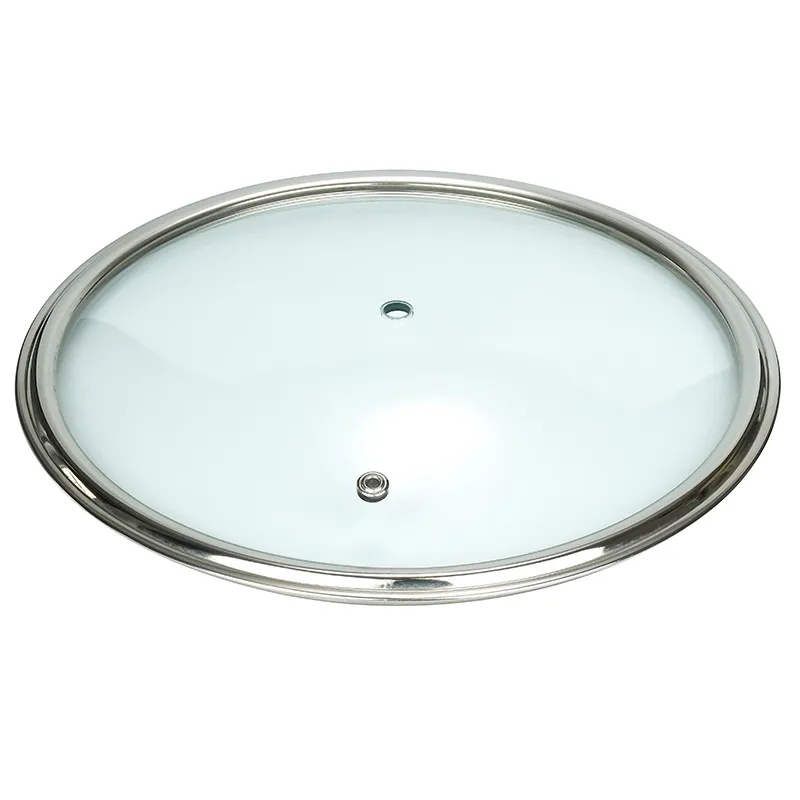
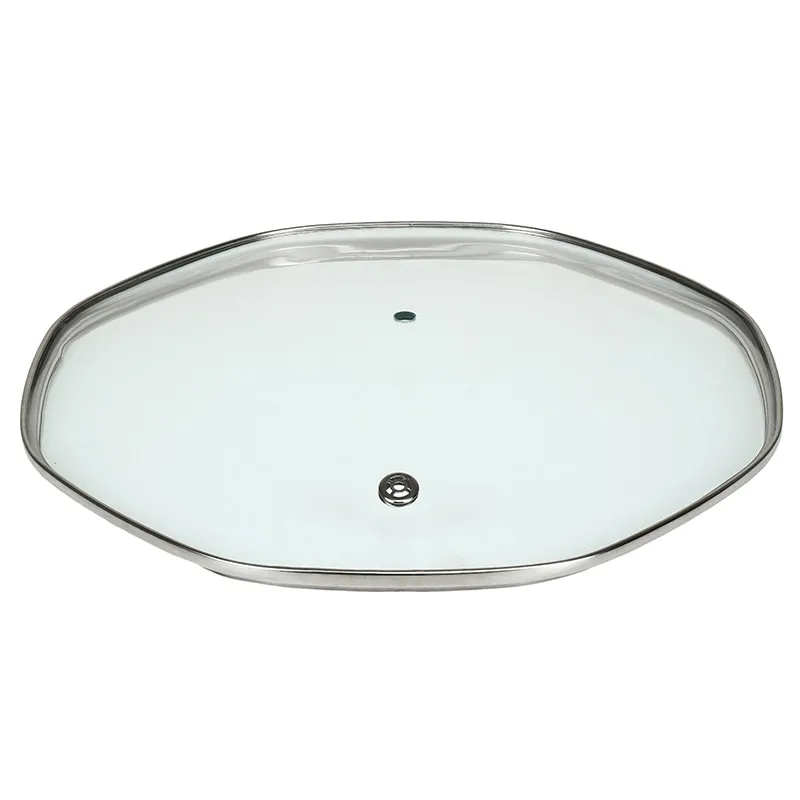
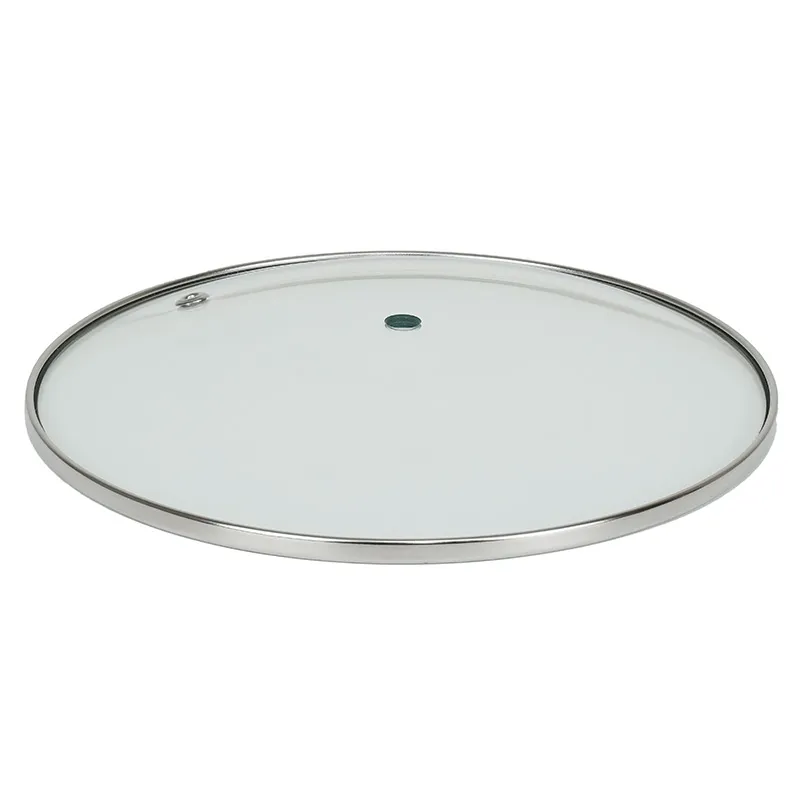
Tempering is where the glass sheet gains its character. It's not just about making it 'strong'. It's about engineering a specific stress profile. For a lid, the edge stress is critical—it's the point of contact and potential impact. Our furnaces in Taian are set up with different heating zones and quenching air pressures for different product geometries. A large, flat rectangular tray lid and a small, domed pot lid require completely different furnace recipes, even if they start from the same raw sheet material.
One persistent issue is roller wave distortion. During heating, the glass softens and rests on ceramic rollers. If the heat profile is off, the rollers can leave slight impressions, creating optical distortion. For a clear cookware lid, this is a major aesthetic defect. Solving it is a mix of art and science: adjusting roller speed, top/bottom heat balance, and sometimes even the composition of the roller sleeves themselves. It's a tuning process that never really ends, as furnace elements age and ambient humidity in the workshop changes.
The quenching process, the rapid cooling with high-pressure air jets, is another make-or-break stage. The air pressure must be perfectly even across the entire sheet surface. A blocked nozzle? You'll get an area of weaker tension, a potential future break point. We do monthly nozzle checks and pressure mapping, a tedious but essential preventative maintenance task. A breakage during quenching means lost material, energy, and time—the cost adds up quickly across millions of pieces.
Cutting and Edging: Where Precision Meets Practicality
Before tempering comes cutting. Diamond wheel cutting is standard, but the key is the edge quality post-cut. A rough, micro-chipped edge is a stress concentrator—a perfect starting point for a crack to propagate after tempering. We use a two-stage process: a primary cut followed by a light grinding or seaming operation to clean up the edge. It adds a step, but it drastically reduces our tempering failure rate.
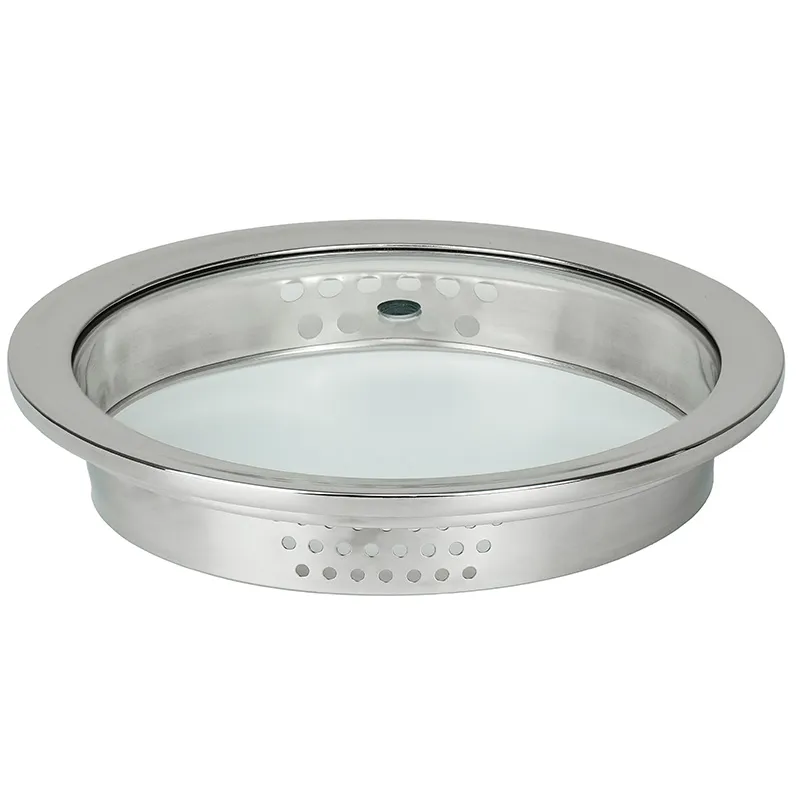
For products like glass lids, hole drilling for knobs or steam vents is another critical operation. Drilling must be done before tempering. The drill speed, coolant flow, and feed rate must be meticulously controlled to prevent chipping or generating subsurface cracks. We once had a issue with small hairline cracks radiating from steam vent holes, only visible under polarized light. The problem was tool wear; the drill bit had dulled slightly beyond its optimal change interval. Now, tool life is tracked religiously per batch of glass sheet.
Edge finishing after tempering is limited. Once tempered, you can't grind or cut the glass without it shattering. So any edge work—like a light polish for a smooth feel—has to be meticulously planned and executed in the pre-tempering phase. This logistical sequencing is a fundamental part of production planning.
Quality Control: Beyond the Standard Tests
Everyone talks about impact tests and thermal shock tests. And we do them—steel ball drops, cycling between boiling and ice water. But the real-world test is often more nuanced. For instance, how does a lid perform when dropped onto a tiled kitchen floor at an angle, not flat? We do simulated drop tests at various angles onto different surfaces. The failure mode tells us a lot about the edge stress quality.
Another subtle check is for nickel sulfide (NiS) inclusions. These are tiny impurities that can exist in the raw glass sheet. They undergo a phase change over time, expanding and potentially causing spontaneous breakage long after the product is in a consumer's home. While rare, it's a catastrophic failure mode. We mitigate this by sourcing from reputable float glass producers with good impurity control and, for critical batches, using heat soak testing. This involves holding tempered products in a special oven at around 290°C to force any NiS inclusions to expand and break the glass before it ships. It's an expensive, time-consuming process, so it's reserved for our most demanding contracts.
Optical clarity is subjective but crucial. A distorted lid is a customer complaint waiting to happen. We have light tables where inspectors look for any waviness, bubbles, or streaks. It's a human-eye check because automated systems sometimes miss the specific type of distortion that bothers people when they're looking through a lid at their food.
The Export Reality: Logistics and Market Specifics
With over 90% of our products exported, the glass sheet journey doesn't end at our factory gate. Packaging is a discipline in itself. A tempered glass lid is strong, but its kryptonite is a pinpoint impact during shipping. We use multi-layer packaging: a foam sleeve, a corrugated cardboard former, and a sturdy outer carton. The design has to prevent any direct contact between glass surfaces and allow for stacking without transmitting point loads.
Market preferences vary. Our clients in Germany and Switzerland often prefer a cleaner, more minimalist design with very precise tolerances. Southern European markets might prioritize certain aesthetic shapes or knob styles. This means we might be working with slightly different glass sheet thicknesses or cutting patterns for different regions, even if the base material is the same. It requires flexible production scheduling and meticulous inventory management to avoid cross-contamination of specs.
The scale of operation—15 million pieces a year from a 15,000㎡ facility—means efficiency is paramount. Raw glass sheet inventory is a balancing act. Too much, and you tie up capital and space. Too little, and you risk production stoppages. We work on just-in-time principles with trusted suppliers, but the long lead times for specialty glass mean we have to forecast months in advance, especially for the borosilicate used in our core lid products. It's a constant dance between sales forecasts, production capacity, and supply chain reliability.
Looking at the operations at EUR-ASIA COOKWARE, the specialization in household glass products hinges on mastering these nuances of the humble glass sheet. It's not glamorous work. It's about controlling countless variables—from the molecular composition of the raw material to the air pressure in a quenching jet—to turn a fragile flat sheet into a durable, reliable product that functions seamlessly in kitchens from Brazil to South Korea. The sheet is just the beginning; everything that follows is applied physics, mechanical engineering, and a lot of learned, sometimes painful, experience.
Related Products
Related Products