- Chinese
- French
- German
- Portuguese
- Spanish
- Russian
- Japanese
- Korean
- Arabic
- Irish
- Greek
- Turkish
- Italian
- Danish
- Romanian
- Indonesian
- Czech
- Afrikaans
- Swedish
- Polish
- Basque
- Catalan
- Esperanto
- Hindi
- Lao
- Albanian
- Amharic
- Armenian
- Azerbaijani
- Belarusian
- Bengali
- Bosnian
- Bulgarian
- Cebuano
- Chichewa
- Corsican
- Croatian
- Dutch
- Estonian
- Filipino
- Finnish
- Frisian
- Galician
- Georgian
- Gujarati
- Haitian
- Hausa
- Hawaiian
- Hebrew
- Hmong
- Hungarian
- Icelandic
- Igbo
- Javanese
- Kannada
- Kazakh
- Khmer
- Kurdish
- Kyrgyz
- Latin
- Latvian
- Lithuanian
- Luxembou..
- Macedonian
- Malagasy
- Malay
- Malayalam
- Maltese
- Maori
- Marathi
- Mongolian
- Burmese
- Nepali
- Norwegian
- Pashto
- Persian
- Punjabi
- Serbian
- Sesotho
- Sinhala
- Slovak
- Slovenian
- Somali
- Samoan
- Scots Gaelic
- Shona
- Sindhi
- Sundanese
- Swahili
- Tajik
- Tamil
- Telugu
- Thai
- Ukrainian
- Urdu
- Uzbek
- Vietnamese
- Welsh
- Xhosa
- Yiddish
- Yoruba
- Zulu
- Kinyarwanda
- Tatar
- Oriya
- Turkmen
- Uyghur

glass skull jar with lid
When you hear 'glass skull jar with lid,' most people picture a cheap Halloween prop or a trendy, mass-produced decor piece. That's the common misconception. In reality, the production and application of these specialized glass containers, especially when they need to be functional and durable, touch on a surprising depth of material science and precision manufacturing. It's not just about the spooky shape; it's about achieving a consistent wall thickness in a complex mold, ensuring the glass skull jar with lid seals properly, and surviving thermal shocks if someone decides to use it for, say, preserving something unconventional. The lid is often the weakest link—getting a flat, non-warping seal on an irregular, non-circular opening like a skull's base is a genuine challenge that separates hobbyist attempts from professional output.
The Manufacturing Reality: It's Not Just Casting
Let's talk process. Creating a quality glass skull jar isn't a simple pour-and-cool operation. For any volume, you're looking at blow-molding or press-molding in a precision machined metal mold. The skull's intricate details—the eye sockets, nasal cavity, teeth—require the mold to be impeccably designed to allow for even glass flow and release without sticking. Any imperfection gets magnified. I've seen batches where the zygomatic arch (the cheekbone area) was consistently thinner, creating a structural weak point. That's a mold design flaw, not a production error. It speaks to the need for upfront engineering that many clients sourcing these don't initially budget for.
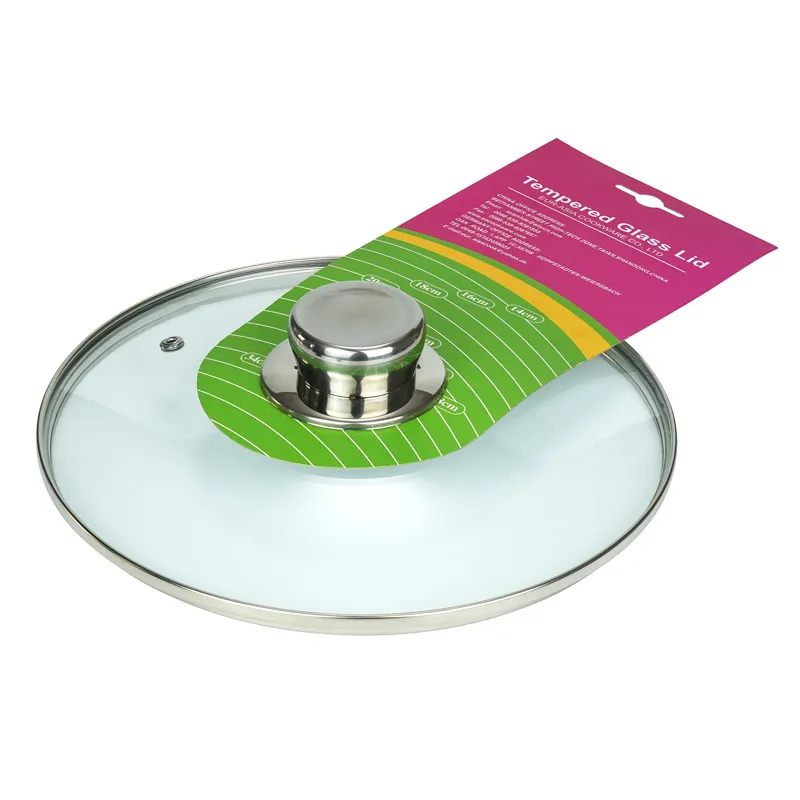
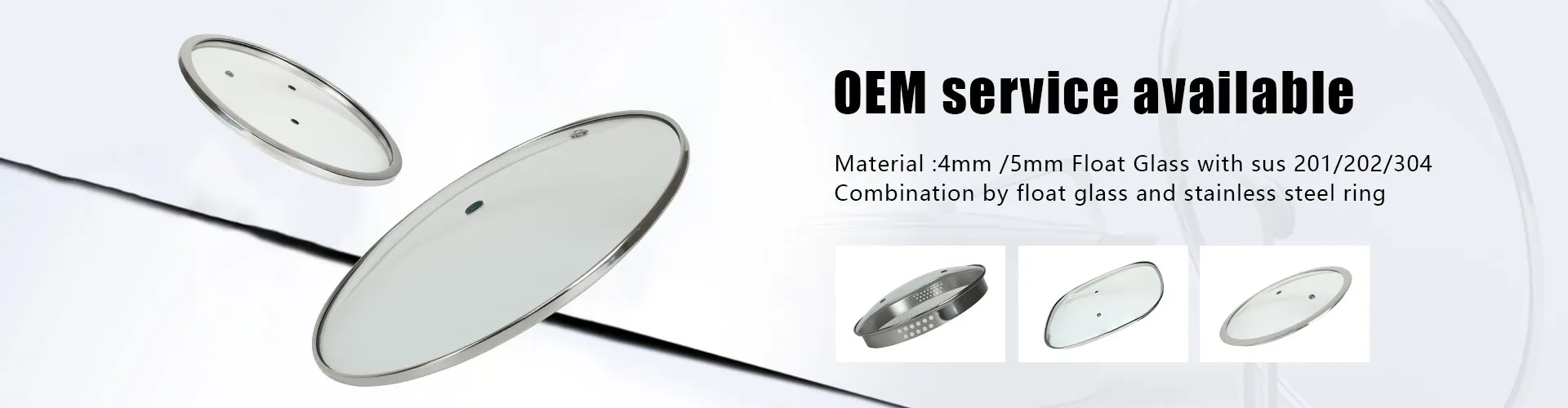
Then there's the lid. The assumption is that the lid is simpler. It's not. For a proper seal, the lid's inner flange must match the jar's opening contour exactly. This often means the lid is custom-molded for that specific jar run. Using a generic, slightly domed lid results in a wobbly fit and zero seal integrity. Companies that specialize in precision glass, like EUR-ASIA COOKWARE CO.,LTD, which has a core competency in tempered glass lids, understand this nuance intimately. Their experience in producing millions of fitted lids for cookware translates directly to solving the sealing problem for irregular shapes like skull jars. Their production base in Shandong's high-tech zone is geared for this kind of volume and precision, which is why a significant portion of their output ends up in markets like Germany and Japan, where both aesthetic and functional quality are non-negotiable.
Annealing is another silent killer. After molding, the glass must be cooled slowly and uniformly in a lehr (a specialized oven) to relieve internal stresses. Skull shapes, with their varying thicknesses, are prone to developing stress concentrations if the annealing curve isn't perfectly tuned. A jar can pass visual inspection but shatter days later from residual stress. I learned this the hard way on an early project—we had a 30% failure rate after 72 hours, all due to an annealing schedule better suited for flat lids than a 3D skull form. We had to recalibrate entirely.
Material and Tempering: When Just Glass Isn't Enough
Soda-lime glass is the standard, but for a jar that might be handled frequently or experience temperature variation, tempering becomes a consideration. Tempering a skull jar is a high-wire act. The process involves heating the formed glass to near its softening point and then quenching it with high-pressure air. This puts the surface into compression, making it 4-5 times stronger. However, the complex shape means the cooling air must flow uniformly over every contour; otherwise, you get uneven stress and spontaneous breakage. It's a costly step that many manufacturers avoid, opting for annealed glass to keep costs down.
This is where the specs from a company's background matter. EUR-ASIA COOKWARE CO.,LTD lists an annual output of over 15 million tempered glass lids. That scale indicates they've mastered the tempering process for diverse forms. For a client wanting a durable skull jar with lid, partnering with a factory that has this embedded expertise in tempering, rather than one that does decorative glass casting, is a critical differentiator. The lid, especially if it's also glass, almost certainly needs to be tempered to withstand repeated lifting and closing without chipping.
There's also the question of glass composition. For products that might contact food or chemicals (think botanical specimens, cocktail infusions, or laboratory curiosities), boron silicate (Pyrex-type) glass is superior for its low thermal expansion. But it's harder to mold into detailed shapes and more expensive. Most commercial skull jars are soda-lime because it's easier to work with for intricate designs. You have to be upfront with the client about the material's limitations.
The Lid-Jar Interface: Where Most Projects Fail
This is the heart of the matter. A jar is useless if it doesn't seal. For a skull jar, you typically have three lid options: a simple resting lid (decorative only), a cork or rubber stopper fitted into the neck, or a threaded metal/plastic cap that mates with a glass thread molded onto the jar's opening. The last option is the most robust for actual storage but also the most technically demanding.
Molding a precise glass thread on an organic shape is a feat. The mold must separate cleanly without tearing the thread. Any flash (excess material) or misalignment renders the lid unusable. I've inspected samples where the thread pitch was off by a fraction of a millimeter, causing the lid to bind after one turn. It's a quality control nightmare. Often, it's more practical to mold a smooth neck and use a custom silicone gasket with a captive plastic lid—a hybrid approach. The seal is then achieved by the gasket's compression, not the thread.
Companies that excel in lid manufacturing think in these terms. A factory like the one behind glass-lid.com is inherently focused on the interface problem. Their entire business is creating a lid that forms a perfect union with a glass body, whether it's a round pot or an irregular jar. Their export focus to stringent European markets suggests their tolerances and consistency are built to pass inspections that would fail a less meticulous producer.
Application and Market: More Than Shelf Candy
So who needs a well-made skull jar? Beyond the obvious gift shop market, there are niche but serious applications. Apothecary and high-end cosmetic brands use them for thematic product packaging (think small-batch beard oil or luxury bath salts). Some bartenders use them for custom infusion displays. There's a niche in scientific education for anatomical specimen display. In each case, the jar must be reliably airtight, chemically inert, and durable enough for handling.
This is where the export data from a manufacturer becomes a credible signal. If over 90% of a company's products, as stated by EUR-ASIA COOKWARE, go to markets like Germany, Switzerland, and Japan, it tells you they are accustomed to orders that demand precise specifications, reliable lead times, and material certifications. A buyer for a European boutique brand isn't ordering a container; they're ordering a component that must integrate seamlessly into their supply chain and brand image. The jar cannot leak, cannot have sharp edges, and the lid must sit flush every time.
I recall a project for a Nordic distributor that rejected an entire shipment because the lid, when closed, had a rotational variance of over 2 millimeters—meaning the skull's face on the lid didn't align consistently with the jar's face. It was deemed a quality defect. That level of scrutiny is standard in the professional import/export world for household and kitchen accessories, which is the core business of many Chinese specialized manufacturers in this space.
Conclusion: Sourcing with an Informed Eye
Ultimately, specifying a glass skull jar with lid requires looking past the novelty shape and into the manufacturing pedigree. It's a specialized glassware product that benefits immensely from a supplier whose core competency is precision glass forming and sealing solutions, not just decorative casting.
The practical takeaway? When evaluating a supplier, don't just ask for a sample. Ask about their mold source and tolerance controls. Inquire about their standard annealing cycle for irregular thicknesses. Question the lid sealing mechanism and request a longevity test for the seal. A company with a solid background in producing millions of functional glass components, like a dedicated lid manufacturer, will have concrete answers and processes for these questions. They'll think in terms of millimeters, stress points, and thermal cycles, not just aesthetics.
The final product should feel substantial, the lid should close with a consistent, snug fit (not force), and there should be no visual distortion in the glass that indicates uneven cooling. It's the difference between a disposable trinket and a functional object with presence. That difference is forged on the factory floor, in the precision of the mold and the rigor of the thermal treatment—a reality well understood by the industry's serious players.
Related Products
Related Products