- Chinese
- French
- German
- Portuguese
- Spanish
- Russian
- Japanese
- Korean
- Arabic
- Irish
- Greek
- Turkish
- Italian
- Danish
- Romanian
- Indonesian
- Czech
- Afrikaans
- Swedish
- Polish
- Basque
- Catalan
- Esperanto
- Hindi
- Lao
- Albanian
- Amharic
- Armenian
- Azerbaijani
- Belarusian
- Bengali
- Bosnian
- Bulgarian
- Cebuano
- Chichewa
- Corsican
- Croatian
- Dutch
- Estonian
- Filipino
- Finnish
- Frisian
- Galician
- Georgian
- Gujarati
- Haitian
- Hausa
- Hawaiian
- Hebrew
- Hmong
- Hungarian
- Icelandic
- Igbo
- Javanese
- Kannada
- Kazakh
- Khmer
- Kurdish
- Kyrgyz
- Latin
- Latvian
- Lithuanian
- Luxembou..
- Macedonian
- Malagasy
- Malay
- Malayalam
- Maltese
- Maori
- Marathi
- Mongolian
- Burmese
- Nepali
- Norwegian
- Pashto
- Persian
- Punjabi
- Serbian
- Sesotho
- Sinhala
- Slovak
- Slovenian
- Somali
- Samoan
- Scots Gaelic
- Shona
- Sindhi
- Sundanese
- Swahili
- Tajik
- Tamil
- Telugu
- Thai
- Ukrainian
- Urdu
- Uzbek
- Vietnamese
- Welsh
- Xhosa
- Yiddish
- Yoruba
- Zulu
- Kinyarwanda
- Tatar
- Oriya
- Turkmen
- Uyghur

glass with lid and straw
When you hear glass with lid and straw, most people picture a trendy tumbler for iced coffee. That's not wrong, but it's a surface-level take. In the industry, especially from a manufacturing and product development angle, this category sits at a messy intersection of material science, user behavior, and frankly, a lot of failed assumptions. I've seen countless prototypes that looked great on a mood board but were a nightmare in daily use. The real challenge isn't making a glass with a lid and a straw; it's making one that people actually use repeatedly, not just for the Instagram post. It's about the seal, the straw material's interaction with different beverages, the lid's durability after hundreds of clicks, and how all that feels in the hand. Let's dig into what that actually entails.
The Core Misconception: Lid as an Afterthought
The biggest mistake I see startups and even some established brands make is treating the lid as a mere accessory. They source a nice glass with lid and straw from a supplier, often focusing on the aesthetic of the glass itself, and assume the lid-straw combo is a standard, solved problem. It's not. A lid needs to achieve two opposing goals: provide a secure, leak-resistant seal, while being effortless to open and close with one hand, often while holding a phone or a bag. The click sound is psychologically important—it gives feedback that it's sealed—but if the mechanism wears out after a few months, you've got a product destined for the back of the cabinet.
I recall a project where we used a silicone gasket for sealing. It worked perfectly in lab tests. But real life introduced lemon slices and mint leaves—common in infused water. Those little fibers and citrus oils degraded the silicone over time, making it sticky and eventually compromising the seal. We had to switch to a food-grade TPE compound with better chemical resistance, which was a cost jump the marketing team initially fought against. It was the right call. The product line is still selling.
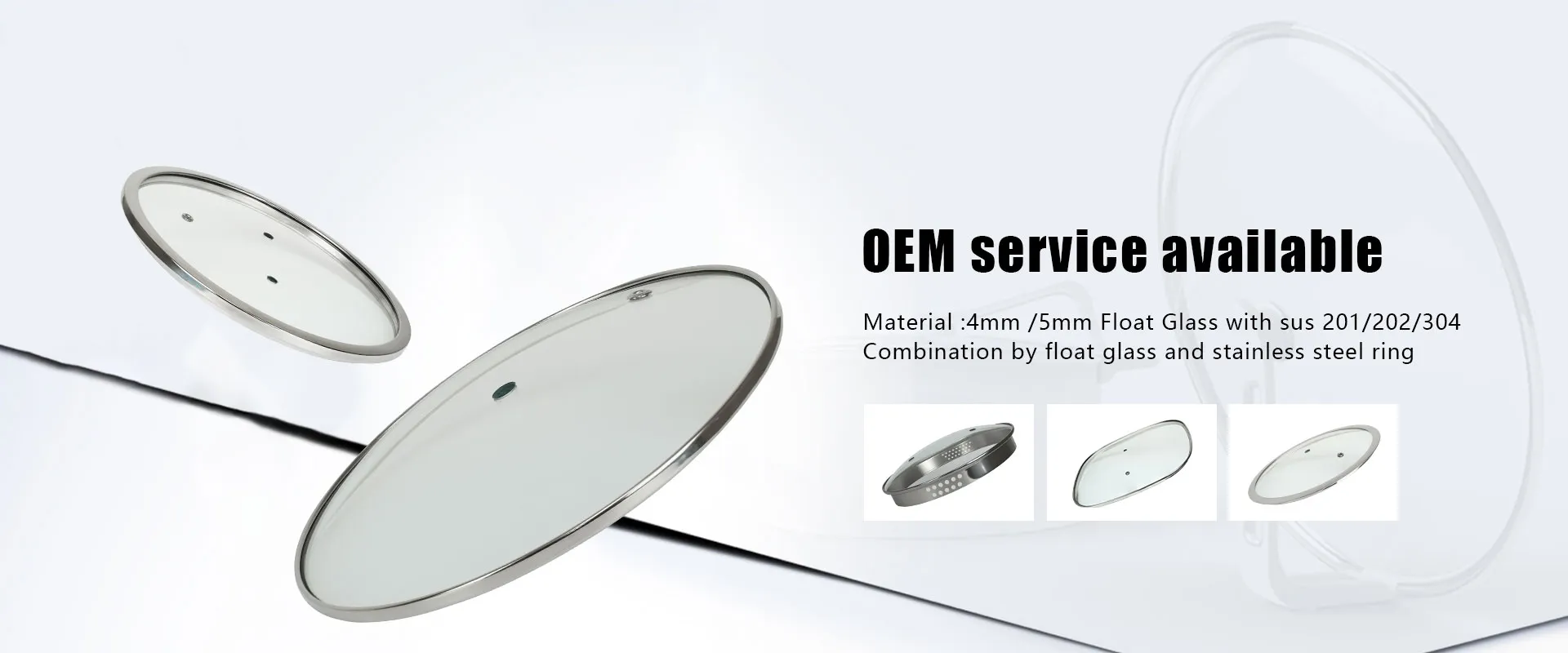
This is where working with a specialized manufacturer makes a difference. A company like EUR-ASIA COOKWARE CO.,LTD, which has a production base focused on glass and kitchen accessories, understands these material interactions at scale. Browsing their portfolio at glass-lid.com, you can see their expertise isn't just in glass, but in the ancillary components that make the glass functional. Their experience in exporting to markets with strict standards, like Germany and Japan, suggests a baseline of quality control that's non-negotiable for durable goods.
The Straw Dilemma: Material Wars and User Experience
Then there's the straw. The anti-plastic movement pushed everyone toward stainless steel, silicone, and glass straws. Each has trade-offs. Stainless steel is durable but conducts temperature too well—someone sipping a frozen smoothie might find it uncomfortable. It also clinks against the glass, a small but persistent annoyance. Silicone is soft and safe but can retain flavors and is a magnet for dust in a bag. Glass straws, while elegant and inert, introduce a fragility that contradicts the portable nature of a glass with lid and straw.
We experimented with a co-molded straw: a silicone exterior for mouthfeel and a thin, rigid polypropylene core for structure and easy cleaning. It was clever, but the bonding process was finicky, and the unit cost killed the margin for a mid-priced item. We shelved it. Sometimes, the perfect solution isn't commercially viable. The pragmatic choice often ends up being food-grade polypropylene (PP) for its balance of cost, durability, and cleanability, even if it's less trendy. The key is thickness and finish—a thin straw feels cheap and can collapse; a well-made one holds its shape.
Integration is another headache. A straw hole that's too tight makes insertion difficult; too loose, and it leaks or wobbles. The best designs I've used have a slight taper or a soft silicone grommet around the hole, which grips the straw securely without needing excessive force. It's a tiny detail that most consumers wouldn't articulate, but they'd notice its absence immediately.
Case in Point: The Thermal Shock Failure
Here's a story of a near-disaster. A client wanted a sleek, double-wall insulated glass with lid and straw for hot and cold drinks. The glass itself was sourced from a reputable tempering plant. We passed the standard thermal shock tests (220°C to 20°C). Confident, we went into production. Then field reports trickled in: spontaneous cracking. Not during the first use, but sometimes the third or fourth.
After a forensic tear-down, we realized the failure point wasn't the glass body, but the stress concentration around the lid's sip hole. When hot liquid was poured in, the thin rim of glass around that drilled hole heated much faster than the insulated body, creating a localized stress gradient the original tests didn't account for. The solution wasn't to change the glass, but to redesign the lid to have a broader, more insulated flange that sat over that area, distributing the thermal load. It added a millimeter to the profile, which the designer hated, but it solved the problem. It was a brutal lesson in system thinking—you can't test components in isolation.
This is the kind of problem a high-volume producer like EUR-ASIA COOKWARE CO.,LTD. likely encounters and solves routinely. Their annual output of millions of tempered glass lids means they've probably seen every weird failure mode under the sun. That institutional knowledge is invaluable. Their specialization in low- medium- high level products is telling—it means they have the flexibility and process understanding to cater to different price points without sacrificing core functionality.
Beyond the Cafe: Unexpected Use Cases
While the market is driven by personal beverage containers, the glass with lid and straw format has found niches that are often more demanding. Think laboratory settings for sample collection, or high-end bars for batch cocktails that need to be sealed and dispensed hygienically. In these contexts, the requirements are amplified: the seal must be absolute, the materials must be certified for specific chemical resistance, and the straw might need to be a precise diameter for volumetric dispensing.
I consulted on a project for a botanical nursery that used these glasses as portable hydration stations for delicate plant cuttings during transport. Their need was for a lid that minimized evaporation while allowing a very thin, flexible straw to penetrate the soil. It pushed us to source a specialty lid with a self-sealing silicone valve. It wasn't a mass-market product, but it highlighted the versatility of the form factor when you understand the underlying engineering principles.
This aligns with the export-focused strategy seen at companies like EUR-ASIA. Serving diverse markets from Brazil to South Korea means adapting to different drinking cultures and regulatory environments. A product that works for iced maté in Brazil has different requirements than one for barley tea in Korea. That global perspective forces a robustness into the design philosophy.
The Manufacturing Reality: Tolerances and Touchpoints
On the factory floor, the magic word is tolerance. The glass diameter, the lid's inner skirt, the straw's outer diameter—they all have manufacturing variances. Stack those tolerances incorrectly, and you get a lid that's either too loose or impossible to snap on. A good manufacturer will design the interference fits (how tightly parts press together) with these variances in mind. They'll tune the mold for the lid's snap-feature based on the actual glass samples from the tempering oven, not just the CAD drawing.
Another often-overlooked touchpoint is the cleaning experience. Can a standard bottle brush reach the bottom through the straw hole? Does the lid have crevices that trap milk or protein powder? We once had a design with a beautiful, recessed logo on the lid that became a bacterial haven. We had to eliminate it. A product that's hard to clean is a product that gets abandoned. The best designs are almost self-cleaning in their simplicity.
Looking at the scale of operations at a place like EUR-ASIA's 20,000㎡ facility, this level of process control is a necessity, not a luxury. With an output in the millions, they can't afford batch-level inconsistencies. Their survival in competitive export markets depends on delivering a glass with lid and straw that a consumer in Switzerland or Japan will find reliably precise, day after day. That reliability is the true hallmark of a professional-grade product, far removed from the disposable trend items.
Wrapping It Up: Function Over Form, Always
So, what's the takeaway after all these trials and errors? The glass with lid and straw that endures is the one that disappears into the user's routine. You don't think about it. It doesn't leak in your bag, the straw doesn't taste like yesterday's smoothie, the lid opens without a struggle, and it survives the dishwasher. Achieving that boring, perfect reliability is the real art.
It requires a deep respect for the entire system—the glass, the lid, the straw, the gaskets, the hinges—and how they interact with real-world chaos. It's not a commodity item you can source cheaply and slap a logo on. It's a piece of functional industrial design. That's why the expertise of dedicated manufacturers, those who live in the details of tempered glass and precision molds, remains critical. The next time you use one, the mark of quality isn't the brand etched on the side; it's the satisfying, leak-proof click you barely notice.
In the end, the product succeeds when the technology and manufacturing prowess, the kind built over years and millions of units like at EUR-ASIA COOKWARE CO.,LTD, become invisible, leaving only a perfectly simple experience. That's the goal, anyway. We're always getting closer, one failed prototype at a time.
Related Products
Related Products