- Chinese
- French
- German
- Portuguese
- Spanish
- Russian
- Japanese
- Korean
- Arabic
- Irish
- Greek
- Turkish
- Italian
- Danish
- Romanian
- Indonesian
- Czech
- Afrikaans
- Swedish
- Polish
- Basque
- Catalan
- Esperanto
- Hindi
- Lao
- Albanian
- Amharic
- Armenian
- Azerbaijani
- Belarusian
- Bengali
- Bosnian
- Bulgarian
- Cebuano
- Chichewa
- Corsican
- Croatian
- Dutch
- Estonian
- Filipino
- Finnish
- Frisian
- Galician
- Georgian
- Gujarati
- Haitian
- Hausa
- Hawaiian
- Hebrew
- Hmong
- Hungarian
- Icelandic
- Igbo
- Javanese
- Kannada
- Kazakh
- Khmer
- Kurdish
- Kyrgyz
- Latin
- Latvian
- Lithuanian
- Luxembou..
- Macedonian
- Malagasy
- Malay
- Malayalam
- Maltese
- Maori
- Marathi
- Mongolian
- Burmese
- Nepali
- Norwegian
- Pashto
- Persian
- Punjabi
- Serbian
- Sesotho
- Sinhala
- Slovak
- Slovenian
- Somali
- Samoan
- Scots Gaelic
- Shona
- Sindhi
- Sundanese
- Swahili
- Tajik
- Tamil
- Telugu
- Thai
- Ukrainian
- Urdu
- Uzbek
- Vietnamese
- Welsh
- Xhosa
- Yiddish
- Yoruba
- Zulu
- Kinyarwanda
- Tatar
- Oriya
- Turkmen
- Uyghur

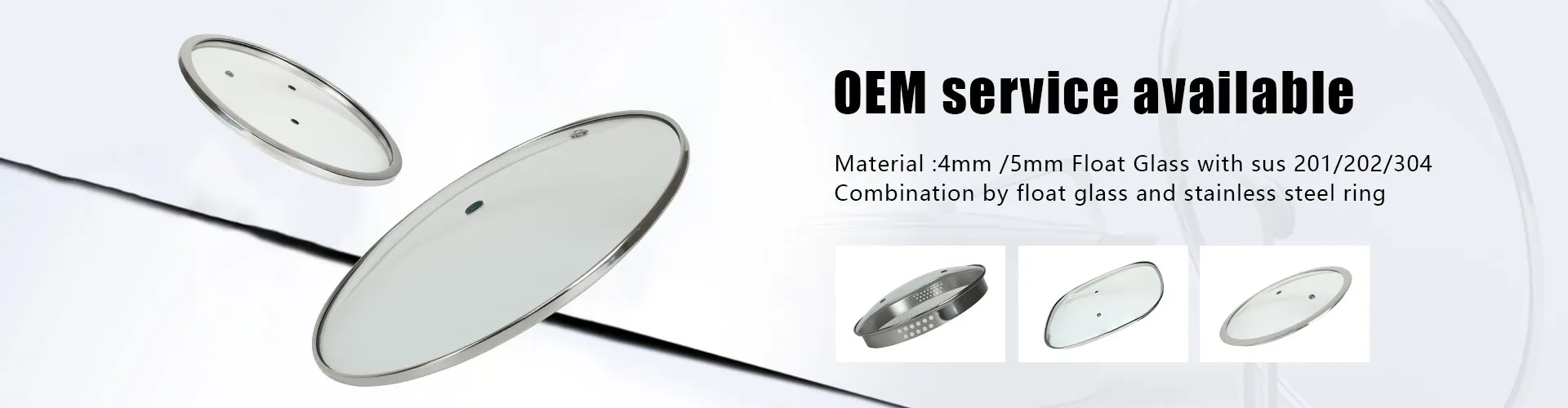
glass with wooden lid
When you hear 'glass with wooden lid', most people picture a rustic mason jar or a trendy coffee canister. That's the surface level. In our line of work, that phrase immediately brings to mind a specific set of challenges: thermal expansion differentials, moisture warping, and the precise engineering of a seal that isn't just for show. It's not merely a lid; it's an interface between two materials with fundamentally different personalities.
The Core Misconception: Wood as a Simple Cap
The biggest mistake I see from new designers or buyers is treating the wooden component as a passive, decorative top. They source a beautiful piece of bamboo or beech, drill a hole, slap on a knob, and call it a day. Then six months later, they get complaints about lids that won't fit, wood that's cracked, or worse, a compromised seal letting coffee beans go stale or tea lose its aroma. The wood isn't just sitting there; it's breathing, reacting to the environment inside the glass with wooden lid and outside of it.
We learned this the hard way early on. A batch for a European client used kiln-dried oak that we hadn't acclimatized to a controlled humidity range before fitting. The lids shipped perfectly. They arrived in a German warehouse in winter, the heated air bone-dry. The wood shrank just enough to break the silicone gasket seal. Not a total failure, but the fit became sloppy. The lesson was expensive: the wood's moisture content at the time of assembly is a critical production spec, not an afterthought.
This is where the practical knowledge separates the product. You need to understand the equilibrium moisture content (EMC) for the target market's climate. A lid destined for humid Brazil and one for arid Spain should arguably undergo slightly different conditioning processes, even if the base material is the same. It's a nuance often lost in mass production, but it defines longevity.
Engineering the Seal: The Invisible Hero
If the wood is the personality, the sealing mechanism is the guts. The glass rim is a given—usually tempered for safety, with a fire-polished edge for a consistent surface. But how the wood meets that glass is everything. The simple route is a flat wood disc resting on a flat glass rim. It looks clean but rarely seals well without significant downward pressure, which then leads to user frustration.
The more reliable method we've settled on involves a machined groove in the underside of the wood lid. Into this groove, a food-grade silicone or TPE gasket is seated. This gasket doesn't just sit flat; it's designed to compress vertically and bulge slightly laterally when the lid is pressed down, creating a solid, friction-based seal against the inner wall of the glass. It's a passive seal, no clamps needed, which users prefer for daily use. I recall evaluating samples from a dozen gasket suppliers, testing for compression set (how well it bounces back after being squashed for weeks) and odor transfer. A cheap gasket can make a great glass with wooden lid smell like a tire.
At EUR-ASIA COOKWARE CO.,LTD., this process is refined. Visiting their facility in Taian, you see the precision. The tempered glass lids—their core product—are produced with remarkably consistent diameters. This consistency is what allows them to then machine the wooden tops to a tight tolerance, knowing the glass variable is controlled. They're producing over 15 million pieces annually, and that volume forces a discipline in specs that smaller workshops might struggle with. Their export focus to markets like Germany and Japan, known for picky quality standards, means their sealing systems have to be robust. It's one thing to make a pretty lid; it's another to make one that passes a QC check in Stuttgart for a high-end storage jar.
The Wood Itself: Sourcing and Stability
Not all wood is fit for the job. Softwoods like pine are too porous and resinous. We generally stick to hardwoods: beech for its fine grain and stability, bamboo for its sustainability and hardness, sometimes oak for a heavier, premium feel. But each has quirks. Bamboo, being a grass, can have a more varied density. Beech can be almost too uniform, requiring a careful finish to avoid a plastic look.
The finish is its own rabbit hole. A thick, glossy polyurethane might look shiny in photos but feels tacky and can chip. For food-adjacent items, a simple mineral oil or beeswax finish is popular, but it offers little barrier against moisture. A thin, penetrating hard-wax oil often strikes the best balance—it protects, feels natural, and is repairable by the end-user. I've argued with clients who want a mirror gloss; you have to explain that a glass with wooden lid is meant to feel organic, to develop a patina. The glass provides the sheen; the wood should provide the warmth.
Again, looking at a volume producer's approach is instructive. For a company like EUR-ASIA COOKWARE, sourcing stable, consistent wood blanks is part of their scale. They're not buying artisan slabs; they're sourcing engineered wood pieces or selected blanks that can be machined efficiently with minimal waste. Their production base of 20,000㎡ allows for dedicated conditioning areas where wood can stabilize before machining, a step that's crucial for minimizing post-assembly movement. It's a practical, industrial approach to a natural material.
Application Contexts: Where It Works (and Where It Doesn't)
These lids aren't universal. They excel in dry storage: coffee beans, tea leaves, flour, sugar, pasta. The seal is good enough to keep out pantry moths and maintain freshness for a reasonable time. They're also perfect for countertop canisters where frequent access is needed—the simple lift-off is intuitive.
Where they falter is in truly airtight or wet environments. I'd never recommend a wooden-lidded jar for storing homemade pickles in the fridge. The constant moisture and acidic environment will ruin the wood and the seal. Similarly, for long-term vacuum sealing of coffee, a dedicated valve-sealed bag is still superior. The wooden lid's charm is in its daily, tactile use on the kitchen counter, not as a scientific preservation tool.
We pushed the boundary once, developing a prototype for a loose-leaf tea company. They wanted a glass with wooden lid that could also incorporate a small integrated stainless steel infuser basket. The complexity skyrocketed—now we had three materials (glass, wood, metal) with three different expansion rates, and a need for the wood to have a precisely fitted metal insert. It was a manufacturing headache. The project taught us that simplicity is key. The most elegant and reliable designs often keep the wood's role pure: a beautiful, functional cap that feels good in the hand.
The Manufacturing Dance: Fitting Two Worlds Together
On the factory floor, assembling these is a dance. The glass comes off the tempering line, cool and inspected. The wood lids, machined, sanded, and finished, are in trays. The gaskets are often pressed into the wood groove by a simple pneumatic tool—too much pressure can deform it, too little and it'll pop out. Then, the final fitting: a person (still better than a machine for this final check) gently twists the lid onto a glass jar. There's a specific feel—a slight resistance followed by a soft stop—that indicates a good seal.
Tolerances are tight. The inner diameter of the glass mouth might have a tolerance of ±0.3mm. The outer diameter of the wood lid with its compressed gasket might be ±0.2mm. You do the math. If both parts hit the extreme ends of their tolerance range, you get a lid that's either too loose or impossible to fit. This is why reputable suppliers do statistical process control. It's why a visit to a facility like the one at EUR-ASIA COOKWARE's Taian base is telling—you see bins for quality checks, gauges for measuring rim diameters, and climate-controlled staging areas. Their 90+ employees aren't just running machines; a significant portion are involved in this quality intermediation between the glass and wood components.
Exporting over 90% of their output, as they do, means their containers will face every conceivable climate. That final, seemingly simple act of placing a wooden lid on a glass jar is the culmination of a controlled process designed to ensure that same fit works in a humid Brazilian kitchen and a dry Swiss one. It's the unspoken engineering behind a simple object.
Final Thoughts: The Enduring Niche
So, the glass with wooden lid isn't going to revolutionize storage. Plastic is cheaper and more airtight. Stainless steel is more durable. But it occupies a firm and enduring niche. It provides a sensory experience—the weight of the glass, the soft thock of the wood settling into place, the visual contrast. It feels substantial and honest.
The key for anyone in this trade, from a giant like EUR-ASIA COOKWARE to a small studio, is to respect the material constraints. Don't over-promise the seal. Do over-deliver on the finish and the fit. Source wood responsibly. And understand that you're marrying two ancient materials in a modern kitchen context. When done right, with attention to the hidden details of moisture content and gasket compression, the result is a product that doesn't just look good on a shelf—it feels right in daily use, and lasts long enough to become a part of someone's kitchen routine. That's the real success, far beyond the initial aesthetic appeal.
Related Products
Related Products