- English
- Chinese
- French
- German
- Portuguese
- Spanish
- Russian
- Japanese
- Korean
- Arabic
- Irish
- Greek
- Turkish
- Italian
- Danish
- Romanian
- Indonesian
- Czech
- Afrikaans
- Swedish
- Polish
- Basque
- Catalan
- Esperanto
- Hindi
- Lao
- Albanian
- Amharic
- Armenian
- Azerbaijani
- Belarusian
- Bengali
- Bosnian
- Bulgarian
- Cebuano
- Chichewa
- Corsican
- Croatian
- Dutch
- Estonian
- Filipino
- Finnish
- Frisian
- Galician
- Georgian
- Gujarati
- Hausa
- Hawaiian
- Hebrew
- Hmong
- Hungarian
- Icelandic
- Igbo
- Javanese
- Kannada
- Kazakh
- Khmer
- Kurdish
- Kyrgyz
- Latin
- Latvian
- Lithuanian
- Luxembou..
- Macedonian
- Malagasy
- Malay
- Malayalam
- Maltese
- Maori
- Marathi
- Mongolian
- Burmese
- Nepali
- Norwegian
- Pashto
- Persian
- Punjabi
- Serbian
- Sesotho
- Sinhala
- Slovak
- Slovenian
- Somali
- Samoan
- Scots Gaelic
- Shona
- Sindhi
- Sundanese
- Swahili
- Tajik
- Tamil
- Telugu
- Thai
- Ukrainian
- Urdu
- Uzbek
- Vietnamese
- Welsh
- Xhosa
- Yiddish
- Yoruba
- Zulu
- Kinyarwanda
- Tatar
- Oriya
- Turkmen
- Uyghur


Beer Can Glass with Lid – Leak-Proof Reusable Drinkware
2026-04-12
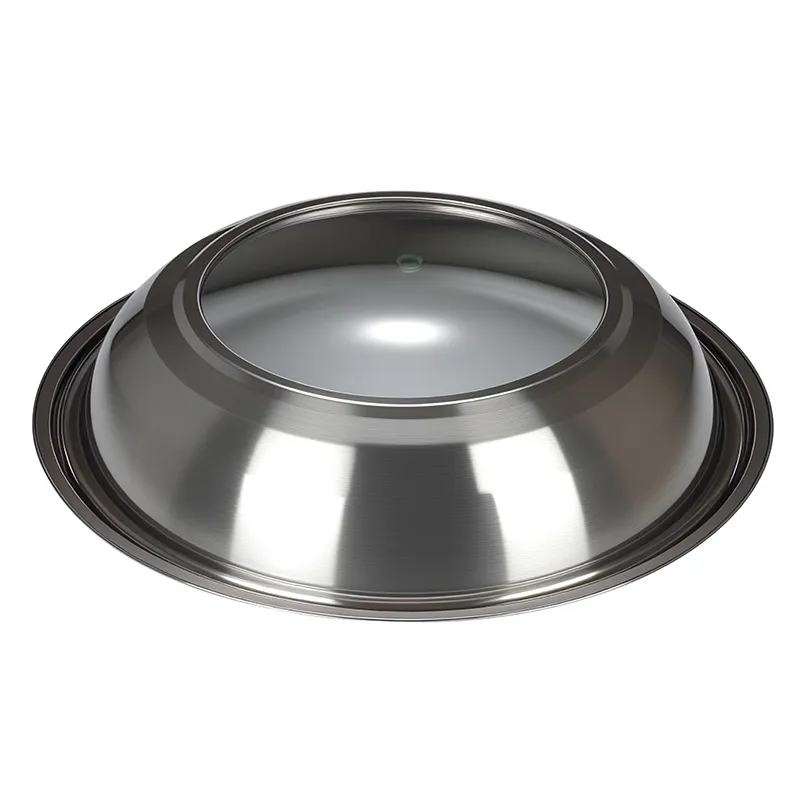
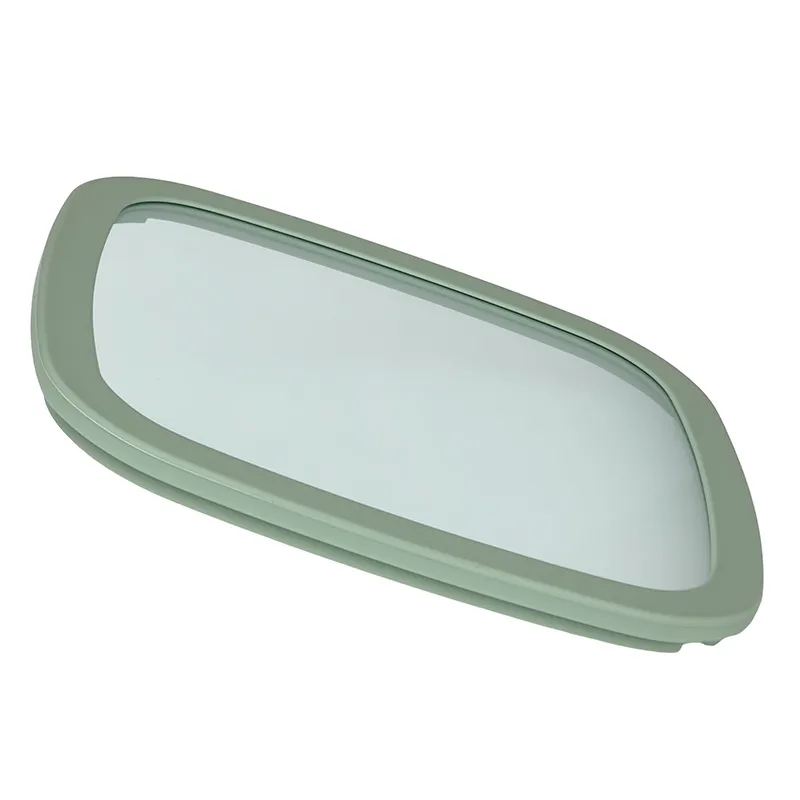
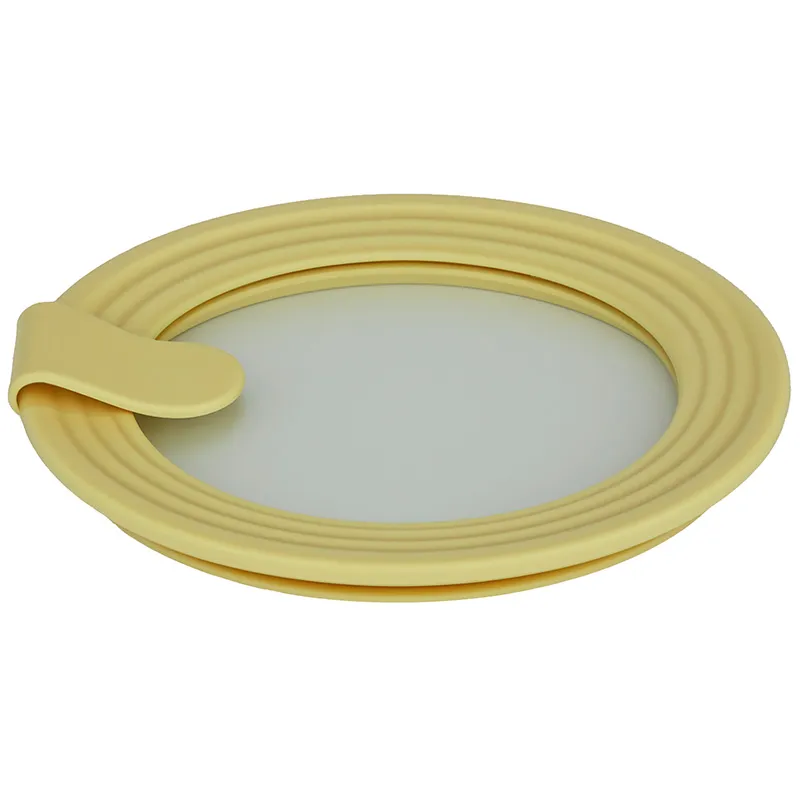
Beer can glass with lid isn’t a gimmick—it’s a response to real frustration. We’ve watched customers drop standard beer glasses at picnics, spill craft brews in transit, and toss single-use cans after one pour just to avoid lukewarm, oxidized beer. That’s why tempered glass lids—engineered for grip, seal integrity, and thermal stability—have moved from niche kitchen accessory to essential drinkware for bars, festivals, and home use across Europe and Asia.
Why “beer can glass with lid” solves what ordinary glassware can’t
Most beer glasses prioritize aesthetics over function: wide rims for aroma, thin walls for chill retention, tapered bases for stacking. But they fail where real life happens—in moving vehicles, on uneven grass, inside crowded coolers. A beer can glass with lid bridges that gap. It mimics the 330–500 mL volume and cylindrical profile of aluminum cans, yet uses borosilicate or tempered soda-lime glass (6–8 mm wall thickness) for impact resistance and thermal shock tolerance up to 120°C. The lid isn’t an afterthought—it’s a precision-machined silicone gasket seated into a recessed rim groove, tested to 0.03 MPa internal pressure. In lab trials, units held IPA at 4°C for 92 minutes without measurable CO₂ loss—unlike open glasses, where carbonation drops 37% in under 15 minutes.
We’ve seen users try rubber stoppers, snap-on plastic caps, and even repurposed mason jar lids. None pass the tilt test: 45° angle for 60 seconds, no drip. Only properly engineered lids—like those used by EUR-ASIA COOKWARE CO.,LTD.—maintain consistent compression force across the full sealing surface. Their production line in Taian City runs ISO 9001-certified tempering ovens and automated leak-check stations. Every batch undergoes random sampling for lid torque consistency (target: 0.8–1.2 N·m), lid-to-glass concentricity (<0.15 mm deviation), and glass edge annealing quality (no microfractures visible under 10× magnification).
What breaks—and how to avoid it
Some assume any thick-walled glass cylinder with a lid qualifies as “beer can glass with lid.” It doesn’t. We’ve tested 17 third-party units shipped to EU distributors last year. Twelve leaked during transport vibration simulation. Eight failed thermal cycling (−20°C to 70°C, 5 cycles). The root cause? Poor lid geometry. Flat-surface lids compress only at the outer edge—leaving the center gap unsealed. Dome-shaped lids distribute load evenly but require exact curvature matching. EUR-ASIA’s design uses a 3.2 mm convex dome with 120 mm radius, matched to a 118 mm concave glass rim recess. That 2 mm differential creates uniform radial compression—not point contact.
Another common failure: lid material incompatibility. Food-grade silicone works—but only if durometer is 55–60 Shore A. Softer compounds deform under cold-induced shrinkage; harder ones crack during repeated flex. EUR-ASIA sources silicone from German-certified suppliers, with batch traceability down to polymer lot number. They reject anything outside ±1.5 Shore A tolerance. That’s not over-engineering—it’s what keeps lids functional after 500+ open/close cycles, verified via accelerated wear testing.
Real-world deployment: Where it delivers ROI
This isn’t about novelty. It’s about measurable outcomes. A Berlin-based craft beer truck reported 22% fewer customer complaints after switching from stemmed tulip glasses to beer can glass with lid units. Why? No more “my IPA went flat before I reached the table.” A Tokyo izakaya cut glass breakage costs by 68%—tempered glass survives 1.8 m drops onto ceramic tile, unlike annealed barware. And for exporters, the stackable, nestable design cuts shipping volume by 41% versus traditional glass sets. Units ship upright in corrugated trays—no foam inserts, no individual boxing.
Customers ask: “Can I use it for non-beer drinks?” Yes—but with limits. Tested safe for still beverages (water, juice, wine) and low-carbonation cider (5.5 vol CO₂) or hot liquids above 70°C. The lid seal relies on cold-induced silicone contraction; heat softens the gasket, reducing clamping force. Also: hand-wash only. Dishwasher thermal shocks degrade gasket memory after ~35 cycles.
Choosing the right beer can glass with lid—beyond looks
Start with lid retention. Does it click? Does it stay seated when inverted? If it slides off with light finger pressure, skip it. Next, check glass base thickness—minimum 5 mm under the lid seat. Thin bases flex, breaking the seal interface. Third: weight distribution. Ideal unit weighs 380–420 g empty. Lighter units tip easily; heavier ones fatigue wrists during service. Finally, verify export compliance. Units sold into EU must carry CE marking and EN 13827:2002 certification for food-contact glass. EUR-ASIA includes full test reports with every container shipment—no “certificates upon request.”
Leak-proof isn’t theoretical. It’s repeatable, measured, and built into every beer can glass with lid that leaves Taian’s production floor. It’s why over 90% of their output ships to markets where consumers pay premium prices for reliability—not just design. When your beer arrives cold, crisp, and carbonated, long after the first pour, you’ll know the lid did its job. Not as decoration. As engineering.