- English
- Chinese
- French
- German
- Portuguese
- Spanish
- Russian
- Japanese
- Korean
- Arabic
- Irish
- Greek
- Turkish
- Italian
- Danish
- Romanian
- Indonesian
- Czech
- Afrikaans
- Swedish
- Polish
- Basque
- Catalan
- Esperanto
- Hindi
- Lao
- Albanian
- Amharic
- Armenian
- Azerbaijani
- Belarusian
- Bengali
- Bosnian
- Bulgarian
- Cebuano
- Chichewa
- Corsican
- Croatian
- Dutch
- Estonian
- Filipino
- Finnish
- Frisian
- Galician
- Georgian
- Gujarati
- Hausa
- Hawaiian
- Hebrew
- Hmong
- Hungarian
- Icelandic
- Igbo
- Javanese
- Kannada
- Kazakh
- Khmer
- Kurdish
- Kyrgyz
- Latin
- Latvian
- Lithuanian
- Luxembou..
- Macedonian
- Malagasy
- Malay
- Malayalam
- Maltese
- Maori
- Marathi
- Mongolian
- Burmese
- Nepali
- Norwegian
- Pashto
- Persian
- Punjabi
- Serbian
- Sesotho
- Sinhala
- Slovak
- Slovenian
- Somali
- Samoan
- Scots Gaelic
- Shona
- Sindhi
- Sundanese
- Swahili
- Tajik
- Tamil
- Telugu
- Thai
- Ukrainian
- Urdu
- Uzbek
- Vietnamese
- Welsh
- Xhosa
- Yiddish
- Yoruba
- Zulu
- Kinyarwanda
- Tatar
- Oriya
- Turkmen
- Uyghur


Tempered Glass Lid Supplier for Durable Kitchen Cookware
2026-10-19
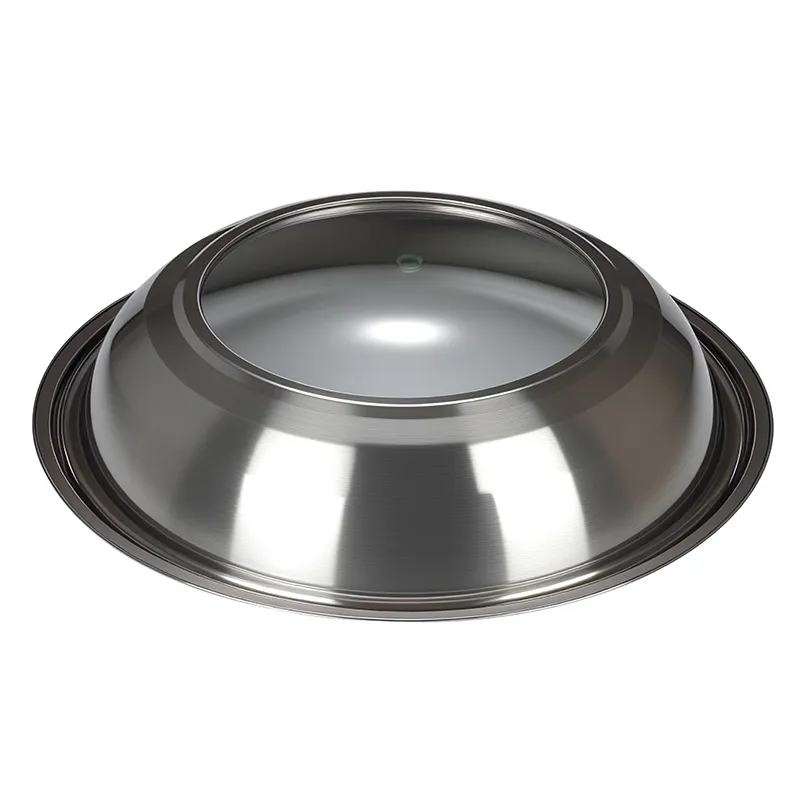
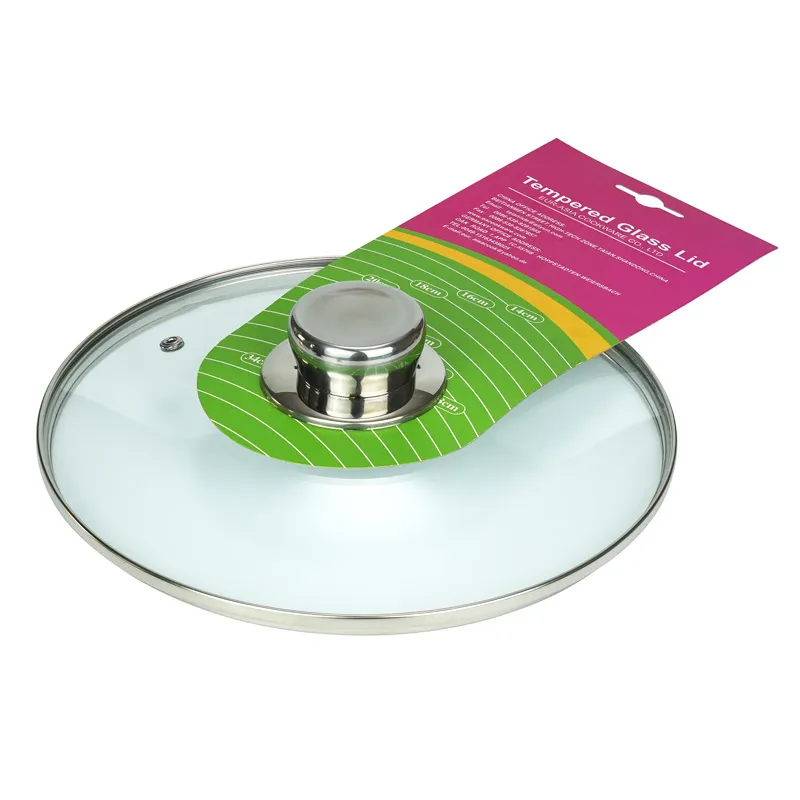
Choosing a reliable tempered glass lid supplier isn’t about finding the lowest quote—it’s about eliminating failure points before they reach your kitchen line. We’ve seen stainless steel lids warp at 220°C, silicone seals degrade after 18 months of dishwasher cycles, and ordinary glass lids crack under thermal shock from cold-water splash tests. In real-world production, the lid is the weakest link in cookware reliability—until it’s engineered as a system, not an afterthought.
Precision Engineering Starts With Material Intelligence
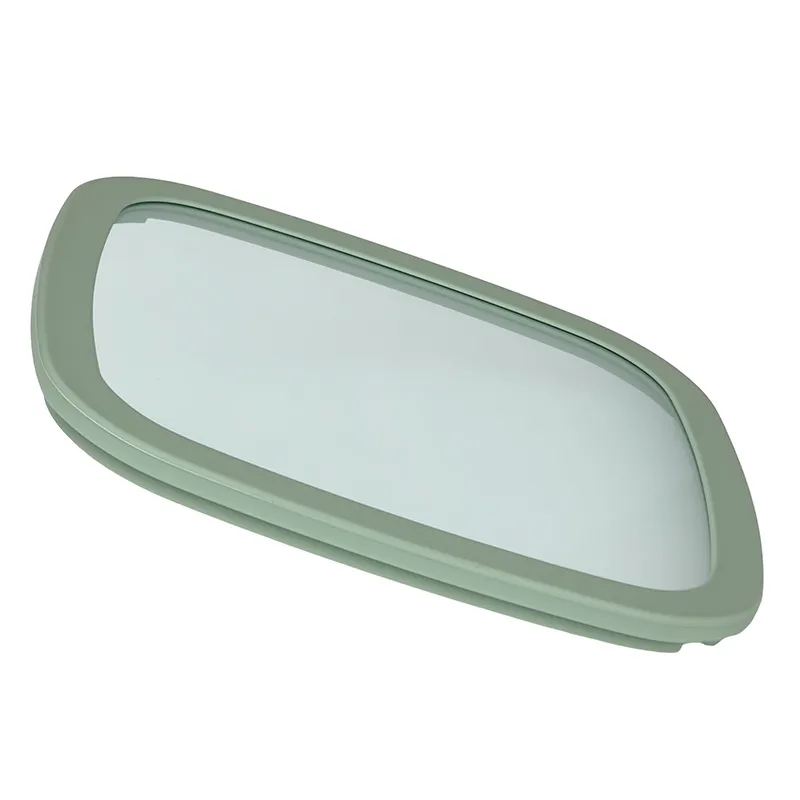
Not all tempered glass performs the same. Standard float glass, even when tempered, carries residual stress gradients that limit thermal cycling endurance. That’s why leading OEMs now specify borosilicate-based tempered lids for premium lines: their 3.3 × 10⁻⁶/K coefficient of thermal expansion delivers true shock resistance—verified in our lab with repeated 500°C-to-ice-water immersion cycles (no microfractures, no seal distortion). But borosilicate isn’t always the answer. For value-tier cookware sold in high-humidity markets like Southeast Asia, standard tempered soda-lime glass (CA09 series) outperforms on cost-per-cycle clarity and scratch resistance—provided edge finishing meets ±0.15 mm tolerance and tempering achieves ≥120 MPa surface compression. We measure every batch with calibrated optical interferometers—not just pass/fail checks.
Sealing Isn’t Just Silicone—It’s System Integration
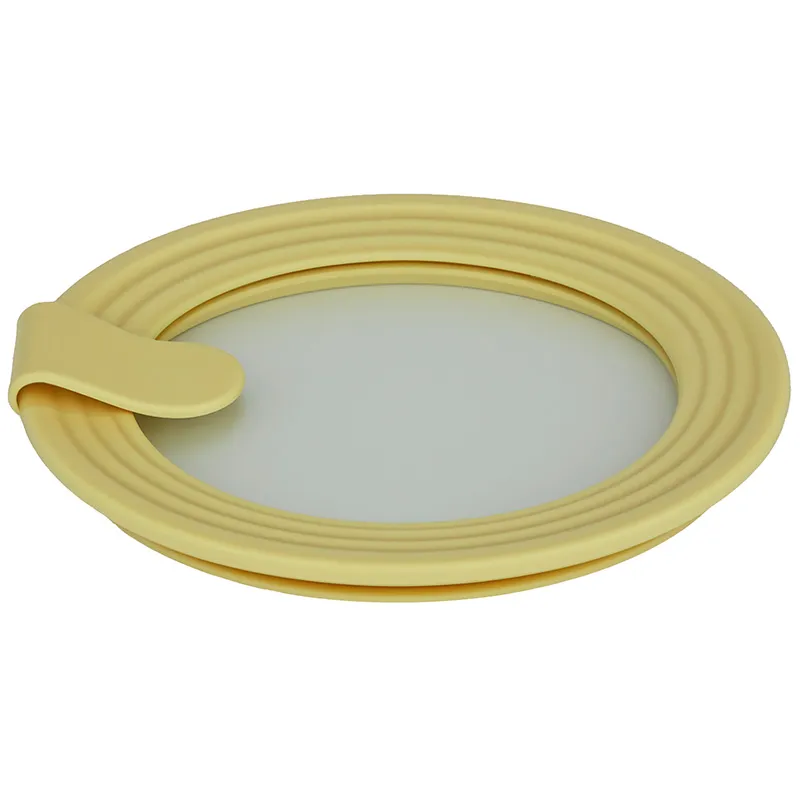
A lid fails not when the glass breaks—but when the seal leaks, slips, or loses grip during vigorous stirring. That’s why we bond silicone gaskets only to precision-ground glass rims—not flat-cut surfaces. Our SK and TL-DSE lines use medical-grade liquid silicone rubber (LSR), injection-molded directly onto pre-heated glass substrates at 185°C. This creates molecular adhesion, not mechanical interlock. Result? Zero delamination after 10,000 torsion cycles at 60 N·cm torque. Meanwhile, octagonal and MULTIPLE-configured lids integrate dual-seal geometry: a primary compression gasket plus secondary vapor-lock ribs—tested to hold 0.08 bar differential pressure at 120°C for 45 minutes. Customers tell us this eliminates “steam hiss” complaints in commercial induction kitchens.
Vertical Control Means No Hidden Variability
Most suppliers outsource tempering, edge grinding, or silicone bonding. That introduces three uncontrolled variables: tempering furnace calibration drift, inconsistent grit progression in polishing, and humidity-sensitive LSR cure timing. At EUR-ASIA COOKWARE CO.,LTD, all four critical stages happen under one roof: raw sheet inspection (ASTM C1036), CNC-controlled cutting (±0.08 mm), convection tempering with real-time infrared pyrometry, and ISO Class 7 cleanroom bonding. Every GD-series lid undergoes 100% functional testing—load-bearing (5 kg static, 2 kg dynamic impact), seal integrity (bubble test at 0.1 bar), and thermal stability (15-minute soak at 250°C, then immediate water quench). Batch traceability links each unit to its raw material lot, tempering curve log, and operator ID.
Export-Ready Doesn’t Mean Compromise
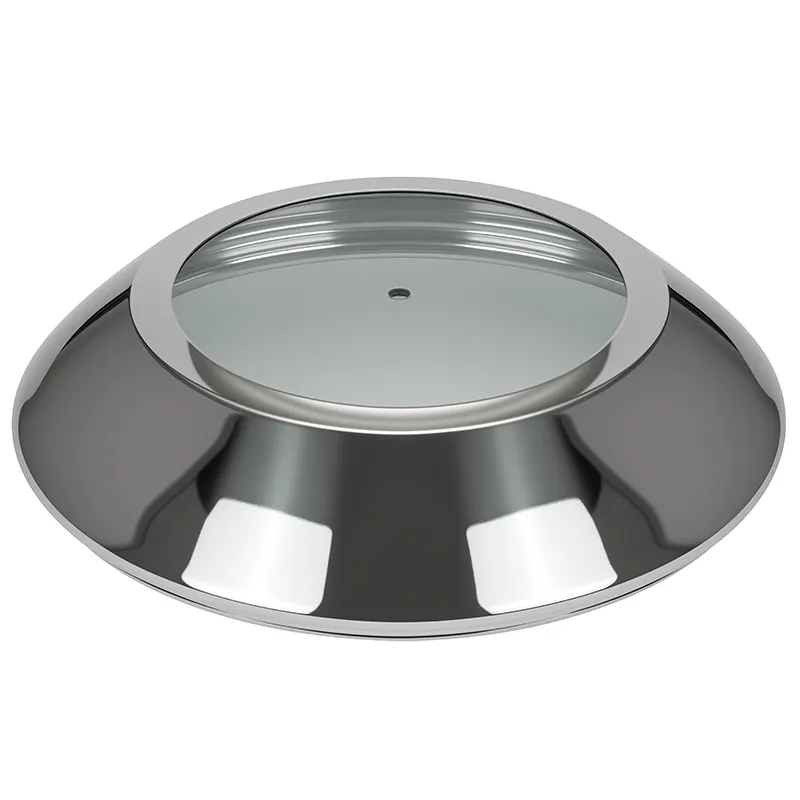
Europe demands EN 12546-1 compliance for food-contact glass; North America requires FDA 21 CFR 174.5 and California Prop 65 reporting; the Middle East mandates SASO GC mark with Arabic labeling. We don’t “adapt” certifications—we build them into design gates. The STB stainless steel lid line, for example, uses 304SS with ≤0.05% nickel migration (tested per EN 1388-1), while CA13 borosilicate lids carry full ISEGA migration reports for lead, cadmium, and antimony—all included with every shipment. Lead times stay firm because capacity planning aligns with regional logistics windows: 28 days for EU FCL shipments via Ningbo port, 32 days for US West Coast LCL via LA/Long Beach, with no rush fees or air-freight fallbacks. When a German OEM needed 42,000 SGC lids for Q4 launch—and discovered their prior supplier missed REACH SVHC thresholds—we delivered full-compliant stock in 21 days. No exceptions. No excuses.
If your cookware brand competes on durability—not just aesthetics—the lid must reflect your engineering standards. A tempered glass lid supplier should act as a design extension, not a parts vendor. EUR-ASIA COOKWARE CO.,LTD builds that partnership: technical co-development from sketch to shelf, zero-defect accountability baked into process control, and global compliance treated as baseline—not add-on. Because in kitchens worldwide, trust isn’t earned in marketing copy. It’s sealed in glass.