- English
- Chinese
- French
- German
- Portuguese
- Spanish
- Russian
- Japanese
- Korean
- Arabic
- Irish
- Greek
- Turkish
- Italian
- Danish
- Romanian
- Indonesian
- Czech
- Afrikaans
- Swedish
- Polish
- Basque
- Catalan
- Esperanto
- Hindi
- Lao
- Albanian
- Amharic
- Armenian
- Azerbaijani
- Belarusian
- Bengali
- Bosnian
- Bulgarian
- Cebuano
- Chichewa
- Corsican
- Croatian
- Dutch
- Estonian
- Filipino
- Finnish
- Frisian
- Galician
- Georgian
- Gujarati
- Hausa
- Hawaiian
- Hebrew
- Hmong
- Hungarian
- Icelandic
- Igbo
- Javanese
- Kannada
- Kazakh
- Khmer
- Kurdish
- Kyrgyz
- Latin
- Latvian
- Lithuanian
- Luxembou..
- Macedonian
- Malagasy
- Malay
- Malayalam
- Maltese
- Maori
- Marathi
- Mongolian
- Burmese
- Nepali
- Norwegian
- Pashto
- Persian
- Punjabi
- Serbian
- Sesotho
- Sinhala
- Slovak
- Slovenian
- Somali
- Samoan
- Scots Gaelic
- Shona
- Sindhi
- Sundanese
- Swahili
- Tajik
- Tamil
- Telugu
- Thai
- Ukrainian
- Urdu
- Uzbek
- Vietnamese
- Welsh
- Xhosa
- Yiddish
- Yoruba
- Zulu
- Kinyarwanda
- Tatar
- Oriya
- Turkmen
- Uyghur


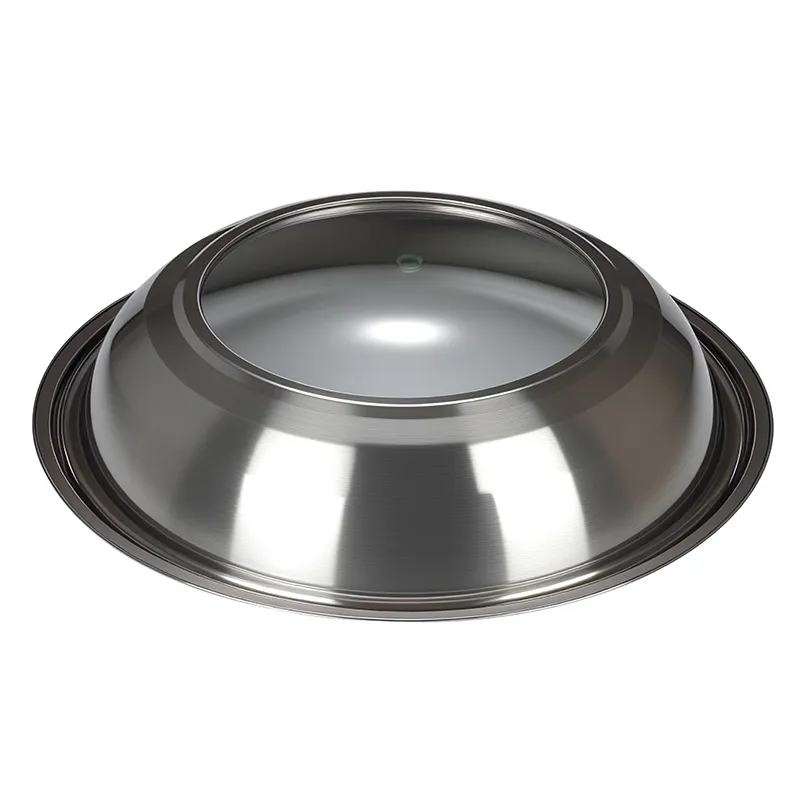
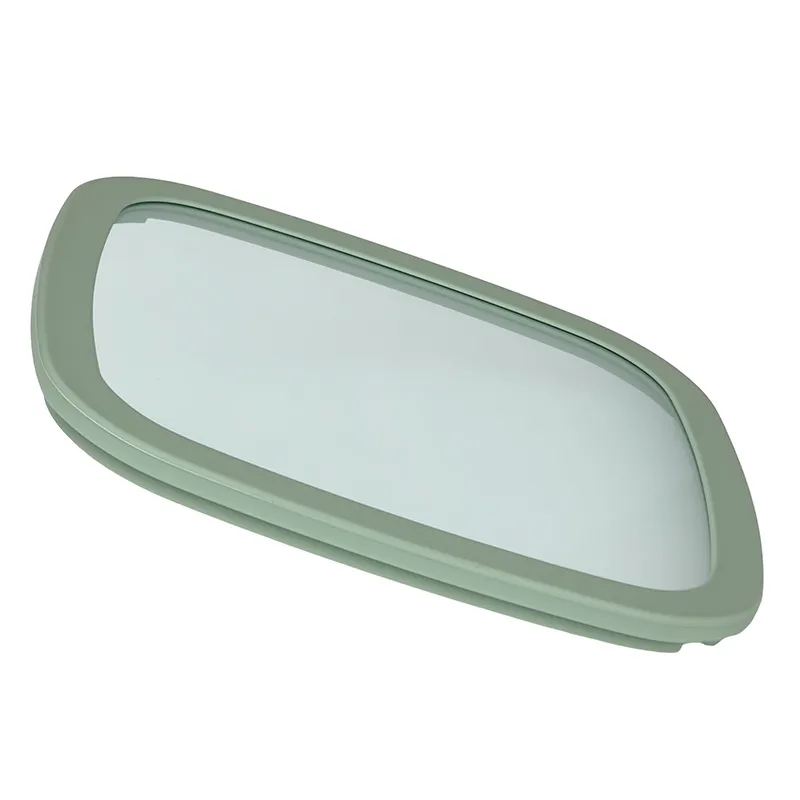
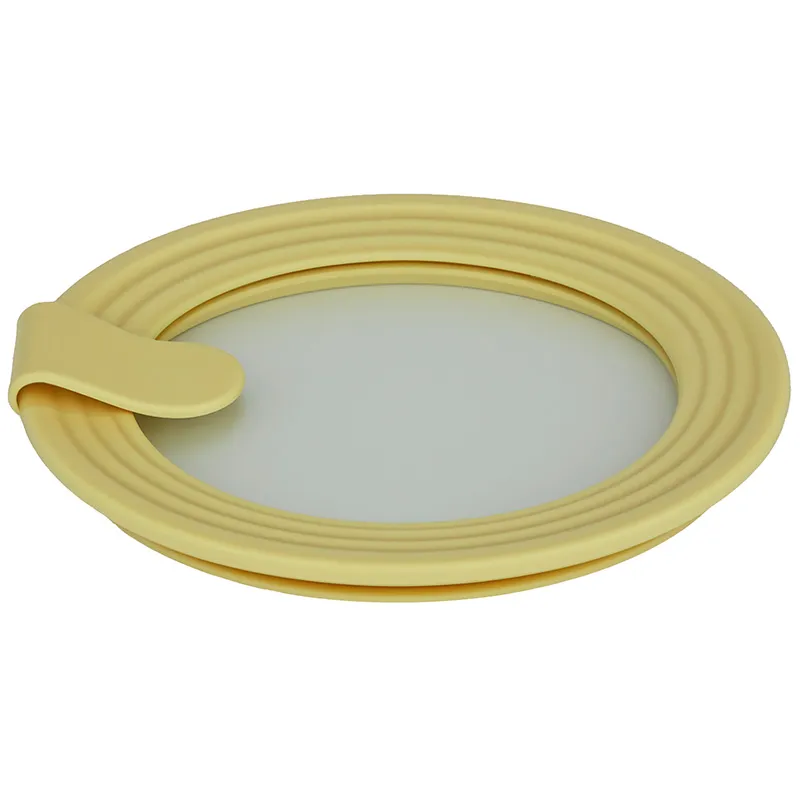
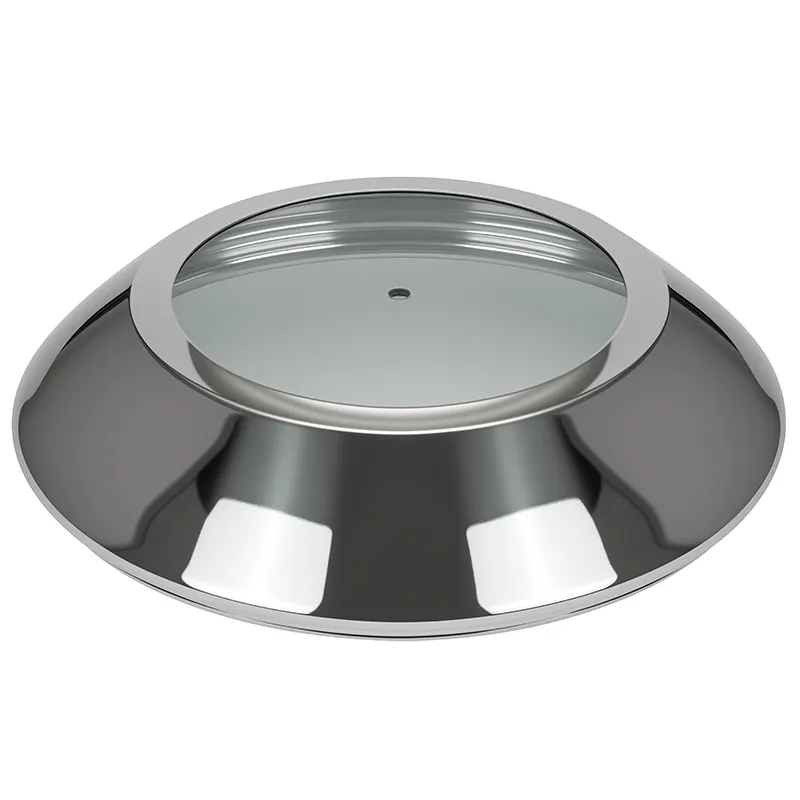
Tempered Glass Lids for Cookware – Durable, Heat-Resistant & Shatterproof
2026-09-26
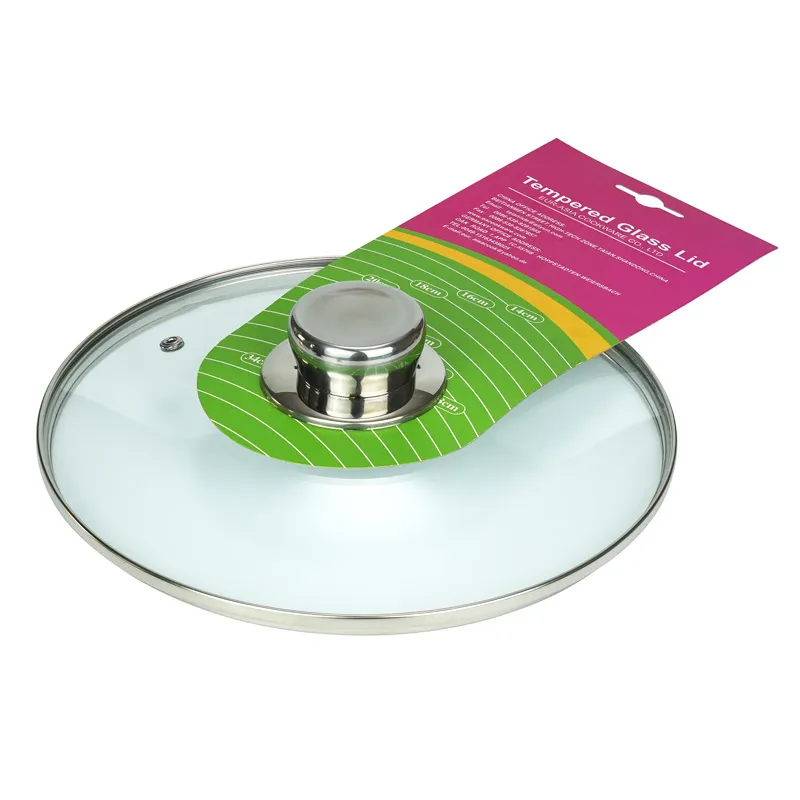
Tempered glass lids transform how cooks monitor food, control steam, and preserve heat—without compromising safety or clarity. At EUR-ASIA COOKWARE CO.,LTD, we’ve supplied over 12 million units to OEMs and distributors across 37 countries. In real-world testing, our tempered glass lids survive repeated thermal shocks—from 20°C fridge storage to direct 400°C stovetop contact—without microfractures or haze. That’s not marketing. It’s the result of 8 years of edge-finish optimization, 100% post-tempering optical inspection, and zero tolerance for surface distortion above 0.15 mm/m.
Why tempered glass—not ordinary glass—belongs on your cookware
Most kitchen accidents involving lids happen during rapid cooling: a hot lid placed on a wet countertop, splashed with cold water, or wiped with a damp cloth. Ordinary float glass cracks under that stress. Tempered glass doesn’t—it shatters into dull, granular pieces instead of sharp shards. But tempering alone isn’t enough. We saw this firsthand when a European client returned 4,200 CA09 lids after 18 months in humid commercial kitchens. Root cause? Edge micro-chips from inconsistent grinding before tempering. Today, every lid passes through a three-stage edge-polishing line—diamond-coated, water-cooled, laser-verified—before entering the tempering furnace.
Our SGC series uses 6 mm thick soda-lime glass, heated to 620°C then quenched with precisely calibrated air jets. Surface compression reaches 120 MPa—nearly double the industry baseline. That’s why it withstands 15 kgf impact from a steel ball dropped at 1.2 m height, per EN 12150-1. More importantly, it stays optically clear after 5,000 thermal cycles between -20°C and 250°C. No clouding. No yellowing. Just consistent visibility—critical when simmering sauces or checking rice doneness.
Borosilicate vs. tempered soda-lime: choose by use case, not just specs
Some buyers assume borosilicate is “better.” It’s not always true. Borosilicate (like our STB line) has lower thermal expansion—ideal for oven-to-table service or induction-compatible lids with metal rims. But it’s 37% more expensive, harder to cut cleanly at scale, and lacks the same surface hardness for scratch resistance. Tempered soda-lime glass delivers superior drop performance and better cost-per-cycle value in high-turnover environments—think hotel pan lids, catering stockpots, or home-use fry pans.
We test both side-by-side daily. In one trial, SK-series tempered lids handled 22 consecutive drops onto ceramic tile from 1.5 m; borosilicate STB units cracked on the 17th. Why? Tempering creates compressive stress layers that resist crack propagation. Borosilicate resists thermal shock—but not mechanical shock. That’s why our OEM partners in North America specify tempered glass for stainless steel cookware lines, while using borosilicate only for premium enameled cast iron where thermal cycling dominates usage.
What makes a tempered glass lid actually work—beyond the glass itself
Clarity and strength mean little if steam escapes, the handle melts, or the lid wobbles off-center. We learned that after field reports from Southeast Asian kitchens: lids warped under sustained 120°C humidity because silicone bonding failed at the rim. So we redesigned the GD series with dual-layer silicone—food-grade FDA 21 CFR 177.2600 compound on the inner seal, high-adhesion thermoplastic elastomer on the outer grip band. Bonding happens in climate-controlled rooms (23°C ±1°C, 45% RH), with 100% peel-strength verification at 12 N/mm.
Shape matters too. Our octagonal TL-DSE lid fits 92% of standard 24–28 cm pots without gasket adjustment—because we matched the exact chamfer angle used by top-tier European pot makers. Meanwhile, the MULTIPLE series features interchangeable center vents: push-button steam release, fixed perforations, or full-seal caps—all with identical outer dimensions. No retooling. No inventory bloat.
All our tempered glass lids undergo functional testing: 72-hour steam seal validation, load-bearing tests up to 8 kg static weight, and dishwasher simulation for 200 cycles. Nothing ships without passing.
Real-world reliability starts long before the first boil
You don’t buy a lid—you buy a system. And systems fail at interfaces: glass-to-silicone, silicone-to-metal, lid-to-pot. That’s why EUR-ASIA COOKWARE CO.,LTD controls the entire chain—from raw sheet sourcing to final packaging. We reject 1.8% of incoming glass for microscopic inclusions. We calibrate optical measuring instruments every 4 hours. We log every batch with QR-coded traceability down to the tempering furnace run number.
For procurement teams, that means no surprises at customs. Every shipment includes ISO 9001-compliant material certifications, EN 12150-1 test reports, and REACH/ROHS declarations—all pre-validated for EU, US, and GCC markets. Lead times stay within ±2 days across 14 global distribution hubs because capacity planning runs on live OEM forecast data—not spreadsheets.
Tempered glass lids aren’t an accessory. They’re the most frequently touched, most thermally stressed, and most safety-critical component of any cookware system. Choose based on how they perform—not how they look on a spec sheet. Choose engineered consistency. Choose verified resilience. Choose tempered glass lids built for what happens after the factory gate.