- Chinese
- French
- German
- Portuguese
- Spanish
- Russian
- Japanese
- Korean
- Arabic
- Irish
- Greek
- Turkish
- Italian
- Danish
- Romanian
- Indonesian
- Czech
- Afrikaans
- Swedish
- Polish
- Basque
- Catalan
- Esperanto
- Hindi
- Lao
- Albanian
- Amharic
- Armenian
- Azerbaijani
- Belarusian
- Bengali
- Bosnian
- Bulgarian
- Cebuano
- Chichewa
- Corsican
- Croatian
- Dutch
- Estonian
- Filipino
- Finnish
- Frisian
- Galician
- Georgian
- Gujarati
- Haitian
- Hausa
- Hawaiian
- Hebrew
- Hmong
- Hungarian
- Icelandic
- Igbo
- Javanese
- Kannada
- Kazakh
- Khmer
- Kurdish
- Kyrgyz
- Latin
- Latvian
- Lithuanian
- Luxembou..
- Macedonian
- Malagasy
- Malay
- Malayalam
- Maltese
- Maori
- Marathi
- Mongolian
- Burmese
- Nepali
- Norwegian
- Pashto
- Persian
- Punjabi
- Serbian
- Sesotho
- Sinhala
- Slovak
- Slovenian
- Somali
- Samoan
- Scots Gaelic
- Shona
- Sindhi
- Sundanese
- Swahili
- Tajik
- Tamil
- Telugu
- Thai
- Ukrainian
- Urdu
- Uzbek
- Vietnamese
- Welsh
- Xhosa
- Yiddish
- Yoruba
- Zulu
- Kinyarwanda
- Tatar
- Oriya
- Turkmen
- Uyghur

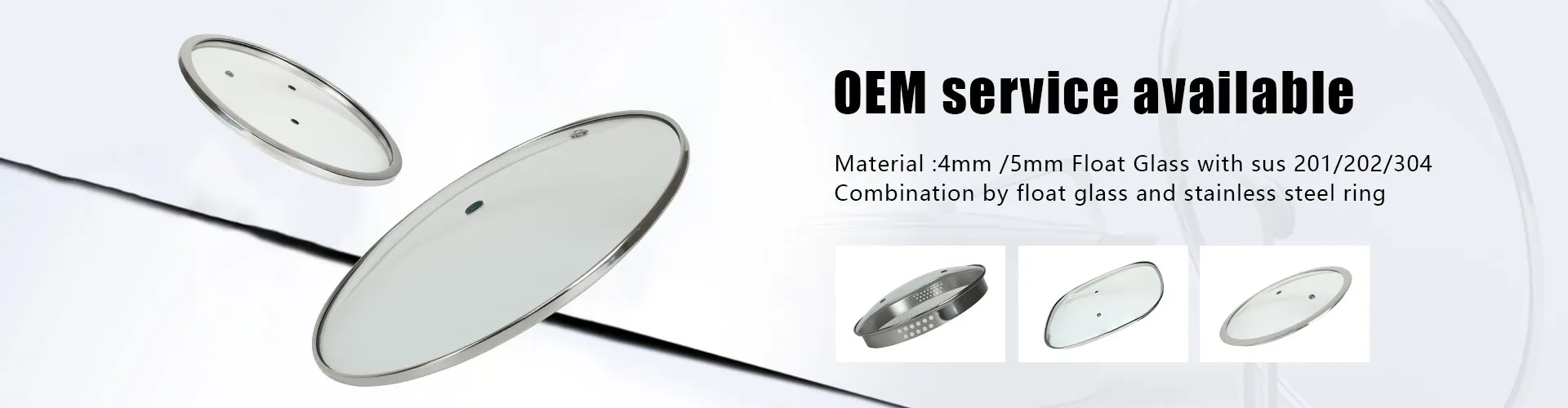
ikea glass lid
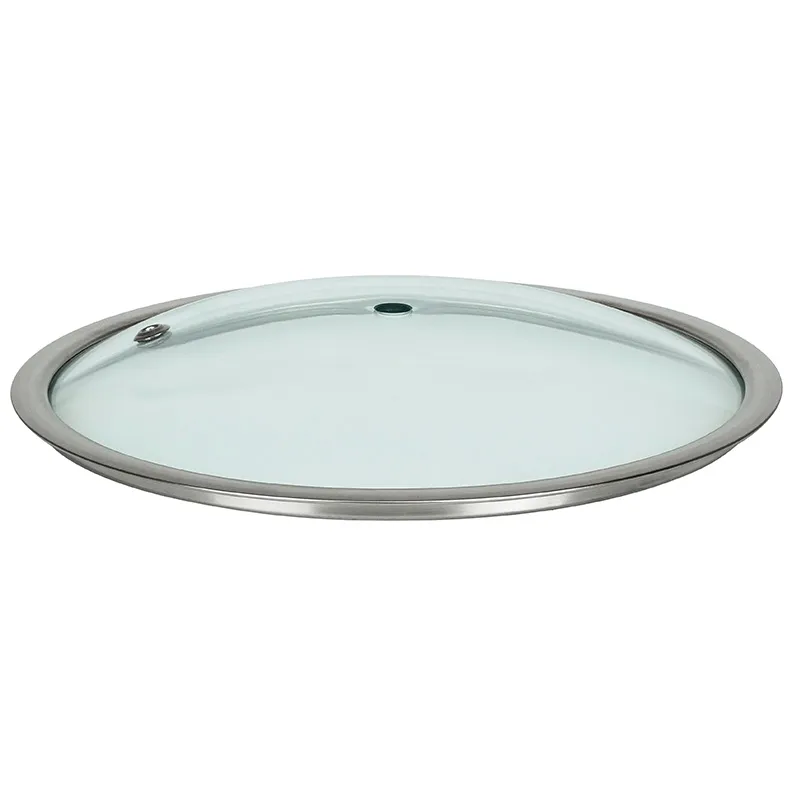
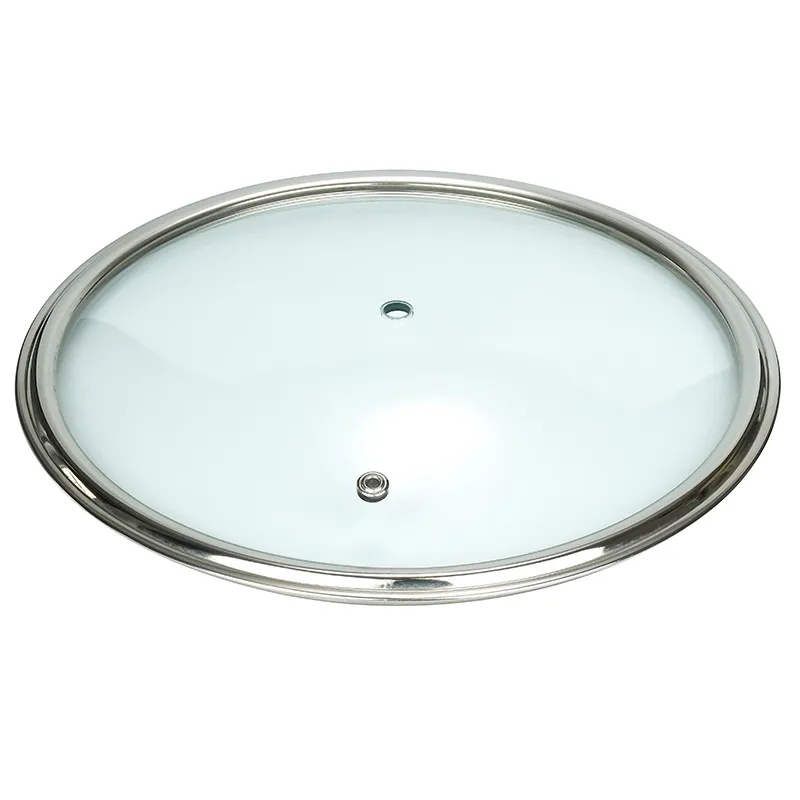
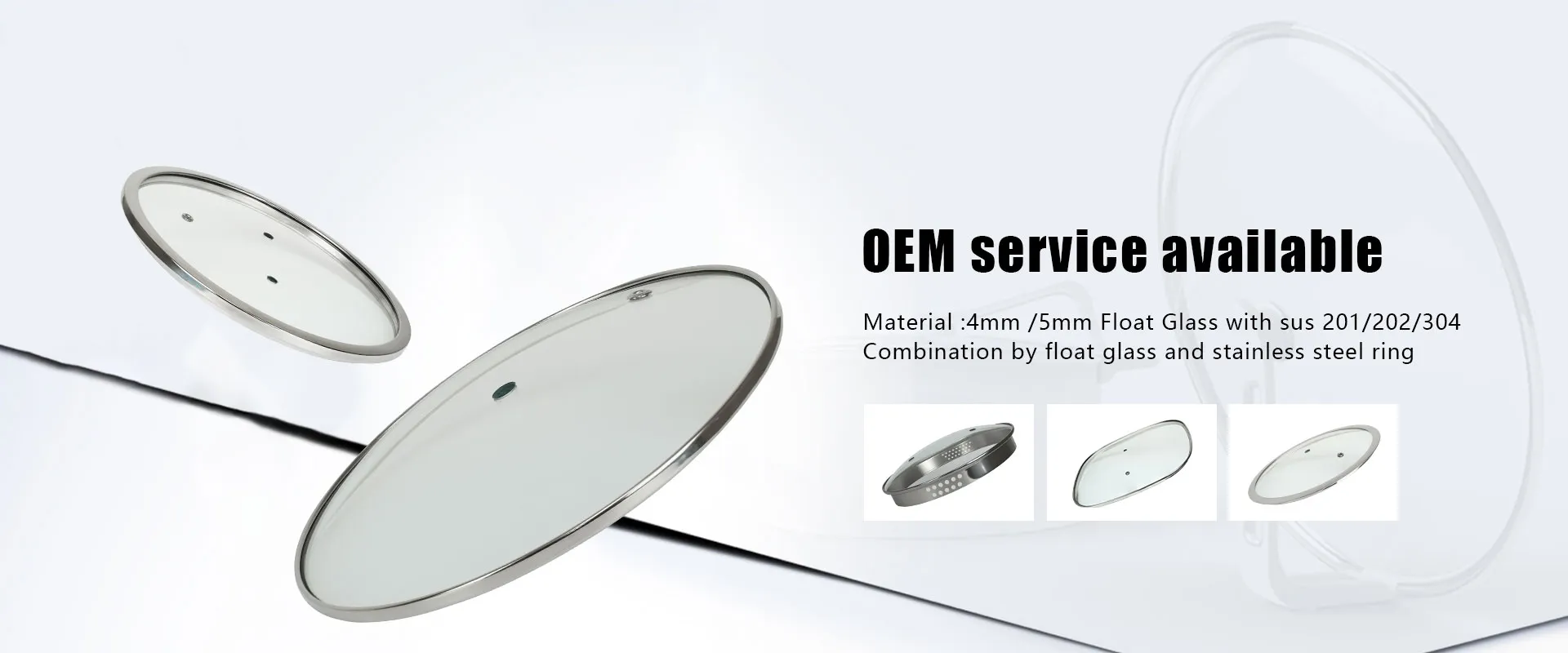
When you hear 'IKEA glass lid,' the immediate thought is replacement—a simple, generic cover for a pot you bought years ago. That's the common trap. In reality, it's a gateway into the nuanced world of tempered glass for cookware, where dimensions, curvature, and thermal shock resistance aren't just specs; they're the difference between a perfect seal and a kitchen mishap. I've seen too many assume any clear lid from a home store will do, only to deal with poor fit or, worse, cracks during a rapid cool-down. The IKEA ecosystem, with its specific product lines like 365+ or SENSUELL, often requires a precision match that generic replacements can't guarantee. It's less about the brand and more about understanding the engineering behind a functional glass lid.
The Fit Fallacy and Thermal Dynamics
Let's get specific. I recall a project where a client, a mid-sized European importer, wanted a batch of lids for IKEA's classic 365+ series saucepans. They provided the original, thinking it was straightforward. Our first prototypes failed. Not on dimensions—we nailed the diameter—but on the 'dome.' The curvature was off by maybe two millimeters. That's enough to let too much steam escape, defeating the purpose of a lid. It's a detail you only catch with hands-on experience, measuring not just with calipers but by observing the steam vent pattern and how the glass sits on the rim under heat.
Then there's the tempering process. For a lid to survive the shift from a hot stove to a cold granite countertop, the glass must be uniformly heated and quenched. I've had batches where the stress pattern, visible under polarized light, showed inconsistencies. Those lids would pass a basic impact test but shatter unpredictably during thermal shock. This is where a manufacturer's capability is tested. A company like EUR-ASIA COOKWARE CO.,LTD., with a dedicated production base and an annual output in the millions, typically has the controlled ovens and quenching systems to manage this. Their specialization in tempered glass for export markets suggests they've tackled these thermal dynamics repeatedly.
You can find their focus directly on their site, https://www.glass-lid.com, which clearly states their core business: producing tempered glass lids and kitchen accessories. Exporting to over a dozen countries, including stringent markets like Germany and Japan, implies their processes meet diverse international safety and quality standards. This isn't a generic glass workshop; it's a focused operation. For an IKEA replacement part, this level of specialization is relevant because IKEA's own suppliers operate under similar rigorous protocols.
Material Sourcing and the Handle Problem
Another overlooked aspect is the handle and knob assembly. The glass itself is only half the product. IKEA often uses stainless steel or heat-resistant phenolic knobs screwed into the glass. The failure point? The insert. If the metal insert bonded into the glass isn't the right alloy or isn't seated perfectly, it loosens over time. We learned this the hard way on an early order. The lids were fine, but after 50 dishwasher cycles, a percentage of knobs started spinning. The fix involved switching to a different insert adhesive and torque-testing every assembly.
This connects back to a full-service manufacturer. A company that covers the entire process, from glass tempering to metalwork assembly—like EUR-ASIA COOKWARE, which mentions producing various types of tempered glass lid and other glass products—is better positioned to control this synergy. Their 20,000㎡ facility likely houses integrated lines for this. When sourcing a glass lid meant to mirror OEM quality, this vertical integration matters more than just the unit price.
For a DIY replacement, my advice is always to check the knob first. Can you remove it? Is the thread standard? Sometimes, the solution isn't a whole new lid but sourcing a compatible knob from a specialist, which again, leads you to producers who sell these components in bulk to assemblers.
The Export Reality and Good Enough Quality
Working with export-focused factories reveals a tiered quality landscape. There's a stark difference between lids produced for a discount chain and those for a premium European brand, even if they come from the same region. The former might have ground but unpolished edges, thinner tempering, or less precise printing on the rim. The latter will have smoother edges, a clearer, more resilient temper, and often, a more durable silk-screen logo.
Given that EUR-ASIA COOKWARE exports over 90% of its products to Europe and other developed markets, their baseline quality is inherently geared toward passing the inspections of those importers. This doesn't mean every lid is premium, but the floor is higher. For an IKEA replacement—IKEA being a massive global buyer with its own strict audits—this export-oriented quality is a decent benchmark. It suggests the factory is accustomed to working to specifications and tolerances that would be compatible with IKEA's own requirements.
I remember evaluating samples from a few suppliers in Shandong. The ones that failed had issues like optical distortion (wavy glass) or poor fit on our gauge pots. The successful sample, which coincidentally came from a factory with a similar export profile to EUR-ASIA, had a consistent clarity and a snap-on fit that was almost airtight. It's these tangible, almost tactile details that separate a functional product from a subpar one.
Practical Sourcing and Verification
So, if you're a retailer or a larger operation looking to source a batch of IKEA-compatible lids, what's the move? First, abandon the term IKEA specific in communications with factories for legal reasons. Instead, provide exact dimensional drawings: outer diameter, inner sealing diameter, height of dome, and diameter of the knob hole. Reference the type of glass (clear tempered, typically 3-4mm thick) and the need for thermal shock resistance (we usually test from 220°C to 20°C immersion).
A professional manufacturer's website, like the one mentioned, should be a starting point for capability assessment, not the end. Look for evidence of testing equipment, quality control charts, and export certifications. The company intro stating they are specialized in producing... tempered glass lid and their large annual output are positive indicators of focus and scale. The next step is always to request a DAP (Drawings, Approval, Prototype) sample. Never skip the prototype, and test it under real conditions—boil water, slam it into cold water, put it in the dishwasher for a dozen cycles.
In one case, we approved a lid based on perfect dimensions, but the prototype had a slightly larger steam vent hole than specified. It seemed minor, but it changed the cooking dynamics for certain dishes. We caught it, revised the drawing, and the factory corrected it. This iterative, detail-oriented dialogue is the hallmark of dealing with a competent supplier.
Concluding Thoughts: It's a Component, Not a Commodity
Wrapping this up, the keyword 'IKEA glass lid' ultimately points to a specialized component industry. It's not a generic commodity. Its value lies in precise engineering, material science, and an understanding of how it functions in a dynamic cooking environment. The fact that dedicated manufacturers exist—operating on the scale of millions of pieces annually for the global market—underscores that this is a field with depth.
For the end-user, the lesson is to be wary of the cheapest, no-name replacement. Look for indicators of tempering and check the fit. For the trade professional, success lies in partnering with factories that demonstrate vertical integration, export compliance, and a willingness to engage in the prototyping feedback loop. The production base in Taian City, Shandong, mentioned by EUR-ASIA COOKWARE, is part of a larger industrial cluster for such goods, which can be both an advantage for sourcing and a challenge in differentiating true quality.
In the end, a good glass lid disappears into the routine of cooking. You don't notice it. It just works. Achieving that simplicity is the complex result of getting a hundred small details right, from the chemistry of the glass to the torque on the knob. That's the real story behind the search term.
Related Products
Related Products