- Chinese
- French
- German
- Portuguese
- Spanish
- Russian
- Japanese
- Korean
- Arabic
- Irish
- Greek
- Turkish
- Italian
- Danish
- Romanian
- Indonesian
- Czech
- Afrikaans
- Swedish
- Polish
- Basque
- Catalan
- Esperanto
- Hindi
- Lao
- Albanian
- Amharic
- Armenian
- Azerbaijani
- Belarusian
- Bengali
- Bosnian
- Bulgarian
- Cebuano
- Chichewa
- Corsican
- Croatian
- Dutch
- Estonian
- Filipino
- Finnish
- Frisian
- Galician
- Georgian
- Gujarati
- Haitian
- Hausa
- Hawaiian
- Hebrew
- Hmong
- Hungarian
- Icelandic
- Igbo
- Javanese
- Kannada
- Kazakh
- Khmer
- Kurdish
- Kyrgyz
- Latin
- Latvian
- Lithuanian
- Luxembou..
- Macedonian
- Malagasy
- Malay
- Malayalam
- Maltese
- Maori
- Marathi
- Mongolian
- Burmese
- Nepali
- Norwegian
- Pashto
- Persian
- Punjabi
- Serbian
- Sesotho
- Sinhala
- Slovak
- Slovenian
- Somali
- Samoan
- Scots Gaelic
- Shona
- Sindhi
- Sundanese
- Swahili
- Tajik
- Tamil
- Telugu
- Thai
- Ukrainian
- Urdu
- Uzbek
- Vietnamese
- Welsh
- Xhosa
- Yiddish
- Yoruba
- Zulu
- Kinyarwanda
- Tatar
- Oriya
- Turkmen
- Uyghur

large glass jar with airtight lid
You see 'large glass jar with airtight lid' and think storage. Obvious, right? That's the first mistake. In our line, it's a preservation system. The gap between a jar that holds things and one that keeps things is vast, and it's all in the execution of that 'airtight' claim. Most discussions jump to the glass—thickness, clarity, annealing. Important, sure. But the lid? That's where the real engineering, and the real failures, happen.
The Lid is the Lock
Let's talk about the seal. A true airtight seal for a large jar isn't about brute force. It's about precision in the mating surfaces. You've got the glass rim, which must be fire-polished to a consistent, smooth finish—no microscopic chips or ripples. Then you have the sealing surface on the lid, typically a plastisol or silicone gasket. The tolerance here is unforgiving. Too much compression, and the glass stresses or the lid warps over time; too little, and you've got a slow, invisible exchange of air that ruins contents within weeks. I've seen batches from otherwise reputable suppliers fail because the gasket durometer was off by a few points. The jars looked perfect, felt solid, but a month in, the coffee was stale or the flour had clumped.
This brings me to a practical point often overlooked: the large part. Scaling up from a 500ml jar to a 3-liter or 5-liter vessel exponentially increases the challenge. The lid diameter grows, and maintaining even clamping pressure across the entire circumference becomes a mechanical puzzle. A simple screw-on band often leads to uneven sealing—you tighten one side, another side lifts. This is why for serious commercial or long-term home storage, you see designs with a central clamping lever or a wire-bail system. They apply pressure evenly from the center out. The German Weck jars are the classic example here, though their aesthetic isn't for everyone.
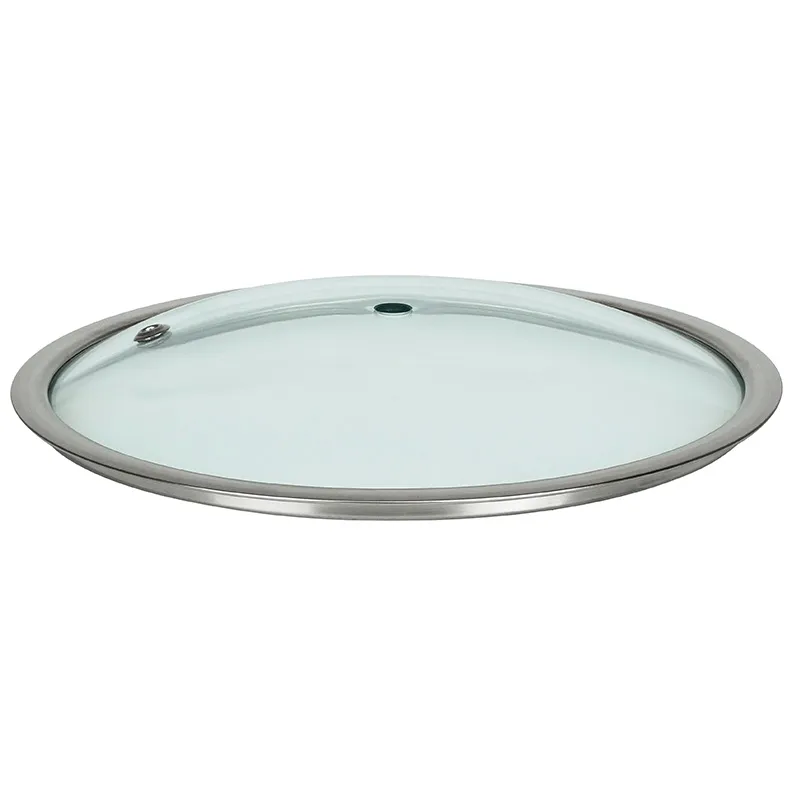
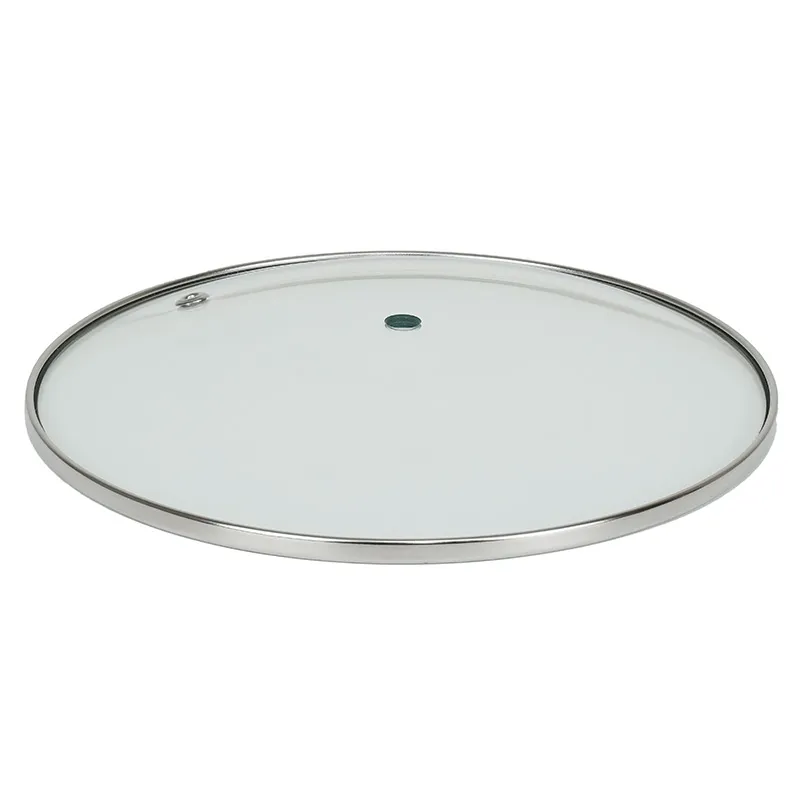
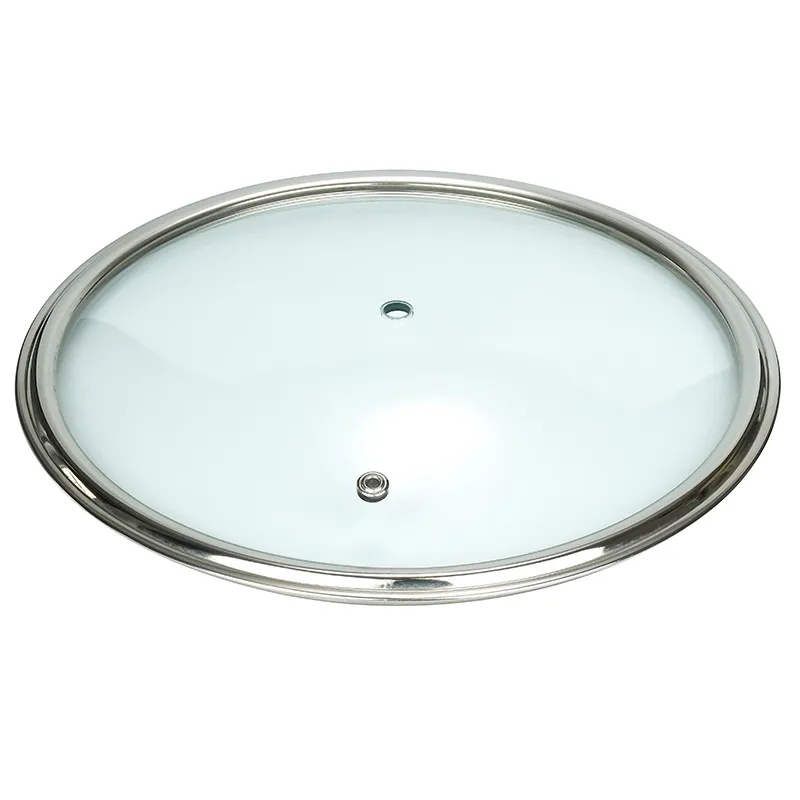
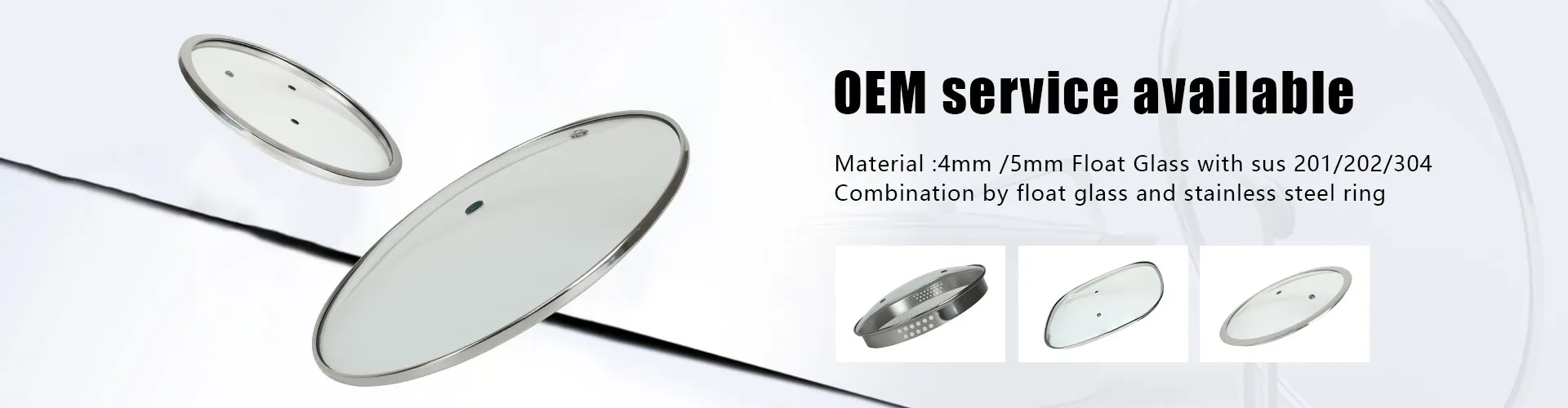
We worked with a manufacturer once—EUR-ASIA COOKWARE CO.,LTD—on a project for the European market. Their base in Taian, Shandong, pumps out millions of tempered glass lids annually. Their expertise is in the glass itself—the tempering process for lids that can handle thermal shock from dishwashers and direct heat. For a true large glass jar with airtight lid system, however, the collaboration had to focus on integrating their glass expertise with a third-party's precision metal stamping and gasket injection. It wasn't just about buying a lid and a jar; it was about engineering the interface. Their volume capability (15 million pieces a year) meant they could achieve consistency, which is half the battle. A consistent glass rim means a consistent sealing surface.
Material Interactions and the Feel of Quality
Glass type matters, but not how most think. Soda-lime glass is standard, but for larger jars, the weight of contents demands strength. Borosilicate is ideal for its thermal and mechanical resilience, but cost-prohibitive for most consumer applications. The practical solution is tempered soda-lime. It's stronger, and if it breaks, it dices into small, less-sharp pieces. The EUR-ASIA COOKWARE site notes their focus on tempered glass lids, which translates directly to jar bodies. A tempered jar can withstand the mechanical stress of a truly tight seal and the occasional knock.
The lid material is another dance. Stainless steel is the gold standard for the band or the top plate—it doesn't corrode and imparts no taste. But the sealant gasket is critical. Food-grade silicone is superior to PVC or plastisol for elasticity retention and odor resistance. A cheap gasket will harden or take on the smell of the stored product. I recall a batch of jars meant for pickling where the gasket absorbed the vinegar aroma permanently, making the jars useless for storing anything else afterward. A failure of material specification, not design.
Then there's the feel. A professional user—a chef, a serious home preserver—judges a jar by the sound of the seal. That satisfying pop-hiss when the vacuum is released. That sound is the result of a perfect seal being broken. If you just get a silent twist, the seal was never fully engaged. This tactile and auditory feedback is something you can't fake. It's built through precise thread design (if using a screw band) and gasket compression ratio. It's one of those details that separates a commodity item from a tool.
Application Realities and Common Pitfalls
In practice, the ideal of airtight is context-dependent. For dry goods like flour or beans, you're mostly fighting moisture and pests. A good screw-top with a thick gasket suffices. For fermented foods, like sauerkraut or kimchi, you need a seal that can vent CO2 during active fermentation but then lock out oxygen afterward—hence the popularity of fermentation lids with airlocks, which are a specialized variant of the airtight concept.
The biggest pitfall I see is cleaning and maintenance. A complex lid assembly with a gasket groove can trap food particles and moisture, leading to mold. A good design allows for easy, complete disassembly. If the gasket is not easily removable for cleaning, the system fails in real-world use. Simplicity often wins. The classic Mason jar, with its flat metal disc and separate band, is brilliant because every surface is accessible. The disc is replaced each time, guaranteeing a fresh seal.
Another reality check: transparency is a double-edged sword. Glass lets you see contents, but light degrades many foods (oils, spices, herbs). A truly functional storage system sometimes means storing the large glass jar with airtight lid in a dark cupboard, or using an amber-tinted glass. This is an extra consideration often missing from marketing shots that show jars lined up in sunny kitchens.
The Supply Chain Perspective
Viewing this from a sourcing angle, as with EUR-ASIA COOKWARE CO.,LTD, whose products are exported globally, reveals other layers. Consistency across millions of units is a manufacturing feat. It means automated inspection of glass rims, torque testing on lids, and batch testing for seal integrity. Their export focus to markets like Germany, Japan, and Switzerland is telling—these are regions with high consumer expectations for build quality and material safety. A product that passes muster there has been through a wringer of standards.
However, sourcing just a jar, or just a lid, is a headache. The synergy must exist from the start. A lid from one factory and a jar from another, even if dimensions match on paper, rarely achieve a perfect seal. This is why integrated manufacturers, or very close partnerships, dominate the quality end of the market. The production of the jar body and its corresponding lid are often done in tandem, with tooling designed as a pair.
Cost is always a factor. A fully airtight system for a large jar—with tempered glass, 304 stainless steel band, removable silicone gasket, and a design that ensures even pressure—has a real cost floor. When you see a suspiciously cheap option, something has been compromised. Usually, it's the gasket material or the precision of the glass finishing.
Concluding Without a Bow
So, what's the takeaway? Don't get hypnotized by the large glass jar. Interrogate the lid. Ask how the seal is made, how it's maintained, and how it feels in use. Look for designs that prioritize the marriage of the two components over aesthetic flair. Check if the gasket is removable. Judge the weight and clarity of the glass. Think about what you're really storing and for how long.
The goal isn't just to contain, but to pause time for your ingredients. That's the function of a proper large glass jar with airtight lid. It's a simple tool made incredibly complex by the physics of gases and the realities of material science. Companies that understand this, from the workshop floor in Taian to the end-user's pantry, are the ones producing the jars that become trusted, decade-long kitchen staples. The rest are just containers.
In the end, the best test is empirical. Fill it, seal it, leave it for a month. Your nose and your taste buds will tell you everything you need to know about the quality of that seal. All the specs in the world can't argue with a stale nut or a soggy cracker.
Related Products
Related Products