- Chinese
- French
- German
- Portuguese
- Spanish
- Russian
- Japanese
- Korean
- Arabic
- Irish
- Greek
- Turkish
- Italian
- Danish
- Romanian
- Indonesian
- Czech
- Afrikaans
- Swedish
- Polish
- Basque
- Catalan
- Esperanto
- Hindi
- Lao
- Albanian
- Amharic
- Armenian
- Azerbaijani
- Belarusian
- Bengali
- Bosnian
- Bulgarian
- Cebuano
- Chichewa
- Corsican
- Croatian
- Dutch
- Estonian
- Filipino
- Finnish
- Frisian
- Galician
- Georgian
- Gujarati
- Haitian
- Hausa
- Hawaiian
- Hebrew
- Hmong
- Hungarian
- Icelandic
- Igbo
- Javanese
- Kannada
- Kazakh
- Khmer
- Kurdish
- Kyrgyz
- Latin
- Latvian
- Lithuanian
- Luxembou..
- Macedonian
- Malagasy
- Malay
- Malayalam
- Maltese
- Maori
- Marathi
- Mongolian
- Burmese
- Nepali
- Norwegian
- Pashto
- Persian
- Punjabi
- Serbian
- Sesotho
- Sinhala
- Slovak
- Slovenian
- Somali
- Samoan
- Scots Gaelic
- Shona
- Sindhi
- Sundanese
- Swahili
- Tajik
- Tamil
- Telugu
- Thai
- Ukrainian
- Urdu
- Uzbek
- Vietnamese
- Welsh
- Xhosa
- Yiddish
- Yoruba
- Zulu
- Kinyarwanda
- Tatar
- Oriya
- Turkmen
- Uyghur

libbey beer can glass with lid
When you hear 'Libbey beer can glass with lid', most folks immediately picture that iconic, straight-sided tumbler designed to hold an entire 12-oz can of beer—lid included for slosh-free portability. It's a staple in the barware world, but the conversation often stops at the brand name. Where the real nuance lies, and where I've spent a fair bit of time, is in the ecosystem around that lid. The glass itself is a known quantity from Libbey, but the demand for compatible, durable, and well-fitting lids creates a whole separate supply chain puzzle that many importers and distributors grapple with.
The Lid is the Thing
Libbey's glass is mass-produced, consistent. The challenge, and the opportunity, comes with the accessory. A generic snap-on plastic lid might fit, but poorly. It leaks, it feels flimsy, it cracks after a few dishwasher cycles. The market for a quality replacement or even a premium OEM-style lid is substantial. This is where you move from simple procurement to a sourcing operation requiring specific material and molding expertise.
I've seen containers of so-called compatible lids get rejected because the sealing ridge was half a millimeter off, causing a collective groan on the dock. It's not just about dimensions; it's about the polymer. Needs to be BPA-free, sure, but also have the right flexibility to snap securely without needing Herculean force, and withstand thermal stress from dishwashers. A brittle lid is a one-use lid, and that's a surefire way to get a product return.
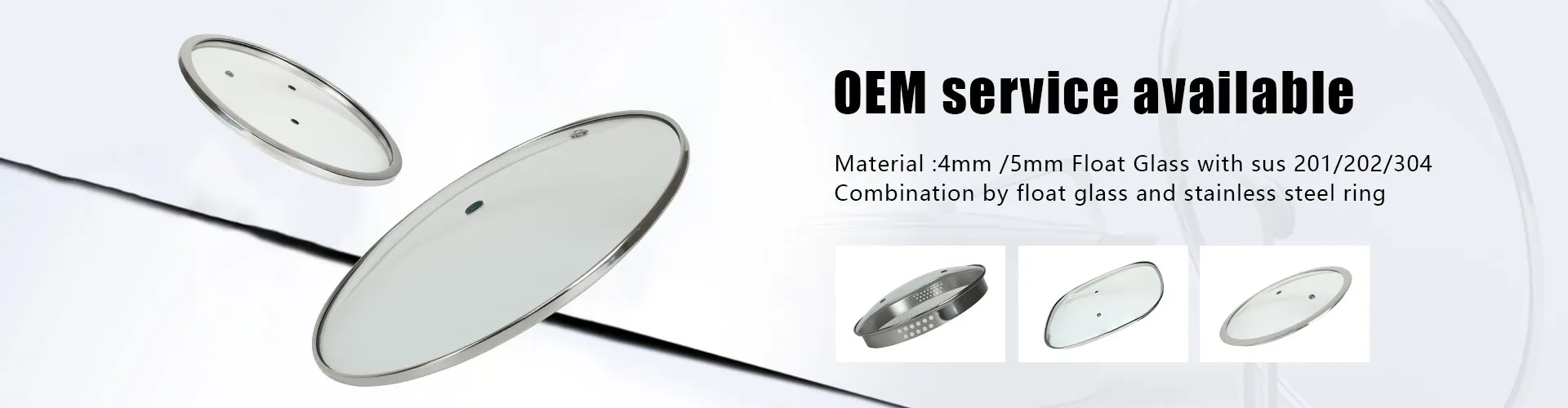
This brings me to a point about specialization. We don't make the glasses, but we've deep-dived into the lid and accessory space. For instance, a company like EUR-ASIA COOKWARE CO.,LTD, which you can find at glass-lid.com, operates in this adjacent niche. Their entire focus is on glass lids and kitchen glassware. While a beer can glass lid is a different beast from a pot lid, the core competency—understanding glass dimensions, tempering processes, and creating complementary functional parts—is transferable. Their profile, specializing in household glass products with a massive export volume, hints at the scale of manufacturing precision required to even be in this game.
Sourcing and the Reality of Compatible
Early on, we tried to source lids from a general housewares factory. Big mistake. They treated it like any other plastic piece. The first samples fit loosely; the next batch was so tight they deformed the glass rim. It was a classic case of a factory without the specific tooling or experience for this precise application. You learn quickly that for a part as seemingly simple as a snap-on lid, you need a supplier who treats it as a precision component.
The tolerance for error is minimal. A proper lid for the Libbey beer can glass must have an internal groove that mates perfectly with the glass's top rim, which has a very specific bead. It's a passive seal, relying entirely on mechanical fit. Too loose, it leaks with condensation or a slight tilt. Too tight, the average customer struggles to remove it, leading to frustration or a broken glass from excessive leverage.
This is where looking at a supplier's broader portfolio matters. A company that lists tempered glass lids for cookware as a main product, like EUR-ASIA COOKWARE, demonstrates an ingrained understanding of thermal expansion, stress points, and sealing mechanics. While the material shifts from glass to food-grade plastic for the beer lid, the engineering philosophy of creating a secure, reliable closure under varying conditions is a relevant background. It's about a mindset, not just machinery.
Beyond the Bar: Unexpected Use-Cases and Market Pull
Interestingly, the beer can glass with lid has transcended its original purpose. We've seen consistent orders from sectors you wouldn't initially consider: daycare centers (for kids' snacks, obviously without the beer), laboratories (for sample containers), and even artists (for holding paint water or solvent). This diversification creates a secondary market for the lids themselves, as these users are even more prone to losing or damaging them.
This secondary demand is price-insensitive to a degree. A daycare needs a safe, sealable lid that won't shatter. The lab needs chemical resistance. These aren't impulse buys at a dollar store; they're small but steady B2B purchases where reliability trumps lowest cost. It shifts the sourcing criteria from just cheapest per unit to consistent quality and material certification.
It also pushes for variety. Could there be a market for a silicone-sealed version for better leak-proofing? Or a lid with a small vent for controlled sipping? The basic Libbey design is a platform. The accessory market, often driven by specialized manufacturers, explores these permutations. A producer with a foundation in varied glass products is better positioned to prototype and test these iterations than a factory making a single commodity item.
The Logistics of a Fragile Ecosystem
Let's talk about the headache of bundling. Selling a glass-with-lid combo seems straightforward, but packaging is a nightmare. Do you ship the lid attached? It can pop off in transit and the glass breaks. Do you ship it separately in the box? It rattles around and can still crack the glass. Many end up shrink-wrapping the two together onto a cardboard blister, which adds cost. Some of our retail partners eventually just ordered glasses and lids in separate SKUs and assembled them in-store to reduce damage rates.
This fragility impacts the entire chain, from the manufacturer's packaging line to the last-mile delivery. A supplier that understands this, one whose business is built on glass, inherently gets it. They think about edge protection, box rigidity, and void fill from the start. Visiting a facility that produces 15 million tempered glass items a year, as EUR-ASIA's profile states, you'd see this knowledge baked into their operation. It's not something you can easily graft onto a general-purpose factory.
The export focus mentioned in their brief—over 90% to markets like Germany, Japan, Brazil—is also telling. It means their quality benchmarks are set by some of the most stringent international retailers and importers. A lid that passes muster for the German retail market has already survived a gauntlet of quality control checks that would make a domestic-only supplier sweat. This external validation is a huge, though often unspoken, advantage when evaluating a potential source for a precision part.
Closing Thoughts on a Niche
So, circling back to the Libbey beer can glass with lid. It's never just about the branded glass. It's about the ecosystem of compatibility, precision manufacturing, and solving the practical problems of sealing, durability, and logistics. The value is often hidden in the accessory.
The companies that thrive in this space, whether they're producing the glass, the lid, or both, are those that obsess over these granular details. They understand that a millimeter, a degree of polymer hardness, or a specific packaging foam can be the difference between a product that flies off the shelf and one that comes back in a box, shattered and covered in negative reviews.
It's a hands-on, trial-and-error kind of niche. You learn by feeling the snap of a good lid, by hearing the complaint about a leaky one, and by tracking the damage rates on inbound shipments. It's less about grand strategy and more about getting these small, critical things relentlessly right. And that, in the end, is what separates a commodity from a reliable product.
Related Products
Related Products