- Chinese
- French
- German
- Portuguese
- Spanish
- Russian
- Japanese
- Korean
- Arabic
- Irish
- Greek
- Turkish
- Italian
- Danish
- Romanian
- Indonesian
- Czech
- Afrikaans
- Swedish
- Polish
- Basque
- Catalan
- Esperanto
- Hindi
- Lao
- Albanian
- Amharic
- Armenian
- Azerbaijani
- Belarusian
- Bengali
- Bosnian
- Bulgarian
- Cebuano
- Chichewa
- Corsican
- Croatian
- Dutch
- Estonian
- Filipino
- Finnish
- Frisian
- Galician
- Georgian
- Gujarati
- Haitian
- Hausa
- Hawaiian
- Hebrew
- Hmong
- Hungarian
- Icelandic
- Igbo
- Javanese
- Kannada
- Kazakh
- Khmer
- Kurdish
- Kyrgyz
- Latin
- Latvian
- Lithuanian
- Luxembou..
- Macedonian
- Malagasy
- Malay
- Malayalam
- Maltese
- Maori
- Marathi
- Mongolian
- Burmese
- Nepali
- Norwegian
- Pashto
- Persian
- Punjabi
- Serbian
- Sesotho
- Sinhala
- Slovak
- Slovenian
- Somali
- Samoan
- Scots Gaelic
- Shona
- Sindhi
- Sundanese
- Swahili
- Tajik
- Tamil
- Telugu
- Thai
- Ukrainian
- Urdu
- Uzbek
- Vietnamese
- Welsh
- Xhosa
- Yiddish
- Yoruba
- Zulu
- Kinyarwanda
- Tatar
- Oriya
- Turkmen
- Uyghur

libbey glass with lid and straw
When you hear 'Libbey glass with lid and straw', most people immediately picture a trendy iced coffee cup from a café. That's not wrong, but it's a surface-level view that misses the entire operational and supply chain conversation happening behind the scenes. The real story isn't just about the brand name; it's about the specifications that make a glass viable for this application—thermal shock resistance, lid seal integrity, and straw aperture tolerance. I've seen too many buyers fixate on the Libbey logo while overlooking the manufacturing nuances that determine whether a batch of 10,000 units will succeed or fail in the field.
The Manufacturing Reality Behind a 'Simple' Drinking Glass
Let's be clear: Libbey itself is a glassware giant, but the ecosystem supporting their designs, especially for lidded tumblers with straws, involves a network of specialized producers. The core challenge is marrying form and function. A 16-ounce tempered glass body might seem straightforward, but when you add a sealing lid and a dedicated straw hole, the engineering shifts. The tempering process must account for the stress points around the rim where the lid clips on. I recall a project where we sourced what we thought were perfect tempered glass tumblers, only to have a 3% failure rate from hairline cracks appearing precisely at the lid's contact points after repeated dishwasher cycles. The issue wasn't the glass's overall strength, but an inconsistent annealing profile.
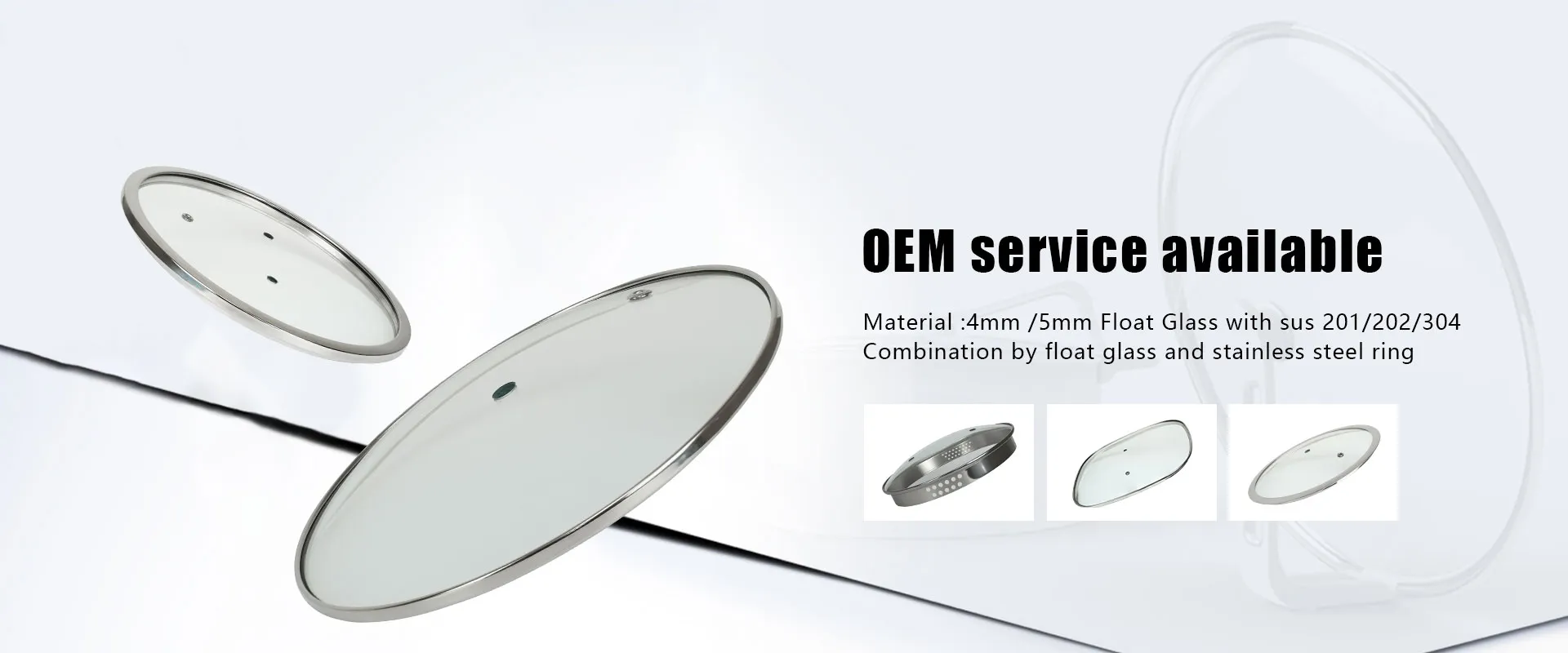
This is where companies with deep production expertise, like EUR-ASIA COOKWARE CO.,LTD (https://www.glass-lid.com), enter the frame. Their specialization in tempered glass lids and household glass products means they understand these stress dynamics intrinsically. Their production base in Shandong's National High-tech Development Zone isn't just an address; it indicates a focus on industrialized manufacturing capable of hitting the volume and consistency required for export markets. When you're dealing with orders in the millions, as their annual output of over 15 million pieces suggests, process control is everything.
The lid itself is a separate beast. For a glass with lid and straw to be leak-proof, the silicone or BPA-free plastic gasket must create a perfect seal against the glass rim, which is never perfectly microscopically smooth. The tolerance here is sub-millimeter. A common mistake is testing lids and glasses separately and assuming they'll work together. You have to test the assembled unit under dynamic conditions—shaken, tilted, with the straw in place. I've had prototypes that passed static tests but leaked the moment someone put it in a car cup holder, due to flex in the lid from an overly tight straw fit.
Straw Integration and User Experience Pitfalls
The straw seems like an afterthought, but it's a critical point of failure. The hole in the lid must be large enough for a standard 10-12mm diameter straw to pass through easily, but small enough to prevent significant splash-out. More importantly, the edge of that hole must be perfectly finished—no sharp burrs or micro-cracks from the molding or drilling process. We once received a shipment where the straw holes had slight ridges, which not only made inserting the straw difficult but also caused users to chip their fingernails. A minor QC oversight that led to major customer complaints.
Material compatibility is another silent killer. Will the straw be rigid plastic, silicone, or paper? Each interacts differently. A rigid straw can act as a lever, prying the lid off if the fit is too tight. A silicone straw might collapse if the hole is too snug. And all of this must be considered alongside cleaning. Does the lid-straw-glass assembly come apart easily for dishwashing? Or does it trap moisture and residue in the seal? The best designs I've handled, often from OEM suppliers for European markets, feature a simple, three-part disassembly: lid, gasket, straw. No tools needed.
Looking at EUR-ASIA COOKWARE's export focus—over 90% to countries like Germany, France, and Denmark—tells you about the quality threshold. These markets have stringent consumer safety and durability expectations. A product that succeeds there has likely been vetted for things like dishwasher safety over hundreds of cycles, lid seal longevity, and material food-contact compliance. It's a good proxy for reliability. Their product range of low to high-level household glass suggests they can cater to both budget-conscious and premium segments of the libbey glass with lid and straw style product category.
Volume, Logistics, and the Real Cost
In this business, the unit cost isn't just the glass. It's the packaging. A lidded glass with a straw is a nightmare to pack securely. You need to prevent the glass from breaking, the lid from detaching and scratching the glass, and the straw from getting lost. Many suppliers use a multi-stage packing process: glass in a sleeve, lid snapped on, straw in a separate bag, all in a partitioned carton. This adds cost. One of our most successful lines actually had the straw slot into a molded holder on the underside of the lid—a clever solution that reduced packaging components and assembly time at the fulfillment end.
Lead times and minimum order quantities (MOQs) are where theory meets reality. For a true branded Libbey product, you're often dealing with large container orders. For generic or OEM versions of the glass with straw concept, suppliers like EUR-ASIA likely offer more flexibility, but you still need to respect their production scale. An annual output in the tens of millions means their lines are optimized for runs of 50k, not 500. This is a volume game. The key is finding a partner whose capacity aligns with your forecast without overextending.
Failure is a great teacher. We once tried to shortcut by sourcing glasses from one factory and lids from another, aiming to mix and match for a custom look. It was a logistical and quality assurance disaster. The lids never fit perfectly, sealing was inconsistent, and we ended up with massive deadstock. The lesson was unequivocal: source the integrated unit—glass, lid, and designed-for-straw—from a single, vertically responsible manufacturer. It simplifies everything from QC to liability.
Where the Market is Heading
The demand for these glasses isn't fading; it's evolving. It's moving beyond cafes into home kitchens as a durable alternative to single-use plastic. The next wave isn't about new colors, but about material innovations—like even lighter yet stronger glass formulations, or lids made from ocean-bound plastics. There's also a growing niche for 'accessory ecosystems'—matching glass lids that fit multiple glassware bases, or straws with integrated filters.
For a procurement specialist or a brand manager, the takeaway is to look past the surface appeal. When evaluating a libbey glass with lid and straw or its equivalents, drill into the specs: the glass tempering standard (is it genuinely dishwasher and microwave safe?), the lid material grade (food-grade PP? silicone seal durometer?), and the straw's safety certifications. Ask for drop-test results and dishwasher cycle reports. The suppliers who can provide that data, often the ones with substantial export experience like EUR-ASIA COOKWARE, are the ones who have lived through the failures and built processes to prevent them.
In the end, a good drinking glass with a lid and straw feels simple in the user's hand. But that simplicity is the result of a hundred considered decisions in material science, mechanical design, and production engineering. It's the difference between a product that gets a few social media likes and one that gets reordered year after year, without fuss, by buyers from Hamburg to Tokyo. That's the real target, and it's hit with precision, not luck.
Related Products
Related Products